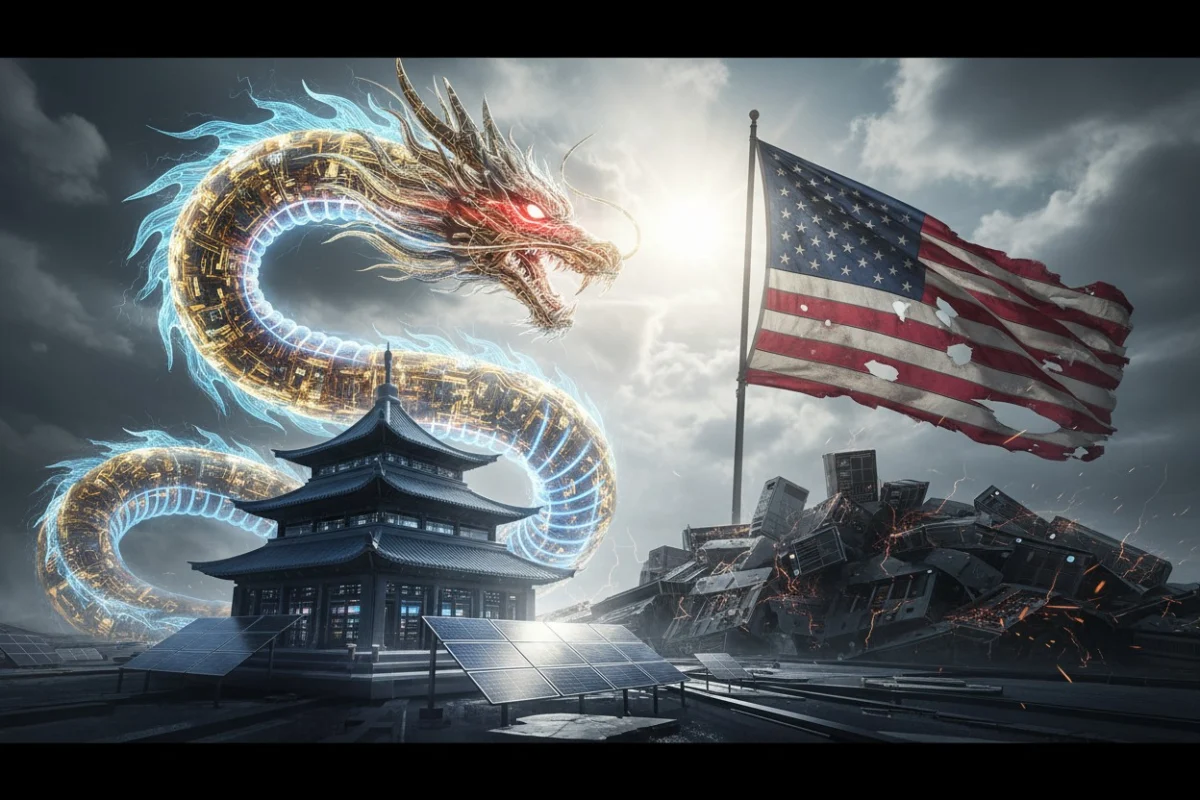
The landscape of global artificial intelligence has undergone a seismic shift. For years, the prevailing narrative in Silicon Valley and along the D.C. beltway was that American labs—backed by trillions in venture capital and an unparalleled concentration of elite talent—held an insurmountable lead. However, the emergence of Kimi K3, the latest large language model (LLM) from Beijing-based Moonshot AI, has challenged this assumption with startling efficiency. By outperforming established U.S. frontier models on critical benchmarks and demonstrating superior capabilities in real-world software engineering, Kimi K3 has ignited a debate: Is the United States losing the most significant technological race of the 21st century?
The Kimi K3 Moment: A Technical Benchmark
The arrival of Kimi K3 represents more than a marginal improvement in parameter count or processing speed; it represents a fundamental change in architectural efficacy. In independent testing, users have reported that the model handles complex coding tasks—specifically the resolution of deep-seated bugs—with a nuance that current iterations of Anthropic’s Claude and OpenAI’s GPT-4o struggle to replicate.
The K3 model’s performance on Terminal Bench and front-end design metrics suggests that Moonshot AI has cracked a code that has long eluded Western labs: the ability to maintain long-context reasoning without the "hallucination" decay typically seen in high-parameter models. When developers integrated Kimi K3 via API, the model did not merely provide surface-level patches; it conducted an exhaustive audit of entire repositories, identifying secondary vulnerabilities that had remained undetected by traditional proprietary models.
This performance has led many in the developer community to suggest that we are witnessing a "post-secrecy" era. While US labs rely on gated, black-box architectures, Kimi K3’s open-weight approach suggests that the Chinese ecosystem is moving toward a model of collaborative, rapid-iteration development that defies the traditional "moat" strategies employed by American Big Tech.
A Chronology of the Shift
To understand the weight of the Kimi K3 announcement, one must look at the rapid maturation of the Chinese AI sector over the last 18 months:
- Early 2024: The "DeepSeek Moment." The release of DeepSeek’s open-source models signaled that Chinese firms had mastered sparse attention mechanisms, effectively lowering the compute barrier for high-performance AI.
- Mid-2024: The proliferation phase. Reports indicated that over 262 Chinese startups were aggressively targeting the domestic AI market, shifting from academic research to commercial deployment at a pace rarely seen in Western markets.
- Late 2024: The emergence of "Distillation" mastery. Chinese firms began perfecting the art of model distillation, allowing them to shrink high-performance models into highly efficient, low-latency versions that function on consumer-grade hardware.
- Early 2025: The Kimi K3 Launch. Moonshot AI releases K3, effectively matching—and in specialized tasks, exceeding—the capability of U.S. frontier models while remaining uncensored and highly accessible.
Supporting Data: Why the U.S. "Moat" is Crumbling
The competitive advantage held by China is not limited to software engineering; it is supported by structural realities that the United States has been slow to address.
The Engineering Talent Pipeline
Demographic and educational data paint a stark picture. China continues to produce STEM graduates at a rate nearly four times that of the United States. While Western universities have increasingly focused on interdisciplinary and sociological frameworks, the Chinese education system remains anchored in a rigorous, meritocratic approach to mathematics and physical sciences. Consequently, U.S. AI labs have become paradoxically dependent on the very talent pool they are attempting to isolate, frequently hiring top-tier Chinese engineers to bridge the capability gap.
The Infrastructure Advantage: Power and Energy
AI is, at its core, an industrial process that demands massive, consistent, and cheap electrical power. China’s "all-of-the-above" energy strategy—which balances nuclear expansion with coal, hydro, and massive solar deployment—has kept industrial electricity costs at roughly 8 cents per kWh.
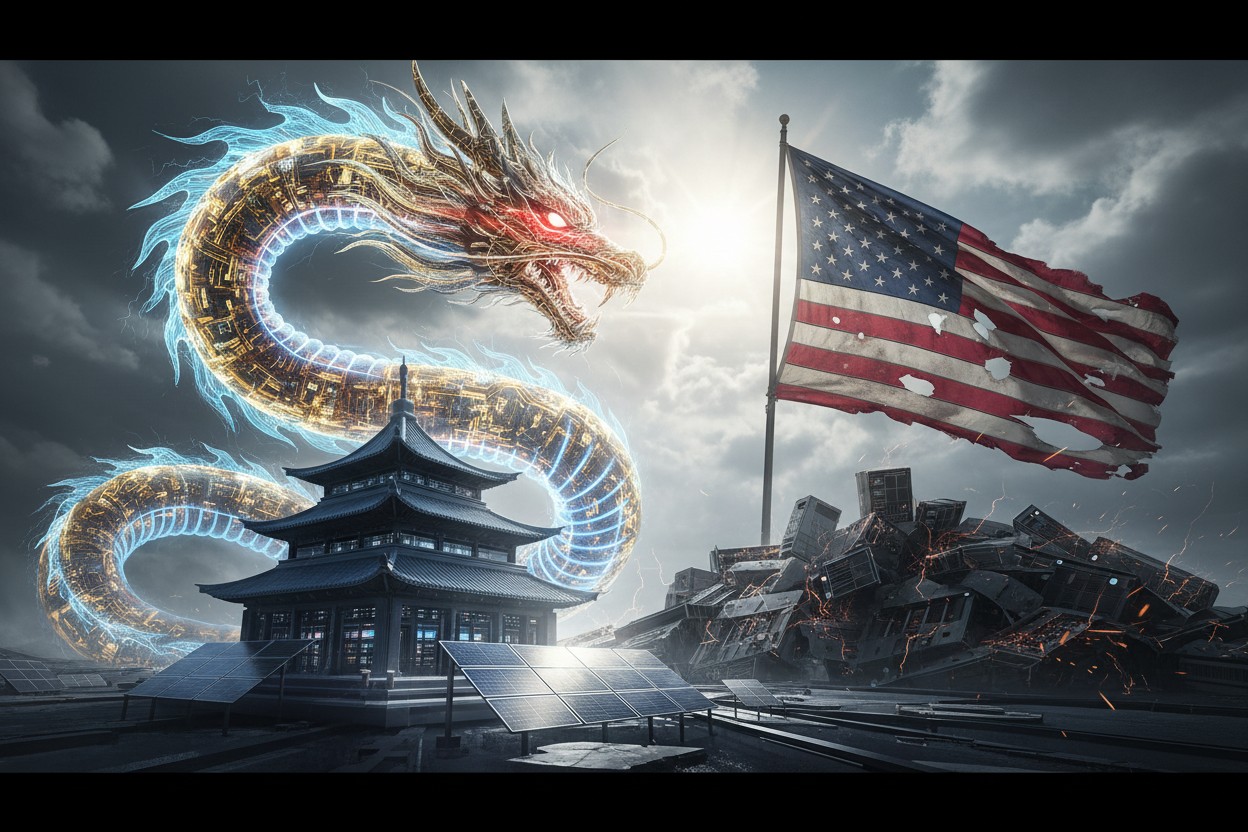
In contrast, the U.S. energy grid is currently facing a supply-demand crisis. Regulations, environmental litigation, and "green tape" have stalled the construction of new data center-adjacent power generation. As AI inference requirements scale exponentially, the United States finds itself with limited capacity for the "massive-scale" AI infrastructure that China is currently commissioning within months of project approval.
Official Responses and Policy Friction
The U.S. government’s response to these developments has been characterized by defensive maneuvering. Recent executive actions, including the banning of certain models and the tightening of export controls on high-end GPUs, have been criticized by industry analysts as "self-destructive."
Anthropic and other major labs have publicly decried the rise of Chinese models, labeling them a risk to intellectual property and safety. However, many independent observers interpret these complaints as a symptom of a crumbling monopoly. When a market leader relies on government intervention to stifle competition, it often signals that the firm has lost the ability to compete on merit. The current U.S. policy trajectory—prioritizing containment over domestic acceleration—has effectively ceded the momentum to Chinese firms that are not bound by the same regulatory gridlock.
Global Implications: The End of the AI Bubble?
The economic implications of this shift are profound. The current U.S. AI market is heavily inflated by speculative investment, with sky-high price-to-earnings ratios for hardware manufacturers like Nvidia. If corporate users begin to migrate to cheaper, more capable, and more open Chinese models, the "AI bubble" currently propping up major tech valuations could face a sharp correction.
Recent workforce reductions at major tech conglomerates, including Cloudflare and Oracle, serve as early warning signs. As companies look to cut costs, the appeal of proprietary, expensive U.S. AI services will likely wane in favor of more cost-efficient, open-source alternatives emanating from the East.
The Road Ahead
The "AI Race" is no longer a sprint defined by a single breakthrough; it is a marathon of infrastructure, education, and open-source collaboration. By prioritizing secrecy and protective guardrails, the United States has inadvertently alienated its developer base. Meanwhile, China has cultivated an ecosystem that incentivizes rapid improvement, shared knowledge, and massive energy expansion.
If the United States intends to regain its footing, it must address the fundamental weaknesses in its power grid, reform its educational pipeline, and pivot away from the protectionist policies that have hampered its own innovators. The Kimi K3 model is not just a technological achievement; it is a wake-up call. The era of unchallenged American hegemony in AI is drawing to a close, and the next chapter of the digital age will be written by those who can provide the most powerful, affordable, and accessible intelligence to the world.