
“In an age of constant movement, nothing is so urgent as sitting still.” — Pico Iyer
In the modern era, the calendar has become our primary architect. We measure our worth in completed tasks, check-marked to-do lists, and the relentless hum of professional output. Yet, a growing movement of thinkers, psychologists, and writers is beginning to challenge the structural integrity of this "hustle culture." At the heart of this resistance is a simple, often uncomfortable practice: the art of doing absolutely nothing.
The Anatomy of a Modern Truancy
On a seemingly ordinary Tuesday in late September, author and mindfulness advocate Lori Roach chose a path of rebellion. With a 5:00 p.m. work deadline looming, she opted not for the office, but for the park. She packed a thermos of tea, some simple food, and a book she had no intention of reading.
For two hours, she sat beneath the shifting light of oak trees, engaging in the "unproductive" act of existence. However, the experience was far from serene. Throughout the session, she battled a persistent, internal narrative—a deep-seated anxiety that her presence in the park was akin to truancy.
This internal friction is a hallmark of the contemporary psychological experience. For many, rest has been reclassified from a biological necessity to a transactional reward. We operate under the tacit assumption that relaxation must be "earned" through the exhaustion of all available energy. This conditioning is so pervasive that it is no longer perceived as a cultural narrative, but rather as the objective, immutable reality of life.
The Cumulative Costs of Deferred Rest
The implications of treating rest as a conditional luxury are severe. When rest is deferred until the "list is finished," the reality of modern work—which is infinite and ever-expanding—ensures that the list is never truly complete.
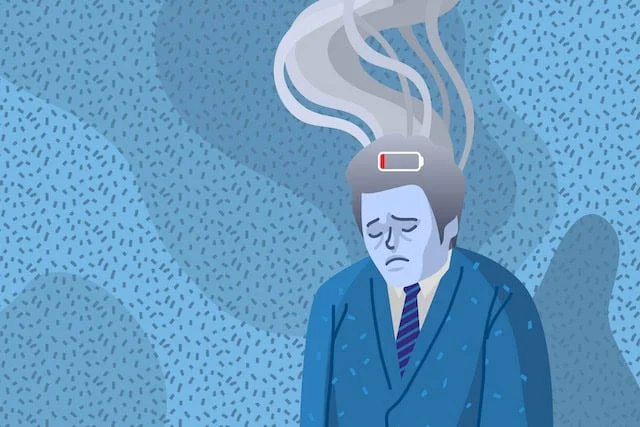
This leads to what experts describe as "chronic depletion," a state of grinding exhaustion that the average professional attempts to remedy with caffeine, digital distractions, and the hollow promise that things will "slow down after this next project."
However, the slowing down rarely occurs spontaneously. Without a conscious, deliberate choice to exit the cycle of perpetual productivity, the nervous system remains in a state of high-alert, never fully transitioning into the restorative phases required for long-term health.
The Neuroscience of Stillness: The Default Mode Network
The physiological necessity for "doing nothing" is backed by empirical research into the human brain. Neuroscience has identified a specific neural system known as the "Default Mode Network" (DMN). This collection of brain regions becomes hyper-active during periods of wakeful rest.
Contrary to the belief that the brain is "off" during these moments, the DMN is engaged in complex, essential work. It facilitates self-reflection, creative integration, and the processing of past experiences. When we deny ourselves the space for this activity, we essentially block our brain’s ability to make sense of our lives.
We are not, by nature, built for perpetual productivity. Our biology is defined by rhythm—the oscillation between effort and rest, engagement and withdrawal. When one half of this binary is systematically removed, the result is not merely fatigue; it is a profound disconnection from one’s own internal signals, values, and identity.

Chronology of an Afternoon: Confronting the Discomfort
To understand the transformation that occurs during intentional stillness, one must observe the progression of the practice. For those conditioned by productivity, the first thirty minutes of a "nothing-session" are rarely peaceful.
- 0–30 Minutes: The "Productivity Guilt" Phase. The mind reflexively catalogs pending emails, unfinished chores, and the opportunity cost of the current hour. The individual often feels they are "performing" rest rather than experiencing it.
- 30–60 Minutes: The Resistance Phase. The urge to check a phone or return to a task becomes physically palpable. This is the moment where most people abandon the practice, interpreting the discomfort as a sign that they should be working.
- 60–120 Minutes: The Shift. As the nervous system realizes the threat of "unproductivity" is not fatal, the body begins to regulate. Shoulders drop, breathing patterns normalize, and the individual enters a state of "unhurried presence."
This progression illustrates that the discomfort of sitting still is not a signal to return to work; it is, in fact, the most accurate indicator that one is in desperate need of the pause.
Implications for the Modern Workforce
The societal implications of this "productivity-first" culture are profound. When every hour is assigned a purpose, the individual ceases to live in the moment and instead becomes a servant to the clock.
Psychologists argue that this leads to a "loss of the thread"—an inability to hear the quieter signals of what we truly value. When we lack the space to be, we become reactive rather than proactive, prone to burnout, and increasingly alienated from our own experiences.
Official Perspectives and Expert Consensus
While "doing nothing" sounds counter-intuitive to corporate efficiency, organizational psychologists are beginning to argue that it is a prerequisite for high-level performance.
"We are seeing a trend where companies are pushing for ‘always-on’ cultures, yet the data shows that innovation and problem-solving are directly tied to downtime," says Dr. Elena Rossi, a cognitive scientist specializing in workplace fatigue. "The Default Mode Network is where the ‘aha’ moments happen. If you never let the brain rest, you aren’t just exhausted; you are actively limiting your cognitive capacity."
Redefining the "To-Do" List
The solution proposed by practitioners of the "Art of Stillness" is not to abandon work, but to reclassify rest. The goal is to shift the perspective:
- Rest is Maintenance: Just as a machine requires downtime for recalibration, the human nervous system requires empty time to maintain its operational integrity.
- Rest is Not a Reward: It is a foundational requirement, akin to sleep or nutrition.
- The Practice of "Staying Anyway": The most effective way to combat productivity guilt is to lean into it. By sitting with the discomfort of doing nothing, one eventually learns that the world does not collapse when the work pauses.
Conclusion: Reclaiming the Rhythm
The challenge of our time is to reject the myth that our worth is tied to our output. As Lori Roach notes, "The trees have no opinion about my inbox." Nature operates on cycles of growth and dormancy, and humanity is no exception.
Ultimately, the act of going outside with no goal, no phone, and no plan is a revolutionary gesture. It is a refusal to be defined by the demands of the digital age. By integrating these moments of "unscheduled nothing" into our weeks, we do not become less productive; we become more human. We reclaim the rhythm of our own lives, ensuring that we are not just serving the hours, but actually living in them.
The afternoon you keep postponing is not a reward to be earned at the end of a lifetime of labor. It is a fundamental component of the life you are living right now. The invitation is open: go outside, sit on the grass, and stay. The rest will follow.