

History is often written in sweeping epics, but it is deeply punctuated by singular moments—days where a single broadcast, a stroke of a pen, a swing of a bat, or a stray mold spore changed the trajectory of human culture, science, and society forever. Across the decades, various milestones have marked profound shifts in how we entertain ourselves, govern our nations, heal our bodies, and understand our place in the cosmos.
Examining these historical touchstones reveals a tapestry of human ingenuity, artistic brilliance, and accidental discoveries that continue to resonate in contemporary life.
Main Facts: A Convergence of Historic Anniversaries
To look back at this consequential date in history is to witness an extraordinary convergence of cultural touchstones. From the dawn of a new space-faring frontier on syndicated television to the foundational architecture of American democracy, several events share this calendar anniversary:

- The Voyage of the Enterprise (1987): Star Trek: The Next Generation debuted, redefining modern science fiction television and establishing a multi-decade cultural franchise.
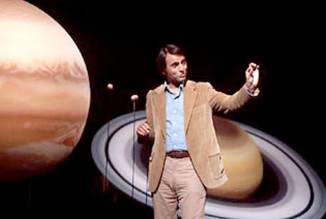
- A Journey Through the Cosmos (1980): Carl Sagan’s landmark science series Cosmos: A Personal Voyage premiered, bringing the wonders of the universe into millions of American living rooms.
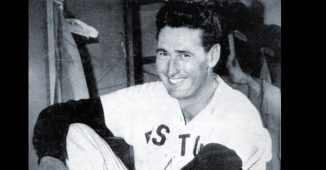
- The Unbroken Record (1941): Boston Red Sox legend Ted Williams finished the baseball season with a .406 batting average, a feat that has remained unmatched in Major League Baseball for over eight decades.
- The Framework of a Nation (1787): The newly minted United States Constitution was officially submitted to the 13 states for ratification, establishing the world’s oldest active written national constitution.
- A Masterpiece in Vinyl (1976): Stevie Wonder released his monumental, chart-topping double album Songs in the Key of Life, an artistic triumph born out of global humanitarian work.
- The Accidental Miracle (1928): Sir Alexander Fleming observed a bacteria-killing mold in his London laboratory, laying the groundwork for the discovery of penicillin and the dawn of modern antibiotics.
- The Wisdom of the Ages (551 BCE): The birth of Confucius, the legendary Chinese philosopher whose ethical frameworks and foundational golden rule have guided human relationships for millennia.
Chronology: How These Milestones Unfolded Through Time
551 BCE: The Birth of Confucius
Long before the advent of modern states or mass media, the philosophical foundations of human empathy were being forged in ancient China. Born in 551 BCE, the philosopher Confucius introduced a system of thought that emphasized personal and governmental morality, deep social relationships, justice, and absolute sincerity. Crucially, he formulated a guiding principle for human interaction—often called the Golden Rule—five centuries before the life of Jesus: "Never impose on others what you would not choose for yourself." His teachings would go on to shape the cultural, political, and moral fabric of East Asia for thousands of years.
1787: Founding Documents and Interstellar Visions
Fast-forwarding more than two millennia, the late 18th century brought about radical experiments in human governance. On this day in 1787, the recently completed United States Constitution was officially submitted to the 13 states. Following a unanimous vote by the U.S. Congress, the document was sent out with neither a recommendation for nor against its adoption, requiring approval from nine states to go into full force—a milestone achieved the following June.
In a poetic echo across exactly two centuries, September 17, 1987, saw the debut of Star Trek: The Next Generation. Created by Gene Roddenberry, the syndicated series transported audiences into the 24th century aboard the USS Enterprise (NCC-1701-D). Spanning 178 episodes over seven seasons, the show introduced a fresh philosophical framework for the franchise, replacing the "crusty banter" of the original series with a utopian vision of a future devoid of human workplace conflict, powered by the commanding presence of Sir Patrick Stewart as Captain Jean-Luc Picard.

1928: The Accidental Discovery That Saved Millions
Just over four decades after the nation’s founding documents were sent to the states, a messy laboratory in London gave rise to a medical revolution. On this day in 1928, Scottish physician and bacteriologist Sir Alexander Fleming returned from a vacation to find his laboratory benches cluttered. Noticing a strange phenomenon in a petri dish where a stray mold spore had drifted in, Fleming observed that the mold had successfully killed off the surrounding staphylococci culture.
Having served in the British Army Medical Corps during World War I—where he witnessed countless soldiers succumb to agonizing, infected wounds—Fleming immediately recognized the significance of the observation. His understated reaction, "That’s funny!" led to the publication of his findings the following year in the Journal of Experimental Pathology, ultimately birthing penicillin, the world’s first true antibiotic.
1941: The Summer of the .400 Hitter
Thirteen years after Fleming’s discovery, American sports achieved an unassailable peak. On this day in 1941, Boston Red Sox left fielder Ted Williams wrapped up the Major League Baseball regular season with a batting average of .406. Despite turning down high school offers from the St. Louis Cardinals and New York Yankees due to his mother’s concerns about him leaving home too early, Williams had signed with his local San Diego minor league club. Plagued by chronic respiratory issues throughout his life, he nevertheless dominated the sport in batting average, home runs, and runs batted in. His stated career goal was simple yet profound: to have people point at him and say, "There goes Ted Williams, the greatest hitter who ever lived." To this day, no major league player has managed to cross the .400 threshold since that autumn afternoon.
1976 and 1980: Musical and Scientific Masterpieces
The latter half of the 20th century witnessed triumphs in both art and science. In 1976, Stevie Wonder released his eighteenth studio album, Songs in the Key of Life. The ambitious Motown double LP, which included an additional four-song bonus disc, made history by debuting at No. 1 on the Billboard charts—only the third album ever to do so and the first by an American artist. The album sold 10 million copies in the U.S. alone and held the top spot for 13 consecutive weeks, drawing creative energy from Wonder’s time spent working with handicapped children in Ghana.
Four years later, in 1980, American public television broadcasted the premiere of Cosmos: A Personal Voyage. Hosted by the beloved astronomer and science communicator Carl Sagan, the thirteen-part series captivated audiences by exploring the solar system, the origins of life, and the life cycles of stars. Utilizing groundbreaking special effects that allowed Sagan to seemingly walk through physical models of distant worlds, Cosmos became the most-watched series in American public television history until Ken Burns’ The Civil War a decade later.
Supporting Data and Metrics
The enduring legacy of these milestones is quantifiable in their immense reach, accolades, and statistical permanence:
- Star Trek: The Next Generation: Ran for 178 episodes across 7 seasons; garnered 19 Emmy Awards, 2 Hugo Awards, 5 Saturn Awards, and a prestigious Peabody Award.
- Cosmos: A Personal Voyage: Broadcasted in 60 countries and viewed an estimated 500 million times; earned 2 Emmy Awards and a Peabody Award.
- Ted Williams’ .406 Average: Achieved by earning a hit 4 out of every 10 trips to the plate in 1941—a feat standing unbroken for over 84 years in Major League Baseball.
- Songs in the Key of Life: Sold over 10 million copies in the United States, spent 13 consecutive weeks at No. 1 on the Billboard 200, and stands as one of the most critically lauded records in popular music history.
- Penicillin: Transformed global life expectancy, shifting the course of modern pharmacology and earning Fleming the Nobel Prize in Physiology or Medicine.
Official Responses and Critical Acclaim
The weight of these historical events was recognized by industry leaders, institutions, and the public alike:
When reflecting on the longevity of the Star Trek television franchise, Paramount Pictures Chairman Frank Mancuso Sr. marveled at its commercial and cultural durability. "The shelf life in this business is usually 3 days," Mancuso observed, before declaring the franchise a "priceless asset" after it flourished for decades.
Similarly, the scientific and artistic community lauded works like Cosmos and Songs in the Key of Life for bridging cultural divides. While Carl Sagan was celebrated for making complex astrophysics accessible and poetic to a mainstream audience, Stevie Wonder’s artistic output was recognized as a pinnacle of soulful human expression.

In the medical sphere, though Alexander Fleming’s initial 1929 publication in the Journal of Experimental Pathology received a muted response from the contemporary scientific establishment, history ultimately vindicated his laboratory observation. His preserved workspace at St. Mary’s Hospital in Paddington now stands as the Alexander Fleming Laboratory Museum, honoring a discovery that fundamentally altered human mortality.
Implications: How the Past Shapes Our Present
The convergence of these distinct anniversaries offers a compelling lesson on the nature of progress. Whether through the calculated strokes of political compromise seen in the drafting of the U.S. Constitution, the rigorous philosophical ethics of Confucius, or the serendipitous realization of a messy petri dish, human history moves forward through a blend of discipline and unexpected discovery.
Today, society continues to reap the benefits of these milestones. Antibiotics derived from Fleming’s mold save millions of lives annually; the constitutional framework established in 1787 continues to govern the world’s oldest continuous republic; and modern space exploration and science communication trace their spiritual lineage directly back to Carl Sagan and Gene Roddenberry.

As we reflect on these moments, we are reminded that innovation requires both the patience to master a craft—much like Ted Williams at the plate or Stevie Wonder in the recording studio—and the open-minded curiosity to notice when the universe is whispering something entirely unexpected.