
History is rarely a straight line; it is a convergence of disparate threads—military triumphs, architectural marvels, artistic breakthroughs, and social evolution. On this day, we look back through the annals of time to celebrate the moments that defined leadership, innovation, and cultural legacy.
The Birth of a Commander: Washington Takes the Helm
July 3, 1775
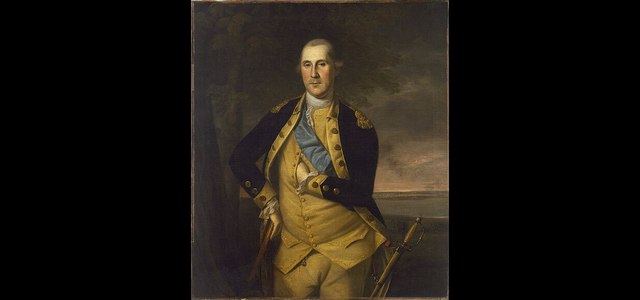
Two hundred and fifty-one years ago, a singular event altered the trajectory of the Western world. George Washington officially assumed command as the "General and Commander in Chief of the army of the United Colonies." Nominated by John Adams the previous month, Washington stepped into a role that would define the American spirit.
The Strategic Mindset of the First General
Following the baptism by fire at Lexington, Concord, and the Battle of Bunker Hill, Washington faced the daunting task of organizing a ragtag group of volunteers into a fighting force capable of confronting the most powerful military machine on the planet: the British Empire.
His maiden victory—the liberation of Boston—was a masterclass in tactical deception. By secretly positioning heavy artillery on the heights of Dorchester, Washington rendered the city untenable for the British garrison. Viscount Howe, the British commander, was left with no choice but to evacuate, marking a significant psychological victory for the nascent Continental Army.
Leadership Through Adversity
Historians often debate Washington’s tactical prowess. Thomas Jefferson famously noted that Washington often "failed in the field," yet this critique ignores the broader reality of his leadership. Washington’s true genius lay in his strategic resilience and his ability to hold a fragile coalition together after devastating losses.

Washington was a product of his own humility. He frequently relied on the consensus of his officers during war councils—a habit that occasionally led to tactical errors but ultimately fostered a culture of shared responsibility. Perhaps his most remarkable achievement was his relationship with his men. He was their most vocal advocate in the Continental Congress, constantly battling for supplies and pay for soldiers who were frequently underfed and poorly equipped.
Washington was an infamous disciplinarian, transforming a chaotic collection of provincial militias into a disciplined, professional fighting force. For those who endured his command, the reward was not merely military success, but the birth of a nation.
Architectural and Cultural Milestones
History is not only written in blood and policy but also in steel, song, and stone. Several milestones observed today highlight humanity’s drive to bridge divides, whether physical, social, or creative.

The Fatih Sultan Mehmet Bridge: Bridging Two Worlds
Thirty-eight years ago (1988), the Fatih Sultan Mehmet Bridge—the Second Bosphorus Bridge—was completed. Spanning the iconic waterway that separates Europe and Asia, this engineering marvel serves as a modern testament to the legacy of Sultan Mehmed the Conqueror, who captured Constantinople in 1453.
The bridge is a gravity-anchored suspension feat, featuring a 1,510-meter deck suspended by double vertical steel cables. Its construction required the excavation of 600,000 cubic meters of rock to secure its anchors into the banks of Asia Minor and Europe. Designed with the region’s seismic activity in mind, the bridge’s steel structure provides the necessary pliability to withstand earthquakes, while its 300-foot towers ensure the structural integrity required for such a massive span.
The Harmony of Laurel Canyon: Crosby, Stills & Nash
Fifty-eight years ago (1968), a quiet, impromptu gathering in Joni Mitchell’s home in Laurel Canyon, Los Angeles, changed the landscape of popular music forever. David Crosby, Stephen Stills, and Graham Nash discovered an immediate, electric chemistry through their vocal harmonies.

The trio’s debut album, Crosby, Stills & Nash, was a cultural phenomenon. Three months later, despite never having performed live together, they took the stage at Woodstock. The subsequent addition of Neil Young solidified their status as icons of the anti-war movement, immortalized by their haunting anthem "Ohio," which was written, recorded, and released within a week of the Kent State University tragedy.
Institutional and Social Progress
Progress is often slow, fraught with bureaucratic hurdles and social skepticism. Two major events—the return of the Stone of Destiny and the birth of the first American savings bank—underscore the struggle for institutional legitimacy and cultural heritage.
The Stone of Destiny Returns
Thirty years ago (1996), the British government announced the long-awaited return of the Coronation Stone of Scone to Scotland. Stolen by Edward I in 1296 as a spoil of war, the stone had been a source of national resentment for seven centuries.
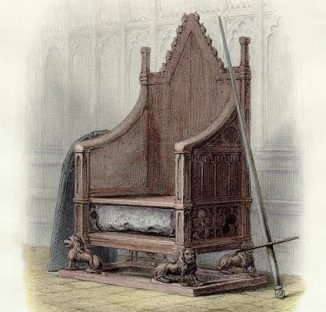
The stone’s history is one of cloak-and-dagger intrigue. On Christmas Day 1950, a group of Scottish students famously broke into Westminster Abbey to retrieve it, returning it to Scotland before it was eventually recovered by English police. Its permanent return to Edinburgh Castle was a gesture of immense symbolic significance, healing a long-standing wound between the Scottish people and the British Crown.
The Birth of American Thrift: The Bank for Savings
In 1819, the Bank for Savings in the City of New York opened its doors, marking the first time in American history that a financial institution was designed specifically for the working class. Promoted by philanthropist Thomas Eddy, the bank’s mission was to provide a "secure place of deposit" where laborers could earn interest.
The journey to establish the bank was arduous. State legislators, wary of financial institutions following the economic instability that followed the War of 1812, were initially skeptical. The founders had to prove their altruistic intentions by initially operating under the guise of "The Society for the Prevention of Pauperism." Their success eventually paved the way for modern consumer banking, emphasizing the importance of institutional trust and social responsibility.

Innovation and Pop Culture
The modern age has been defined by rapid technological leaps and the rise of a global media culture.
The Dawn of Color Television
Ninety-eight years ago (1928), John Logie Baird performed the world’s first color television transmission. Using three light sources, a commutator, and scanning discs equipped with primary color filters, Baird transmitted an image of 8-year-old Noele Gordon wearing brightly colored hats.
While Baird’s analog systems were eventually surpassed by the all-electric systems developed by EMI-Marconi, his contributions are monumental. A pioneer of the electronic age, Baird was posthumously recognized as one of Scotland’s greatest scientists, a testament to his role in laying the foundation for the visual media that defines our modern existence.

Celebrating Global Icons
Today, we also celebrate the birthday of Tom Cruise, who turns 64. From his early days in the industry to his record-breaking success with Top Gun: Maverick, Cruise has maintained a position at the pinnacle of Hollywood. His journey—from a childhood marred by poverty and abuse to becoming one of the most bankable stars in cinema history—is a story of relentless work ethic and artistic evolution.
Similarly, we mark the 46th birthday of Olivia Munn. An actress whose career spans from The Daily Show to high-profile dramas like The Newsroom and blockbuster films, Munn has utilized her platform to advocate for animal welfare and celebrate her heritage, serving as a reminder of the multifaceted nature of modern stardom.
Conclusion: A Legacy of Persistence
Whether it is Washington’s resolve at the birth of a nation, the engineering ingenuity of a bridge connecting continents, or the creative harmony of a legendary trio, today’s anniversaries share a common theme: persistence.

From the halls of government to the stages of Woodstock, and from the banks of New York to the transmission of the first color images, these events remind us that progress is the result of vision, discipline, and the courage to act in the face of uncertainty. As we reflect on these milestones, we are reminded that our current reality is built upon the foundational efforts of those who dared to innovate and lead.