In the high-pressure environment of a small business, the instinct to "do more" is often conflated with "doing things faster." When a project that should take two days drags into an eleven-day ordeal, the typical knee-jerk reaction is to invest in new project management software, purchase a subscription to an automation tool, or force oneself to work longer hours. However, experts suggest this approach is fundamentally flawed. Speeding up the hands-on execution of a task does nothing to address the silent killer of productivity: the time work spends sitting idle between steps.
To truly streamline business processes, entrepreneurs must shift their focus away from how quickly they perform individual tasks and toward the duration of the "queues"—the gaps between actions where work lingers awaiting approvals, documents, or replies. By systematically measuring the ratio of "touch time" (active work) to "wait time" (stagnant time), business owners can identify systemic bottlenecks and eliminate inefficiencies before spending a single dollar on new technology.
The Anatomy of a Process: Understanding Touch Time vs. Wait Time
The core of business inefficiency lies in a fundamental misunderstanding of what a "process" actually is. Most business owners view a process as a linear sequence of tasks. In reality, a process is a series of tasks separated by waiting periods.
When a business owner feels they are "too slow," they are almost always misdiagnosing the problem. If a task requires ninety minutes of actual labor but takes nine days to complete, the problem is not the lack of speed in those ninety minutes. The problem is the 214 hours of waiting that surrounds the effort.
Buying a new, fancy dashboard or project management app only optimizes the ninety minutes of labor. If that labor was already efficient, the new tool simply delivers the work to the next "waiting room" faster. This is why many digital transformation efforts in small businesses fail; they attempt to digitize a flawed, high-latency process rather than fixing the underlying structure of the work.
Chronology of a Failed Optimization
To understand how this cycle of frustration typically unfolds, we can look at the typical lifecycle of a "slow" business process:
- The Trigger: A task that should be quick—like sending an invoice or completing a quote—becomes a source of significant stress because it consistently exceeds its expected timeline.
- The Misdiagnosis: The owner, feeling behind schedule, assumes they are not working hard enough or that their current system is "messy."
- The Capital Outlay: On a Tuesday, fueled by the stress of being weeks behind, the owner purchases an expensive project management tool.
- The Implementation Phase: The owner spends an entire weekend moving tasks into "boards," setting up automation triggers, and promising to keep the system updated.
- The Failure: By the following week, the new software is populated, but the job still takes eleven days. The bottleneck remains, now just housed in a more expensive digital container.
- The Burnout: The owner, having failed to see results, blames their own lack of discipline and begins working late nights, which eventually leads to exhaustion and a decline in performance on other days.
Data-Driven Efficiency: Lessons from Industry
The principle of "wait time" is not merely theoretical; it is a pillar of Lean manufacturing and the Theory of Constraints. Case studies have consistently demonstrated that processing time is often a fraction of total lead time.
In one notable case study involving an axle beam housing manufacturing line, researchers found that the total lead time was 4.6 days, while the actual processing time was a mere 408 minutes. While a law firm or a creative agency is not a factory floor, the mathematical principle remains the same: "Touch time" is almost always dwarfed by "Queue time."
Furthermore, a 2024 study of a healthcare claims process provided a clear roadmap for success. By using lean analysis to eliminate non-value-added steps before introducing robotic process automation, the team saw process cycle efficiency jump from 69.07% to 95.54%, resulting in a 380-minute reduction in total process time. This confirms that automation is only effective when applied to a lean, optimized process.
The Five-Step Path to Streamlining
To successfully streamline, business owners should follow a rigid hierarchy of operations. Jumping to software is the final step, not the first.

1. Prioritize by Cost, Not Irritation
Not all slow processes are created equal. Use simple arithmetic: multiply the frequency of the task by the time spent, then add a "penalty" for each time the task requires rework. A monthly invoicing process that takes forty minutes is significantly more "expensive" to the business than a weekly quote that takes fifteen minutes but requires multiple revisions.
2. Measure, Don’t Guess
Keep a simple log with two columns: "Touch Time" and "Wait Time." Note the time when you start a task and the time when you hand it off. Crucially, track why the work stopped. Is it waiting for a client reply? Is it waiting for an internal approval? You cannot improve what you do not measure.
3. Identify and Test the Bottleneck
The longest wait in your log is not necessarily the bottleneck. It may be a one-off event. A true bottleneck is a step where work stacks up consistently across multiple runs. Only when you have confirmed that a specific step is constantly starving the rest of the process for capacity should you focus your energy there.
4. The Fix Ladder
Follow this sequence to solve the problem:
- Delete: Remove steps that exist only because of an outlier event from years ago.
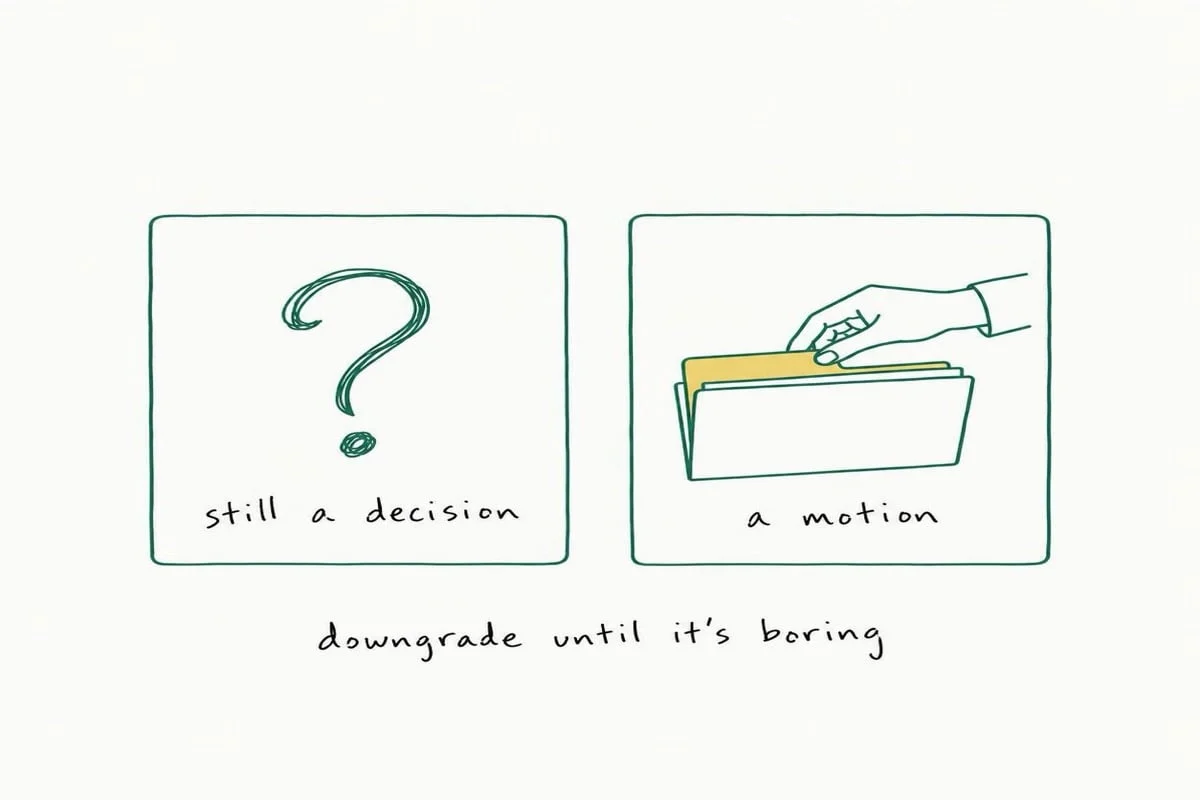
- Default: Create a "standing rule" (e.g., "Any invoice under $500 is automatically approved").
- Batch: Group similar tasks to reduce the cognitive load of switching contexts.
- Hand off: Delegate with a clear "Definition of Done."
- Automate: Only after the process is lean and the steps are defined should you deploy software.
5. Cap Work-in-Progress (WIP)
According to Little’s Law, the amount of work in your "system" directly dictates how long each individual job takes. If you keep ten jobs open simultaneously, you are creating massive wait times for every client. By limiting yourself to five active jobs, you ensure that individual projects reach completion faster, increasing throughput without increasing your hours worked.
Implications for Small Business Owners
The implications of this strategy are profound. For the solo entrepreneur or the small business owner, these steps represent a move away from "toxic productivity"—the state of being constantly busy without moving the needle—toward intentional growth.
When a bookkeeping business owner, "Bridget," moved her client request deadline to the 28th of the month and instituted a policy of closing the books even if a statement was missing, she reduced her lead time from nine days to four without buying a single app. When "Todd," a flooring contractor, created a standard pricing card for his most common jobs, he eliminated the need to wait until the evening to provide quotes, effectively reducing his process time by nearly 70%.
Conclusion: The Discipline of Doing Less
The primary obstacle to streamlining a small business is not a lack of technology; it is the emotional difficulty of deleting steps and saying "no" to current habits. Streamlining is an exercise in subtraction.
The next time a job comes back for rework or lingers in your inbox, resist the urge to buy a new subscription. Instead, open a notepad, track the wait time, and ask: "Can this be deleted, or can I write a rule that makes this decision for me?" By starting here, you treat the underlying cause of inefficiency rather than merely putting a faster coat of paint on a broken system. The goal is to create a business that functions with less friction, fewer interruptions, and a significantly higher degree of clarity—all of which are achievable through observation and discipline, not just an expensive software upgrade.