Somewhere in your home, there is a kit. It might be a watercolor set with only three colors touched, a guitar missing a high E-string, or a high-end telescope that cost more than you care to admit to your neighbors. Each of these items arrived with the best of intentions—the promise of a new passion or a creative outlet. Today, they are simply high-quality storage.
The conventional wisdom suggests you lost interest. But this narrative is flawed. If you speak to people over 70, you quickly realize there is no shortage of ideas or ambition. The real struggle is a failure of logistics. Most hobby guides are written for an idealized version of retirement: a person with an empty calendar, boundless stamina, and a pristine living environment. They rarely account for the realities of an ordinary Tuesday. To avoid the "closet of abandoned projects," you must stop choosing by appeal and start choosing by fit.
The Chronology of Abandonment: From Intent to Storage
The life cycle of a failed hobby is remarkably consistent. It begins with an "aspirational purchase"—the buying of gear to signal the start of a new identity. This is followed by a "friction phase," where the logistical reality of the hobby (the drive, the physical strain, the setup time) begins to clash with the daily rhythm of life. Finally, the "abandonment phase" sets in, often accompanied by a sense of personal failure.
However, research suggests this is not a failure of character. A 2024 systematic review of 37 studies covering nearly 27,000 adults aged 70 to 101 identified health, fitness, and environmental obstacles as the primary barriers to sustained engagement. The gap isn’t between you and the hobby; it is between the hobby and your life as it exists on a rainy, tired, or busy afternoon.
Supporting Data: The Vital Link Between Hobbies and Health
The urge to find a hobby is well-founded. A massive 2023 longitudinal study, analyzing data from 93,263 adults aged 65 and older across 16 countries, established a clear link between active hobby engagement and reduced depressive symptoms. Furthermore, these participants reported higher self-reported health and overall life satisfaction.
The biological implications are equally profound. A meta-analysis of 16 datasets found that poor social connection is linked to a 29% higher risk of coronary heart disease and a 32% higher risk of stroke. While these are population-wide associations, they provide a compelling mandate: when designing your week, the hobby should act as an anchor for both physical movement and social connection.
The Four-Fit Check: A Framework for Longevity
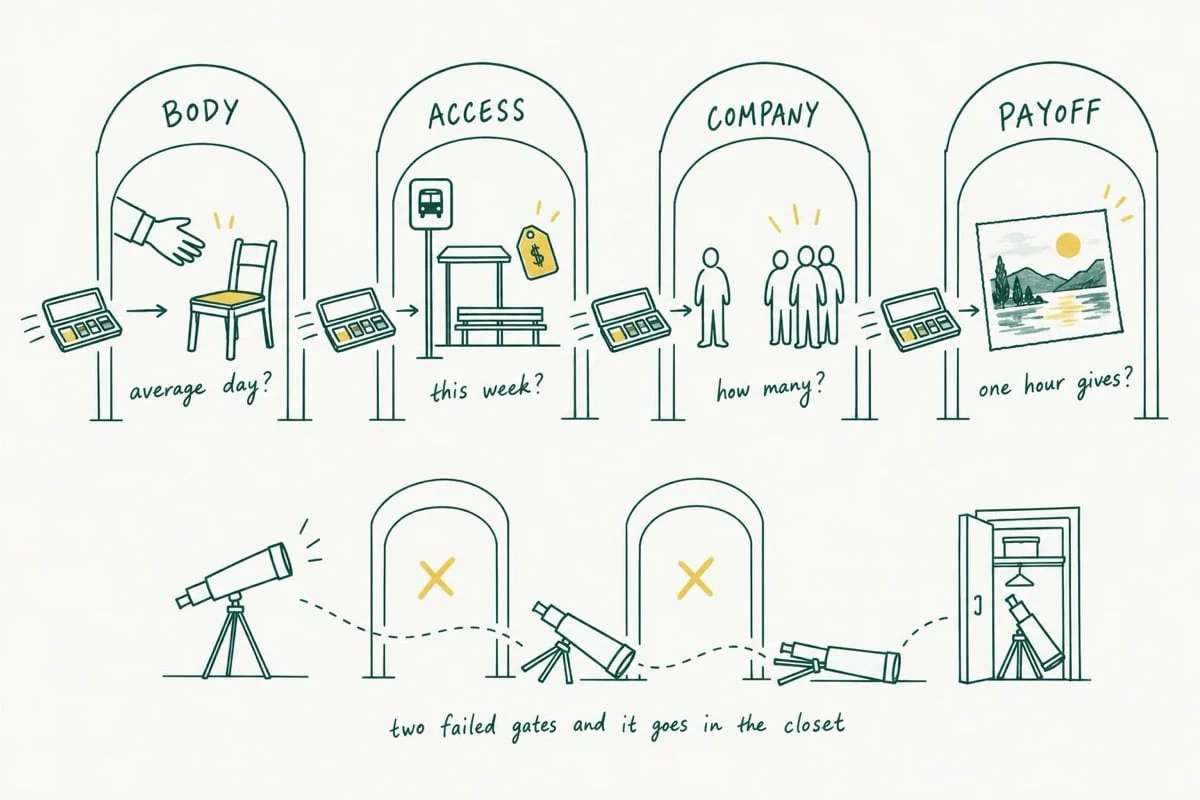
To ensure a hobby survives past the initial novelty, you must subject it to the "Four-Fit Check." This is a rigorous screening process designed to filter out activities that look good on paper but fail the test of reality.
1. Body Fit: The Average Day Standard
Do not judge a hobby by how you feel on your best day; judge it by how you feel on a normal Tuesday, including the stiffness of a slow morning. Ask yourself:
- Does this require sustained standing?
- Does it demand fine motor skills that your arthritis might resist?
- Can you stop halfway through without ruining the progress?
Federal health guidelines for older adults emphasize 150 to 300 minutes of moderate aerobic activity weekly, but they acknowledge that "moderate" is a relative term. If a hobby requires climbing ladders or balancing on uneven terrain, it should be a conscious choice—not an accidental hazard.
2. Access Fit: The Friction Test
This is the most common point of failure. If your hobby requires a 30-minute drive, a specialized parking permit, or a reliance on someone else’s schedule, it is fragile. High-friction hobbies rarely survive the first month. Choose activities where the "barrier to entry" is low—the library, the kitchen table, or the local community center.
3. Company Fit: Designing Your Social Landscape
Research is clear: social engagement is a primary driver of longevity. However, "company" does not mean the same thing for everyone. Some thrive in a choir; others prefer a shared woodshop. If your week is currently solitary, choose a hobby with a "built-in" social component, such as a bridge club or a docent role at a museum. If you are already socially active, a solitary pursuit like genealogy or digital photography may provide a necessary balance.

4. Payoff Fit: The Power of Completion
A hobby that requires weeks of effort before yielding a result runs on willpower—a finite resource. Look for activities that provide a "micro-payoff" in every session. Whether it is a finished sketch, a learned phrase in a new language, or a conversation with a fellow gardener, the session should leave you with a tangible sense of completion.
The Two-Week Trial: A Professional Approach
Before purchasing that expensive telescope or professional-grade kiln, commit to a two-week trial. During this period:
- Borrow the gear: Do not spend a cent on equipment.
- Schedule it like a job: Commit to four sessions at the exact time of day you would realistically perform them.
- Evaluate objectively: After the fourth session, ask: Did you go without having to talk yourself into it? Did you want to book the next session before the current one ended?
If the answer is "no," it is not a personal failure. It is simply data. You have saved yourself from another item in the closet.
Implications for Future Planning
The current trend in "active aging" is shifting away from the traditional model of "retirement as a long vacation." Instead, it is being reframed as a period of intentional design. The implications are clear: the most successful retirees treat their time with the same respect they once gave their careers.
When you struggle to find an activity, it is often a sign that you are looking for a pastime when you should be looking for a role. Volunteering, community organizing, or acting as a mentor provides a "script" for the first twenty minutes of an interaction, making the social aspect of a hobby much easier to navigate.
Frequently Asked Questions
What should a 70-year-old be doing every day?
There is no universal daily template, but the most robust schedules include three pillars: physical movement within your ability, cognitive stimulation (learning something new), and social contact. A single, consistent hobby slot is often more effective than a scattered, high-stress schedule.
Is the "5 Hobbies Rule" legitimate?
The "5 Hobbies Rule"—which suggests you need one hobby for money, one for health, one for creativity, one for knowledge, and one for mindset—is a popular internet myth. There is no empirical research supporting this, and for many, it creates unnecessary pressure. One hobby that truly fits your life is infinitely better than five that you feel obligated to maintain.
What if nothing feels appealing?
If you find yourself feeling "flat" across the board, do not force a hobby. This is often a sign that you need to shift your focus from the activity to the environment. Walk into a local community center or library and simply exist in the space. Often, interest follows proximity to others. If this lack of interest persists, treat it as a conversation for your doctor, not a project to be solved by buying more equipment.
How do I handle limited mobility?
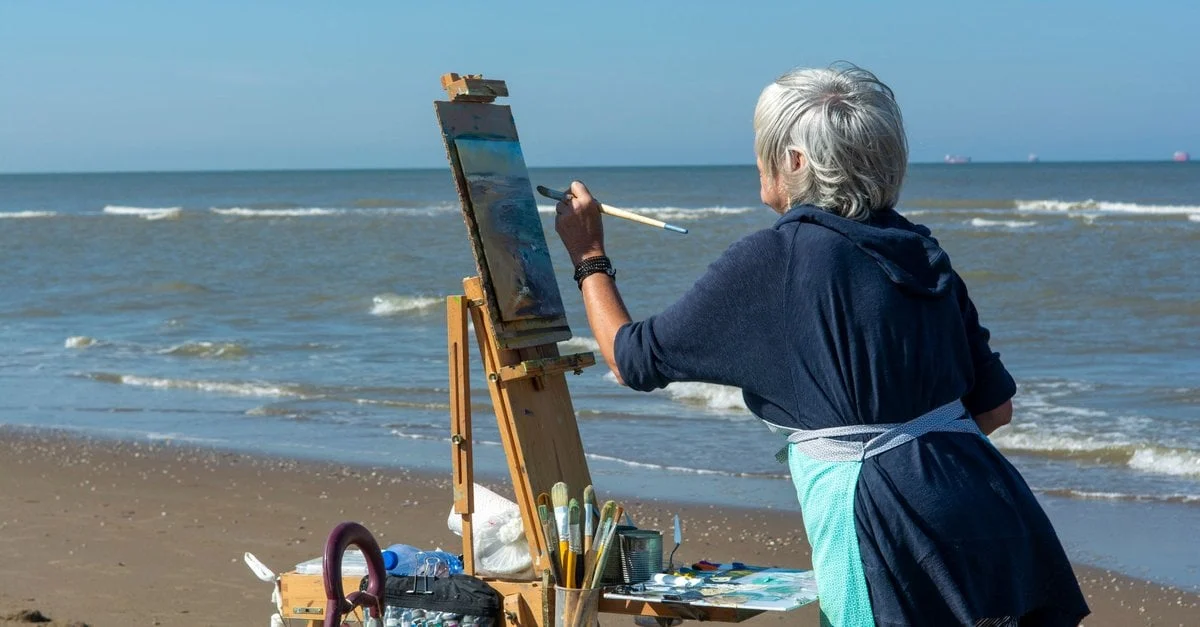
If you are restricted by mobility, look for "seated variants" of your interests. Container gardening, watercolor painting, and audio-based research are all high-reward activities that require minimal physical strain. Remember: in the world of hobbies, it is almost always possible to adapt the method to suit the body.
Final Thoughts
The kit in your closet was not a mistake; it was an untested guess. As you move forward, remember that the goal is not to find the "perfect" hobby—it is to find a recurring rhythm that makes your Tuesday feel intentional. Stop buying, start testing, and let the hobby earn its place in your life.