In a move that marks a significant shift in the intersection of consumer technology and clinical practice, OpenAI has announced the broad availability of its "ChatGPT Health" features. As of this week, users over the age of 18 across all subscription tiers—including the free version—now have the ability to integrate personal medical data into the chatbot interface. While the company frames this as a democratization of medical literacy, the rollout has been met with a wave of skepticism from privacy advocates, legal experts, and medical professionals who argue that the platform’s infrastructure and reliance on proprietary benchmarking are fundamentally ill-equipped to handle the gravity of human health.
The Main Facts: What Has Changed?
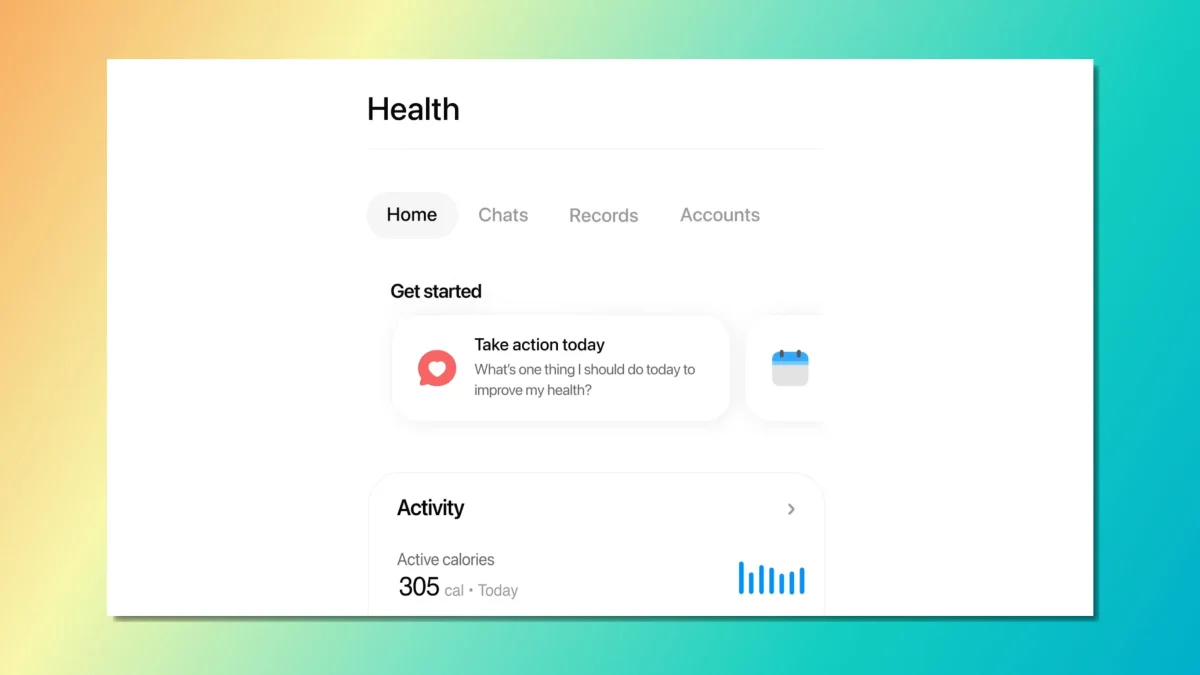
OpenAI’s latest update removes the paywall for its specialized health-focused tools, which allow users to ingest data from Apple Health, U.S. hospital systems, One Medical, and Function Health. By connecting these accounts, users can ostensibly ask the AI to synthesize their medical history, interpret lab results, or provide context for ongoing health concerns.
However, the core of the controversy lies in the fundamental architecture of the privacy policy. Previously, OpenAI maintained a strict, siloed "Health" environment where data was kept isolated from model training. The new policy represents a substantial, if subtle, rollback of those protections. Under the current terms, privacy safeguards—specifically the assurance that conversations will not be used for AI training—are now conditional. They apply only to "Health conversations," defined by the system as interactions where the user has explicitly connected their medical records.
This creates a "privacy trap": if a user simply types their symptoms into a standard ChatGPT window without formally linking a medical data source, those conversations remain subject to the company’s standard data-usage policies, meaning they could potentially be ingested to refine future AI models.
Chronology of a Controversial Rollout
The trajectory of ChatGPT’s entry into the medical sphere has been rapid and increasingly litigious:
- Initial Launch: OpenAI introduced a dedicated health experience with high-minded promises regarding data isolation and the promise that health-related queries would remain private.
- The HealthBench Debut: To bolster its credibility, OpenAI unveiled "HealthBench," a framework designed to grade AI performance against human physicians. The results suggested that their models outperformed doctors in diagnostic scenarios.
- The Legal Tipping Point: Concurrent with the expansion of the service, public scrutiny intensified following a high-profile lawsuit. A pastor claimed that following advice provided by ChatGPT-4o regarding a medical condition led to a near-fatal delay in treatment for a pulmonary embolism.
- Current Expansion: Despite mounting legal pressures and warnings from safety nonprofits like ECRI—which labeled the misuse of AI chatbots the "number one health technology hazard of 2026"—OpenAI has moved to make these features universally available to all adult users.
Supporting Data and the "Benchmarking" Problem
At the heart of OpenAI’s marketing strategy is the HealthBench framework. The company posits that their models are not merely assistants, but reliable clinical surrogates. They present data showing that, according to rubrics written by physicians, their paid models outscore human counterparts.
However, independent analysis of the HealthBench methodology reveals profound limitations. Experts argue that these tests are "static" and "sanitized." They consist of short, focused queries that do not mirror the chaotic, nuanced reality of a patient-doctor interaction. A patient in a clinic might present with multiple comorbidities, exhibit poor memory, or withhold information—variables that current LLMs are incapable of navigating.
Furthermore, critics have pointed to apparent inconsistencies in the grading rubrics themselves. In some instances, the rubrics appear to "double-dip," awarding points for the same instruction (such as seeking emergency care) multiple times under different criteria. This has led to accusations that the benchmarks are designed to favor the AI’s performance rather than provide an objective measure of clinical safety.
Official Responses and Corporate Strategy
OpenAI maintains that ChatGPT is not a replacement for a doctor. Their standard disclaimer—that the chatbot is meant for interpretation and information rather than diagnosis—is front and center. The company argues that by providing users with access to their own data in a conversational format, they are empowering patients to be more informed advocates for their own health.
Yet, the discrepancy between the company’s "no-training" promises and the actual user interface remains a point of contention. By making the most robust privacy settings contingent on connecting third-party medical accounts, OpenAI is effectively incentivizing users to hand over their most sensitive health data to gain the protection they might have assumed they already had.
Implications: The Reality of "Algorithmic Medicine"
The implications of this rollout extend far beyond the technical architecture of the software. We are currently witnessing a massive, uncontrolled experiment in medical triage.
1. The Erosion of Privacy
The shift in policy suggests a strategic pivot: OpenAI is prioritizing the acquisition of structured health data. By forcing users to "connect" their records to receive better privacy, they are creating a pipeline for high-value clinical data that could be leveraged for future breakthroughs in AI-driven diagnostics, even if they claim that specific data isn’t used for training.
2. The Danger of "Correct" but Contextless Advice
The most significant danger posed by LLMs is not their ability to provide "wrong" answers, but their ability to provide "plausible-sounding" ones. In a medical context, an answer that is 90% correct can be 100% fatal if the missing 10% involves a critical contraindication or a subtle symptom that an AI is not programmed to detect. As noted in the ongoing lawsuits, patients are already making life-altering decisions based on chatbot outputs.
3. Institutional Hazards
When a nonprofit like ECRI ranks a specific technology as the top hazard of the year, it is a signal that the medical establishment is deeply concerned about the "de-skilling" of patients. If users begin to view ChatGPT as a primary source of medical truth, the doctor-patient relationship is fundamentally disrupted. When a patient arrives at a clinic armed with an AI-generated diagnosis, the physician must spend valuable time debunking or correcting the AI’s hallucinations, potentially slowing down actual care.
Conclusion: Proceed with Extreme Caution
For those who choose to utilize ChatGPT Health, the most critical takeaway is to maintain a posture of total skepticism. The platform is not a clinician; it is a probability machine designed to predict the next likely word in a sentence, not to evaluate the biological reality of a human body.
If you must use these tools, treat them as a curiosity or an organizational aid for your medical records—not as a diagnostic oracle. Always verify information with a licensed medical professional, and recognize that the privacy settings you believe you are getting may be far more conditional than the marketing copy implies. In the age of AI, the old medical adage remains the best advice: Primum non nocere—first, do no harm. In the case of ChatGPT, the best way to do no harm may be to keep your medical life entirely offline.