The global smartphone market has officially entered the era of the "foldable wars." With the highly anticipated announcement of the Apple iPhone Duo, the tech giant has finally dipped its toe into a category that competitors like Samsung, Motorola, and Honor have been refining for nearly a decade. While Apple’s entry is undoubtedly a landmark moment, it arrives at a time when the market is already mature, highly competitive, and increasingly value-driven.
As the industry pivots toward flexible display technology, the debate is no longer about if a phone should fold, but which device offers the most utility, durability, and value for the modern creative professional.
The Main Facts: A New Contender Enters the Fray
Apple’s move into the foldable space with the iPhone Duo is, by all accounts, a calculated, late-to-the-party entry. Priced at a premium $1,999, the device is positioned as a luxury productivity powerhouse. However, Apple’s late arrival has drawn sharp criticism from industry veterans.
Interestingly, there is a degree of irony in the supply chain: while Apple markets the iPhone Duo as the pinnacle of its mobile engineering, the display technology itself is largely sourced from Samsung—the very rival currently dominating the foldable landscape. This creates a fascinating dynamic where the world’s most famous brand is utilizing the hardware of its fiercest competitor to compete in a market that competitor essentially created.
Chronology: The Evolution of the Foldable Phone
To understand why the iPhone Duo’s arrival is so contentious, one must look at the timeline of the foldable revolution:
- 2019: The Experimental Phase. Samsung launched the original Galaxy Fold, a device marred by early screen durability issues. It was a proof-of-concept that signaled the industry’s desire to break away from the traditional slab form factor.
- 2020–2022: The Refinement Era. Samsung, Motorola, and Huawei began iterating on hinge mechanics and screen durability. The introduction of the "Flip" form factor brought foldables to a more mainstream, fashion-conscious audience.
- 2023–2024: The Proliferation of Choice. Brands like Honor and OnePlus entered the fray, pushing the boundaries of thinness and camera performance. The Honor Magic V6, for instance, set new standards for hardware thinness, proving that foldables didn’t have to be bulky.
- 2025: The Tri-Fold Breakthrough. Huawei’s Mate XT Ultimate introduced the world to the "tri-fold" design, expanding from a standard phone to a 10.2-inch tablet, shifting the goalposts for what constitutes a "mobile" device.
- 2026: The Apple Inflection Point. Apple’s announcement of the iPhone Duo marks the moment foldables are no longer a "niche" enthusiast product but a recognized premium segment of the smartphone market.
Supporting Data: Pricing and Value in a Saturated Market
The pricing strategy for the iPhone Duo ($1,999) places it in direct competition with the Samsung Galaxy Z Fold8 Ultra. However, market dynamics are currently favoring the consumer who shops around.
Currently, the Samsung Galaxy Z Fold8 Ultra—a device with years of software optimization and ecosystem maturity—is seeing aggressive discounting. With a $300 price reduction at major retailers like Amazon, the Z Fold8 Ultra is available for $1,799. This makes it $200 cheaper than the forthcoming iPhone Duo.
For the international market, the competition is even stiffer. In the UK, the Honor Magic V6 has seen a massive price correction, falling from £1,999 to £1,499. When comparing these figures, the value proposition for the iPhone Duo becomes a significant hurdle for Apple. Consumers are being asked to pay a premium for the Apple brand and iOS integration, while the hardware-per-dollar ratio is currently skewed heavily in favor of established Android foldables.
Official Responses and Market Positioning
While Apple maintains its characteristic silence regarding competitors, the response from the broader market has been swift. Samsung, in particular, has utilized social media to highlight its "first-mover" advantage. By emphasizing the number of years they have spent perfecting the hinge and the inner display, they are subtly reminding consumers that Apple is a newcomer to a technology that is notoriously difficult to manufacture.
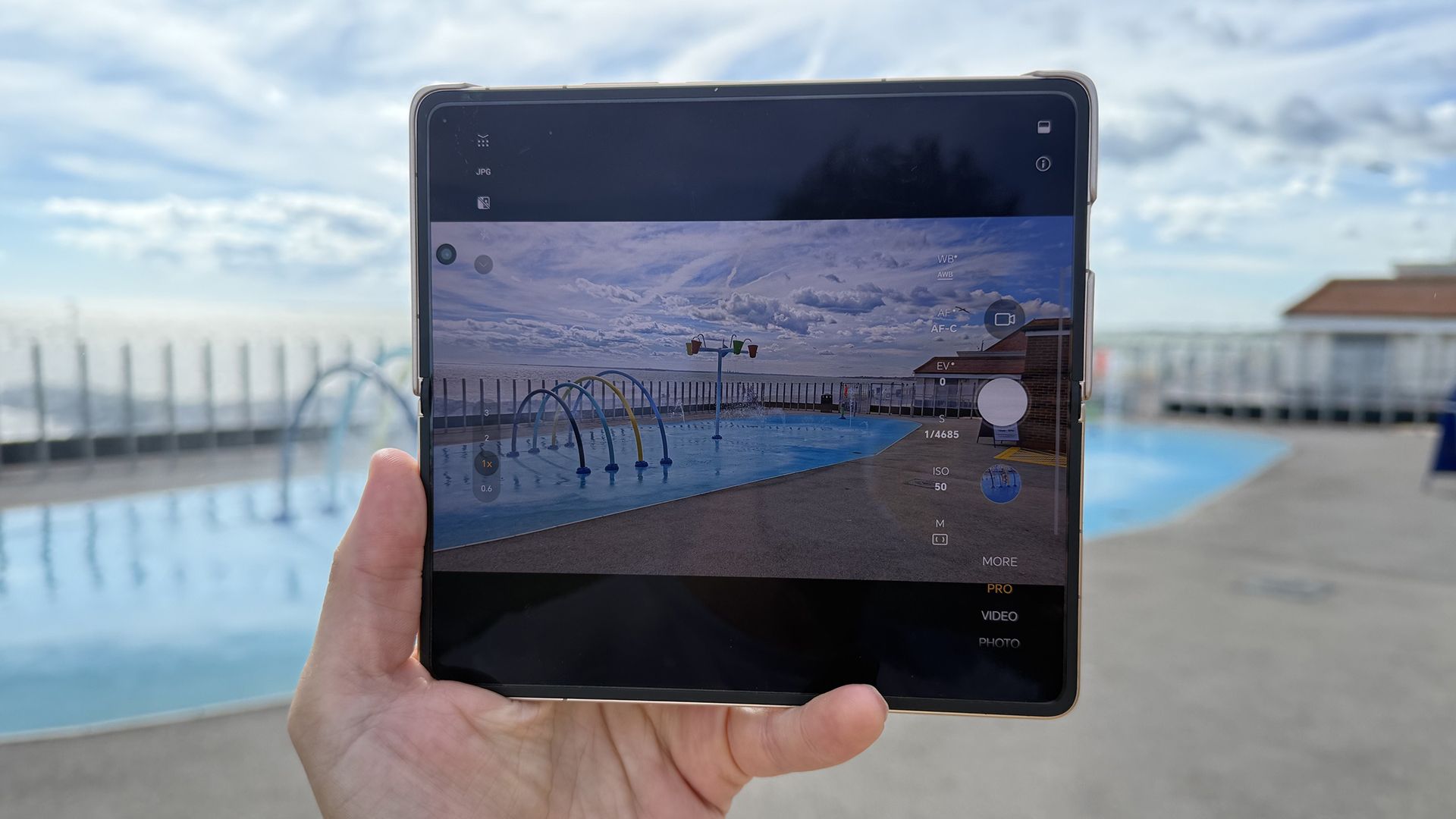
Meanwhile, Honor’s recent marketing pushes for the Magic V6 highlight its "thinnest-in-class" profile and IP68/IP69 water and dust resistance, suggesting that while Apple may have the brand cachet, companies like Honor have the engineering agility to provide a more practical everyday experience.
Implications for the Creative Professional
For the target audience of the iPhone Duo—creative professionals, designers, and power users—the landscape is complex.
1. The Ecosystem Lock-in
The strongest argument for the iPhone Duo is Apple’s ecosystem. For users who rely on Handoff, iCloud integration, and the seamless continuity between Mac and iPad, the iPhone Duo is the "missing link." If you are already deep into the Apple ecosystem, the cost of switching to a superior hardware experience, like the Google Pixel 10 Pro Fold or the Samsung Galaxy Z Fold8 Ultra, is high.
2. Software vs. Hardware
The Pixel 10 Pro Fold currently holds the crown for the best AI-driven software experience. Google’s computational photography and generative AI integration on a tablet-sized screen are transformative for tasks like photo editing and document management. In contrast, the iPhone Duo will need to prove that its software—likely an adapted version of iOS—can truly utilize the expanded screen real estate, rather than simply "stretching" phone apps, which has been a common criticism of early foldable software implementations.
3. The Durability Factor
With the introduction of IP68/IP69 ratings in devices like the Magic V6, the "fragility" argument against foldables is disappearing. Prospective iPhone Duo buyers will be watching closely to see if Apple’s first-gen hinge hardware can match the industrial durability of the fifth or sixth-generation hinges found on competing devices.
The Future: Folding or "Dumbing Down"?
Interestingly, as the foldable market hits its peak, there is a counter-movement emerging. A growing segment of the population is seeking a "digital detox," turning toward "dumb phones" to regain focus and reduce screen time. While the tech world obsesses over devices that offer more screen, more pixels, and more multitasking, the market’s diversity suggests a split: a future where we either embrace the "super-device" (the tri-fold) or retreat to the simplicity of the feature phone.
Conclusion: Is the iPhone Duo Worth the Wait?
Apple is rarely first to a market, but they are often the company that defines the standard for "mass adoption." The iPhone Duo is not just a phone; it is a declaration that the foldable form factor is here to stay.
However, for the savvy consumer, the current market reality is difficult to ignore. Whether it is the superior AI of the Google Pixel 10 Pro, the refined, discounted power of the Samsung Galaxy Z Fold8 Ultra, or the sheer engineering marvel of the Honor Magic V6, Apple faces a steep climb.
If you are an Apple loyalist, the iPhone Duo is the device you have been waiting for. But if you are a creative professional looking for the absolute best hardware value, the current foldable market offers a wealth of alternatives that are not only more affordable but, in many respects, more mature. The foldable wars are far from over, and in many ways, for the consumer, they have only just begun.