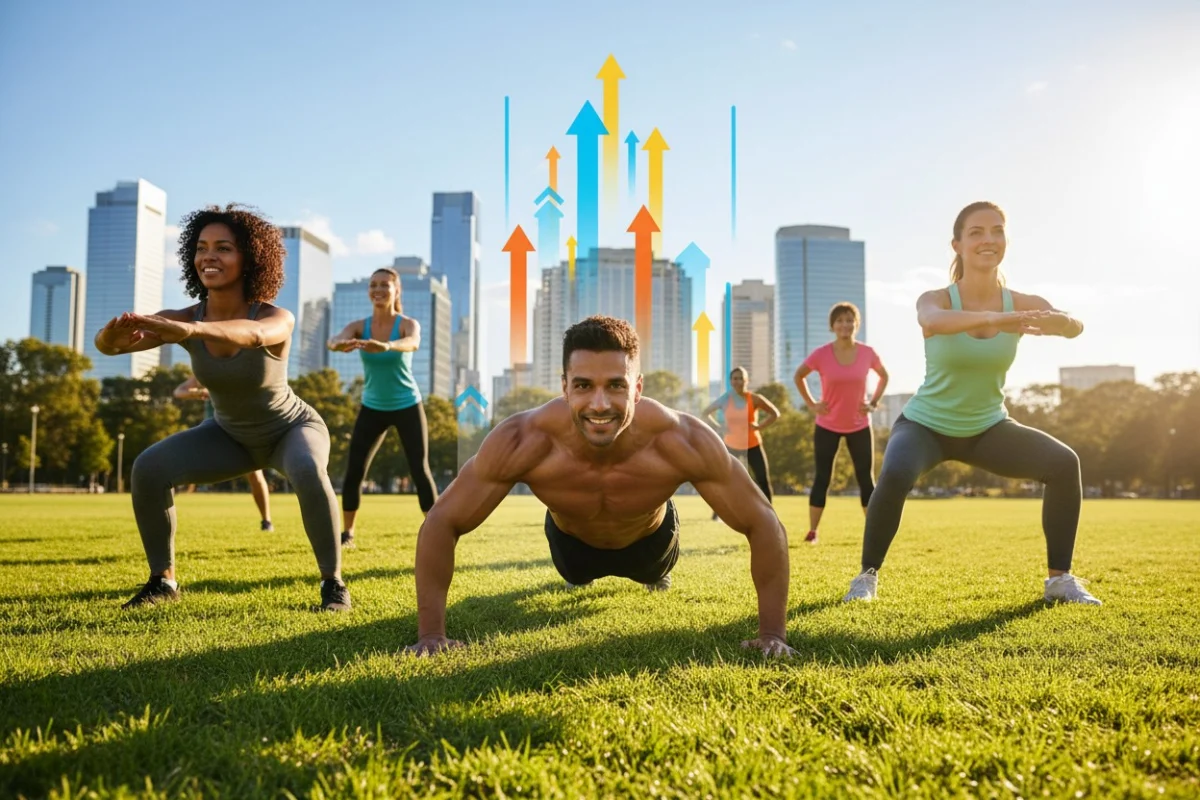
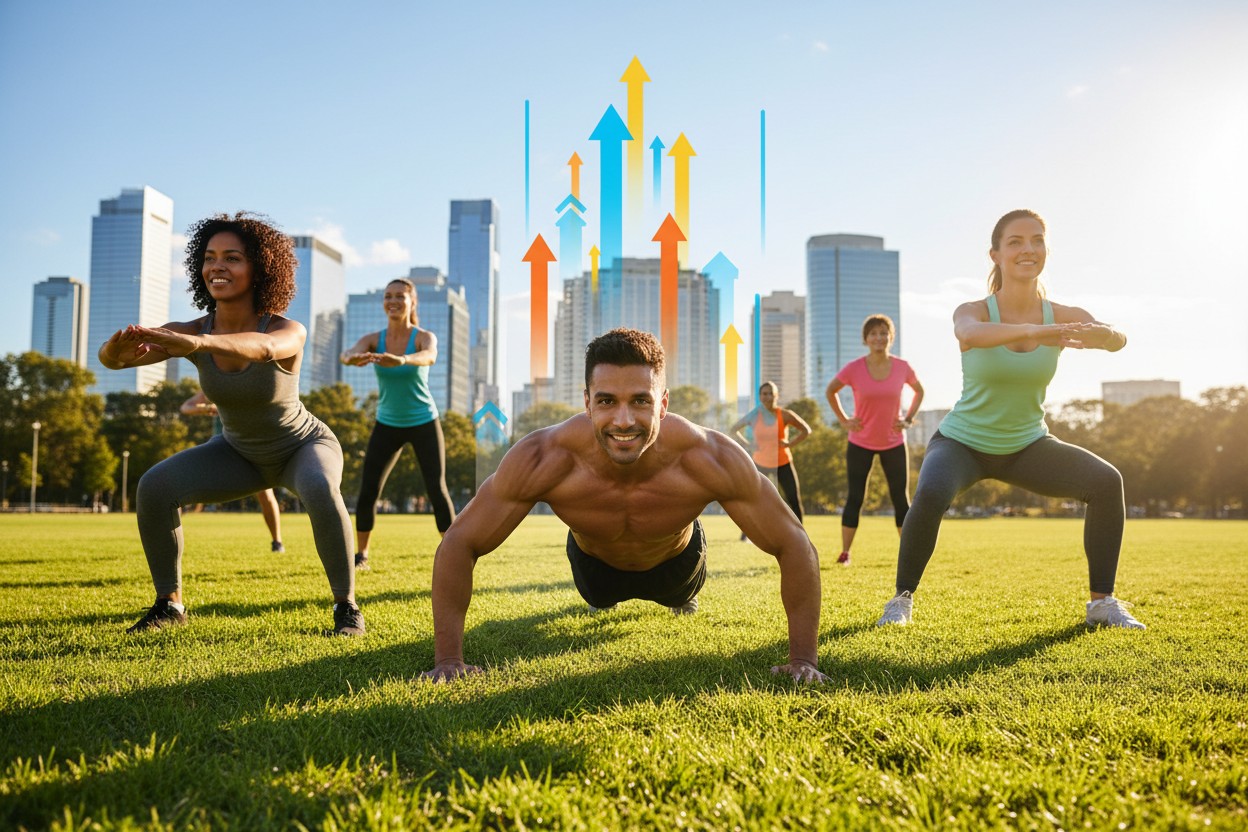
WASHINGTON — In a landmark update that promises to reshape how millions approach fitness, the American College of Sports Medicine (ACSM) has officially revised its resistance training guidelines for the first time in nearly two decades. The comprehensive new directives deliver a clear and empowering verdict for home exercisers and minimalists alike: bodyweight exercises are not merely a fallback option for travelers or beginners—they are a fully legitimate, highly effective pathway to building functional muscle strength, size, and power.
Drawing from an exhaustive meta-analysis of 137 systematic reviews encompassing data on more than 30,000 participants, the updated guidelines dismantle the long-standing cultural bias that effective hypertrophy requires heavy iron, expensive gym memberships, or complex machinery. Instead, the consensus highlights a pragmatic truth: consistency, progressive overload, and practicality matter far more than pursuing an elusive "perfect" workout routine.
Main Facts: What the New ACSM Guidelines Change
For 17 years, public health directives and mainstream fitness culture heavily leaned toward traditional gym environments—barbells, cable stacks, and selectorized machines—as the gold standard for resistance training. The updated ACSM framework recalibrates this perspective, putting bodyweight training on equal footing with external loads.
The core takeaways from the updated guidelines include:
- Equal Efficacy: All forms of structured resistance training—including calisthenics, free weights, and resistance bands—yield comparable improvements in muscle strength, size, and power when matched for intensity and effort.
- Frequency Standard: Healthy adults are now advised to train each major muscle group at least twice per week to stimulate optimal adaptation and growth.
- The Power of Progression: Bodyweight movements provide more than sufficient mechanical tension for muscle hypertrophy, provided they are executed with strict form and systematically made more difficult over time.
- Simplicity Wins: The literature emphasizes that maintaining a simple, consistent, and practical routine outperforms intermittent, high-intensity pursuits of workout perfection.
Chronology of a Shift: 17 Years of Exercise Science Evolution
To understand the magnitude of this policy update, one must look back at how resistance training recommendations have evolved over the past two decades.
- The Mid-2000s Baseline: The previous ACSM resistance training position stands, established nearly two decades ago, heavily prioritized traditional weight room equipment. While calisthenics were acknowledged as an introductory tool, they were rarely viewed as a standalone solution for significant muscular hypertrophy.
- The Intervening Decades: Over the last 17 years, sports science experienced a boom in biomechanical research. Concurrently, global socioeconomic shifts, pandemic-related gym closures, and the rise of home-based fitness accelerated interest in scalable, equipment-free movement patterns. Researchers began systematically tracking whether calisthenics could induce the same cellular signaling pathways and muscle protein synthesis as traditional lifting.
- The 137-Review Synthesis: Culminating in the recent policy overhaul, researchers synthesized 137 rigorous systematic reviews involving over 30,000 subjects. The accumulated data revealed that muscles do not inherently "know" whether the resistance they are overcoming comes from a cast-iron dumbbell or the practitioner’s own body weight—they only respond to mechanical tension, metabolic stress, and progressive overload.
- The 2026 Paradigm Realignment: The formal release of the updated ACSM guidelines closes the gap between clinical exercise science and real-world application, validating home-based calisthenics as a primary modality for lifelong health and longevity.
Supporting Data and the Five Fundamental Movements
Fitness experts note that unlocking muscle growth without equipment requires mastering five fundamental movement patterns. These exercises form a comprehensive system capable of targeting the chest, back, quadriceps, hamstrings, and glutes. Crucially, these movements can be scaled infinitely to accommodate everyone from frail novices to elite athletes.
1. Push-ups: The Ultimate Upper Body Compound
Push-ups primarily engage the pectoralis major, anterior deltoids, and triceps, while intensely activating trunk stabilizers to maintain a rigid midline.
- Proper Form: Begin in a high plank position with hands slightly wider than shoulder-width apart. Lower the chest under control until it hovers just above the floor, then press forcefully back to the starting position.
- Regressions & Progressions: Beginners can perform incline push-ups with hands elevated on a stable surface. Advanced practitioners can progress by elevating their feet or incorporating tempo variations to increase time under tension.
2. Pull-ups: Targeting the Posterior Upper Body
Pull-ups are the premier bodyweight movement for developing the latissimus dorsi, upper back, and biceps.
- Proper Form: Grasp an overhead bar with an overhand grip and pull the chin cleanly over the bar using a controlled, deliberate motion.
- Regressions & Progressions: Those unable to perform a standard pull-up can utilize resistance bands for assistance or perform "negative" pull-ups (jumping to the top and lowering down slowly).
3. Bodyweight Squats: The Cornerstone of Lower Body Function
Squats target the quadriceps, gluteus maximus, and hamstrings. Because they engage the posterior chain, lower back, and calves simultaneously, they are classified as a premier compound movement.
- Proper Form: Place feet shoulder-width apart and lower the hips backward and downward as far as comfortably possible while keeping the heels planted.
- Functional Impact: Beyond muscle growth, squats are celebrated by fitness experts as a foundational movement for building functional strength, enhancing balance, and significantly reducing the risk of falls in older populations.
4. Lunges: Unilateral Stability and Strength
Lunges challenge the quadriceps, glutes, and hamstrings while demanding single-leg stabilization.
- Proper Form: Step forward and lower both knees toward the ground at 90-degree angles before driving back to the starting position.
- Progressions: Exercisers can advance to single-leg variations such as split squats or reverse lunges to further tax stability and muscular endurance.
5. Glute Bridges: Posterior Chain Activation
Glute bridges primarily target the glutes and hamstrings while recruiting deep core stabilizers.
- Proper Form: Lie flat on the back with knees bent and feet flat on the floor. Drive through the heels to lift the hips until a straight line forms from shoulders to knees, pause briefly, and lower with control.
- Accessibility: This movement requires minimal space and serves as a premier at-home lower-body exercise, particularly for populations requiring low-impact joint loading.
Official Responses and Expert Perspectives
The sports science community has overwhelmingly welcomed the validation of calisthenics, noting that it democratizes physical fitness by removing financial and logistical barriers.
"If an exercise becomes difficult to control, switch to an easier variation rather than forcing the movement," advised a spokesperson for a national fitness organization during a briefing on the updated guidelines. This philosophy underscores the importance of strict form and controlled tempo over ego-driven lifting.
Exercise physiologists emphasize that the human body thrives on the principle of progressive overload. Whether an individual is adding a pair of 50-pound dumbbells to a squat or elevating their feet during a push-up, the biological mechanism for growth remains identical: the muscle tissue adapts to novel stressors by repairing itself to be stronger and denser.
Furthermore, medical professionals stress the importance of body awareness. While muscle fatigue and a localized "burn" are expected and necessary responses to resistance training, sharp joint pain, dizziness, or persistent discomfort are red flags.
"Individuals bear responsibility for their own well-being and must listen to their bodies during physical activity," health advocates noted. Sudden or sharp pain is never a normal training response, and persistent symptoms warrant a professional medical evaluation.
Implications for Public Health and the Future of Fitness
The financial, time, and spatial barriers associated with traditional gym memberships have historically prevented large segments of the population from meeting recommended physical activity guidelines. By officially recognizing bodyweight training as an elite-tier muscle-building modality, the ACSM has opened the door for broader public health interventions.
1. Democratization of Fitness
Fitness is no longer gated behind monthly gym dues or the acquisition of heavy equipment. A living room floor, a stable chair, and a doorway pull-up bar are now officially validated by sports medicine as sufficient tools for achieving optimal muscular health.
2. Longevity and Aging in Place
With the guidelines emphasizing that major muscle groups must be trained twice weekly to maintain functional capacity, older adults have a clear, safe roadmap to combat sarcopenia (age-related muscle loss). Movements like bodyweight squats and glute bridges directly translate to improved balance, independence, and fall prevention.
3. Redefining Workout Culture
The psychological burden of "gym intimidation" or failing to maintain a complex workout regimen has derailed countless fitness journeys. The new ACSM guidelines offer a liberating message: consistency in a simple, scalable bodyweight routine beats an erratic, high-end gym routine every single time.
As society digests these updated recommendations, the message from sports science is unmistakably clear: your body is the ultimate gym, and the path to robust health is quite literally in your own hands.