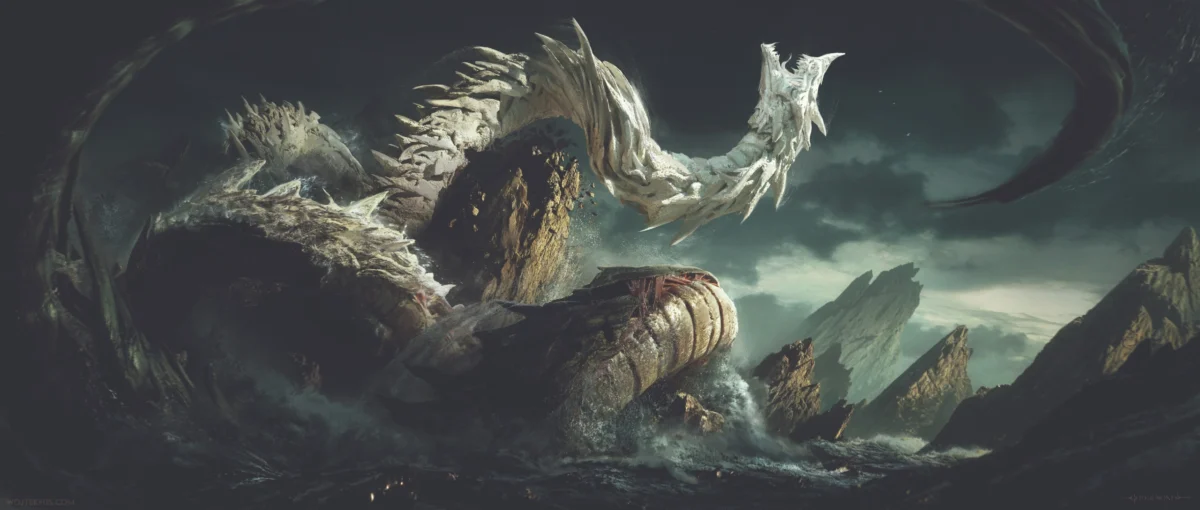
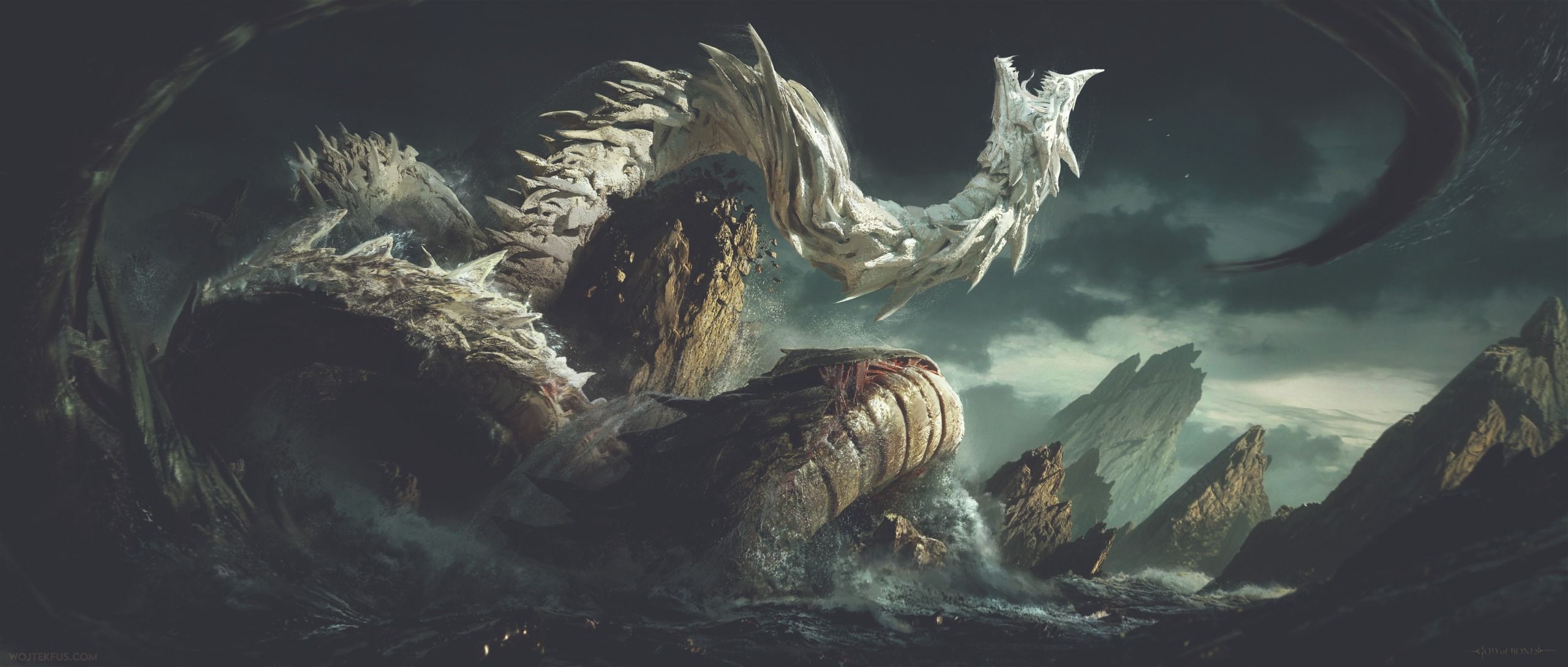
In the realm of cinematic world-building, few challenges are as daunting as capturing the intersection of organic life and geological permanence. For the creative team behind the short film God of Bones, the primary visual anchor was a monumental task: depicting a gargantuan serpent frozen in the final, agonizing seconds of its life, calcified into stone as it collapses into the earth. This pivotal vista shot, a centerpiece of the production, required a sophisticated blend of traditional sketching, advanced 3D procedural workflows, and meticulous digital matte painting.
The project, spearheaded by director Paul Coulthard, sought to evoke a sense of "halted motion"—a moment of extreme violence and scale rendered into a static, haunting landscape. To achieve this, the production brought on digital artists to bridge the gap between initial conceptual drawings and a photorealistic, immersive final frame. The resulting image stands as a masterclass in scale, weight, and atmospheric storytelling.
The Genesis: Establishing the Vision
The development of the God of Bones serpent was not a linear path but a collaborative evolution. The narrative requirement was specific: the creature needed to look as though it were mid-death, caught in a cataclysmic transformation where its biological form was rapidly turning to mineral.
"The initial compositions weren’t fully achieving the sense of weight and the specific type of ‘halted motion’ we needed," notes the artist brought in to refine the vista. "Paul Coulthard’s vision was clear from the start, but the technical execution of such a massive, calcifying entity required a shift in perspective."
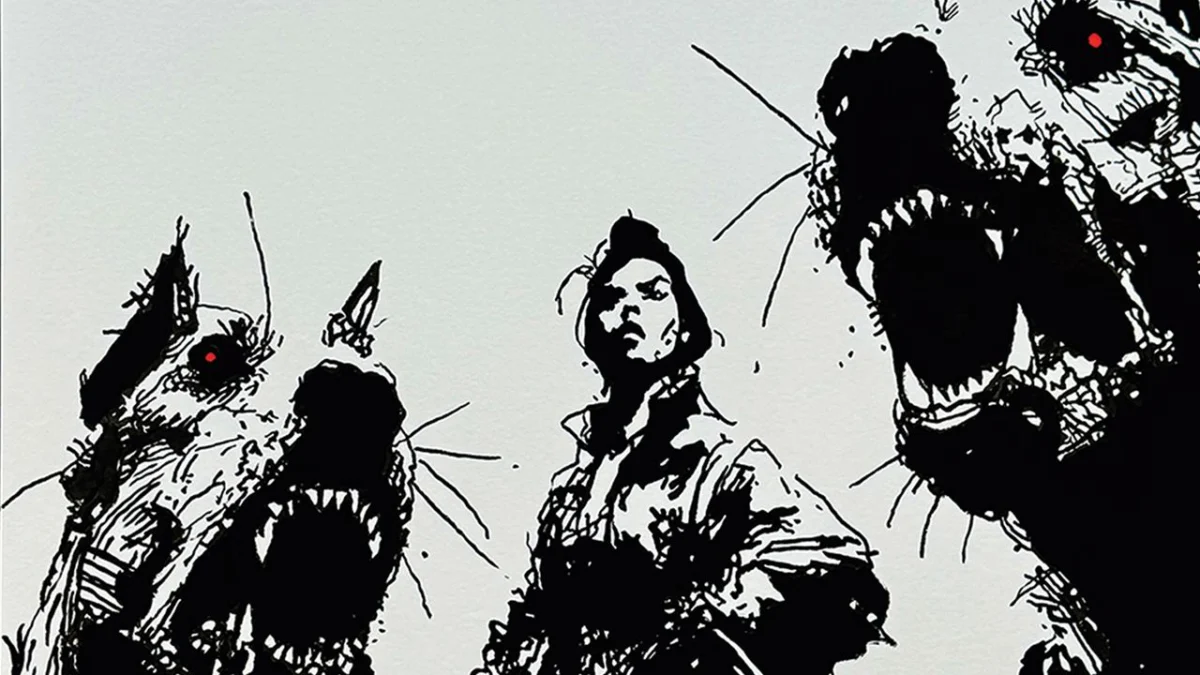
The collaboration began with a series of rough sketches by Coulthard. These drawings served as the foundational "DNA" for the scene, dictating the rhythm of the serpent’s body as it impacted the environment. These sketches prioritized the visceral nature of the beast—the curve of the neck, the tension in the scales, and the sheer volume it occupied within the frame.
Chronology of Creation: From Sketch to Screen
The workflow for the God of Bones scene followed a traditional but highly refined pipeline, moving from 2D ideation to complex 3D assembly.
Phase 1: Conceptual Foundation
The process started with mood-boarding and rapid sketching. The objective was to define the "violence" of the scene. Artists focused on how the creature’s weight would interact with the surrounding terrain. By establishing a clear silhouette early, the team could ensure that even at a distance, the audience would immediately grasp the scale of the serpent.
Phase 2: 3D Layout and Structural Blocking
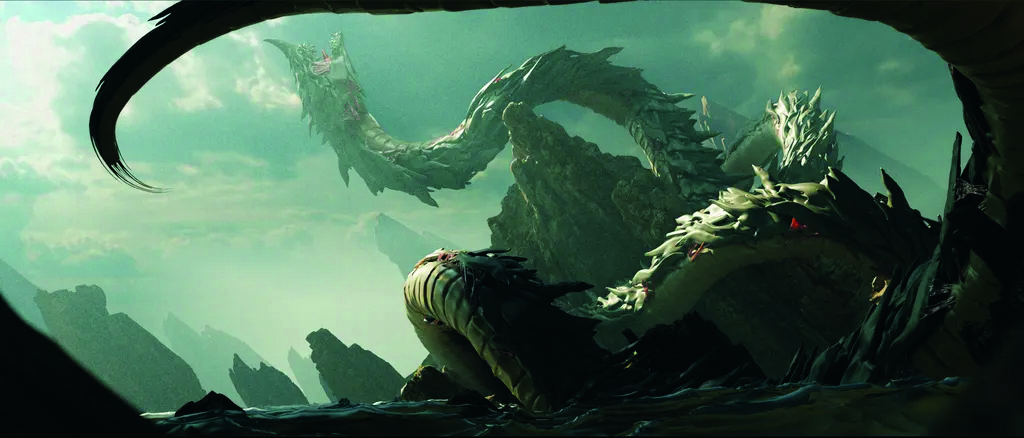
Once the concept was locked, the team transitioned to Blender. This stage was critical for maintaining scale. The serpent was modeled with an emphasis on its path of travel; it wasn’t just a static object but a kinetic force that had been suddenly silenced.
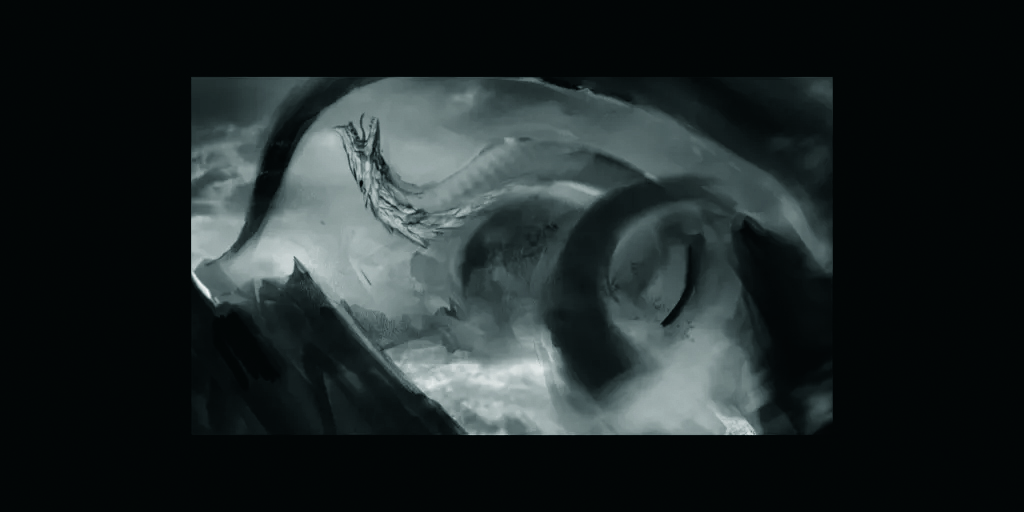
"We built the environment around the serpent, using rocky formations to frame the collapse," explains the lead artist. "In Blender, we were able to test various camera angles to find the one that best communicated the instability of the creature’s final moments. It had to look heavy, yet fragile, as if one wrong touch would shatter the stone."
The serpent’s design itself was a major undertaking, supervised by Christian Bull, with intricate modeling provided by Laurens Rasti and Wilmar Ballespi of Shoot First. Their work ensured that the transition from serpentine scales to jagged, calcified rock was biologically plausible and aesthetically striking.
Phase 3: Texturing, Lighting, and Atmospheric Integration
The final phase involved rendering the 3D blockout and performing an extensive digital paintover. This is where the scene transitioned from a 3D model into a cinematic vista.
To sell the realism of the scene, the artists integrated high-resolution photography of natural stone and ocean spray. Atmospheric depth was achieved through volumetric fog and light shafts, which helped push the serpent further into the background, emphasizing its immense size compared to the landscape. A final artistic decision—flipping the entire composition—was implemented to create a more dynamic and unconventional visual flow, forcing the viewer to re-evaluate the scale and orientation of the beast.
Supporting Data: The Technical Toolkit
The creation of such a high-fidelity image relies on the latest in digital artistic hardware and software. The production of the God of Bones vista highlights the necessity of a robust workstation. For artists looking to replicate similar high-scale environmental work, the industry standard involves:
- Software: Blender remains the core for layout and initial modeling due to its versatility and rapid iteration cycles. The integration of high-resolution textures often requires secondary software like Substance Painter or ZBrush for the organic sculpting of the scales.
- Hardware: A high-end workstation is mandatory for handling complex geometry. This includes processors with high core counts for rendering and large amounts of VRAM to handle the high-resolution textures of large-scale creatures.
- Tablets and Peripherals: For the paintover stage, the use of professional-grade drawing tablets is essential. These tools allow for the nuanced brushwork required to blend the CGI elements with the photographic overlays, ensuring a seamless finish.
Official Perspectives: The Director’s Intent
Paul Coulthard’s vision for God of Bones centers on the juxtaposition of the ancient and the ephemeral. By turning the creature into stone, the film explores themes of legacy and decay. The collaborative nature of the production allowed for a unique creative friction—where the director’s narrative goals pushed the technical artists to go beyond standard modeling practices.
"Working closely with Paul allowed us to push the atmosphere to that final, cold, and imposing image," the lead artist noted. "It wasn’t just about making a ‘cool monster’; it was about making a moment that felt like it had been carved out of the history of that world."
Implications for Modern Cinematography
The God of Bones project serves as a compelling case study for the future of indie-scale cinematic production. As software tools become more accessible, the ability for smaller teams to produce high-concept, "vista-heavy" shots is increasing.
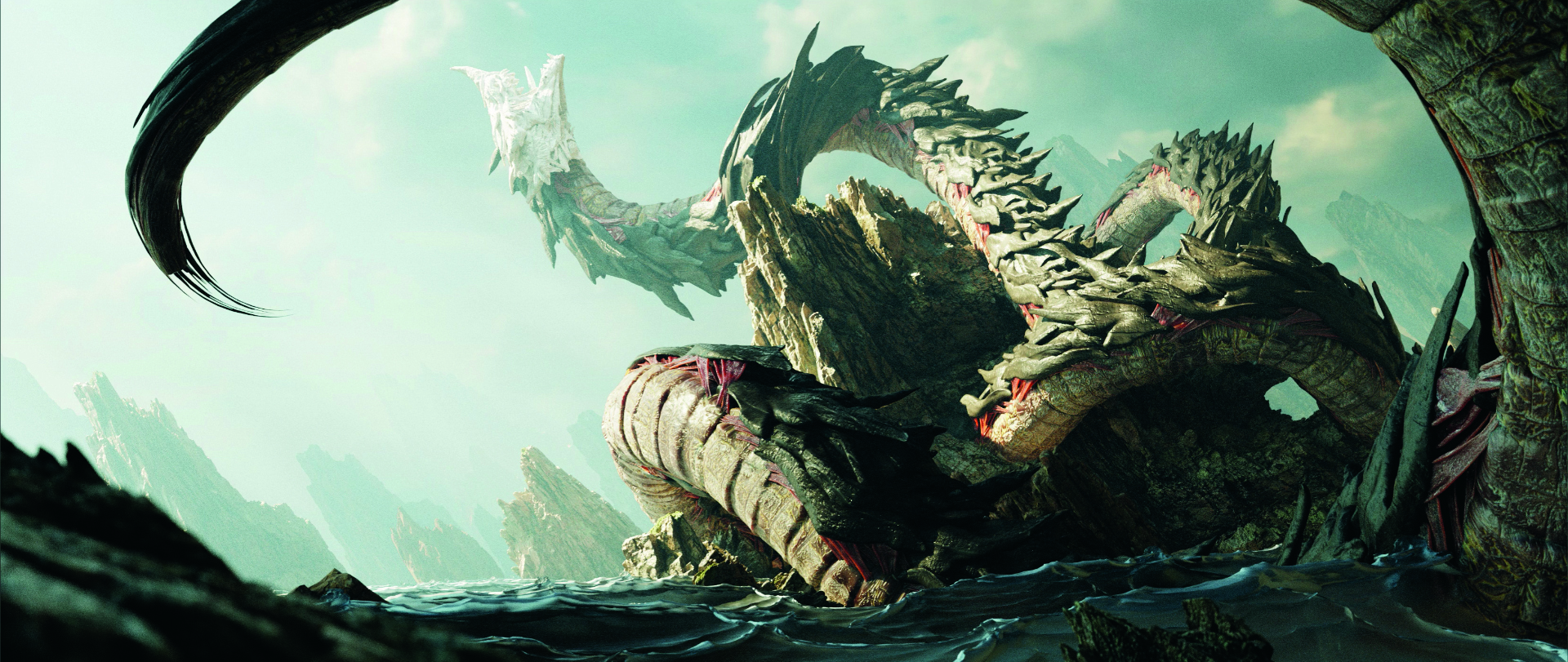
The success of this particular scene suggests that the key to effective world-building lies not just in the software, but in the rigorous attention to traditional composition principles. Even in a 3D-dominated pipeline, the power of a hand-drawn sketch and a clear, intentional vision remains the most important factor in the success of the shot.
Furthermore, the integration of specialized modeling teams (like Shoot First) with independent art directors showcases a new, distributed model of production. This allows for specialized labor—such as high-end creature modeling—to be seamlessly integrated into a broader, smaller-scale directorial vision.
As God of Bones moves toward its completion as a short film, the "calcified serpent" stands as a testament to what is possible when artistic direction, technical precision, and collaborative workflow converge. It is a reminder that in digital storytelling, the most effective way to show the immense is to first understand how it feels to be small.
This article originally appeared in ImagineFX. For more insights into the evolving landscape of digital art and 3D modeling, subscribe to ImagineFX for expert tutorials, artist spotlights, and industry news. For those looking to upgrade their own digital art setups, ensure you are equipped with the latest hardware by reviewing our guides on the best drawing tablets and high-performance laptops for 3D modeling.