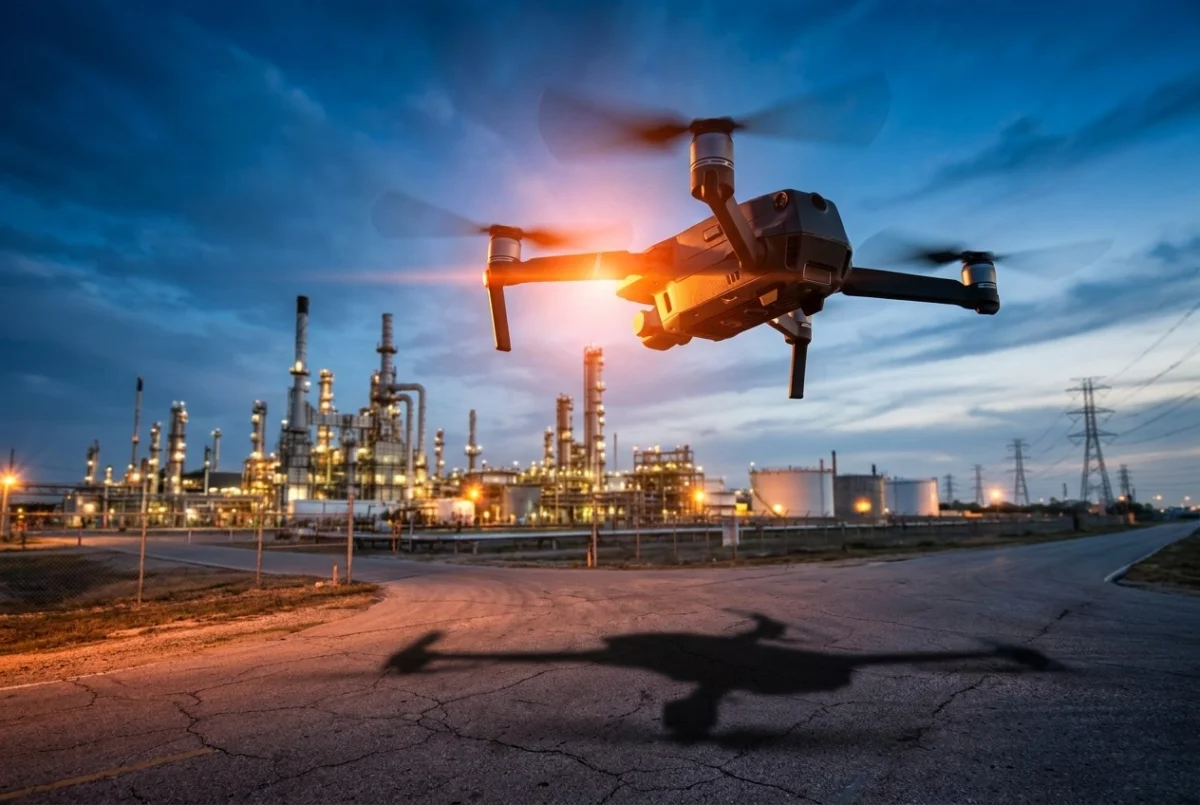
WASHINGTON — The era when the continental United States could rely on geographic isolation and above-ground infrastructure security has come to a definitive end. The global democratization of drone technology and artificial intelligence has quietly dismantled traditional defense assumptions, leaving domestic energy grids, transportation hubs, and financial networks vulnerable to a new form of distributed asymmetric warfare.
National security analysts, intelligence agencies, and defense experts are increasingly warning that the gap between rapidly evolving low-cost unmanned aerial systems (UAS) and static domestic defense measures has created a dangerous window of exposure for the U.S. homeland.
Main Facts: The Asymmetric Threat to the Homeland
The core vulnerability facing modern industrialized nations stems from a radical shift in the economics and accessibility of warfare. Historically, projecting high-precision kinetic force required the multi-billion-dollar industrial base of a sovereign nation-state. Today, off-the-shelf commercial components, open-source navigation software, and accessible guidance systems allow non-state actors, small insurgent cells, or lone operators to replicate precision-strike capabilities for a fraction of the cost.
- Cost Asymmetry: The economic imbalance of modern drone defense is heavily skewed against the defender. Intercepting a commercial-grade drone costing a few thousand dollars frequently requires surface-to-air missiles or specialized counter-UAS interceptors costing upwards of hundreds of thousands—or even millions—of dollars.
- Target Sprawls: Critical infrastructure—such as electrical sub-stations, refineries, natural gas pipelines, and massive data center clusters—was designed for economic efficiency and open operational access, not for defense against airborne attacks. These sprawling facilities cannot realistically be fortified with conventional military perimeters.
- Autonomous Navigation: The integration of onboard artificial intelligence and machine vision means modern drones no longer rely on vulnerable GPS or continuous radio-frequency links. Autonomous systems can identify, track, and strike targets independently, rendering traditional electronic jamming significantly less effective.
Chronology: From Battlefield Innovation to Domestic Vulnerability
The integration of unmanned systems into global conflict zones has accelerated at a staggering pace over the past decade, serving as a real-world testing ground for tactics that are now migrating toward civilian environments.
- Early 2010s: Drones transition from high-altitude military intelligence-gathering platforms (such as early-generation Reapers and Predators) into widely available commercial consumer electronics.
- Mid-to-Late 2010s: Regional conflicts in the Middle East demonstrate the viability of using modified commercial quadcopters and fixed-wing hobby aircraft to deliver improvised explosive payloads to high-value energy infrastructure, as seen in attacks on foreign petroleum facilities.
- 2022–Present: The conflict in Eastern Europe acts as a massive technological accelerant. Both state militaries deploy tens of thousands of first-person view (FPV) kamikaze drones, AI-guided seeker munitions, and synchronized swarm attacks capable of overwhelming dense air defense networks.
- Recent Incidents (2023–2026): Incidents multiply globally. Mysterious drone incursions force the complete temporary shutdown of major European transport hubs, such as Brussels and Liège airports. In the United States, unauthorized drone swarms breach restricted airspace over sensitive military installations, including Barksdale Air Force Base in Louisiana, home to nuclear-capable B-52 strategic bombers. Domestically, localized disruptions—such as the operational shutdown at the Joliet refinery—highlight the fragility of regional fuel supply chains.
Supporting Data: Global Observations and Metrics
Quantifying the scale of the unmanned aerial revolution reveals a dramatic shift in military doctrine and security spending worldwide:
- Global Swarm Operations: Defense ministries have documented massive nocturnal UAV barrages. Instances of more than 500 drones launched simultaneously across multiple regional zones have been recorded, testing the limits of centralized radar and air-defense batteries.
- Defensive Expenditure: According to regional defense studies, coalition and defense forces in the Middle East have intercepted thousands of incoming drones and ballistic missiles during coordinated multi-vector attacks, emphasizing the sheer volume pressure that cheap aerial platforms place on advanced shield systems.
- Foreign Policy Adaptations: Recognizing the severe domestic exposure of its own civil infrastructure, the Russian government authorized major financial institutions and central banking infrastructure to deploy localized anti-counter-UAS systems and arm internal personnel. Furthermore, state measures were enacted to temporarily seize commercial critical infrastructure deemed inadequately protected against airborne threats.
Official Responses and Institutional Warnings
Despite mounting evidence from overseas conflicts and domestic airspace violations, domestic security agencies note that the bureaucratic apparatus responsible for national protection has been slow to adapt.
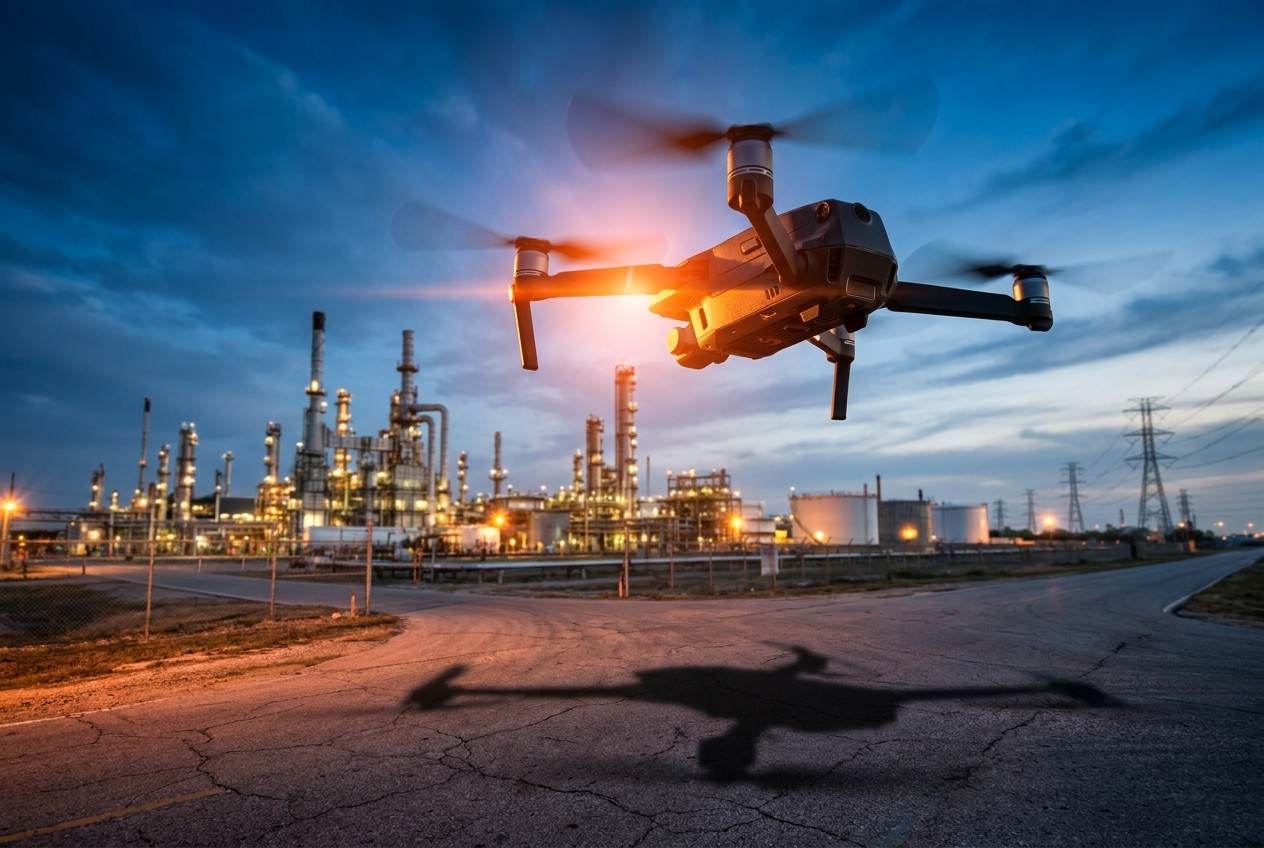
The Federal Bureau of Investigation (FBI) and Department of Homeland Security have previously issued public advisories warning that low-cost commercial drones present a tangible, escalating threat to domestic security, capable of inflicting casualties and causing catastrophic structural damage to critical nodes. However, critics argue these warnings have largely failed to translate into comprehensive, funded federal protection programs for private-sector infrastructure operators.
Military planners emphasize that while the Department of Defense maintains robust counter-UAS programs for deployed overseas troops, the domestic homeland remains legally and logistically difficult to defend. Posse Comitatus restrictions limit the active military’s role in domestic airspace enforcement, leaving the responsibility to local law enforcement agencies that largely lack the training, legal frameworks, and hardware required to neutralize sophisticated drone swarms.
Implications: The Shift Toward Distributed Defense and Resilience
The democratization of destruction necessitates a fundamental reimagining of national security, moving away from reliance on centralized state protection toward decentralized community and corporate resilience.
The Obsolescence of Centralized Security
When critical nodes—such as power grids, water treatment plants, and communication backbones—can be crippled by a coordinated strike originating from an unmonitored backyard or vehicle rooftop, relying solely on federal intelligence agencies to intercept every threat becomes mathematically impossible.
The Corporate and Community Response
As international precedents suggest, critical infrastructure operators and civilian populations must begin planning for prolonged operational degradation. Experts recommend several key pillars for future resilience:
- Redundancy: Building distributed micro-grids, local backup water storage, and off-grid power solutions to ensure communities can survive localized infrastructural failures.
- Hardening Assets: Installing localized passive and active mitigation systems around high-priority industrial facilities, including acoustic sensors, radio-frequency jammers (where legally permissible), and physical shielding.
- Decentralized Preparedness: Cultivating local response networks, individual self-reliance, and public education campaigns regarding emerging technological threats.
The transition to an era of distributed autonomous warfare is no longer a theoretical projection for military strategists; it is a present reality defined by accessible technology, fragile supply chains, and an unprotected domestic landscape. Preparing for this environment requires acknowledging the vulnerabilities in plain sight and shifting the paradigm from centralized defense to total societal resilience.