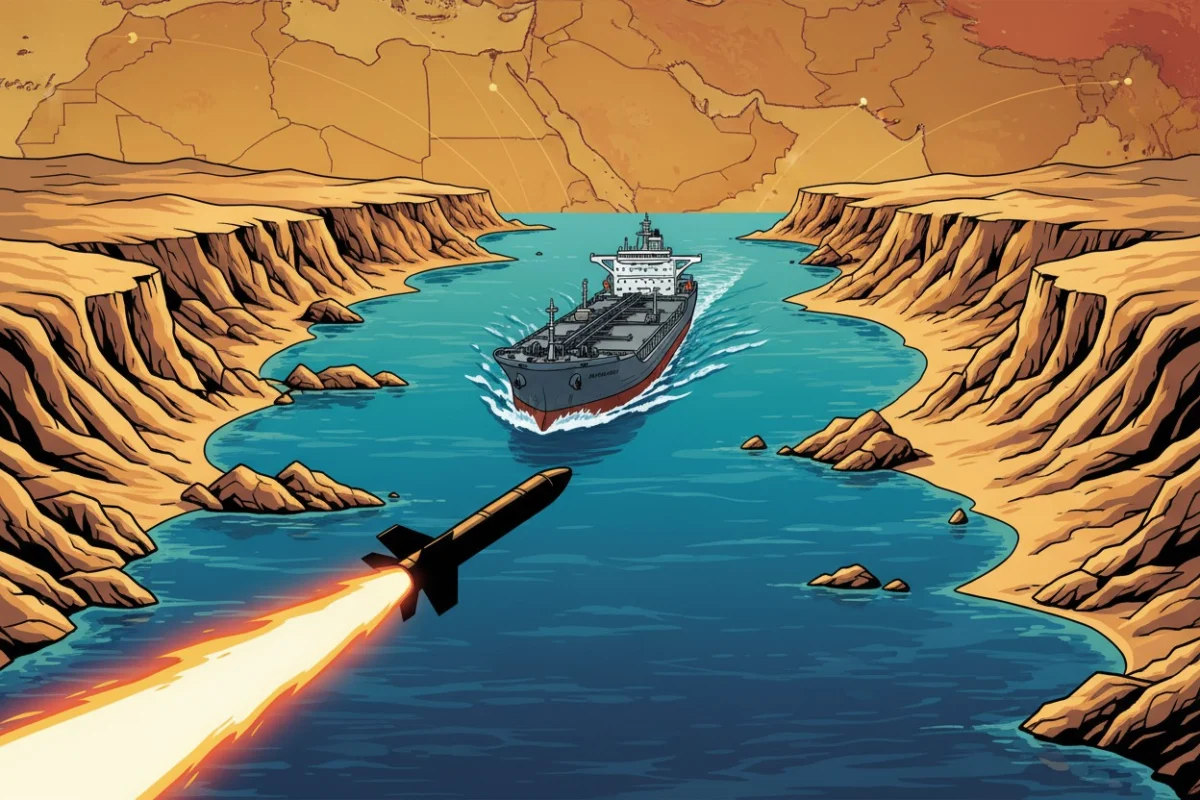
GLOBAL GEOPOLITICS & ENERGY MARKETS — In a dramatic escalation that threatens international trade and energy security, Yemen’s Iran-backed Houthi movement has seized the Greater and Lesser Hanish islands in the southern Red Sea. Confirmed by both government and Houthi officials, this strategic territorial grab significantly tightens the group’s control over the Bab al-Mandab Strait—a critical maritime chokepoint linking the Red Sea to the Gulf of Aden and serving as a vital conduit for crude oil exports to Asian markets.
The developments are sending shockwaves through global commodity exchanges. Combined with a critical outage of Saudi Arabia’s primary East-West pipeline following drone attacks, the security breakdown has stripped the global economy of crucial oil buffers, sending Brent crude past $106 a barrel and igniting fears of a prolonged inflationary shock.
Main Facts: The Strategic Realignment of the Red Sea
The rapid territorial advances by Houthi forces have fundamentally altered military geography in the southern Arabian Peninsula within a matter of days.
- Territorial Seizures: Houthi fighters have captured the Greater and Lesser Hanish islands, situated approximately 160 kilometers north of the Bab al-Mandab Strait. This follows the capture of the strategic port city of Mokha and Perim (Mayyun) Island.
- Complete Coastline Control: Reports from regional media outlets and international observers indicate the Houthis now control roughly 130 kilometers (81 miles) of Yemen’s Red Sea coastline, effectively dominating the entire western maritime theater.
- Proximity to Coalition Assets: The sweeping advance places Houthi units roughly 32 kilometers (20 miles) away from key international military installations, including a U.S. military base in nearby Djibouti, on the opposite side of the 20-mile-wide strait.
- Energy Infrastructure Vulnerability: Simultaneously, multiple drone strikes forced Saudi Arabia to shut down its 745-mile East-West Pipeline. The outage has temporarily choked off millions of barrels of daily oil exports from the Red Sea port of Yanbu, compounding a worldwide diesel shortage and forcing the cancellation of several crude shipments to Europe.
While Houthi leadership has insisted that its military operations are targeted exclusively at Saudi-linked commercial shipping and regional coalition assets—asserting that general international maritime traffic faces no direct threat—global logistics firms and energy analysts remain deeply skeptical and on high alert.
Chronology of the Offensive: A Lightning Campaign
The current crisis unfolded through a succession of rapid military movements and retaliatory strikes across Yemen, Saudi Arabia, and regional waters.
Early September: The Western Coast Offensive
- September 3: Houthi forces initiate a sudden, coordinated military push across Yemen’s western coast. Capitalizing on the withdrawal of Saudi-backed Yemeni government forces from strategic positions, Houthi units sweep northward.
- Mid-September Progress: Fighters capture the vital port city of Mokha after an intense 18-hour offensive, followed swiftly by the takeover of Perim Island within the Bab al-Mandab Strait.
- Mid-September (The Hanish Islands): Pushing deeper into the southern Red Sea, Houthi forces successfully occupy the Greater and Lesser Hanish islands, consolidating total dominance over the coastal shipping corridors.
Mid-September: Energy Infrastructure Strikes and Pipeline Closure
- The Drone Attacks: A series of coordinated drone and ballistic missile strikes—impacting both regional energy infrastructure and domestic positions—culminates in successful hits on Saudi Arabia’s vital East-West Pipeline.
- Pipeline Shutdown: In response to the security threat and potential environmental disaster, the Saudi Energy Ministry orders an immediate, precautionary shutdown of the 745-mile conduit, halting millions of barrels of daily transit designed to bypass the volatile Strait of Hormuz.
- Civilian and Military Casualties: Houthi ballistic missile and drone volleys wound 13 civilians in cross-border attacks and target a Saudi air base. Simultaneously, Saudi-led coalition air strikes pound Houthi positions in Yemen’s Al Jawf province, resulting in reported casualties that underscore the relentless pace of the tit-for-tat violence.
Supporting Data: The Oil Market and Humanitarian Toll
The convergence of blocked maritime choke points and crippled overland pipelines has severely strained global oil inventories and triggered a humanitarian catastrophe in the Horn of Africa and western Yemen.
Energy Markets and Supply Pressures
- Brent Crude Impact: Brent crude futures climbed 1.17% in early trading to settle at $106.92 per barrel, reflecting immediate panic over a potential loss of up to 4% of global daily oil supply.
- Pipeline Capacity: According to research firm Rystad Energy, the East-West Pipeline had been moving between 2.6 million and 4 million barrels of oil per day out of the port of Yanbu. Experts warn that repairs could take several weeks, threatening prolonged supply shortages.
- Refined Products: The crisis hits as refined product markets are already buckling. The average price of diesel in the United States touched $6 per gallon for the first time, driven by surging refining margins and shrinking global stockpiles.
- Depleted Buffers: Chevron CEO Mike Wirth noted that the strategic stock buffers and emergency crude releases that insulated the global economy earlier in the year have now been "played out," leaving little margin for error as fourth-quarter energy demand approaches.
Humanitarian Displacement
- Mass Internal Flight: The International Organization for Migration (IOM) reports that nearly 94,000 people have been forced to flee their homes inside Yemen since the latest escalation of ground fighting began.
- Infrastructure Strain: In southwestern Yemen, roughly 200 schools have been repurposed as emergency IDP (Internally Displaced Person) shelters to accommodate the overwhelming influx of families.
- Maritime Exodus: More than 2,000 refugees have braved the dangerous southern Red Sea crossings in small boats to seek safety in neighboring Djibouti.
Official Responses and Diplomatic Maneuvers
As the geopolitical landscape shifts, regional governments, international energy executives, and Western diplomats are scrambling to contain the fallout.
- Washington’s Direct Contact: U.S. Vice President JD Vance announced that Washington is maintaining direct channels of communication with the Houthi movement as the group solidifies its coastal gains. Emphasizing that the White House is "on top of" the deteriorating security situation, Vance noted constant coordination with regional partners, stating, "We’ve been in constant contact with the Emiratis, the Saudis, and others who are affected in the region."
- Energy Sector Warnings: Jan Stuart, global energy strategist at Piper Sandler, warned that the physical oil market is flashing unmistakable red flags, characterized by disrupted export routes, depleted commercial inventories, and a deepening diesel shortage.
- Shipping Industry Retrenchment: Citing unacceptable risks to crews and cargo, several of the world’s largest container shipping lines have suspended or rerouted their Red Sea operations, bypassing the Suez Canal entirely in favor of the much longer voyage around Africa’s Cape of Good Hope.
- Riyadh’s Defensive Posture: Saudi military and energy officials remain on high daily alert, grappling simultaneously with the Red Sea naval threat, domestic air defense engagements against incoming Houthi drones, and parallel security breaches involving Iran-allied elements affecting infrastructure linkages in neighboring Iraq.
Implications: A Fragile Future for Global Trade and Energy
The consolidation of Houthi power across Yemen’s western seaboard and the Hanish islands marks a profound geopolitical turning point. What began as a localized civil conflict has expanded into a systemic vulnerability for global commerce.
The security architecture of the southern Red Sea—a maritime highway accounting for a vast percentage of global container trade and energy flows—has been fundamentally rewritten. With traditional strategic oil buffers exhausted and key overland transit lines temporarily severed, the global economy is exceptionally sensitive to any further escalation.
As energy executives warn of sustained upside risks to commodity prices over the coming months, the international community faces a complex diplomatic and security dilemma: how to restore unimpeded navigation through the Bab al-Mandab Strait without igniting a broader, multi-front regional war. For now, shipping companies, energy traders, and humanitarian agencies remain locked in a tense holding pattern as the crisis enters a dangerous new phase.