
By Jake Peterson
Senior Technology Editor
September 29, 2026
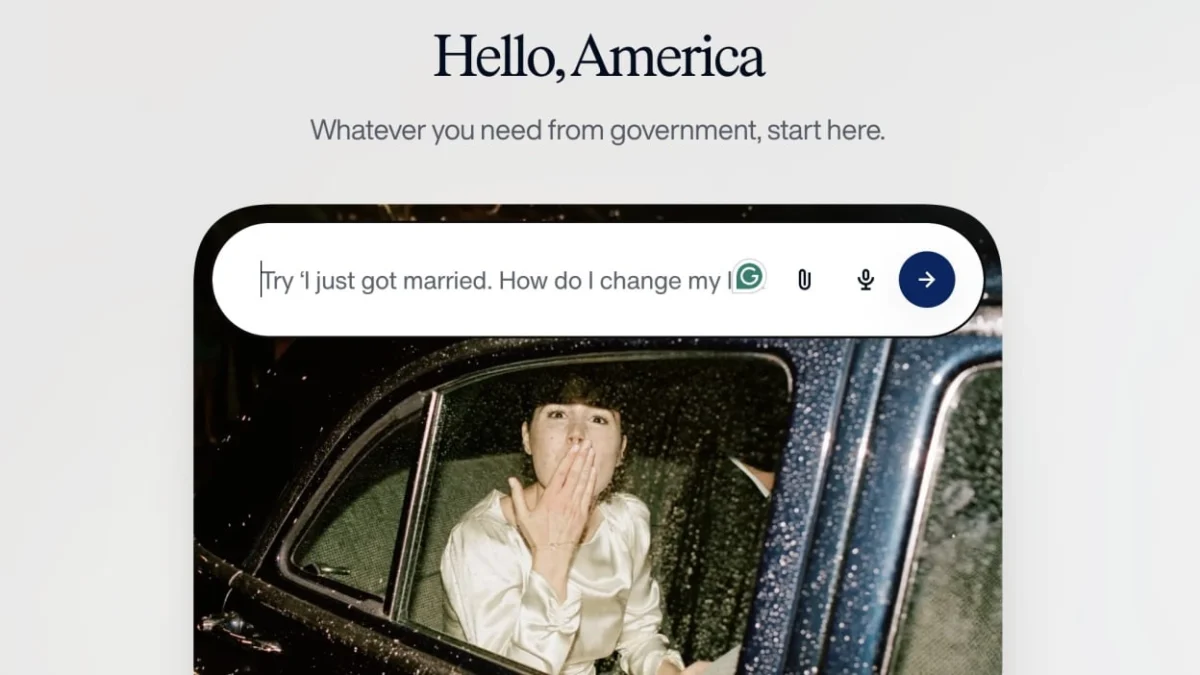
In a landscape where artificial intelligence has permeated almost every facet of modern life, the U.S. federal government has taken a significant leap into the digital age. On Tuesday, the Trump administration officially unveiled "America.gov," an ambitious, AI-driven portal designed to consolidate the vast, often labyrinthine network of government information into a single, conversational interface.
The launch marks a pivot toward centralized digital governance, aiming to transform how citizens interact with federal services. While the platform currently functions as a specialized chatbot, the long-term vision is to evolve the site into an interactive hub capable of executing complex administrative tasks. Yet, as the platform debuts, it has already sparked intense public debate—not only regarding its technical utility but also its role as an unexpected arbiter of institutional truth in an era of polarized political rhetoric.
The Genesis of America.gov: Main Facts
At its core, America.gov is an aggregator of unprecedented scale. The U.S. government maintains roughly 30,000 individual websites, a fragmented digital ecosystem that has long frustrated citizens attempting to navigate federal bureaucracy. America.gov serves as a proprietary "wrapper" for this massive dataset.
Instead of requiring users to hunt through disparate portals for the Social Security Administration, the Department of State, or the USPS, users can now input natural language queries into a singular interface. The AI model, trained exclusively on verified government domains, parses these sources to generate concise, human-readable answers.
Key features at launch include:
- Multilingual Support: The platform is natively accessible in English, Spanish, and French.
- Accessibility: Users can interact via text or voice commands.
- Privacy Protocols: The site employs "Rampart," an open-source classifier designed to detect and redact sensitive Personally Identifiable Information (PII) such as Social Security numbers or credit card data before processing requests.
- Zero-Barrier Access: The service is free, ad-free, and requires no user account, prioritizing public accessibility.
A Chronological Evolution: From Concept to Deployment
The project represents the culmination of nearly two years of internal development focused on digital transformation within federal agencies.
- Early 2025: Initial discussions regarding the consolidation of government web assets began under the banner of the "Digital Federalization Initiative." The goal was to reduce the overhead of maintaining thousands of siloed, often outdated, websites.
- Late 2025: The administration began integrating Large Language Model (LLM) frameworks with federal databases. The focus was on ensuring that the model remained "grounded"—a technical term for restricting AI outputs to specific, verified data sources to prevent "hallucinations."
- Summer 2026: Beta testing was conducted across several pilot agencies, focusing on high-traffic queries such as passport renewal status and Medicare enrollment navigation.
- September 29, 2026: The official public launch of America.gov.
Supporting Data and User Experience
The promise of America.gov is to save hours of administrative labor. Consider the typical workflow for a citizen: traditionally, locating a specific form for a government service might involve navigating through layers of legacy HTML pages, broken links, and PDFs.
Under the new system, a user can simply ask: "How do I register to vote in Ohio?" or "What are the current Medicare open enrollment dates?" The AI provides the answer alongside direct links to the relevant documentation or portal.
However, the efficacy of the tool is tethered to the quality of the government’s underlying data. By restricting the AI’s "knowledge base" to official .gov sites, the architects have attempted to insulate the platform from the misinformation often found on the broader, uncurated web.

The Irony of Truth: Official Responses and Political Friction
Perhaps the most fascinating aspect of America.gov is the unintended consequence of its design. By relying on established, objective records from federal agencies, the platform has created a digital "source of truth" that occasionally conflicts with the political narratives of its own creators.
The 2020 Election and Economic Data
In early testing, the platform has demonstrated a commitment to historical record over political messaging. When queried about the 2020 presidential election, the chatbot states, "Joseph R. Biden Jr. won the 2020 presidential election under the official Electoral College count." This directly contrasts with the rhetoric often employed by the current administration, highlighting the disconnect between political talking points and the objective, archived data managed by civil servants.
Similarly, the site provides nuanced economic reporting. When asked about recent diesel price spikes or grocery inflation, the AI cites federal data—such as military actions affecting the Strait of Hormuz—rather than strictly adhering to the administration’s claims of rapid economic improvement.
The Rebranding of Geography
The platform does, however, reflect the administration’s policy shifts. In instances where executive orders have been issued to rename landmarks or bodies of water—such as the transition from the "Gulf of Mexico" to the "Gulf of America"—the AI faithfully reflects these changes. This serves as a reminder that while the system is "neutral" in its fact-checking, it is also a vessel for the administration’s current policy and regulatory framework.
Implications: The Future of Digital Governance
Secretary of State Marco Rubio has signaled that this is merely the first phase of a much larger transition. By early 2027, the administration aims to move beyond information retrieval to actual service fulfillment.
Potential Future Capabilities
- End-to-End Passport Processing: The goal is to allow users to apply for, track, and receive passports directly through the America.gov interface.
- Automated Enrollment: Expanding the AI to handle complex applications for Medicare, Social Security, and federal employment.
- Dynamic Progress Tracking: Providing real-time updates on the status of government-issued documents, moving away from static status pages toward interactive, conversational updates.
Challenges and Skepticism
Despite the technical ambition, significant hurdles remain. The transition from an information tool to a transactional one requires a massive upgrade in security, reliability, and legal accountability. Entrusting a chatbot with the processing of sensitive identity documents or healthcare enrollment is a high-stakes endeavor. If the system fails—whether through technical error or a data breach—the consequences for citizens would be severe.
Furthermore, the reliance on a centralized AI interface raises questions about "black box" governance. When a citizen is denied a service by an algorithm, how do they appeal? The government must establish robust oversight mechanisms to ensure that the AI is not only accurate but also equitable and transparent in its decision-making processes.
Conclusion
America.gov is a bold, if controversial, experiment in the intersection of artificial intelligence and public service. It is a tool that reflects the paradox of its current administration: a system built on the objective, often stubborn reality of federal data, yet deployed in a climate of intense political volatility.
For now, the platform functions as an efficient, if somewhat limited, assistant. Whether it can truly become the "front door" to the federal government—a reliable, secure, and helpful interface for the American public—will depend on how the administration balances the efficiency of AI with the rigorous requirements of public trust. As we look toward 2027, the success of America.gov will serve as a bellwether for how modern democracies utilize technology to bridge the widening gap between the state and the people it serves.