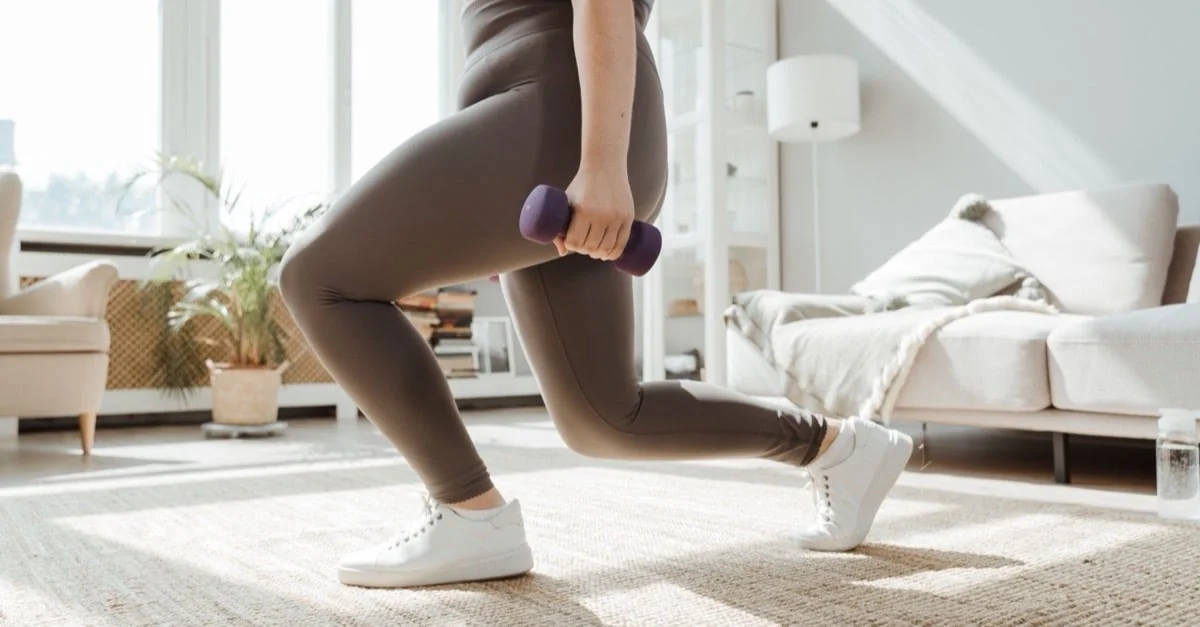
The fitness industry is cluttered with complex, high-intensity regimens that prioritize aesthetic transformation over psychological sustainability. For many, this leads to a cycle of "all-or-nothing" training: a burst of motivation, a complex routine that requires too much equipment or time, a missed session, and the inevitable abandonment of the program. However, strength training at home for women is not about how many different movements you can perform; it is about the architecture of the plan itself.
A successful home program succeeds when it transitions from a "pile of exercises" to a structured, scalable system. It requires five core movements, two sessions a week, a set of dumbbells, and—most importantly—a pre-defined "fail-safe" protocol for the weeks when life inevitably interferes.
The Core Philosophy: Why Most Programs Fail
Take a hypothetical reader we will call Carla. She has eight-pound dumbbells tucked under her bed, a resistance band gathering dust in a kitchen drawer, and three abandoned attempts at a "fitness journey" behind her. Carla does not need another exhaustive list of exercises. She needs to know exactly what to do on Monday, how to make the intensity manageable by week three, and—crucially—what to do on the Monday after a week where nothing went according to plan.
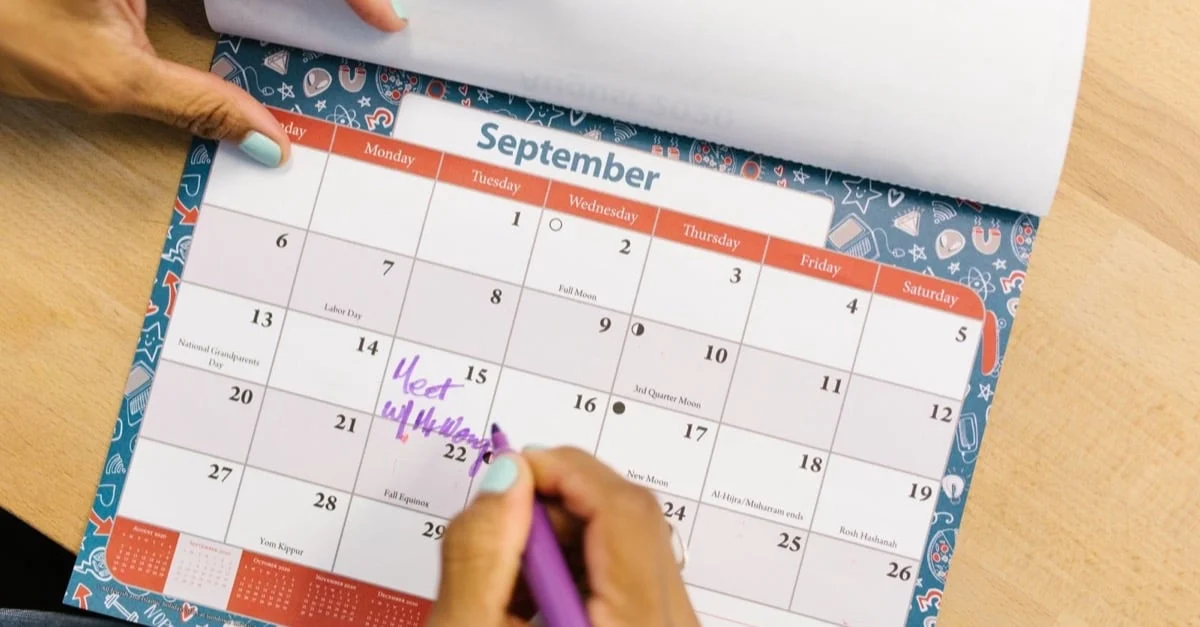
Most programs ignore the "bad week." They demand perfection. When a work trip or a family emergency forces a missed session, the user feels as though they have failed. By building a "floor" into the plan—the absolute minimum amount of movement required to keep the habit alive—we eliminate the guilt that causes most home routines to disintegrate by the second month.
The 6-Week Progression Chronology
This plan is built on a simple premise: steady, incremental progress. We move from two sessions per week in the first month to three sessions in weeks five and six.
The 6-Week Structured Plan
| Weeks | Sessions | The Session | The Floor (Emergency Routine) |
|---|---|---|---|
| 1-2 | 2 | 2 sets of 5 movements; 8-12 reps | 1 set of 5 movements; 8-12 reps |
| 3-4 | 2 | 3 sets of 5 movements; 8-12 reps | 1 set of 5 movements; 8-12 reps |
| 5-6 | 3 | 3 sets of 5 movements; 8-12 reps | 1 set of 5 movements; 8-12 reps |
The "Floor" is your safety net. It is a seven-minute, one-set version of your workout. The beauty of this design is that the Floor never gets harder. While your primary sessions grow in volume and intensity, the Floor remains static, ensuring that even in your most overwhelmed week, you can maintain the physiological and psychological momentum of the habit.
The Five Essential Movements
To achieve the "federal baseline" of muscle-strengthening activity—defined by major health organizations as covering all major muscle groups—we focus on five functional movement patterns:
- The Squat: Targets the quadriceps and glutes. Stand in front of a dining chair. Holding a dumbbell at your chest, sit back until you touch the seat, then stand. The chair acts as both a depth guide and a safety net.
- The Hinge: Targets the posterior chain (hamstrings and lower back). With a flat back and slightly bent knees, push your hips backward while lowering weights toward your shins. Squeeze your glutes to return to standing.
- The Push: Targets the chest, shoulders, and triceps. Use a kitchen counter or sturdy table for an incline push-up. As you progress, lower the surface height until you can perform them on the floor.
- The Row: Targets the upper back and lats. Using a chair for support, pull a dumbbell toward your ribs, keeping your elbow tucked. This is vital for posture, yet frequently skipped in home routines.
- The Carry: Targets the grip, core, and stability. Walk for 30–45 seconds while holding a heavy object in one hand. Keep your shoulders level to force the core to stabilize against the uneven load.
Supporting Data: What the Science Says
The structure of this program is not arbitrary; it is derived from clinical research into novice resistance training.
Load and Intensity
Many women fear that light home dumbbells are insufficient for growth. However, a review of resistance training studies indicates that as long as sets are taken close to the point of muscular failure—the point where another "clean" rep is impossible—loads at 40, 60, and 80 percent of a one-rep maximum produce comparable muscle hypertrophy. If your 8-pound weights make the last two repetitions of your set feel difficult, you are effectively stimulating growth.
Rest Intervals
There is often debate regarding how long one should rest between sets. A 2024 Bayesian review suggests that while resting longer than 60 seconds may slightly favor growth, the difference is marginal. The practical recommendation: use your breath as the timer. Once you can speak a full sentence without gasping, your nervous system is likely ready for the next set.
The "48-Hour" Rule
The primary reason home programs break is not physical overexertion; it is the "restart" struggle. Our 48-hour rule mandates that if you miss a session, you must return within 48 hours—but you return only to the "Floor" routine. By removing the pressure to "make up" for a missed workout with a high-intensity session, you prevent the accumulation of psychological debt.
Official Guidelines and Clinical Context
The American College of Sports Medicine (ACSM) recommends that novice lifters aim for 8–12 repetitions per set, performed 2–3 times per week. This plan aligns with these federal guidelines, which emphasize that some activity is always superior to no activity.
The Role of Aerobic Activity
It is important to remember that strength training is only half of the health equation. The 150-minute-per-week aerobic threshold is best met through consistent walking. If you are doing two 20-minute lifting sessions, you still need 150 minutes of aerobic activity. Walking on the days you don’t lift is the most efficient way to meet this requirement without risking burnout.
Implications for Long-Term Health
Size Changes and Metabolism
A common misconception among women is that resistance training will cause "bulky" muscle growth. In reality, scientific meta-analyses show that women achieve significant improvements in muscle quality and tone, but absolute mass gains occur slowly over years, not weeks. The primary benefit of this program is functional strength and improved metabolic health, not rapid, uncontrollable hypertrophy.
Spot Reduction Myths
A systematic review covering over 1,100 participants confirmed that training a specific muscle does not preferentially reduce fat on top of that muscle. While crunches strengthen the abdominal wall, they do not "target" belly fat. This program focuses on total-body strength, which supports long-term health far more effectively than isolated, localized exercise.
Bone Density
High-intensity resistance training is a proven method for improving bone mineral density. While this six-week plan starts with moderate intensity, it provides the necessary foundation to move toward higher loads (70%+ of one-rep max), which is the threshold where significant bone-density benefits are typically observed.
Conclusion: Starting Monday
Before you begin, ensure you have the proper clearances. If you are pregnant, postpartum, or managing a heart condition, consult a clinician. Otherwise, the barrier to entry is low.
Start this coming Monday by performing the "Floor" routine. By keeping the first session simple and achievable, you are not just exercising; you are building the capacity for consistency. A program that survives a bad week is infinitely more valuable than a "perfect" program that gets abandoned by March.
Frequently Asked Questions
- What if I don’t have dumbbells? A gallon of water (8.3 lbs) or a backpack filled with books serves as an excellent surrogate. The muscle does not know the difference between a high-end dumbbell and a well-packed canvas tote.
- Is two days a week enough? Yes. For a beginner, consistency at two days a week is the "golden ticket" to long-term adherence.
- How do I know when to add weight? Use the 2-to-10 percent rule. If you can perform two extra reps beyond your target with perfect form, increase the load. If you run out of weight, increase the tempo (slower on the way down) or the duration of the movement.
References:
- [1] Physical Activity Guidelines for Americans, 2nd edition.
- [2] ACSM: Progression Models in Resistance Training for Healthy Adults.
- [3] Effects of Resistance Training Performed with Different Loads on Maximal Strength and Muscle Hypertrophy.
- [4] Meta-analysis of weekly set volume on strength improvements.
- [5] Bayesian review of inter-set rest intervals (2024).
- [6] Bayesian meta-analysis of muscle size changes in men vs. women (2025).
- [7] Systematic review: Exercise-induced localized fat reduction.
- [8] Meta-analysis of resistance training and bone mineral density in postmenopausal women.
- [9] The repeated bout effect and delayed onset muscle soreness (DOMS).
- [10] American College of Obstetricians and Gynecologists: Physical activity during pregnancy.