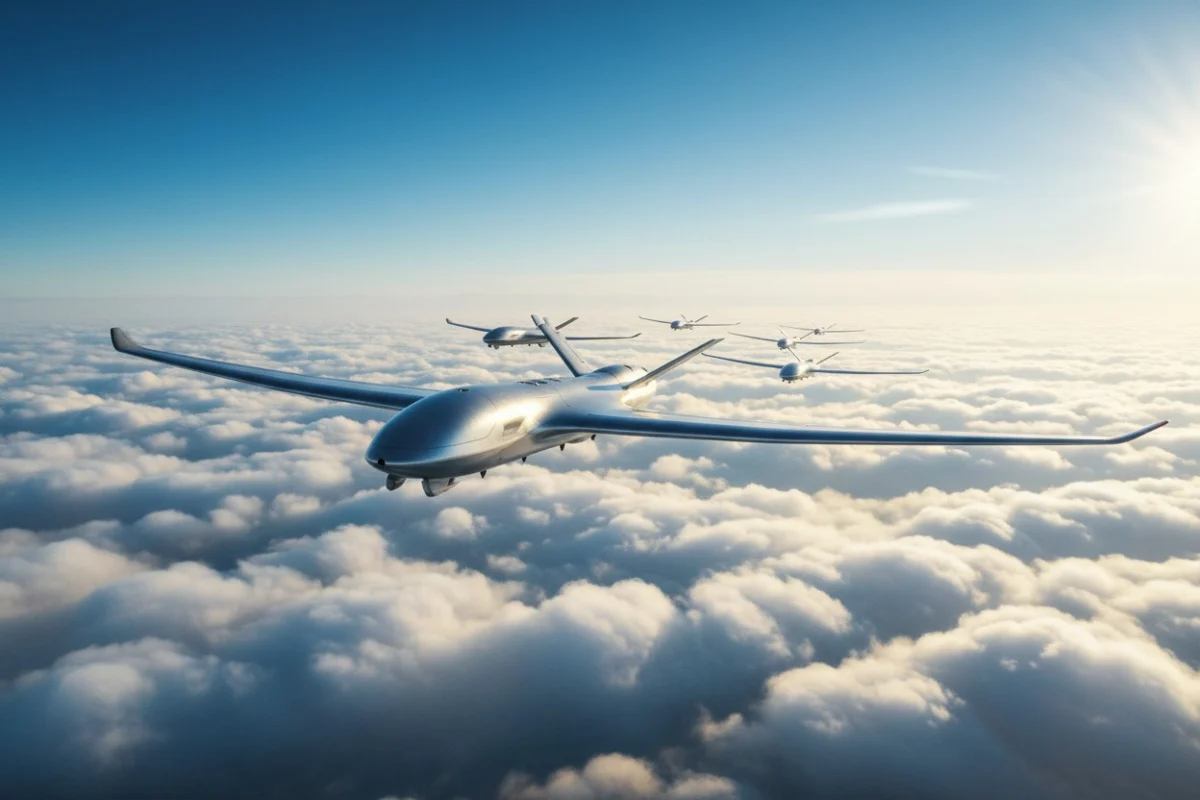
ARLINGTON, VA — In a move set to redefine the future of uncrewed aerial warfare, defense developer Swarm Aero has officially unveiled the "Gamera," a massive 72-foot uncrewed aerial system (UAS) boasting an astonishing reported range of 10,357 miles. Built from a clean-sheet design, the long-endurance platform is explicitly pitched as a low-cost, attrition-tolerant successor to the combat-proven MQ-9A Reaper fleet, which has anchored U.S. military surveillance and strike operations for over two decades.
The announcement comes at a critical juncture for the U.S. Department of Defense. As modern conflict shifts rapidly toward peer and near-peer adversary threats—particularly across vast maritime theatres like the Indo-Pacific—the military is scrambling to replace legacy platforms with systems capable of surviving in highly contested airspace. By emphasizing modularity, communications relay, and, crucially, a price point low enough to absorb heavy losses in swarm formations, Gamera represents a fundamental philosophical shift in how modern air forces view unmanned combat air vehicles (UCAVs).
Main Facts
The Gamera uncrewed aircraft system is a medium-altitude, long-endurance (MALE) platform characterized by several key metrics and design philosophies:
- Dimensions and Range: The aircraft features a substantial 72-foot wingspan/dimension and a reported maximum range of 10,357 miles—substantially outperforming the operational radius of the MQ-9A Reaper.
- Cost and Attrition Philosophy: Developed as a "cheap-to-lose" platform, Swarm Aero has engineered Gamera to be affordable even when deployed in massive, coordinated swarm missions. While an exact price tag per unit was not disclosed during the launch, the U.S. Air Force has openly stated a target cost of roughly $10 million per copy for its upcoming Reaper replacement initiatives.
- Mission Profile: Gamera is designed to conduct long-endurance intelligence, surveillance, and reconnaissance (ISR), as well as precision strike missions. The clean-sheet architecture emphasizes modular payloads, flexible sensor integration, and robust communications relay capabilities.
- Operational Environment: Company representatives emphasize that the system is purpose-built to operate effectively in heavily contested, electronically jammed airspace—a vital requirement given modern electronic warfare trends observed in recent global conflicts.
Despite the high-profile unveiling, Swarm Aero has not yet released a firm first-flight date, nor has it disclosed the financial value of any potential development or procurement contracts with the Pentagon.
Chronology of Development and Strategic Context
The emergence of the Gamera drone does not happen in a vacuum; it is the culmination of decades of evolving drone warfare, shifting geopolitical priorities, and urgent operational lessons learned from recent international conflicts.
The Rise and Limitations of the MQ-9A Reaper
Introduced in the early 2000s, General Atomics’ MQ-9A Reaper became the undisputed workhorse of the U.S. Global War on Terror, providing persistent overwatch and precision strike capabilities across the Middle East and Central Asia. However, designed primarily for asymmetric counter-insurgency warfare against adversaries lacking advanced air defenses, the Reaper has shown acute vulnerabilities in modern, high-threat environments.
Recent operational realities—most notably the loss of dozens of high-value U.S. uncrewed platforms in contested regions like the Middle East and Eastern Europe—exposed a critical flaw: the United States can no longer rely on expensive, exquisite platforms ($30+ million per unit) that cannot be easily replaced if shot down.
The Pivot to Peer Adversaries and the Indo-Pacific
In response to rising tensions with peer competitors such as China and Russia, the Department of Defense shifted its strategic focus toward the vast expanses of the Indo-Pacific theater. Budget documents over the past several years have consistently highlighted a desperate need for long-range uncrewed systems capable of traversing massive oceanic distances without continuous reliance on vulnerable forward-staging bases.
Recognizing these gaps, Swarm Aero initiated a clean-sheet design process, conceptualizing an aircraft that could bridge the gap between expensive, strategic high-altitude long-endurance (HALE) drones and expendable tactical platforms. The result is Gamera—an aircraft sized to carry meaningful payloads over transoceanic ranges while remaining cheap enough to mass-produce.
Supporting Data and Technical Specifications
While complete technical datasheets remain tightly guarded for proprietary and security reasons, published specifications and industry analysis paint a clear picture of Gamera’s intended operational profile.
Range and Endurance Comparison
To fully appreciate Gamera’s strategic value, one must look at its operational radius. The MQ-9A Reaper typically boasts a range of roughly 1,150 miles (1,850 kilometers) and an endurance of around 27 hours under optimal configurations. By contrast, Gamera’s reported 10,357-mile range represents an exponential leap forward. This capability allows the aircraft to launch from secure continental or deep-rear island bases, conduct multi-day patrols over contested maritime zones, and return without requiring complex, forward-deployed logistics chains.
Swarm Architecture and Modularity
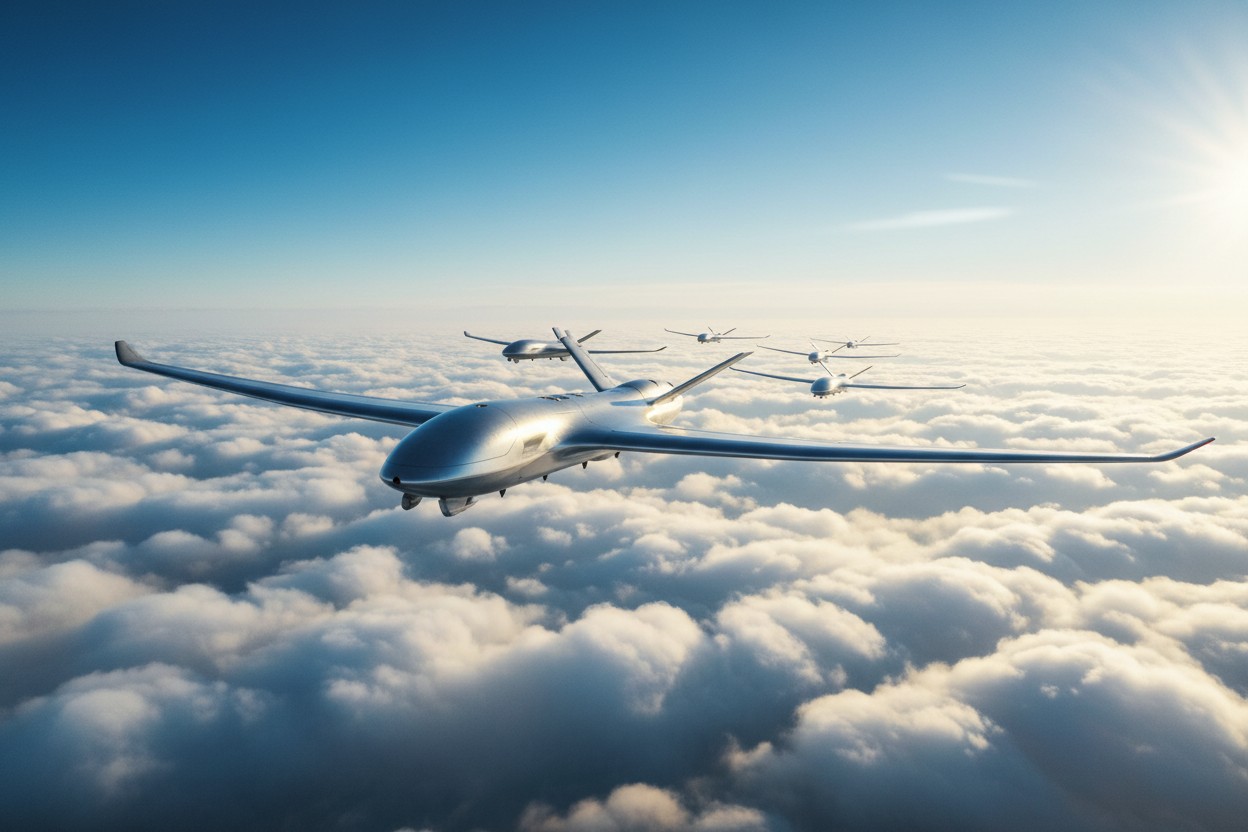
Unlike traditional heavy drones that rely on a dedicated, highly trained pilot and sensor operator crew flying single sorties, Gamera is designed from the ground up for swarm tactics. Utilizing advanced autonomous coordination algorithms, multiple Gamera airframes can share sensor data, distribute target tracking responsibilities, and saturate enemy integrated air defense systems (IADS).
Furthermore, the airframe’s modular design ensures that mission payloads can be rapidly swapped out depending on operational needs. Whether configured as a communications relay node, an electronic warfare jammer, an optical/infrared ISR platform, or a kinetic strike asset, the aircraft’s internal bays and hardpoints are engineered for maximum adaptability.
Official Responses and Industry Perspectives
The unveiling of the Gamera drone has elicited widespread commentary from military officials, defense analysts, and civil liberties watchdogs alike.
Military and Defense Analyst Reactions
Defense analysts interviewed following the announcement noted that Gamera’s combination of extreme range and modular payload capacity could effectively plug critical surveillance gaps in the Indo-Pacific.
"When you look at the tyranny of distance in the Pacific, traditional medium-range drones simply run out of gas or require vulnerable tanker support," said a Washington-based defense strategist. "An uncrewed platform that can self-deploy across thousands of miles, operate autonomously in a swarm, and still cost a fraction of traditional stealth assets changes the tactical math entirely."
Military officials speaking on the condition of anonymity added that the Gamera program aligns perfectly with the Pentagon’s broader push toward disaggregated, attrition-tolerant architectures. The U.S. Air Force’s ongoing search for low-cost Reaper alternatives has opened the door for agile, non-traditional defense contractors like Swarm Aero to challenge legacy aerospace primes.
Privacy and Civil Liberties Concerns
Not everyone is welcoming the proliferation of long-range, autonomous military surveillance technology with open arms. Civil rights organizations and privacy watchdogs have raised immediate concerns regarding the normalization of persistent aerial surveillance, drawing parallels between military drone technology and its domestic creep into civilian airspace.
While Swarm Aero representatives stated that the Gamera platform will strictly comply with existing international laws and military operational requirements, watchdogs remain skeptical. These concerns echo broader societal anxiety over the expansion of the surveillance state.
Civil liberties advocates point to ongoing legal battles—such as the American Civil Liberties Union’s (ACLU) lawsuits against federal law enforcement agencies over facial recognition and tracking software—as evidence of a slippery slope. Lawmakers, including Senator Ed Markey, have repeatedly warned that the American public is increasingly subjected to unwarranted monitoring. Senator Markey famously remarked:
"We cannot stand by as the tentacles of the surveillance state dig deeper into our private lives."
Critics argue that even though platforms like Gamera are ostensibly designed for foreign military battlefields, the normalization of high-altitude, long-endurance autonomous tracking technologies inevitably accelerates domestic dual-use applications and civilian privacy erosion.
Implications and Future Outlook
The introduction of Swarm Aero’s Gamera drone marks a pivotal moment in the evolution of military aviation. As the defense sector transitions away from expensive, exquisite manned and unmanned platforms toward high-volume, networked autonomy, aircraft like Gamera will likely dictate the outcome of future conflicts.
Immediate Next Steps
Swarm Aero officials have confirmed that the program is moving swiftly out of the conceptual design phase. The immediate roadmap includes rigorous ground testing, structural stress evaluations, and eventual flight demonstrations. Should these trials meet performance benchmarks, a formal production evaluation is expected to follow, potentially opening the door for multi-unit procurement contracts by the U.S. Air Force or allied nations.
Broader Industry Trends
Gamera’s debut underscores a broader global trend: the democratization and rapid acceleration of uncrewed technology. From the battlefield use of drones in Ukraine to industrial and commercial delivery applications worldwide, autonomous systems are transforming industries at a breathtaking pace.
Whether Gamera can successfully transition from an ambitious clean-sheet prototype to the undisputed backbone of the future U.S. uncrewed fleet remains to be seen. However, one reality is indisputable: the era of the slow, vulnerable, single-mission drone is drawing to a close, and the age of the long-range, attrition-tolerant swarm has officially arrived.