
For decades, the image of "real" fitness has been inextricably linked to the iron-clad architecture of the gym: the clanging of weight plates, the scent of rubber mats, and the rhythmic hum of treadmills. However, a growing body of evidence suggests that the physical walls of a commercial gym are not a prerequisite for building elite-level strength.
The fitness industry has long perpetuated the idea that gym membership is the "gold standard" for transformation. Yet, for many, this barrier to entry—be it financial, logistical, or psychological—acts as a gatekeeper that discourages progress. As we explore the science of strength training, it becomes clear that the location of your workout is secondary to the principles of your movement.
The Anatomy of Strength: Progressive Overload
At its core, all effective strength training, whether performed with a 400-pound barbell or simply your own body mass, relies on a singular, non-negotiable biological principle: progressive overload.
Progressive overload is the process of gradually increasing the stress placed upon the musculoskeletal system during exercise. When you subject your muscles to a level of tension they are not accustomed to, they experience microscopic tears. Through recovery and protein synthesis, the body repairs these fibers, making them thicker and more resilient.
In a conventional gym setting, this is achieved through external loading—adding plates to a bar or increasing the setting on a cable machine. It is a linear, mathematically simple approach. However, bodyweight training (or calisthenics) operates on the exact same physiological engine. Instead of adding external mass, you manipulate leverage. By altering the angle of your body or reducing the surface area of support, you force your muscles to work at a mechanical disadvantage, effectively increasing the "weight" they must lift without ever touching a dumbbell.
The Anatomy of a Setback: The "Ant-Man" Case Study
The confusion surrounding this topic is not merely academic; it has real-world consequences for those starting their fitness journey. Consider the case of a reader we will call "Ant-Man." Having successfully overhauled his nutrition and lifestyle, Ant-Man turned his attention to physical strength. He opted for a home-based, bodyweight-focused routine that fit perfectly into his schedule.
His momentum, however, was halted by a single, unsolicited comment from a friend: "That’s pointless. You’re going to have to go to a gym eventually if you want to make real progress."
This comment, while perhaps well-intentioned, served as a "deflationary" agent. In a follow-up, Ant-Man admitted, "I feel silly admitting this, but it really deflated me. I haven’t been able to get myself to work out for the last month."
This phenomenon is not isolated. Within the fitness community, there is a persistent, dogmatic insistence that "it only counts if you do it this way." This gatekeeping mentality creates unnecessary barriers. By suggesting that home workouts are inferior or "lesser," we inadvertently tell beginners that their efforts are trivial. This discourages consistency—the single most important variable in long-term health.
The Case for Calisthenics: Why Bodyweight Works
If you look at the pinnacle of human physical performance—gymnasts, circus performers, and elite calisthenics athletes—you see individuals with immense power, muscular density, and body control. These athletes do not rely on heavy iron plates; they rely on mastery of their own mass.
Advantages of the Bodyweight Approach:
- Accessibility: Your "gym" is wherever you are. Whether in a hotel room, a park, or your living room, the barriers to entry are effectively zero.
- Highly Scalable: Every movement can be regressed or progressed. A standard push-up is a foundational movement, but by elevating your feet (decline push-up) or moving to a one-armed variation, you can continue to apply progressive overload for years.
- Functional Integration: Bodyweight movements often require significant core stabilization and balance, training the body to move as a cohesive unit rather than isolating specific muscle groups.
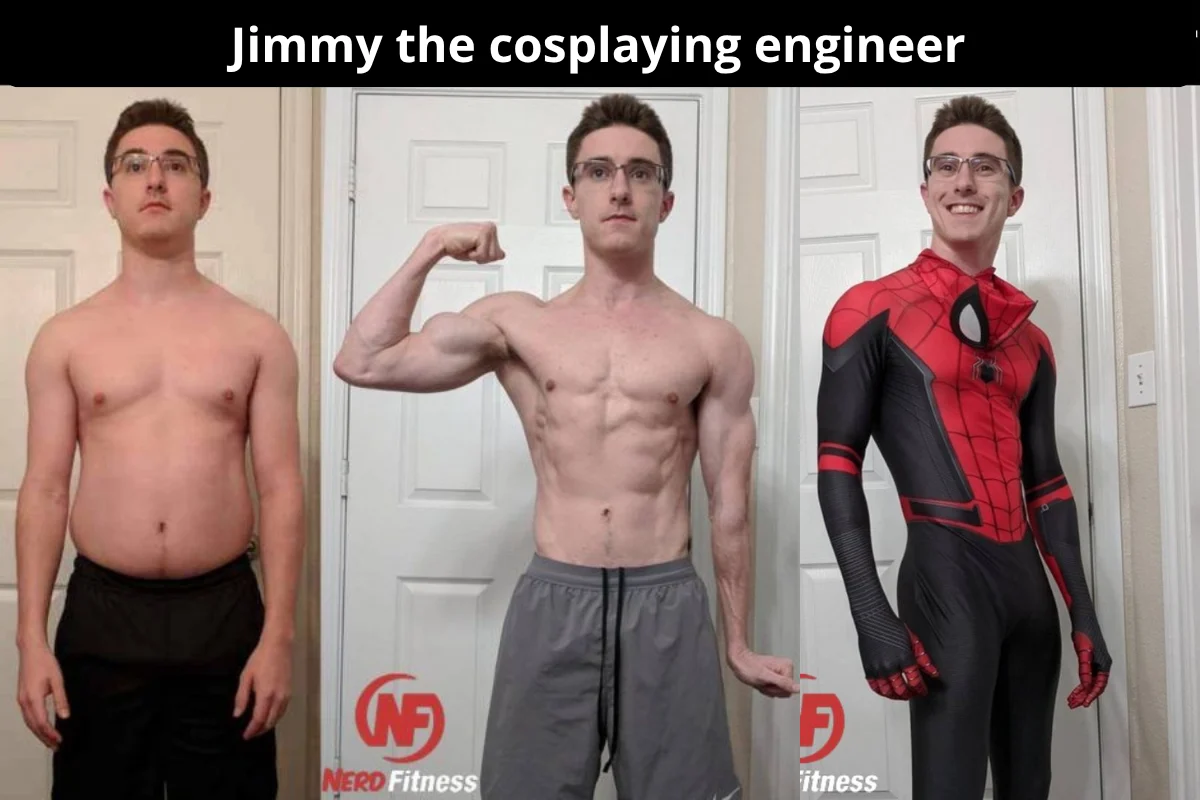
Our client, Jimmy, a busy engineer, provides a perfect case study. Like many, he was skeptical about his ability to build significant muscle at home. After a year of dedicated, progression-based bodyweight training, his transformation was so profound he was able to participate in professional-level cosplay as his favorite superhero, Spider-Man. His success was not the result of a gym membership, but of his commitment to the principle of intensity.
The Case for the Gym: When External Loading Wins
While bodyweight training is remarkably effective, it is important to maintain a balanced perspective. Gyms and external weights offer distinct advantages that are difficult to replicate at home:
- Efficient Pulling Movements: While you can do pull-ups at home with a bar, heavy vertical and horizontal pulling (like heavy barbell rows) is often more convenient in a gym environment.
- Simplified Tracking: It is objectively easier to track progress when you are adding 2.5 pounds to a bar than when you are adjusting the leverage of a complex calisthenics movement.
- Specialized Equipment: For those interested in powerlifting or specialized bodybuilding, the specific machines and heavy free weights in a gym offer a level of convenience that is hard to match in a residential setting.
The takeaway is not that the gym is "bad," but that it is a tool. If that tool helps you stay consistent, use it. If that tool feels like a chore that leads to skipping workouts, it is the wrong tool for your current season of life.
The Pillars of Progress
Regardless of your setting, your results are dictated by three foundational pillars:
- Consistency: The best workout is the one you actually do. If a 20-minute home workout happens four times a week, while a 90-minute gym workout happens only once every two weeks, the home workout is objectively superior for your growth.
- Intensity: You must challenge your muscles to the point of fatigue or near-failure. Without intensity, there is no signal for the body to adapt and grow.
- Progressive Overload: You must continue to make the exercise more difficult over time. If you do the exact same routine for six months, you will cease to see changes.
Implications for the Future of Fitness
The fitness industry is undergoing a shift toward democratization. We are moving away from the "temple of iron" mentality and toward a more flexible, results-oriented framework. The implication for the average person is simple: you have permission to start where you are.
The idea that you need a gym to "get strong" is a vestige of a bygone era. Today, we have the knowledge to manipulate movement, leverage, and volume in ways that render the gym optional. Whether you choose to invest in a squat rack for your garage or simply focus on mastering the perfect handstand push-up, the result is the same: a stronger, more capable version of yourself.
Conclusion: Start Today
If you have been holding back, waiting for the "right" gym, the "right" membership, or the "right" equipment, you are falling for the same trap that sidelined Ant-Man. Your progress is not owned by a building. It is owned by your intent and your consistency.
Whether you are just beginning or looking to scale your current routine, remember that the most important element of training is the training itself. Do not let the dogmas of the fitness industry dictate your boundaries. Start with what you have, apply the principles of progressive overload, and watch as your body adapts to the challenge you set before it.
Whenever you are ready to take the next step, there are resources available to help you build confidence in your fitness journey. If you are looking for a structured, scalable approach to home training, consider exploring bodyweight adventure programs that focus on progression-based results. The systems used by fitness professionals today are designed to work for you, not against you.