For most of his professional life, Joe White lived in the world of high-stakes precision. As a veteran of the technology sector and an expert in information security, White was paid to be the skeptic in the room. His career was built on the rigorous assessment of risk, the identification of vulnerabilities, and the cold, calculated evaluation of systems that others took for granted. To White, risk was not an abstract philosophy; it was a professional discipline.
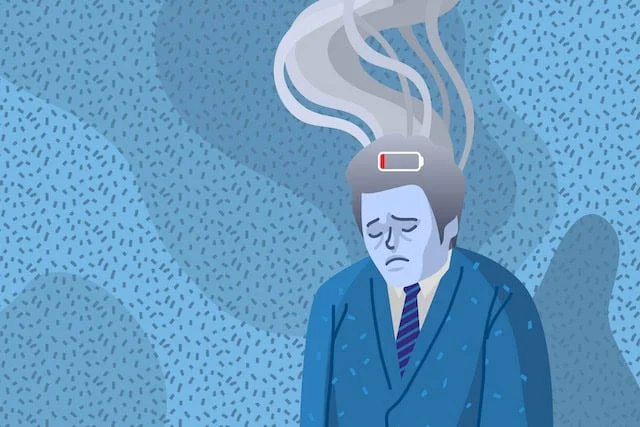
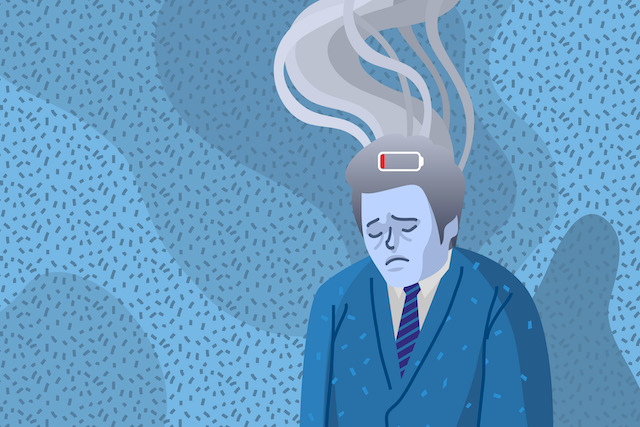
Yet, despite his decades of experience in identifying system failures, White fell victim to the most significant vulnerability of his life—a blind spot that would cost him his $3 million retirement nest egg. The culprit was not a sophisticated cyberattack or a catastrophic market crash, but rather a silent, slow-moving internal erosion: severe, chronic burnout.
The Anatomy of the Loss
The financial loss occurred through an offshore cryptocurrency lending platform, a sector notorious for its lack of regulatory oversight and high-risk yield structures. In the wake of the loss, which occurred over three years ago, White has spent his time dissecting not just the platform’s failures, but his own cognitive state at the time of the investment.
The core of the tragedy lies in a profound irony: a man who spent his life creating "layered defenses" and "failsafes" for corporate infrastructure had failed to implement a single control for his own decision-making process. By his own admission, White was operating with a "single point of failure"—himself.
Chronology of a Cognitive Decline
To understand how a seasoned security professional could be blinded by his own judgment, one must look at the slow creep of cognitive depletion.
- The Baseline of Pressure: For years, White functioned within the high-intensity environment of startups and tech firms. Long hours, constant deadlines, and the expectation of immediate problem-solving were not anomalies; they were the baseline.
- The Feedback Loop of Functionality: White notes that his ability to continue working—to solve technical problems and hold complex meetings—masked the underlying reality of his exhaustion. He had learned to "push through" fatigue, mistakenly interpreting his continued productivity as proof of his health.
- The Threshold of Impairment: There was no singular "crash" moment. Instead, there was a gradual slide where poor sleep, impaired concentration, and heightened anxiety became his "new normal."
- The Decision: At the peak of this cognitive depletion, White made the decision to move his life savings into the offshore crypto platform. Because he was still "functioning," his brain signaled that he was in control, a dangerous illusion that shielded him from the objective risk of the investment.
The Science of Functional Burnout
Psychological research into burnout increasingly supports White’s experience. Burnout is frequently mischaracterized as a state of total collapse—an inability to get out of bed or perform basic tasks. However, "functional burnout" is a far more insidious variant.
In this state, an individual’s cognitive executive functions—the very tools required for high-level risk assessment—are significantly dulled. Research suggests that chronic stress affects the prefrontal cortex, the area of the brain responsible for decision-making, impulse control, and critical analysis. When an individual is chronically exhausted, they do not necessarily stop working; they continue to work, but they do so with a degraded "operating system."
White’s experience highlights the "dangerous feedback loop": the brain is simultaneously the instrument of judgment and the patient suffering from the ailment. When the tool itself is faulty, it cannot accurately report on its own condition.
Supporting Data: The Cost of Ignoring the Self
The financial implications of White’s burnout are, unfortunately, not unique in the modern landscape of high-pressure professional environments. According to recent industry surveys:
- Executive Decision-Making: Studies show that sleep-deprived executives are 30% more likely to exhibit "tunnel vision," focusing on immediate gains while ignoring long-term systemic risks.
- The Crypto Vulnerability: The offshore crypto sector, which saw massive growth between 2020 and 2022, relied heavily on "sophisticated" marketing that targeted high-net-worth individuals who were already experiencing pandemic-related fatigue.
- Cognitive Load: When an individual is in a state of high stress, the brain’s ability to process complex, multi-variable information—such as the risk of an unregulated financial instrument—is equivalent to operating under the influence of alcohol.
Implications for Modern Professionals
The fallout from White’s experience serves as a cautionary tale for the tech industry and beyond. The "hustle culture" that rewards perpetual availability and extreme output is inherently flawed because it ignores the biological necessity of rest.
The "Single Point of Failure" Concept
In information security, you never rely on one person to secure a system. You implement "four-eyes" principles—requiring two people to approve a critical change. White argues that individuals should apply this to their personal lives. If a decision has the potential to alter one’s life permanently, it should never be made in isolation, especially when the individual is under high professional stress.
Redefining Recovery
Recovery, according to those who have studied burnout, is not merely a vacation. It is a systemic overhaul. This includes:
- Prioritizing Sleep: Sleep is not a luxury; it is the primary mechanism for cognitive repair.
- External Auditing: Professionals should cultivate relationships where they can be "checked" by others—friends or family who can act as a mirror to their mental state.
- Decision Diets: When exhaustion levels are high, the best course of action is to reduce the number of high-stakes decisions being made, rather than trying to force through them.
A Call for Accountability and Awareness
White is currently pursuing legal avenues to hold the offshore platform accountable, yet he remains refreshingly transparent about his own role in the disaster. He is not seeking to offload the blame, but rather to use his story as a catalyst for a broader conversation about professional health.
"Competence can become its own vulnerability," White notes. When someone has spent decades being the "smartest person in the room," they become uniquely susceptible to the belief that they are immune to the biological costs of stress.
For the reader, the lesson is immediate: if you are working harder to achieve less, if your baseline for stress has shifted, and if you are making major life decisions without outside counsel, you are not functioning "normally"—you are likely functioning on the edge of a failure.
As White poignantly reflects, "I spent a career looking for vulnerabilities in complicated systems. One of the most consequential vulnerabilities I ever encountered was one I couldn’t see while I was inside it."
The $3 million loss was the price of that blindness. By sharing his journey, White hopes that others will recognize the signs of their own "functional" decline before they reach the point where the consequences are irreversible. In a world that prizes output above all else, the most radical act of professional responsibility may simply be the act of slowing down, seeking help, and admitting that the brain, like any other system, requires a failsafe.
Joe White is currently raising funds to continue his pursuit of accountability and legal recourse regarding the platform that facilitated his loss. For more information on his story or to support his efforts, you can visit his GoFundMe page.