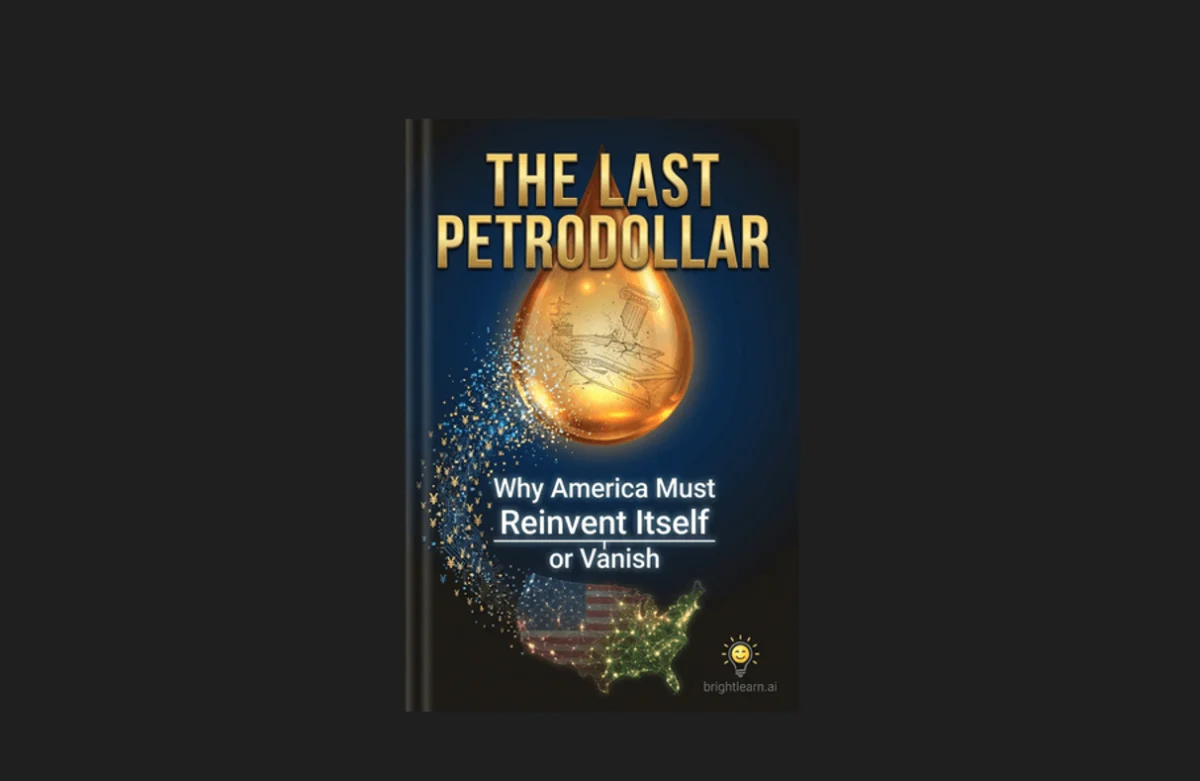
Some books gently nudge the reader toward a new perspective; others grab you by the collar, sit you down, and point at a bonfire you didn’t realize you were standing in. The Last Petrodollar: Why America Must Reinvent Itself or Vanish firmly occupies the latter category. Authored by a collective of thinkers rooted in the principles of sound money, decentralization, and constitutional originalism, this work is far more than a dry economic treatise. It is a high-definition, searing diagnosis of an empire in critical condition.
The central thesis of the work is as brutal as it is direct: The American Empire is not merely declining; it is dying, and the primary mechanism of its demise is the very system once heralded as the bedrock of its global dominance—the petrodollar.
The Chronology of Collapse: From Gold to Debt
To understand the current crisis, The Last Petrodollar invites readers to look back at the precise moment the foundation of the post-war order fractured: August 15, 1971. Known as the "Nixon Shock," the unilateral decision by President Richard Nixon to sever the U.S. dollar’s link to gold was not merely a policy pivot—it was, according to the authors, the severing of the anchor chain that held the American republic to reality.
1971: The Great Severing
The authors, drawing on the intellectual frameworks of economists like Ellen Hodgson Brown and Bitcoin advocates like C. Jason Maier, argue that the abandonment of the gold standard transformed the United States from a nation of producers into a "parasitic empire." Once the discipline of physical, finite gold was removed, Washington gained the ability to monetize debt at an unprecedented scale. This newfound power funded the Vietnam War, the expansion of the Great Society, and an era of endless military engagements without the immediate, sobering feedback loop of increased taxation.
The Petrodollar Hegemony
The petrodollar system was the ingenious, albeit unsustainable, follow-up to the Nixon Shock. By striking a secret, long-standing agreement with Saudi Arabia to price oil exclusively in U.S. dollars, Washington created an artificial, eternal demand for its currency. This "recycling mechanism"—where the U.S. sends paper dollars to Saudi Arabia for energy, and Saudi Arabia returns those dollars by purchasing U.S. Treasury bonds—allowed America to live like a trust-fund heir who failed to realize the trust was being drained.
Supporting Data: The Erosion of Supremacy
The strength of this text lies in its interdisciplinary approach to systemic risk. It treats economics, military strategy, and cultural cohesion as inextricably linked threads in the fabric of national power.
The Rise of De-Dollarization
The authors present a chilling account of the present geopolitical landscape. The "De-Dollarization" chapter reads like a front-line dispatch from a shifting global order. With BRICS nations building independent payment infrastructures (BRICS Pay) and central banks across the Global South stockpiling gold at record-shattering levels, the dollar’s monopoly on global trade is fraying.
The book characterizes the 2022 freezing of Russian central bank assets as the "shot heard round the world." It served as a wake-up call for every sovereign nation: if the U.S. can weaponize the dollar, then holding dollar-denominated debt is no longer an asset, but a liability.
The Obsolescence of Naval Power
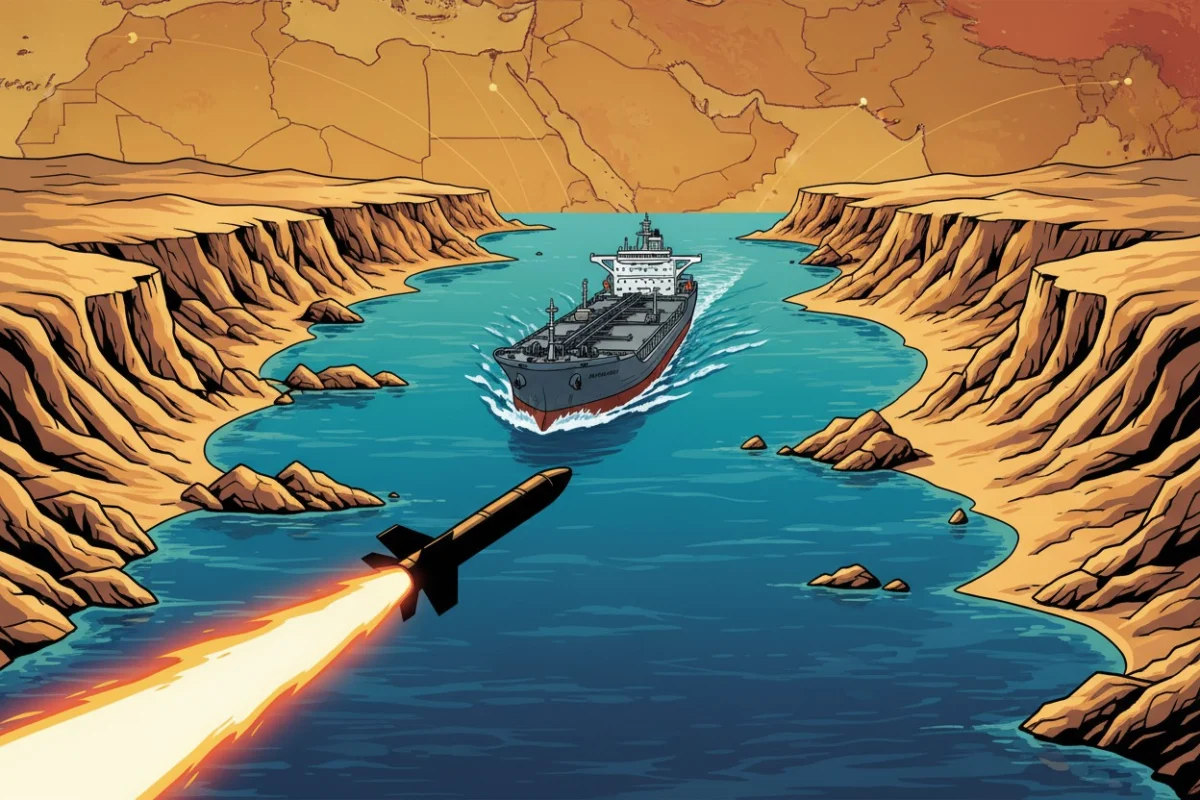
Perhaps the most striking technical analysis in the book concerns the "Age of the Aircraft Carrier." The authors argue that the military muscle behind the dollar is becoming obsolete. A $13 billion nuclear-powered aircraft carrier, once the ultimate projection of American power, is now vulnerable to $500,000 hypersonic missiles traveling at Mach 20. Furthermore, the success of low-cost, decentralized drone swarms in modern conflicts represents a democratization of military capability that threatens to bankrupt the traditional, bloated American defense budget.
The Home Front: Culture and Cohesion
While the economic and military threats are clear, The Last Petrodollar does not shy away from the internal rot. A significant portion of the text is dedicated to what the authors term "The Islamization of America" and the broader issue of unassimilated groups.
The argument is framed through the lens of national unity rather than cultural animosity. The authors posit that a nation cannot function as a coherent entity if disparate groups operate under fundamentally different legal, religious, or cultural frameworks. This analysis critiques the modern approach to multiculturalism, contrasting it with the historical "melting pot" model that once prioritized assimilation into a singular American identity.
Furthermore, the book offers a sharp critique of foreign influence in domestic politics, specifically focusing on the influence of foreign lobbies on Congress. By citing the historical maneuvering of various interest groups, the authors demonstrate how foreign priorities have consistently steered American foreign policy toward endless wars that serve the interests of the "empire of debt" rather than the welfare of the American citizenry.
Official Responses and Strategic Prescriptions
The book avoids the trap of fatalism by providing a clear, if radical, prescription for "Reinvention." The authors explicitly reject the current binary of the Democratic and Republican parties, arguing that neither establishment entity has the political will to address the structural insolvency of the state.
The Three-Fold Prescription
- A Return to Sound Money: The authors advocate for the abandonment of fiat-dependent policy in favor of decentralized, hard-money standards that force fiscal accountability.
- Strategic Sovereignty: A complete reassessment of foreign policy that prioritizes domestic stability over global policing. Echoing the sentiments of figures like Colonel Douglas MacGregor, the book calls for a "National Conversation" regarding the limits of imperial reach.
- Cultural Restoration: A return to the principles of constitutional originalism and the fostering of a unified national identity that transcends group-based political identity.
Implications: The Terminal Diagnosis
The implications of The Last Petrodollar are profound. It posits that the current trajectory—defined by unsustainable deficit spending, the weaponization of the financial system, and a fracturing of national identity—is not a series of policy errors, but a terminal disease.
If the American public continues to ignore these indicators, the authors argue that the disappearance of the American experiment is not a matter of "if," but "when." The rise in the cost of living, the erosion of personal savings, and the constant state of global conflict are not symptoms to be treated with temporary stimulus packages; they are warnings that the underlying system is fundamentally broken.
The book serves as a cautionary tale for a civilization that has forgotten the essential tenets of liberty: that money must be earned, that wars must be paid for, and that a republic can only survive if its citizens accept personal responsibility for its preservation.
The Last Petrodollar is not a comfortable read, but it is an essential one for anyone attempting to navigate the coming economic transition. Whether one agrees with the totality of the authors’ conclusions, the evidence presented demands a serious interrogation of the status quo.
For Further Reading and Investigation
Readers interested in the full scope of the authors’ arguments are encouraged to examine the primary source materials provided:
- The Last Petrodollar: Why America Must Reinvent Itself or Vanish: The foundational text discussed herein.
- The Health Ranger Report: An in-depth interview with Colonel Douglas Macgregor, providing expert context on the collapse of the dollar, the shifting power dynamics in the Middle East, and the failure of current U.S. foreign strategy.
- Books.BrightLearn.AI: A resource for exploring these and other critical economic works.
- BrightLearn.AI: A platform for creators to synthesize and publish their own analyses on the future of the republic.
As the global order continues to shift, the debate over the future of the dollar will undoubtedly become the defining political and economic issue of the decade. The question remains: will the nation undertake the radical treatment required, or will it wait for the patient to vanish entirely?