WASHINGTON — The Trump administration has effectively shelved its controversial preparations for unilateral U.S. military airstrikes on Mexican soil, according to a report by The New York Times citing current and former U.S. and Mexican officials. The shift marks a significant pivot from the aggressive rhetoric that characterized the opening months of President Donald Trump’s second term, during which the White House repeatedly floated direct kinetic action against transnational drug cartels operating within Mexico’s borders.
While the White House has not formally confirmed the policy change, officials speaking on the condition of anonymity indicate that active preparations for direct military strikes have been paused. This de-escalation follows a marked drop in illegal border crossings, stepped-up bilateral security and intelligence operations, and renewed progress toward a comprehensive trade agreement between Washington and Mexico City under Mexican President Claudia Sheinbaum.
The cooling of tensions over Mexico also coincides with a strategic reallocation of Washington’s geopolitical pressure, with trade and security disputes involving Canada increasingly drawing the primary focus of the administration’s cross-border friction.
Main Facts: The Shift Away from Kinetic Strikes
The decision to pause plans for military intervention inside Mexico represents a tactical retreat from what had been a central pillar of President Trump’s campaign and early second-term strategy to dismantle drug cartels by any means necessary.
For months, the administration balanced aggressive saber-rattling with tangible military preparations. In August 2025, the White House issued a classified directive instructing the Department of Defense to draft operational plans for potential lethal strikes targeting cartel infrastructure inside Mexico. These threats were frequently underscored by public pronouncements from Trump himself. In November 2025, Trump declared he would be "proud" to strike cartel targets on land, boasting that U.S. intelligence agencies knew "every route" and "the addresses of every drug lord." By January 2026, he told Fox News host Sean Hannity that the United States was preparing to take the fight directly to mainland targets, asserting, "We knocked out 97 percent of the drugs coming in by water, and we are going to start now hitting land about the cartels."
However, mounting diplomatic pressure, combined with high-level intelligence sharing and joint enforcement operations, has altered the strategic calculus. According to The New York Times, improving security metrics—including a reduction in unauthorized border crossings and Mexico’s aggressive domestic crackdown on high-profile cartel figures—have convinced the White House that direct airstrikes are currently unnecessary. No formal announcement regarding the shelving of the plans has been made, but administration officials confirm that no military strikes are currently authorized or planned.
Chronology: Escalation, Cartel Designations, and Policy Shift
The trajectory of U.S.-Mexico relations over the past two years has been marked by a volatile cycle of pressure campaigns, targeted designations, and sudden security breakthroughs.
- December 2024: Before taking office, Donald Trump escalates his war on cartel leadership by offering a $15 million reward for information leading to the capture of Nemesio Rubén Oseguera Cervantes, universally known as "El Mencho," the ruthless head of the Jalisco New Generation Cartel (CJNG).
- Early 2025: The White House officially designates the CJNG as a Foreign Terrorist Organization (FTO), setting the legal groundwork for potential military and financial targeting under counterterrorism authorities.
- August 2025: The administration issues a classified directive ordering the Pentagon to formulate plans for lethal operations inside Mexico by mid-September.
- February 2026: In a watershed moment for bilateral enforcement, Mexican special forces—reportedly backed by critical U.S. intelligence support—track down and engage El Mencho in a massive shootout. More than 70 people are killed in the operation. El Mencho dies shortly after his arrest from wounds sustained in the battle. Trump responds on social media, posting, "Mexico must step up their effort on Cartels and Drugs!"
- Spring & Summer 2026: The death of El Mencho unleashes a wave of violent reprisal attacks by the CJNG, setting hundreds of locations across Mexico ablaze and putting American tourists at risk in destinations like Puerto Vallarta. Simultaneously, the State Department expands its terrorist designations, with Secretary of State Marco Rubio naming the Juárez cartel and Los Viagras as FTOs and Specially Designated Global Terrorists in July 2026.
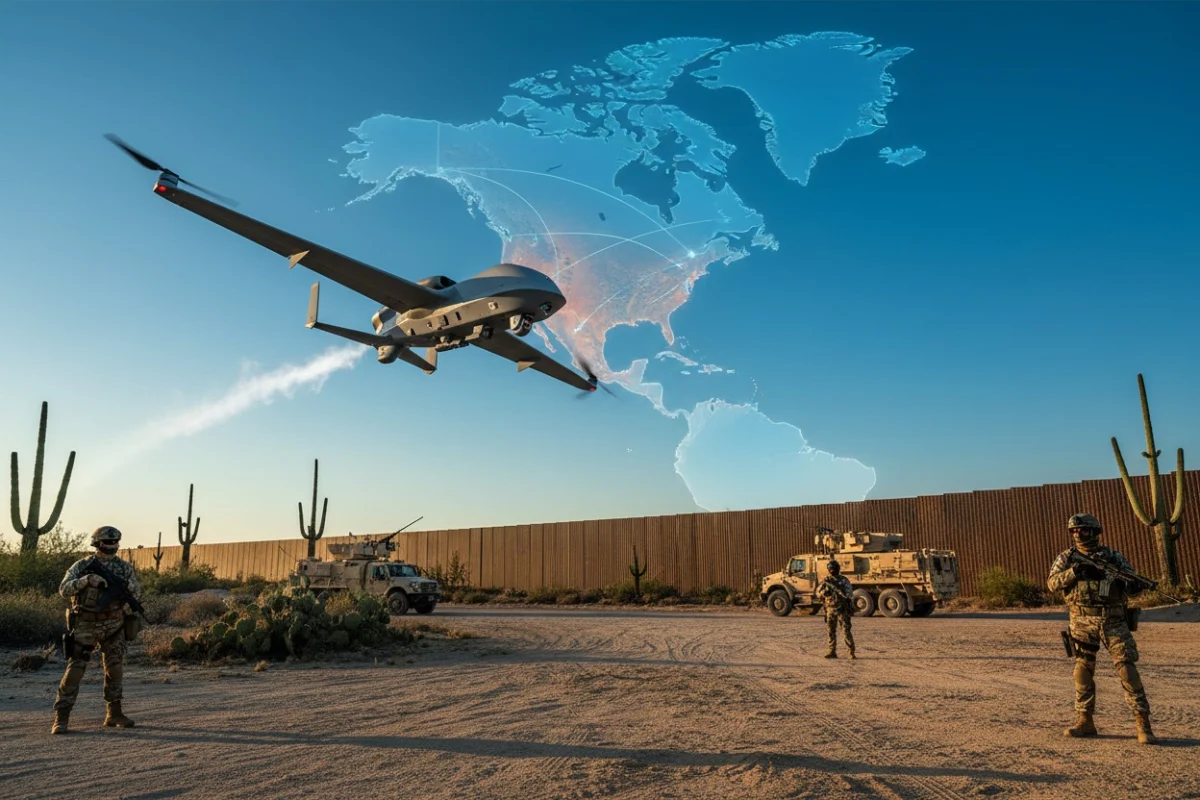
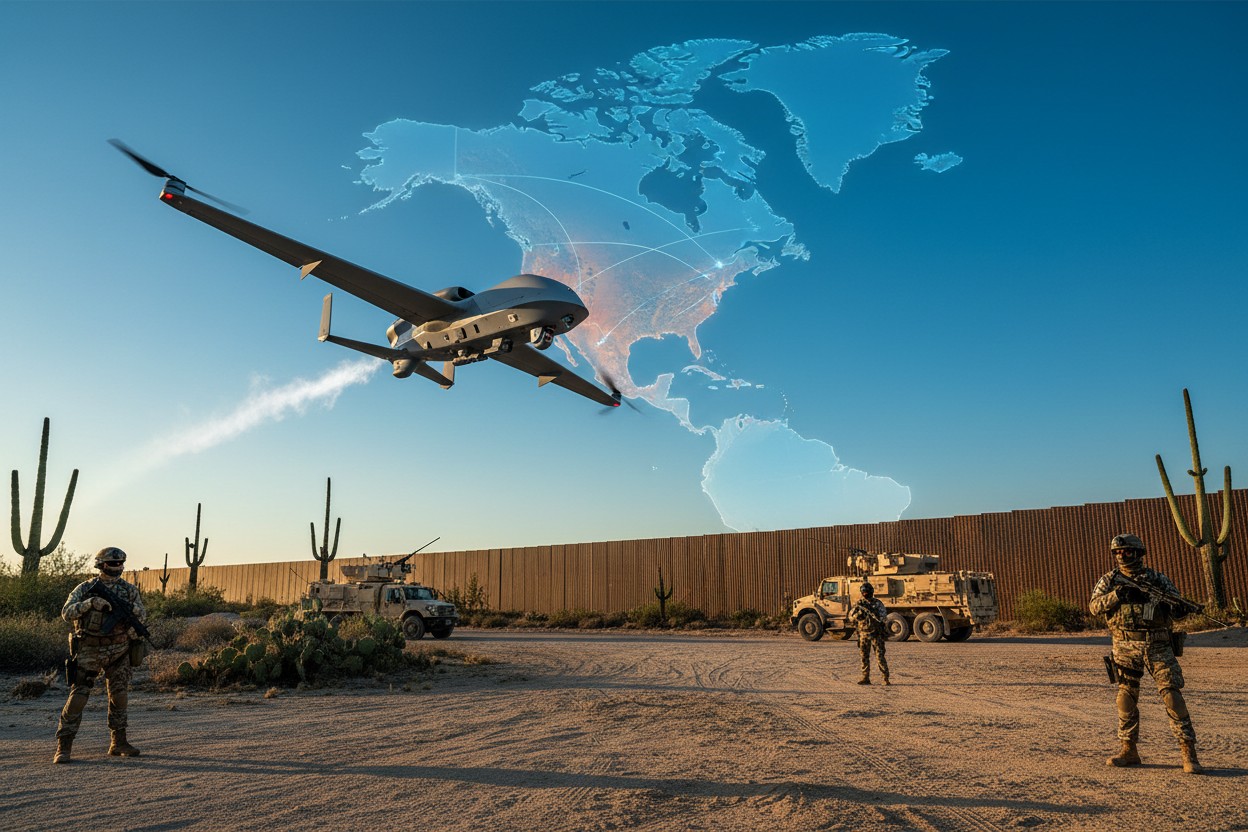
- August 2026: Joint security operations ramp up significantly. U.S. and Mexican forces deploy alongside one another in "mirror" patrols along both sides of the border, utilizing armored vehicles, special operations insertions, and truck-mounted weaponry. Meanwhile, the U.S. military shoots down three cartel drones near the Texas border using advanced laser systems.
- September 2026: Diplomatic breakthroughs take center stage. Following a phone call between Trump and President Claudia Sheinbaum, both leaders announce that a new trade deal is "very close." Shortly after, Beijing announces new export permit requirements for precursor chemicals bound for North America, addressing a key U.S. demand ahead of a planned summit between Trump and Chinese President Xi Jinping.
Supporting Data: Intelligence, Enforcement, and Economic Pressure
The diplomatic thaw has not happened in a vacuum; it is backed by an unprecedented web of intelligence, technological, and economic enforcement mechanisms deployed across North America.
Intelligence and Surveillance Operations
Bilateral security cooperation has increasingly relied on advanced surveillance and technological integration. Reports indicate that the CIA has operated drone surveillance missions over Mexican territory specifically targeting illicit fentanyl manufacturing laboratories. Additionally, the U.S. Navy has deployed P-8 Poseidon maritime patrol aircraft for reconnaissance operations off the coast of Mexico near Tijuana.
On the domestic front, the physical border has seen direct kinetic engagements. In August 2026, the North American Aerospace Defense Command (NORAD) and U.S. Northern Command (NORTHCOM) confirmed that the U.S. military successfully neutralized three drug cartel surveillance and smuggling drones in southern Texas using a directed-energy laser system.
Economic and Financial Sanctions
Beyond military and intelligence assets, the Trump administration has aggressively utilized the U.S. financial system to choke off cartel revenue streams. The Treasury Department has slapped sanctions on more than 50 Mexican individuals and corporate entities tied to the CJNG. Notably, this economic dragnet has expanded far beyond traditional front companies, ensnaring unexpected commercial sectors such as specific tequila manufacturers and even a baby shoe manufacturing enterprise suspected of money laundering.
Trade friction has occasionally flared up independently of the cartels. In August 2026, the U.S. briefly suspended agricultural inspections of Mexican avocados in the western state of Michoacán due to mounting security threats against inspectors. However, after Mexican authorities provided adequate security guarantees, government activities and trade flows were fully restored.
Official Responses and Diplomatic Warmth
The tone emanating from Washington and Mexico City has shifted dramatically from mutual recrimination to public praise.
Speaking before the United Nations, President Trump struck a remarkably cooperative tone regarding his southern neighbor: "I’m very proud to tell you we have a very good relationship with the Mexican government. We’ve made great strides, very great strides with Mexico."
This rhetorical embrace mirrors statements from Mexican President Claudia Sheinbaum, who confirmed that her administration had successfully negotiated agreements with Washington on several critical bilateral fronts following high-level diplomatic calls. Officials from both nations attribute this diplomatic alignment to tangible results on the ground: a measurable drop in unauthorized migration, aggressive Mexican military posture against cartel capos, and steady momentum toward finalizing a renewed trade agreement.
Implications: Geopolitical Realignments and Warnings of Quagmires
While the immediate threat of unilateral U.S. airstrikes has subsided, independent analysts and regional experts warn that the underlying structural risks of the drug war remain acute.
The decision to shelf airstrikes avoids what critics warned could have been a catastrophic escalation. In early 2025 broadcasts, independent commentators such as Mike Adams of Brighteon.com voiced widespread concerns within alternative security circles, warning that kinetic cross-border strikes risked normalizing direct military conflict and inviting inevitable, asymmetric retaliation against American interests. Adams drew sharp historical parallels to the Vietnam War, cautioning that military intervention in Mexico risked transforming the region into an inescapable quagmire.
Furthermore, the fragmentation of cartels following the death of leaders like El Mencho has demonstrated that decapitation strikes do not automatically end the drug trade; instead, they frequently trigger violent internal succession struggles and urban warfare that spill over into tourist zones.
For now, the Trump administration appears to have concluded that economic leverage, intelligence-sharing, and cooperative "mirror" border enforcement yield better results than unilateral military action. Whether this fragile detente can withstand the inevitable shocks of the North American drug trade and upcoming trade negotiations remains the central question for the remainder of Trump’s term.