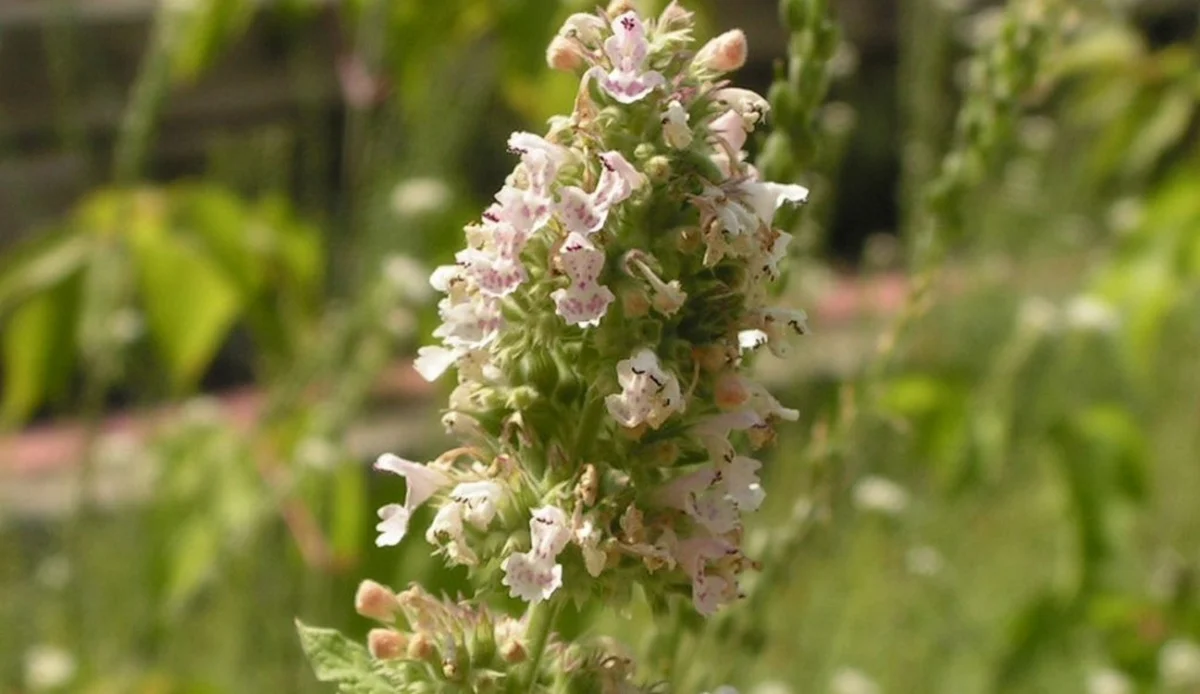
In the fight against one of humanity’s oldest and most persistent enemies—the malaria-carrying mosquito—a team of researchers has turned toward an unlikely ally found in common gardens: Nepeta cataria, or catnip. A collaborative effort between Welsh and Ugandan scientists has revealed that an essential oil derived from this plant acts as a highly effective mosquito repellent, potentially offering a sustainable, low-cost lifeline for rural communities in sub-Saharan Africa.
Presented recently at an international science conference in Florence, Italy, the findings suggest that the chemical compound nepetalactone, naturally occurring in catnip, performs on par with DEET, the industry standard for insect repellents. As malaria parasites continue to evolve, developing dangerous resistance to frontline medical treatments, this breakthrough in preventative care could represent a seismic shift in how we approach public health in developing regions.
The Chemistry of Defense: How Nepetalactone Works
The secret behind the plant’s efficacy lies in its volatile oil. Nepetalactone is the same chemical compound responsible for the euphoric, "high" state that many domestic cats exhibit when exposed to the plant. However, for mosquitoes, the compound is far from intoxicating; it is a powerful deterrent.
Scientific analysis indicates that nepetalactone interferes with the olfactory receptors of various mosquito species. By effectively "blinding" the mosquito’s sense of smell, the compound prevents the insect from identifying humans as potential hosts. In rigorous laboratory testing, a lotion containing a 6% concentration of nepetalactone demonstrated a level of efficacy equivalent to DEET in preventing mosquitoes from landing on human subjects. Even at a lower concentration of 2%, the repellent remained highly competitive, offering a viable alternative for those who cannot afford or access synthetic chemicals.
Chronology: From Traditional Wisdom to Scientific Validation
The journey from a garden herb to a clinical-grade repellent has been a multi-year project marked by deep cultural engagement and rigorous testing.
The Roots of Knowledge
The use of Nepeta cataria is not a new discovery; it has been utilized for centuries in various traditional medicines and folk practices as a natural insect repellent. The current research initiative was born out of a desire to bridge the gap between this traditional knowledge and modern scientific validation.
The Collaboration
Dr. Simon Scofield, a senior lecturer at Cardiff University, spearheaded the project alongside Ugandan partners. The primary objective was not merely to prove the efficacy of the plant, but to create a system that could survive within the economic realities of rural Uganda.
Recent Milestones
- Initial Feasibility Studies: Researchers identified that the local climate in Uganda was ideal for the cultivation of Nepeta cataria.
- Laboratory Trials: Controlled studies compared various concentrations of nepetalactone-based lotions against standard DEET formulations.
- The Florence Presentation (2026): The project team presented their findings at the Florence international science conference, drawing significant attention from global health experts who recognized the potential for a low-cost, decentralized manufacturing model.
Supporting Data: Why DEET is No Longer Enough
To understand the importance of this research, one must look at the economic and biological barriers currently hindering malaria control.
The Economic Barrier
For subsistence farmers in rural Uganda, the cost of commercial mosquito repellents is often prohibitive. DEET—N,N-Diethyl-meta-toluamide—is an effective synthetic chemical, but it is imported, processed, and sold at market prices that remain out of reach for a significant portion of the population. When a choice must be made between food and a luxury repellent, the repellent is often sacrificed, leaving families vulnerable to mosquito bites.
The Biological Challenge
Malaria is not a static threat. The parasite (Plasmodium) responsible for the disease is rapidly developing resistance to established anti-malarial drugs. As medical treatment becomes more complex and expensive, the focus of the global health community has shifted toward prevention.
"Mosquito repellents represent one of the primary measures used to reduce the risk of malaria by reducing mosquito landing and biting events," Dr. Scofield explained. "There is a real need to reduce the reliance on malaria medicines because malaria can develop resistance to drugs. By stopping the bite before it happens, we reduce the burden on the medical system."
Official Responses and Strategic Implementation
The research team has been careful to design a product that is not just a scientific success, but an economic one. By involving local communities in the distillation and production cycle, the researchers aim to foster a self-sustaining ecosystem.
The DSK Lotion
The product, dubbed "DSK lotion," is a mixture of the distilled catnip oil, stabilizers, and cosmetic bases. Because the ingredients are common, the product cannot be patented, which is a strategic choice. By keeping the formula "open," the team ensures that the manufacturing process can be replicated by local entrepreneurs without the burden of licensing fees.
"We wanted to make a repellent that is highly efficacious, but also allows local people to be involved in the production cycle so that it costs a minimal amount of money," said Dr. Scofield. "Once we know that we can sell and distribute the repellent at a low cost, that should generate a self-sustaining system where the money is flowing back to everybody at each stage in the development."
Cultural and Environmental Benefits
Beyond its function, Nepeta cataria offers several secondary benefits:
- Ease of Cultivation: The plant is resilient and thrives in various soil types and climates, making it an ideal crop for smallholder farmers.
- Sensory Appeal: Unlike the harsh, chemical scent of DEET, catnip-based formulations have a pleasant, herbal aroma, which increases the likelihood of consistent daily use among rural families.
- Sustainability: By sourcing and distilling the oil locally, the carbon footprint of the product is significantly lower than that of imported synthetic alternatives.
Implications: A Global Model for Preventative Health
The implications of the Cardiff-Uganda study extend far beyond the borders of East Africa. If successful at scale, this model could serve as a template for other regions struggling with vector-borne diseases.
Democratizing Health Solutions
By leveraging indigenous knowledge and simple, accessible plant-based chemistry, researchers are proving that high-tech solutions are not always the answer to complex global health problems. In many cases, the most effective tool is one that can be grown in one’s own backyard.
The Path Forward
The next phase for the research team involves large-scale field trials to measure the long-term impact on malaria infection rates in specific communities. While the laboratory results are compelling, the real-world application will test the durability and stability of the lotion in harsh, humid conditions.
Furthermore, the team is working with local cooperatives to establish small-scale distillation centers. This will ensure that the essential oil extraction process remains safe and efficient, maintaining the high concentration of nepetalactone required for the lotion to be effective.
Conclusion
The narrative of catnip as a malaria deterrent is a testament to the power of interdisciplinary collaboration. By combining the rigor of university laboratory research with the practical needs and environmental context of rural Uganda, the researchers have identified a path toward a more resilient, self-reliant future.
As we look toward the future of global health, the "Catnip Solution" reminds us that sometimes, the most effective tools for saving lives are the ones we have overlooked for centuries. If this project continues to gain momentum, it may well prove that the answer to a modern, biological crisis was hidden in plain sight, blooming in our own gardens all along.