In the heart of central California’s San Carlos, the fight against the global plastic crisis has become a true family affair. Nick Schick and his parents, David and Andrea, are the driving force behind Peninsula Precious Plastics, a sleek, community-driven nonprofit organization dedicated to tackling one of the most stubborn environmental challenges of our time: hard-to-recycle thermoplastics.
Unlike standard single-use beverage bottles (typically made of PET) or common plastic grocery bags—which, while problematic, benefit from established municipal recycling streams—thermoplastics present a vastly different set of logistical and chemical hurdles. Lacking conventional recycling methods, these durable polymers are routinely destined for landfills. Once discarded, they break down over centuries into microscopic fragments known as microplastics, infiltrating our soil, water supplies, and biological systems, posing a severe threat to human health and global ecosystems.
To combat this, the Schick family operation steps in to intercept these discarded materials before they reach a landfill. Operating on the principle of circular economy and upcycling, Peninsula Precious Plastics "rehomes" hard plastics, transforming what would otherwise be toxic waste into durable, aesthetic, and functional everyday goods.
"Precious Plastics exists to sequester that plastic into reusable objects. So, we’re rehoming the plastic, so it doesn’t end up in places we don’t want," young Nick Schick explained in an interview with CBS News SF.
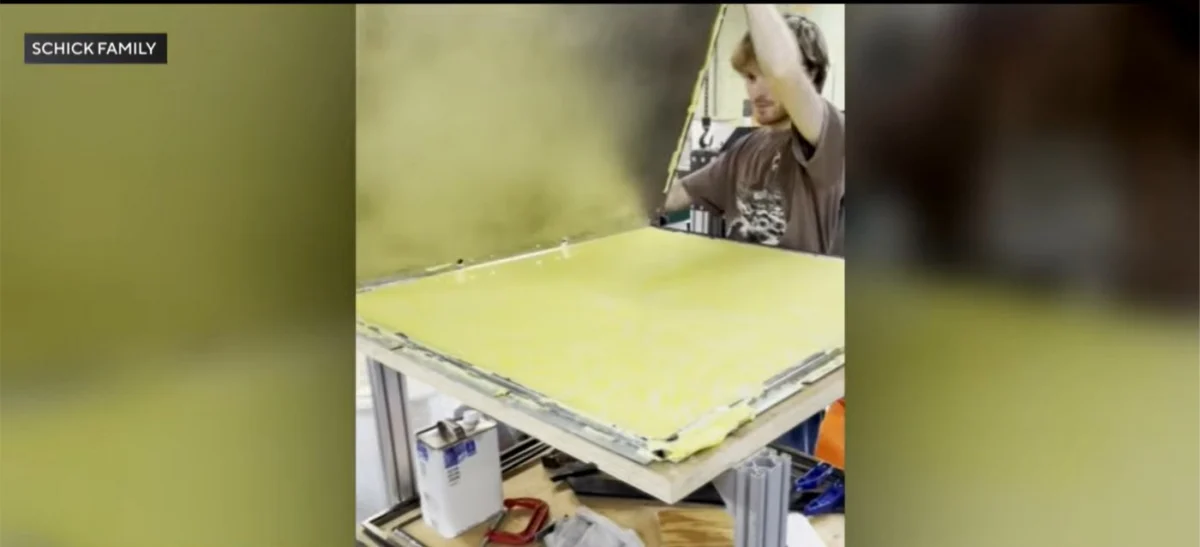
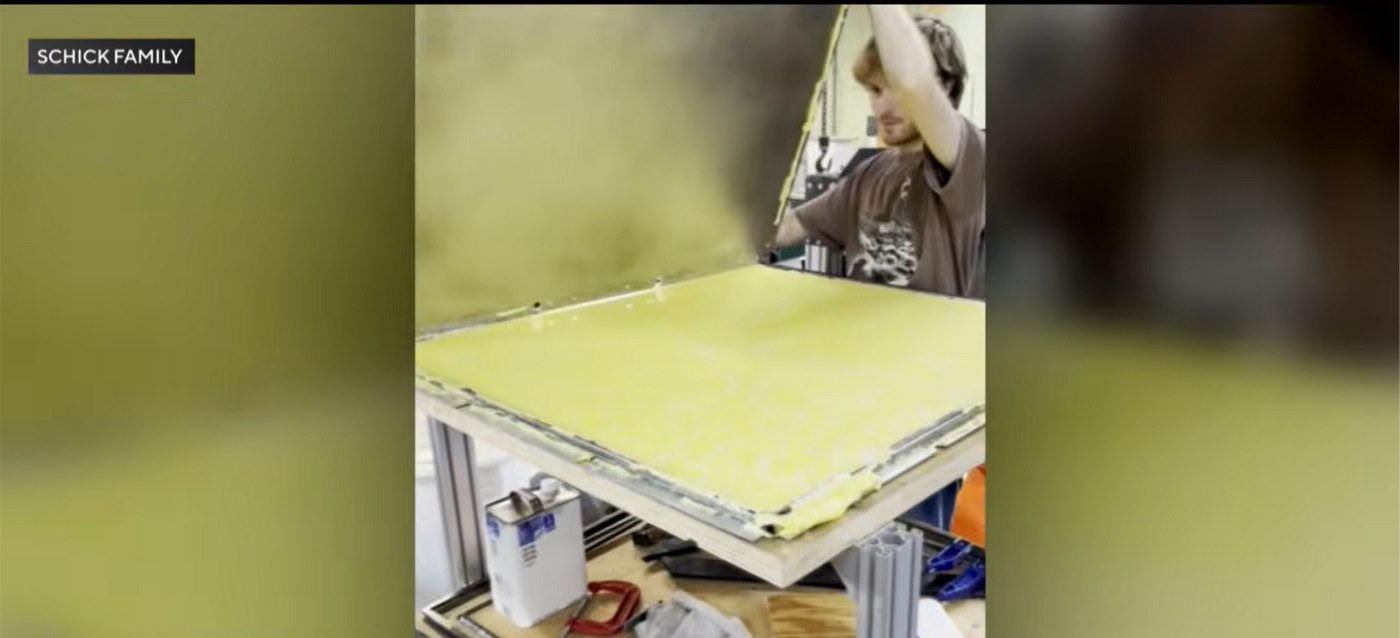
Through local community partnerships, dedicated environmental groups divert hard-to-recycle plastics directly to the Schicks’ workshop. There, a heavy-duty shredder reduces the materials into small, manageable granules. These granules are then loaded into specialized, open-source heat-pressing molds, where they are transformed into a wide array of useful items, ranging from chic furniture and clipboards to combs and keyrings.
However, the impact of Peninsula Precious Plastics extends far beyond the borders of San Carlos. Through global collaborations—most notably a partnership in Malawi—the family’s innovative upcycling blueprints are proving that grassroots environmental engineering can scale to solve international crises.
Chronology of an Upcycling Movement
The journey of Peninsula Precious Plastics did not begin overnight; it is the result of a deliberate, step-by-step evolution driven by technical curiosity, ecological concern, and community mobilization.
Phase 1: Identifying the Gap in Local Recycling
Long before founding the nonprofit, the Schick family noticed the glaring inefficiencies of modern municipal recycling. While paper, cardboard, and aluminum are reliably sorted, vast quantities of durable plastic goods end up rejected by standard sorting facilities due to economic or mechanical infeasibility. Recognizing that traditional recycling systems were failing thermoplastics, the family began researching open-source recycling blueprints developed by the global Precious Plastics network.
Phase 2: Establishing the San Carlos Workshop
David, Andrea, and Nick established their local workshop in San Carlos, outfitting it with specialized machinery designed to process rigid plastics. By forging alliances with local schools, environmental groups, and conscientious community members, they created a steady pipeline of diverted waste. The workshop quickly evolved from a garage experiment into a localized manufacturing hub, turning unwanted industrial scraps and household items into high-demand consumer goods.
Phase 3: The Convergence of Local Brainpower
As word spread throughout the San Francisco Bay Area, the workshop attracted a diverse array of creative minds. Engineers, artists, students, and DIY innovators began flocking to Peninsula Precious Plastics, contributing fresh design ideas and engineering solutions to maximize the utility and aesthetic appeal of upcycled goods.
Phase 4: Expanding Globally to Malawi
The turning point for international impact arrived when social entrepreneur Sofie Roux entered the picture. Roux had been spearheading an initiative in Malawi, southeastern Africa, focused on constructing solar-powered classrooms housed inside modified shipping containers. Facing a critical shortage of basic furniture for these educational spaces, Roux reached out to Peninsula Precious Plastics with an ambitious proposition: could desks be manufactured using their techniques?
What followed was a transcontinental collaboration. Roux’s organization acquired essential press machine designs from the Schicks, while David Schick boarded a flight to Malawi. Working side-by-side with local Malawian communities, David helped install open-source heat presses and trained local workers to harvest, process, and mold locally sourced plastic waste into sturdy, long-lasting school desks.
Supporting Data and Environmental Context
To fully understand the gravity and necessity of the Schicks’ work, one must examine the staggering scale of the global plastic crisis and the unique challenges posed by thermoplastics.
The Thermoplastic Dilemma
Thermoplastics are polymers that become pliable or moldable at a certain elevated temperature and solidify upon cooling. Because they can be repeatedly melted and reshaped, they are ideal for manufacturing durable goods, automotive components, electronics casings, and rigid containers. However, this same chemical resilience makes them a nightmare for standard waste management systems:
Identification Complexity: There are dozens of distinct thermoplastic types (such as ABS, polycarbonate, acrylic, and high-impact polystyrene), many of which cannot be melted together without ruining the structural integrity of the final product.
Economic Inviability: Because sorting these polymers requires labor-intensive manual identification or expensive spectroscopic sorting technology, municipal recycling plants often find processing them financially unfeasible.
Landfill Persistence: Thermoplastics do not biodegrade. Instead, exposure to UV light and mechanical stress causes them to fragment into microplastics—particles less than 5 millimeters in length that have now been detected in human blood, breast milk, and deep-sea trenches.
Quantifying Local and Global Impact
While large-scale industrial recycling plants process millions of tons of material with high carbon footprints, decentralized micro-recycling operations like Peninsula Precious Plastics offer a remarkably low-carbon alternative:
Energy Efficiency: Localized shredding and heat-pressing consume a fraction of the energy required to transport raw plastic waste to distant industrial facilities and melt it down on a macro scale.
Direct Diversion Rates: By working directly with community groups, the Schicks divert thousands of pounds of high-density polymers annually that would otherwise sit inertly in California landfills or leak into the Pacific Ocean watershed.
Educational Multiplying Effect: Every student and community member who visits the San Carlos workshop gains firsthand insight into polymer chemistry and circular design, shifting consumer behavior at the grassroots level.
Official Responses and Perspectives
The success of Peninsula Precious Plastics relies heavily on the intersection of community engagement, international development, and open-source collaboration. Key figures involved in the project have highlighted the transformative nature of this work.
Reflecting on the philosophy of the organization, Nick Schick emphasized the core mission of intentional material management:
"Precious Plastics exists to sequester that plastic into reusable objects. So, we’re rehoming the plastic, so it doesn’t end up in places we don’t want."
The community-centric approach has also fostered a unique intellectual ecosystem within the San Carlos facility. Andrea Schick, reflecting on the diverse crowd drawn to their workshop, noted the caliber of collaboration taking place:
"We get these incredible students, engineers, artists, and out-of-the-box thinkers who come up with the ideas to reduce plastic waste."
This open-source ethos is precisely what allowed the initiative to bridge the gap between Northern California and East Africa. When Sofie Roux sought durable solutions for solar-powered classrooms in Malawi, the collaborative spirit of the Precious Plastics network facilitated an immediate, practical transfer of knowledge and technology rather than a traditional, top-down charitable handout. By equipping the Malawian community with the physical presses and the technical know-how to process their own locally harvested waste, the partnership instantiated true sustainability: teaching a community to permanently solve a localized environmental hurdle using local resources.
Implications for the Future of Waste Management
The model pioneered by Peninsula Precious Plastics carries profound implications for the future of global recycling, urban planning, and international development.
1. The Rise of Decentralized Micro-Recycling
For decades, the prevailing paradigm of waste management has relied on centralized mega-facilities—massive sorting plants where municipal waste is hauled, sorted, and shipped overseas or across states. The success of the Schick family demonstrates that decentralized, hyper-local micro-recycling units can operate efficiently within urban neighborhoods. By treating plastic waste as a localized resource rather than a distant burden, communities can take direct ownership of their environmental footprint.
2. Open-Source Hardware as an International Aid Tool
The Malawi initiative highlights a paradigm shift in humanitarian aid and international development. Instead of shipping manufactured goods (such as plastic school desks) across oceans—thereby incurring heavy carbon emissions and high financial costs—organizations can export open-source blueprints and manufacturing technology. By empowering developing nations to upcycle their own indigenous waste streams, international aid becomes self-sustaining, fostering local entrepreneurship, job creation, and environmental stewardship simultaneously.
3. Redefining Consumer Consciousness
Beyond the mechanical processing of plastic, the cultural impact of initiatives like Peninsula Precious Plastics cannot be overstated. When consumers see their discarded items transformed into sleek, tangible goods right in their own backyard, the abstract concept of "environmentalism" becomes a concrete reality. It challenges the throwaway culture that has dominated modern consumerism for the past century.
Call to Action
As the Schick family continues to prove in San Carlos—and as their methodologies demonstrate across the globe—big systemic changes often begin with small, deliberate local efforts. For residents in the San Francisco Bay Area, visiting the Peninsula Precious Plastics workshop or contributing hard-to-recycle thermoplastics offers an immediate way to participate in the circular economy.
Ultimately, the story of Nick, David, and Andrea Schick serves as an inspiring reminder that waste is merely a resource in the wrong place, waiting for human ingenuity to bring it back home.