Main Facts: The Rise of System-Based Self-Improvement
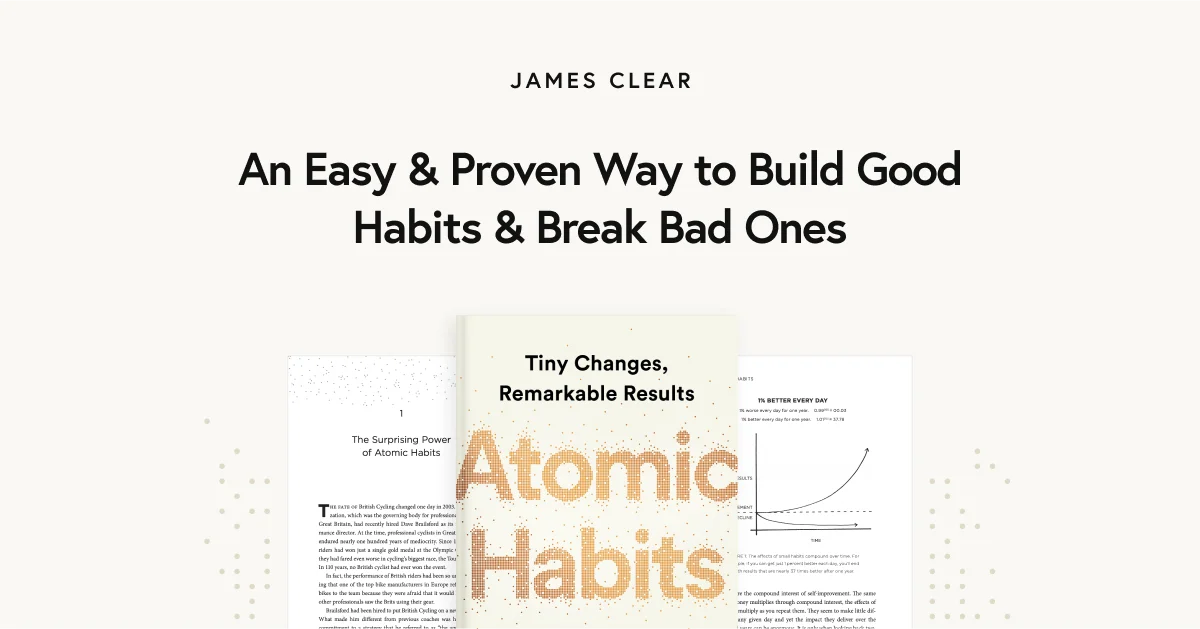
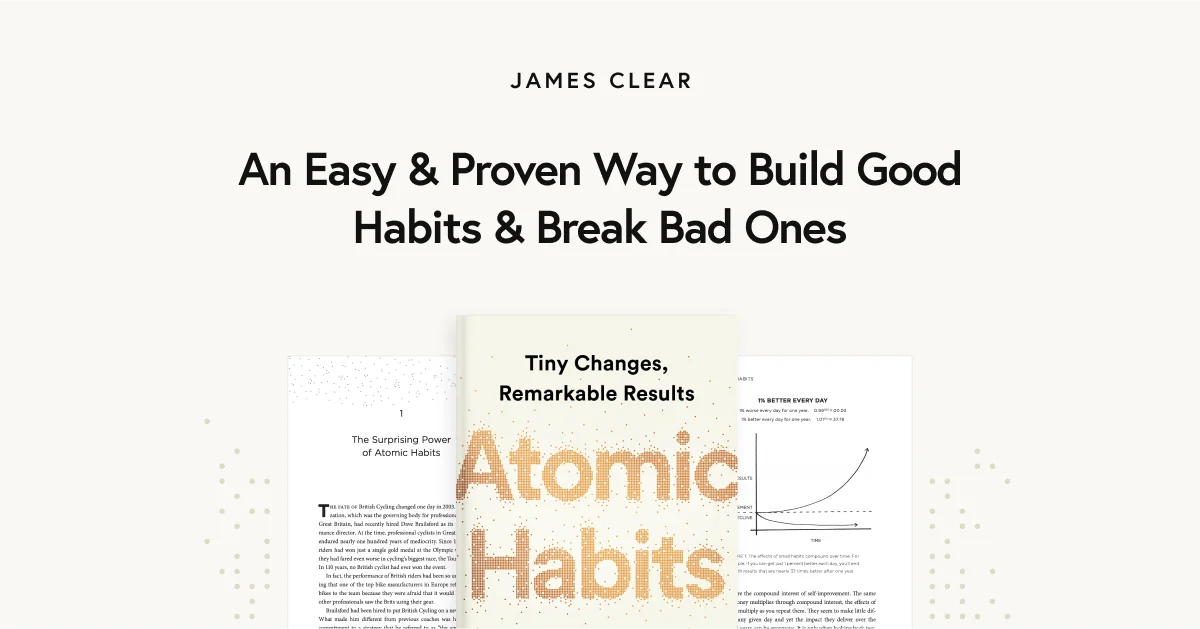
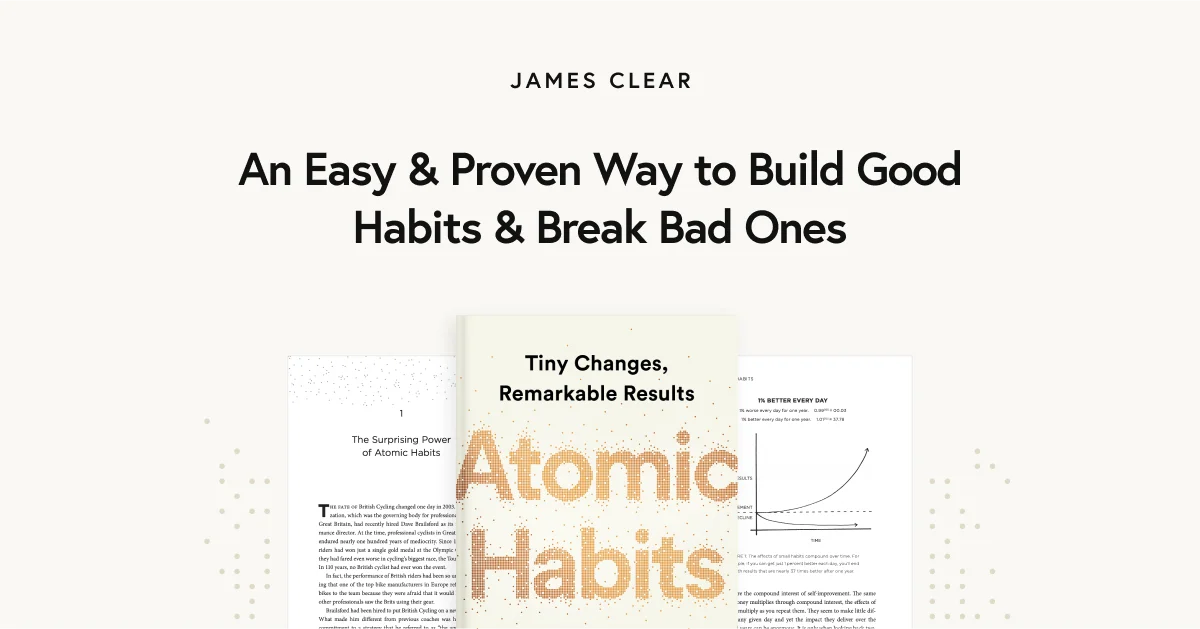
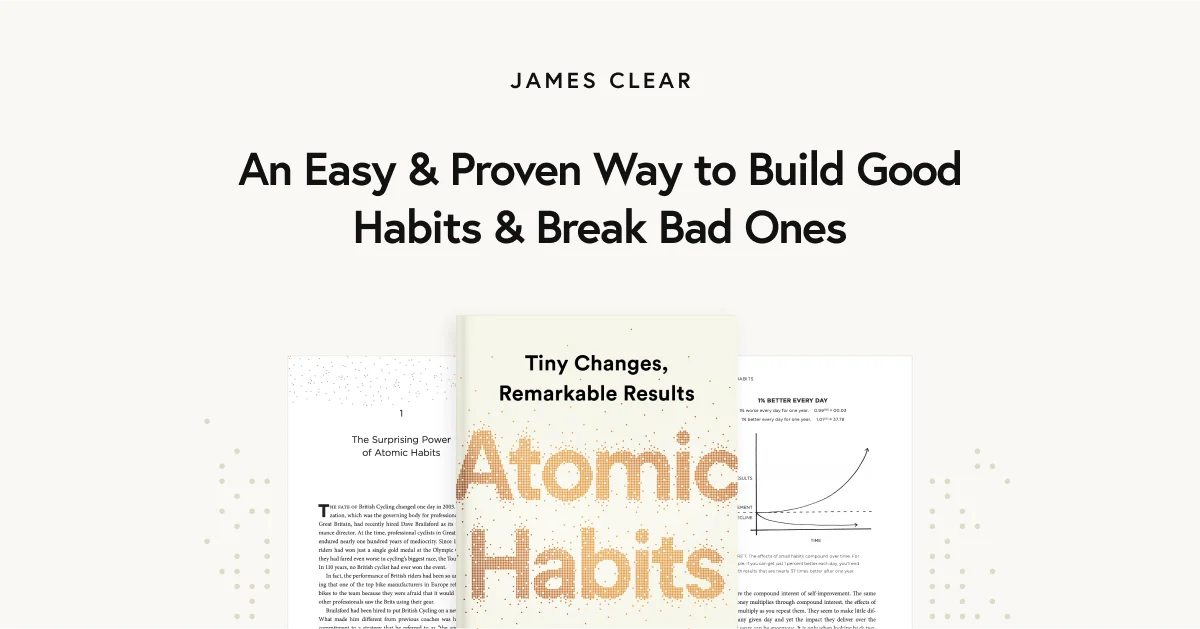
In the landscape of modern behavioral psychology and self-help, few works have achieved the cultural resonance of James Clear’s Atomic Habits. Since its publication, the book has transcended the status of a mere bestseller to become a foundational manual for what Clear calls "the architecture of behavior." The central thesis of Clear’s work is a departure from the traditional emphasis on "willpower" or "motivation." Instead, it posits that habits are the "compound interest of self-improvement"—small, 1% adjustments that, over time, lead to radical life transformations.
Recently, Clear curated a collection of 30 "one-sentence stories" from his global readership, illustrating the practical application of his theories. These testimonials serve as a qualitative data set, proving that the success of habit formation lies not in the magnitude of the initial action, but in the design of the system surrounding it. The core of Clear’s methodology is divided into four laws of behavior change: making it obvious, making it attractive, making it easy, and making it satisfying. By analyzing these reader success stories, we see a clear pattern: individuals who focus on "identity-based habits"—who they wish to be rather than what they wish to achieve—report the highest levels of long-term adherence.
Chronology: From Pavlov to the "Atomic" Era
To understand the impact of these reader stories, one must look at the evolution of habit science. The study of habitual behavior began in earnest with Ivan Pavlov’s classical conditioning in the late 19th century, followed by B.F. Skinner’s work on operant conditioning in the mid-20th century. Skinner’s "S-R-R" (Stimulus, Response, Reinforcement) model laid the groundwork for modern behaviorism.
In the early 2010s, Charles Duhigg popularized the "Habit Loop" (Cue, Routine, Reward) in his book The Power of Habit. However, a gap remained between understanding the loop and implementing it in a chaotic, modern environment. In 2018, James Clear bridged this gap by introducing "Atomic Habits." He integrated the academic research of Stanford’s B.J. Fogg (the creator of "Tiny Habits" and the concept of "anchoring") with practical "choice architecture."
The chronology of a successful habit, as evidenced by Clear’s readers, follows a specific developmental timeline:
- Phase One: The Identity Shift. The individual decides to stop saying "I’m trying to quit" and starts saying "I am not a smoker."
- Phase Two: Environmental Adjustment. The individual modifies their physical or digital surroundings to reduce friction for good habits and increase it for bad ones.
- Phase Three: The Automation Phase. Through "habit stacking" and tracking, the behavior moves from the conscious prefrontal cortex to the basal ganglia, becoming automatic.
Supporting Data: Case Studies in Behavioral Design
The 30 stories shared by Clear provide a diverse range of "field data" across several categories of behavioral intervention.
Identity-Based Habits and Neuro-Linguistic Programming
The most profound shift reported by readers involves the language of the self. A reader named Roland successfully overhauled his diet not by calorie counting, but by adopting the mantra: "I am someone who eats healthy." This is supported by psychological research into cognitive dissonance; when an action aligns with a person’s self-stated identity, the brain experiences less resistance.
Similarly, a reader named Robert noted the psychological difference between "I can’t smoke" (a restriction) and "I don’t smoke" (a choice). This subtle shift in syntax empowers the individual, transforming a perceived sacrifice into an investment in future well-being. One reader even combined this identity shift with a financial incentive, giving himself $10 for every day he identified as a "non-drinker," eventually reaching six years of sobriety.
Environmental Design and Friction Reduction
Clear’s readers provide compelling evidence for "choice architecture"—the practice of organizing the environment to make certain decisions more likely.
- Visual Cues: Heather increased her water intake by placing a bright aqua bottle on her nightstand. Lisa fostered a reading habit by keeping 20-30 library books on hold, ensuring she was never without a "next step."
- Increasing Friction: To curb snacking, Cyd’s husband began keeping Pringles in a locked car parked outside in the cold. To stop "snoozing," Daniel required himself to scan a QR code in the bathroom to turn off his alarm.
- Digital Hygiene: Matthew and Viet reported that simply logging out of Instagram or deleting the Facebook app provided enough "laziness-based friction" to end hours of mindless scrolling.
Habit Stacking and Anchoring
Drawing on B.J. Fogg’s "anchoring" technique, several readers reported success by "stacking" a new habit onto an existing one. A language learner in China committed to speaking Mandarin every time he entered a taxi—a high-frequency "anchor" that led to fluency over two years. Another reader, David, successfully integrated a 20-minute meditation practice by performing it immediately after the "keystone" habit of brushing his teeth.
Official Responses: Clear’s Analysis of Reader Implementation
James Clear’s commentary on these stories emphasizes that "real-world" application often requires more creativity than theory suggests. Clear notes that the stories illustrate a fundamental truth: "Our environment often shapes our behavior." He highlights the "stair-step" approach to habit substitution as a particularly effective strategy for addiction recovery.
In his analysis, Clear points out that many readers have found success by substituting a harmful "craving response" with a constructive one. For instance, a reader replaced the urge to smoke in the backyard with doing sets on a weight bench. Another reader, Marc, phased out daily beer consumption over nine months by substituting it first with fruit juice, then iced tea, and finally seltzer water. Clear suggests that this gradual "tapering" and "substitution" method allows the brain’s dopamine receptors to recalibrate without the shock of "cold turkey" cessation.
Clear also endorses the "Pointing-and-Calling" strategy, a method used by Japanese railway workers to reduce errors. One reader used this by saying "your brain is tricking you" out loud whenever a nicotine craving hit, effectively moving the impulse from the subconscious to the logical part of the brain.
Implications: The Macro Impact of the "Atomic" Movement
The implications of this widespread adoption of habit-forming systems are significant for public health, productivity, and mental resilience. By shifting the focus from "heroic effort" to "systemic design," Clear’s methodology democratizes self-improvement. It suggests that success is not a trait reserved for those with "high willpower," but a result available to anyone capable of making small environmental tweaks.
1. The Death of the "Willpower Myth"
The collective data from these stories challenges the traditional "grit" narrative. When J. Money, a finance blogger, brushes his teeth at 8:00 PM to avoid late-night snacking, he isn’t using willpower; he is using "pre-commitment." This shift reduces "decision fatigue," a state where the quality of decisions deteriorates after a long day of making choices.
2. Scalability of Small Actions
The "1% better" rule has profound implications for long-term health. As seen in the story of Cindy, who used a wall calendar to track her habits, the visual "chain" of success led to a 30-pound weight loss and the simultaneous pursuit of gardening, reading, and business goals. This demonstrates the "spillover effect," where mastering one small habit (the "atomic" unit) provides the confidence and momentum to tackle more complex life changes.
3. Digital and Physical Environmental Awareness
As society becomes increasingly digital, the strategies used by Matthew and Rahul (removing graphics cards or uninstalling browsers) highlight a growing need for "digital minimalism." The ability to intentionally design one’s digital environment is becoming a critical survival skill in an attention-based economy.
Conclusion: The Path Forward
The 30 stories curated by James Clear serve as a testament to the efficacy of the "Atomic Habits" framework. They move the conversation of self-improvement away from vague aspirations and toward tangible, "one-sentence" actions. Whether it is putting socks in a basket by the door or calculating the tablespoons of sugar in a week’s worth of soda to create a visual deterrent, these examples show that the most powerful changes are often the simplest.
As Clear concludes, the journey of habit formation is never truly finished. It is a process of "continuous refinement." By focusing on the system rather than the goal, and the identity rather than the outcome, individuals can build a life that is not just productive, but sustainable. The overarching message is clear: to change your life, you don’t need to change everything at once; you just need to change the cues, reduce the friction, and start with one page, one rep, or one conversation at a time.