
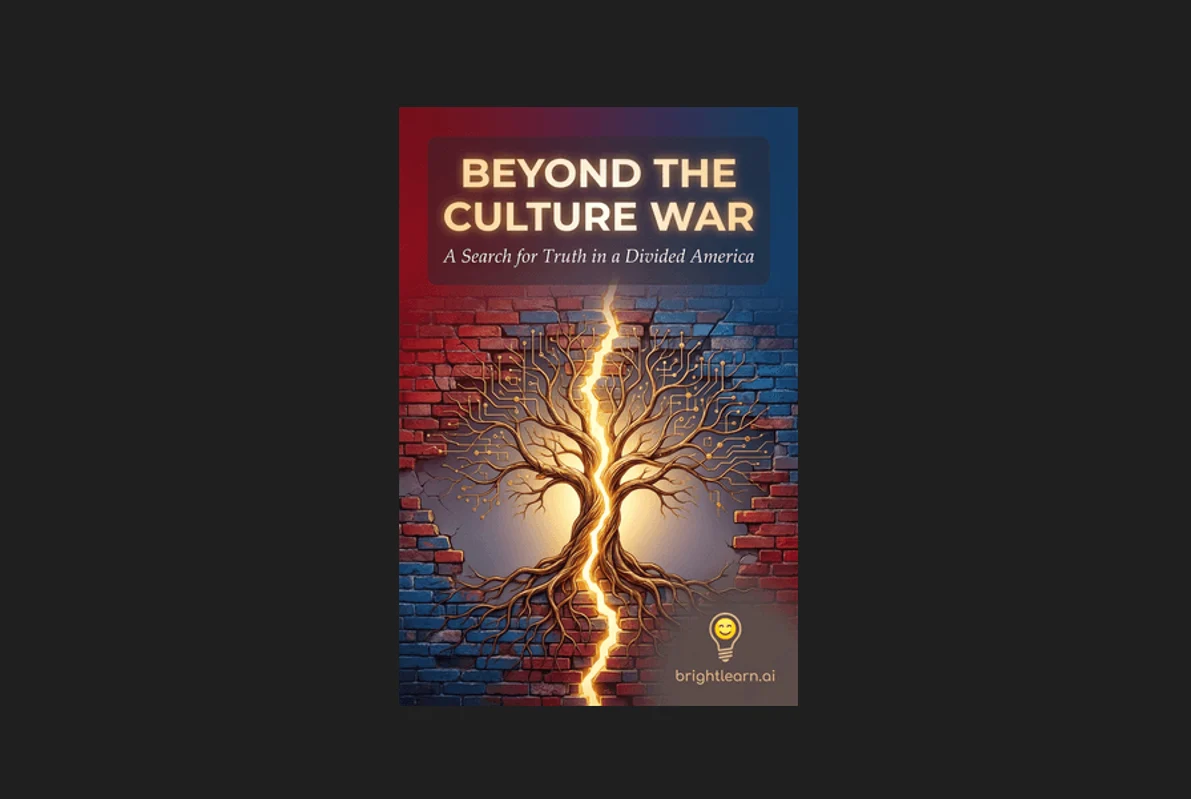
In an era defined by hyper-partisanship and digital tribalism, the American social fabric appears to be fraying at the seams. From heated debates over identity politics to the volatile landscape of electoral discourse, the nation seems locked in a perpetual state of conflict. However, a provocative new work, Beyond the Culture War: A Search for Truth in a Divided America, argues that this vitriol is not a natural evolution of democracy. Instead, it posits that the ongoing cultural friction is a calculated, well-funded mechanism—a "hate factory" designed to maintain the status quo by keeping the populace perpetually distracted.
The Manufactured Conflict: A Systemic Analysis
According to the central thesis of Beyond the Culture War, the incessant fighting over race, gender, and political ideology is far from spontaneous. The book characterizes these outbursts as a sophisticated system of social engineering. By keeping the citizenry focused on internal squabbles, elite institutions—spanning the military-industrial complex, the pharmaceutical industry, and the political class—are able to operate with minimal public oversight.
The strategy employed is as ancient as it is effective: divide and conquer. By incentivizing tribalism, the architects of this system ensure that the population remains too fragmented to mount a cohesive challenge to systemic issues, such as monetary policy, foreign interventionism, and the incremental erosion of civil liberties.
The Economics of Outrage
The "hate factory" is not merely a metaphor; it is a business model. Media outlets, both mainstream and partisan, have discovered that fear and anger drive engagement more effectively than nuance or policy analysis. When a demographic is kept in a state of high stress, they become more susceptible to messaging that frames the "other side" as an existential threat. This environment is highly profitable for pharmaceutical companies—who benefit from a stressed populace—and the military-industrial complex, which relies on a climate of fear to justify sustained global interventions.
Chronology of Polarization: How We Got Here
The current state of division did not emerge in a vacuum. It is the result of decades of structural changes in media, education, and political campaigning.
- The Rise of the 24-Hour News Cycle: Beginning in the late 1980s and accelerating in the 1990s, the transition to 24-hour cable news necessitated a constant stream of "breaking" conflict to keep viewers tuned in. This prioritized sensationalism over investigative depth.
- The Algorithmic Echo Chamber: The advent of social media in the mid-2000s catalyzed the process. Algorithms were designed to show users content that reinforced their pre-existing biases, effectively creating digital silos where alternative viewpoints were not only absent but often framed as morally bankrupt.
- The Institutionalization of Identity: In the last two decades, the focus of political discourse shifted from economic and constitutional governance to identity-based politics. This shift allowed institutions to mobilize voters through visceral emotional triggers rather than intellectual policy debates.
- The Pandemic Inflection Point: The years 2020–2022 served as a massive stress test for the American psyche. During this period, the divergence between mainstream narratives and independent reporting grew into a chasm, leading to the current "post-truth" environment where even basic facts are viewed through the lens of tribal allegiance.
Supporting Data: The Anatomy of Distraction
Data suggests that the average American is now more likely to view those with opposing political views as "immoral" or "a threat to the nation" than at any point in the last century.
A critical observation in Beyond the Culture War is the disparity between what the public believes is important and what is actually being debated. While Americans are preoccupied with the latest viral social media scandal, critical systemic issues—such as the national debt, the expansion of the surveillance state, and the lack of transparency in government spending—are often sidelined.
The book notes that the government, media, and education systems function as a tri-partite engine of consensus. By controlling the curriculum in schools and the framing of news in the media, these institutions define the "Overton Window"—the range of policies or ideas acceptable to the mainstream population. Anything that falls outside this window is labeled as "fringe" or "extremist," effectively silencing dissent before it can reach the public square.
Official Responses and Institutional Silencing
The mechanisms described in the text rely on the silence or complicity of institutional gatekeepers. When asked to respond to claims of manufactured division, representatives from major media conglomerates often point to "editorial integrity" and the necessity of "fact-checking." However, the text argues that these very processes are the tools of the spin machine.
"Mainstream outlets often spin the truth by removing context," the book claims. By omitting the history of a situation or the nuance of a speaker’s intent, media outlets can manufacture a narrative that serves a specific political outcome. Official responses from these institutions frequently dismiss criticism as "misinformation," a term that has become a weapon to delegitimize any perspective that threatens the established narrative.
The Path to Intellectual Sovereignty
Breaking free from the trap of manufactured conflict requires a radical shift in how individuals consume information and define their values. Beyond the Culture War outlines a roadmap for the "independent thinker."
1. Questioning the Source
The first pillar of this transition is the refusal to accept any claim at face value. Whether it is CNN, Fox News, or a favored independent commentator, the text urges readers to seek out primary sources. By reading the full transcript of a speech or the original text of a document rather than relying on a 30-second soundbite, the individual regains the power to interpret events for themselves.
2. The Practice of Dissenting Consumption
To break the echo chamber, one must engage with the ideas they find most disagreeable. This is not for the purpose of conversion, but for the purpose of testing one’s own beliefs. Intellectual humility—the ability to admit, "I don’t know" or "I was wrong"—is identified as the cornerstone of true independent thought.
3. Defining Personal Values
The system relies on citizens adopting externally provided labels. The book suggests that by stripping away these labels and returning to fundamental principles—such as personal liberty, family, and community health—individuals can create a "personal standard." Once these values are firmly established, it becomes much harder for political slogans or fear-based campaigns to manipulate the individual.
Implications: The Price of Freedom
The most sobering aspect of the book is its recognition of the cost of independent thought. The "space between the tribes" is described as the loneliest place in America. Because neither side accepts the independent thinker, these individuals are frequently attacked by both camps.
However, the authors argue that this isolation is the true price of freedom. The alternative—remaining a puppet in a manufactured war—is a slow surrender of one’s agency and soul. The ultimate implication is that the culture war is designed to distract from the reality that the two major political parties are often two sides of the same coin, serving the same elite interests.
By shifting focus away from the manufactured outrage and toward critical issues like monetary policy and the protection of civil liberties, the citizenry can begin to reclaim their power. As the text concludes, the only side truly worth being on is the side of truth, even when that path is fraught with personal and professional costs.
For those interested in exploring these themes further, "Beyond the Culture War: A Search for Truth in a Divided America" is available for download at Books.BrightLearn.AI. The platform encourages readers to not only consume knowledge but to share it, fostering a decentralized ecosystem of information. Additionally, for a deeper look at the intersection of current events and systemic strategy, viewers can watch the "Health Ranger Report" on Brighteon.com.