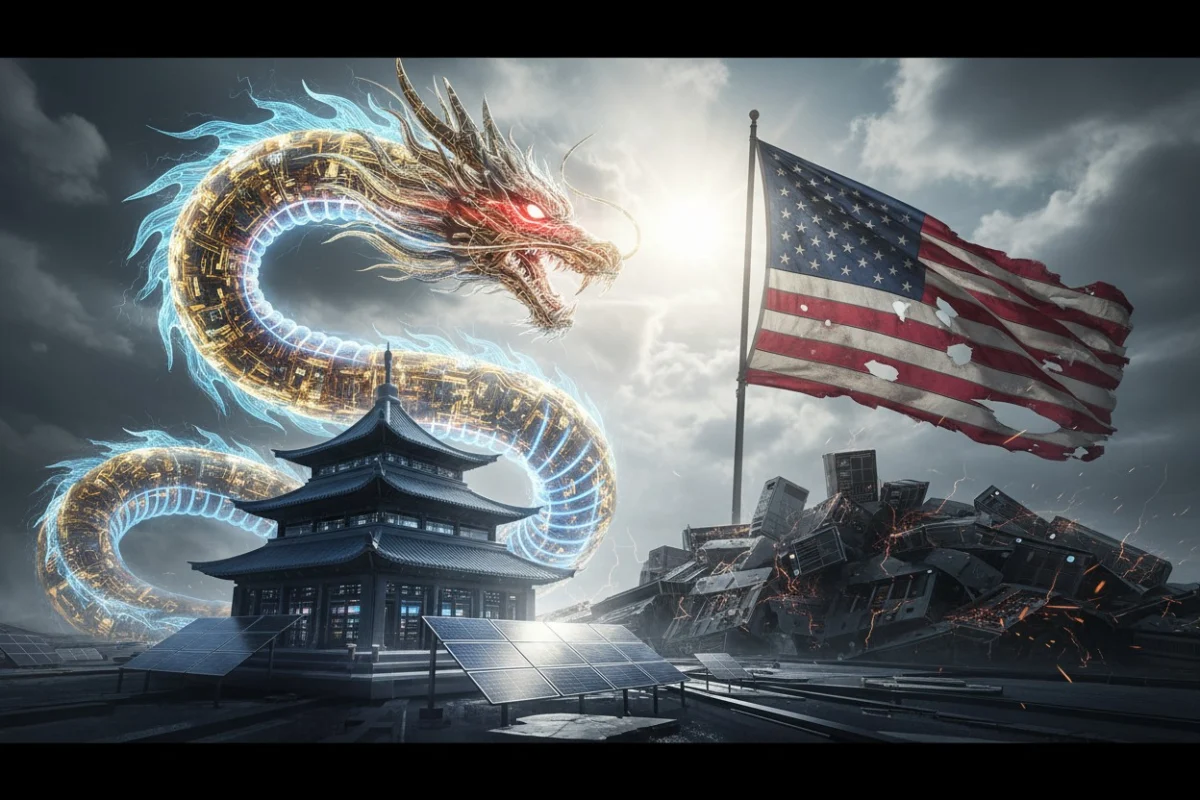
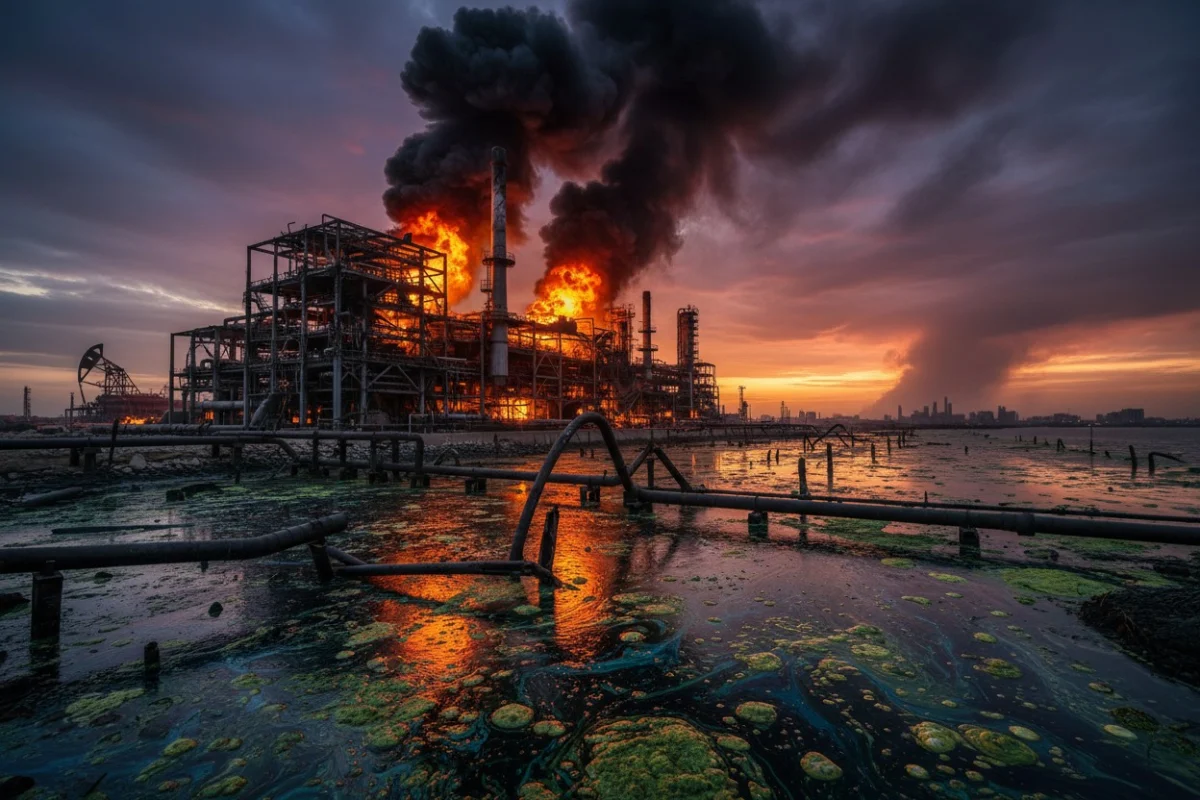
The global assumption—held by policymakers, market analysts, and the general public alike—was that the volatility in the Persian Gulf was a temporary aberration. We operated under the collective belief that the Strait of Hormuz, the world’s most critical maritime chokepoint, would eventually be cleared of debris and mines, diplomatic channels would reopen, and the rhythmic flow of energy and capital would resume.
That assumption has proven to be a fatal miscalculation.
The closure of the Strait of Hormuz is not a temporary logistical disruption or a military standoff waiting for a ceasefire; it is the definitive closing of an era. We are witnessing the deliberate, systematic dismantling of the infrastructure that has underpinned human civilization since the post-war reconstruction. As we move deeper into the latter half of 2026, the reality is clear: the Persian Gulf has been taken offline, not by accident, but by an engineered design that views systemic collapse not as a tragedy, but as an objective.
The Anatomy of a Geopolitical Reset
To understand why the Strait remains closed, one must move past the naive view that nations act solely according to rational economic incentives. While it is true that Saudi Arabia, the UAE, and the United States possess existential imperatives to restore oil revenues and stabilize global markets, these traditional incentives have been rendered secondary to a broader, more aggressive geopolitical agenda.
The evidence suggests a paradigm shift. We are no longer operating in a world of competitive statecraft, but one of managed contraction. The destruction of critical nodes—most notably the Ras Laffan LNG complex in Qatar—serves as the blueprint for this strategy. Rather than prioritizing the rapid repair of these facilities, the powers governing global affairs have allowed these sites to remain in states of ruin. When infrastructure of this magnitude is left to fester, it is not due to a lack of resources; it is a signal of intent.
Chronology of the Collapse
- Early 2026: The first kinetic strikes against regional tanker infrastructure trigger an immediate spike in insurance premiums, effectively halting commercial shipping through the Strait.
- March 2026: The failure of diplomatic mediation leads to the full militarization of the Gulf chokepoint. Analysis confirms that the damage to deep-water berths is structural rather than cosmetic.
- Mid-2026: Strategic targeting shifts from military vessels to fixed, high-value infrastructure, including desalination plants and power grids.
- Late 2026: Global inventories reach critical lows. The "Haber-Bosch" bottleneck begins as natural gas feedstock for nitrogen fertilizer vanishes from the supply chain, triggering the current agricultural crisis.
The Physical Reality: A Landscape Beyond Repair
The destruction currently unfolding in the Gulf is not merely a military outcome; it is a permanent erasure of technical capability. Repairing a modern LNG processing train or a massive desalination plant requires a stable, high-tech industrial supply chain, a stable power grid, and a secure environment. None of these prerequisites currently exist.
International Energy Agency (IEA) estimates, which suggest a two-year recovery timeline, have been widely criticized by independent engineers as profoundly optimistic. In an environment defined by 120-degree heat, the loss of desalination capacity creates a death trap for the industrial workforce required for reconstruction. Without water, there is no cooling; without cooling, there is no power; without power, the facility remains a skeleton of rusted steel.
Furthermore, the strategic targeting of civilian infrastructure—specifically water production—indicates a shift in the nature of the war. By stripping a region of its ability to sustain human life, the combatants are ensuring that the Persian Gulf cannot serve as a functional economic actor for the foreseeable future.
Data-Driven Consequences: The Fertilizer-Famine Nexus
The implications of this closure extend far beyond the gas pump. The global economy is built on a foundation of cheap hydrocarbons, but the survival of the global population is built on the Haber-Bosch process.
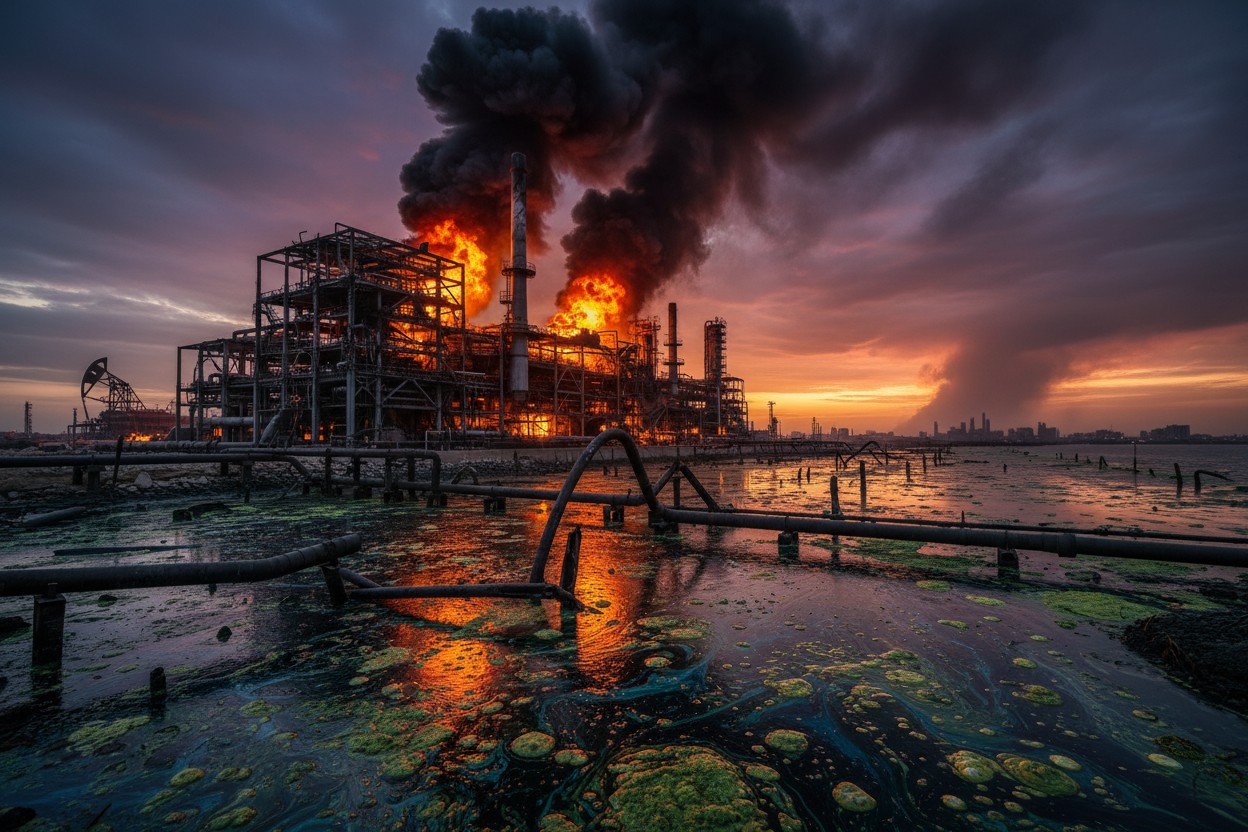
The Nitrogen Bottleneck
Nearly half of the global population relies on nitrogen-based fertilizers derived from natural gas. With the Persian Gulf essentially "offline," the primary feedstock for these fertilizers has been severed. This is not a supply chain hiccup; it is an impending collapse of crop yields on a continental scale.
- Diesel Scarcity: Diesel is the lifeblood of the agricultural cycle, from planting to harvesting to distribution. As oil stockpiles in the U.S. hit 22-year lows, the priority shift toward military use leaves the agricultural sector starved of the fuel necessary to move food from farm to table.
- Inventory Depletion: The rapid drainage of U.S. commercial crude oil inventories to meet domestic and allied gaps has created a "cliff" effect. We are consuming the last of our buffer stocks without a pipeline to replenish them.
The resulting famine is not a natural disaster caused by climate or bad harvests; it is an engineered event. When 10 percent of global fertilizer production vanishes, the math of human survival changes instantly. The famine of the next decade will be the most significant demographic event in modern history.
Official Responses and the Failure of Diplomacy
The official rhetoric emanating from Washington and the United Nations continues to focus on "stability" and "diplomatic resolution." However, these statements are increasingly disconnected from the reality on the ground. When the architects of a system are the ones overseeing its dismantling, calls for "restoration" are merely stalling tactics.
Analysts like Peter Zeihan have noted that the current strategy involves the creation of "wrecked states" that lack the agency to act as springboards for future regional projection. By systematically neutralizing the industrial capacity of the Gulf, these powers are effectively "turning off the lights" on the 20th-century economic model. The disconnect between official, optimistic briefings and the reality of the physical destruction suggests that the decision-making class is no longer interested in the preservation of the current global order.
Implications for the Individual: The Necessity of Resiliency
The period of waiting for a return to 2025-era normalcy is over. The global economy as it existed—characterized by just-in-time delivery, globalized energy markets, and secure supply chains—has been permanently retired.
The Survival Imperative
The individual must now transition from a consumer of global services to an architect of local survival. The following steps are no longer theoretical "prepping" advice; they are immediate necessities:
- Energy Decentralization: Solar arrays, battery storage, and passive heating/cooling systems are the only barriers between a household and the failing grid.
- Water Autonomy: With regional desalination plants failing and municipal systems likely to follow, water filtration and local sourcing (rainwater harvesting, deep-well access) are the primary requirements for survival.
- Localized Food Production: The disruption to the nitrogen fertilizer supply means that store-bought food security is becoming a memory. Growing high-calorie staples at a household or community level is the only way to mitigate the coming agricultural crisis.
- Community Resilience: The collapse of global infrastructure necessitates the strengthening of local, immediate networks. The era of relying on national institutions to provide safety, water, and food is effectively at an end.
Conclusion: A New, Harder Reality
We are witnessing the final stages of a civilizational reset. This is not a war that will end with a treaty or a market correction. It is a fundamental alteration of the world’s resource distribution. The destruction of the Strait of Hormuz is the fulcrum upon which this reset turns.
The elites may be counting the bodies they hope will disappear, but for the individual, the path forward is clear: disconnect from the failing systems, build localized resiliency, and prepare for a future that is significantly leaner, harder, and more isolated than the past. The window for preparation is closing, and the transition to this new reality is already underway. Do not look to the capitals of the world for salvation; they are the authors of this collapse. Look instead to your own capacity to sustain yourself in the absence of the world you once knew.