NOTTINGHAMSHIRE, England — In the quiet hours of a warm June evening in Nottinghamshire, a young red fox kit lay motionless on the tarmac, struck by a passing vehicle and left for dead. Unable to move his hindquarters and stranded in agony for days, his prospects appeared bleak. A veterinarian who initially examined the animal feared the trauma was too catastrophic to overcome, suggesting euthanasia as the most humane path forward.
Yet, resilience often wears unexpected coats of fur.
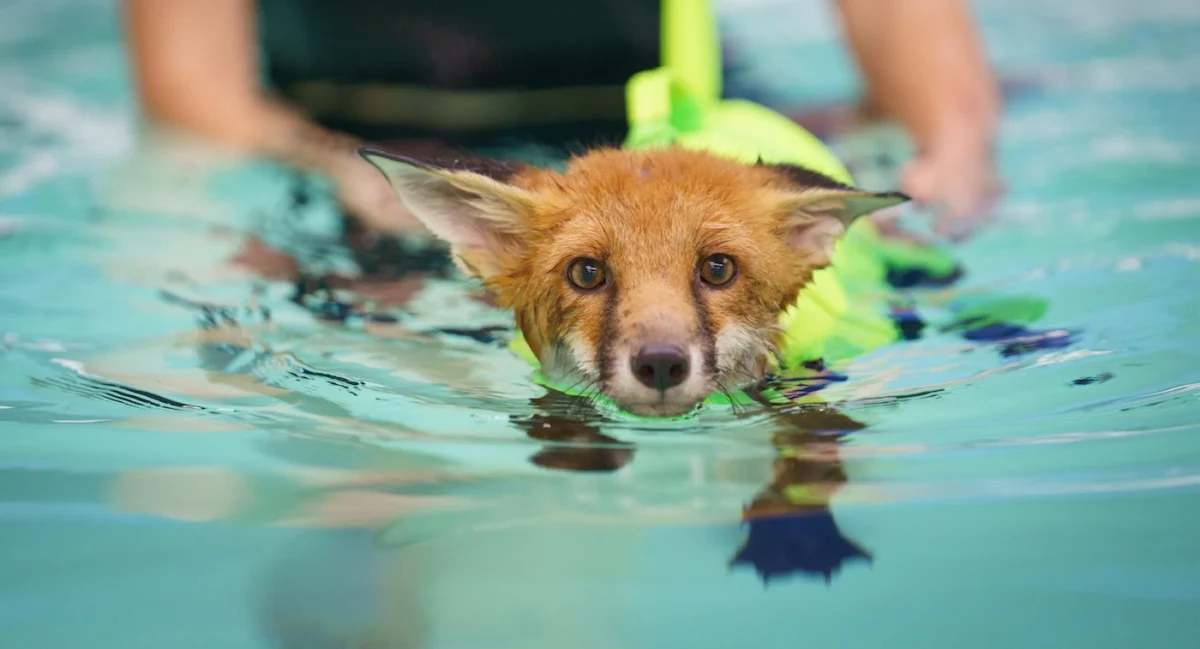
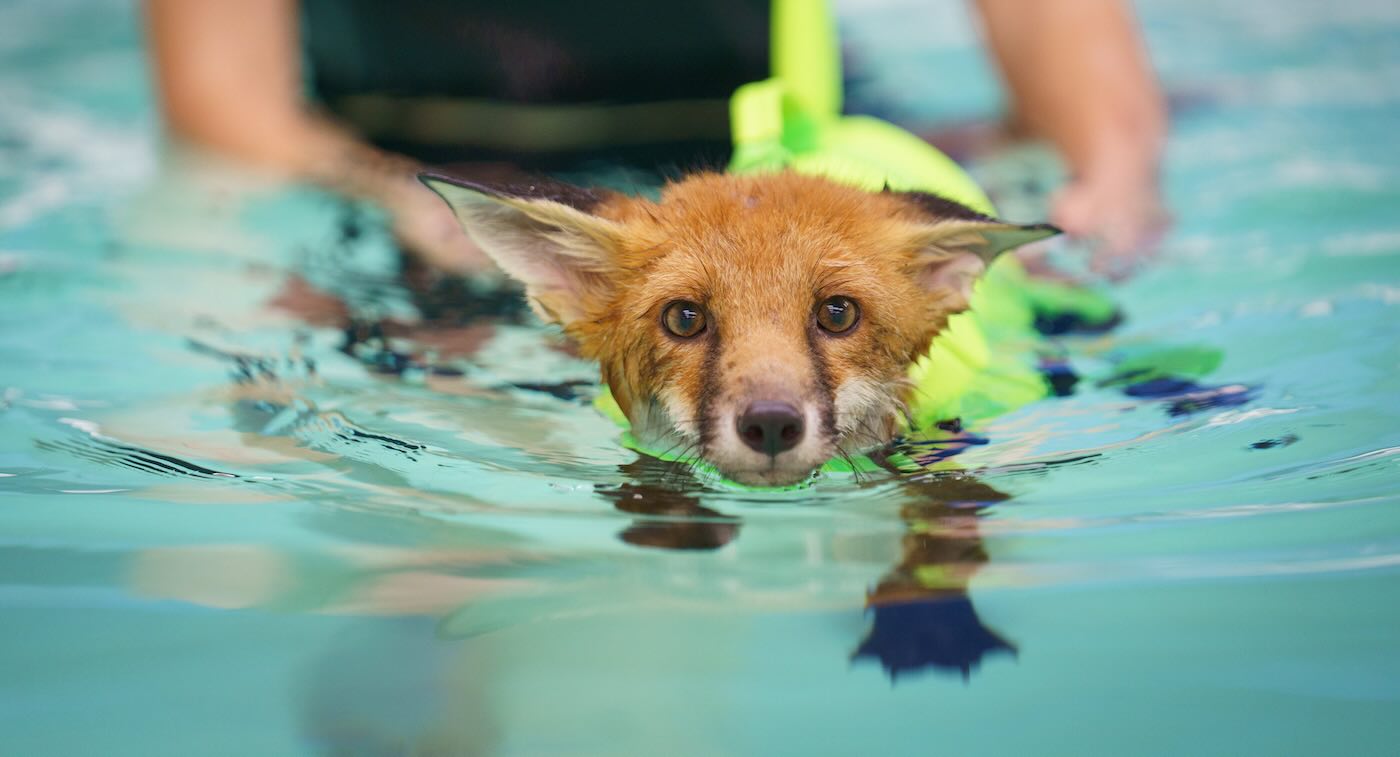
Today, that same fox cub—aptly named Chance—is defying medical odds. Through a painstaking rehabilitation regimen that blends traditional wildlife rescue expertise with cutting-edge canine physical therapy, Chance is relearning how to use his legs. Floating buoyantly in a specialized hydrotherapy pool usually reserved for recovering dogs, the young kit is kicking, regaining sensation, and taking his first triumphant steps toward what rescuers hope will be an eventual return to the wild.
Main Facts: The Miraculous Recovery of a Car-Strike Survivor
The story of Chance underscores a remarkable intersection between domestic pet rehabilitation and wild animal conservation. Found by a concerned member of the public in Nottinghamshire, the young fox was suffering from severe paralysis in his hind legs following a vehicular collision.
- The Patient: A young fox kit named Chance, rescued after being hit by a car last June.
- The Injury: Traumatic spinal and mobility shock that left his back legs completely non-functional for days.
- The Treatment: A specialized rehabilitation program featuring free hydrotherapy swimming sessions at the Mansfield Canine Centre.
- The Goal: Full rehabilitation and ultimate release back into the English countryside, with human contact kept to a strict minimum to preserve his wild instincts.
- The Broader Issue: Local wildlife rescuers report a concerning seasonal spike in vehicle-related fox injuries, driven largely by climate pressures and shifting urban foraging habits.
Despite initial veterinary pessimism, Mansfield Wildlife Rescue stepped in to give the kit a fighting chance. Transported to a specialized facility, Chance began a meticulous recovery process that eventually led him to the doors of the Mansfield Canine Centre, where canine hydrotherapist Chelsea and staff member Cathy Fraser welcomed him into their specialized pool.
Chronology: From the Brink of Euthanasia to the Swimming Pool
To understand the magnitude of Chance’s recovery, one must trace the timeline of his harrowing ordeal and subsequent healing.
Phase 1: The Accident and Rescue (Late June)
The incident occurred on a busy Nottinghamshire roadway. Struck by a car, Chance was stranded for what rescuers believe were multiple days, paralyzed and unable to forage or escape danger. Exposed to the elements and enduring intense physical trauma, his survival seemed statistically impossible. A vigilant member of the public spotted the distressed animal and raised the alarm, prompting emergency intervention.
Phase 2: Diagnosis and Initial Prognosis
Upon intake, the local veterinarian delivered a grim assessment. The impact had severely impaired the kit’s nervous system and hind-limb functionality. Given the extent of the paralysis, the primary medical consensus leaned toward euthanasia to spare the animal prolonged suffering. However, refusing to write off the young life, wildlife rehabilitators at Mansfield Wildlife Rescue intervened, taking Chance into their direct custody to explore alternative therapeutic avenues.
Phase 3: The Introduction of Hydrotherapy
After receiving his necessary vaccinations, Chance was cleared for an unconventional form of wildlife rehabilitation. He was brought to the Mansfield Canine Centre for specialized hydrotherapy sessions—typically reserved for dogs recovering from orthopedic surgeries or managing long-term mobility issues. Under the watchful eye of his designated caretaker, Chelsea, Chance was introduced to the warm, buoyant waters of the hydrotherapy pool.
Phase 4: Current Progress and Future Horizons
Months into the program, the transformation has been nothing short of cinematic. Supported by the natural resistance and buoyancy of the water, Chance has begun actively using his back legs to propel himself. Sensation is returning to his lower extremities, and he has progressed from dead weight to an active swimmer capable of coordinated kicking and self-support. Rescuers are now carefully managing his environment, restricting human interaction to ensure he remains wild-hearted and prepared for a future reintegration into nature.
Supporting Data: The Science of Canine Hydrotherapy for Wildlife
While hydrotherapy has long been a staple in small animal veterinary medicine, its application in wildlife rehabilitation remains a specialized, pioneering frontier.
According to documentation provided by the Mansfield Canine Centre, hydrotherapy offers a uniquely effective environment for trauma recovery:
- Low-Impact Resistance: Water supports a large percentage of an animal’s body weight, drastically reducing stress on fragile joints, fractured bones, and traumatized spinal columns.
- Buoyancy and Range of Motion: The aquatic medium allows patients to execute full limb extensions and flexions that would be impossible on dry land due to gravitational pull and muscular atrophy.
- Cardiovascular and Neurological Stimulation: Swimming stimulates peripheral nerve endings, encouraging neuroplasticity—the brain’s ability to rewire pathways and re-establish communication with paralyzed or damaged limbs.
For Chance, these scientific principles translated directly into biological recovery. Without the weight-bearing stress that would have aggravated his spinal shock on solid ground, the water gently coaxed his dormant leg muscles back into action.
Official Responses: Voices from the Front Lines of Rescue
The emotional and professional impact of Chance’s recovery has resonated deeply with the individuals guiding his rehabilitation.
Cathy Fraser, a staff member at the Mansfield Canine Centre, expressed awe when reflecting on the journey from the initial trauma to the current aquatic therapy sessions.
"When you see that it looked like there was no chance he was going to survive, to now, it’s just an incredible journey and to be a part of it is just so lucky," Fraser remarked. "It’s amazing that this little act of kindness is going to go a long way to potentially Chance being released and living a full, wild life, like he should."
Meanwhile, Cheryl Martins, founder of Mansfield Wildlife Rescue, provided critical context regarding the systemic drivers behind Chance’s accident. Martins pointed to severe seasonal weather patterns as a catalyst for the rising tide of urban wildlife casualties.
"A lot of the rodents that they would normally find and hunt are keeping out of the way because of the weather," Martins explained, highlighting how unusually hot temperatures disrupt typical predator-prey dynamics.
As a result, foxes are altering their territorial ranges. "They’re moving more into towns and cities looking for food, so they’re getting into the busier roads while they’re out searching."
Despite the grim statistics—Mansfield Wildlife Rescue has already nursed five vehicle-hit foxes back to health this year alone—centres like these stand as beacons of hope for urban wildlife navigating an increasingly paved world.
Implications: Urbanization, Climate Pressures, and the Future of Wildlife Rehabilitation
Chance’s story is far more than a heartwarming anecdote about a swimming fox; it serves as a micro-cosmic reflection of the broader ecological pressures facing wildlife in the 21st century.
The Urban-Wildland Interface
As climate volatility increases—marked by extreme heatwaves, unseasonal droughts, and shifting ecosystems—traditional food webs are disrupted. For opportunistic carnivores like the red fox, survival increasingly forces them into closer proximity with human infrastructure. Suburban sprawl, arterial roadways, and high-density urban environments create a lethal labyrinth for young kits searching for sustenance. The spike in vehicle-strike injuries reported by Mansfield Wildlife Rescue highlights an urgent need for urban planners, wildlife advocates, and civil engineers to consider wildlife corridors, underpasses, and reduced speed zones in suburban and semi-rural transition areas.
The Evolution of Wildlife Medicine
Furthermore, Chance’s rehabilitation challenges historical boundaries in veterinary science. Traditionally, wildlife medicine has often been limited by funding, resource scarcity, and a rigid separation between domestic animal care and wild animal management. The cross-pollination of techniques—using canine hydrotherapy equipment for a wild red fox—demonstrates the immense potential of collaborative, multi-disciplinary approaches to animal rescue.
When private centers, specialized therapists, and volunteer-run rescues pool their resources, animals written off as hopeless cases are granted a second lease on life.
The Ultimate Test: Re-wilding Chance
For the team behind Chance, however, the ultimate measure of success is not how well he swims in a sterile clinic pool, but how well he survives out of it. Because red foxes are naturally wary, intelligent, and fiercely independent creatures, human handlers must exercise immense restraint. By keeping human contact to an absolute minimum—feeding him without direct socialization, avoiding unnecessary handling outside of medical necessity, and housing him in secluded rehabilitation enclosures—rescuers are working to ensure that Chance does not become habituated to people.
If his physical therapy continues on its current trajectory, the day will soon come when the sliding doors of the clinic close behind him for the final time. Transported back to a secluded, safe tract of the English countryside, Chance will face an open field, untracked by pavement or cars. There, utilizing legs strengthened by warm water and an indomitable will to live, he will bound away into the tall grass—a wild fox reclaiming his rightful place in nature.