In the halls of the Pentagon and the corridors of power in Washington, a dangerous orthodoxy has taken root over the last three decades. It is a belief system predicated on the notion that technology has finally “solved” the messy, unpredictable nature of warfare. By substituting ground troops with precision-guided munitions, drones, and cruise missiles, modern leaders have convinced themselves that they can project power without suffering the political or human costs of traditional combat.
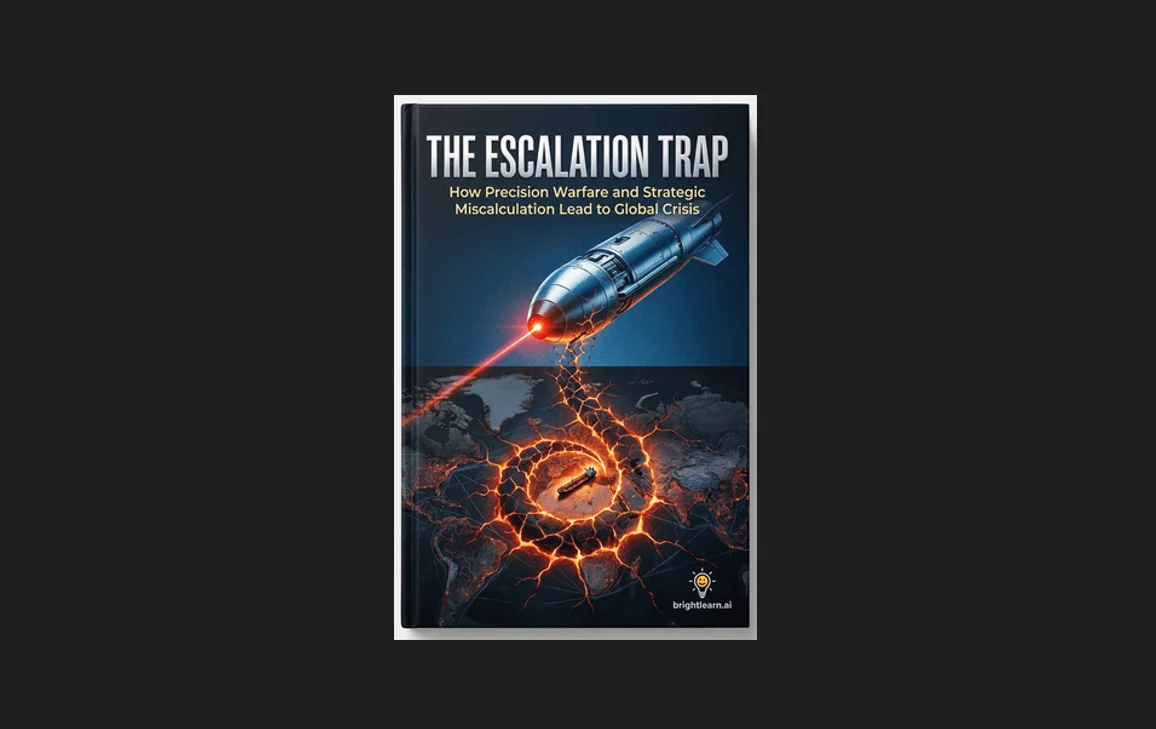
Robert Pape, a renowned political scientist and director of the Chicago Project on Security and Threats, argues in his provocative new book, The Escalation Trap: How Precision Warfare and Strategic Miscalculation Lead to Global Crisis, that this belief is not merely a tactical preference—it is a catastrophic strategic delusion. Far from making war "cleaner" or more controllable, Pape contends that precision warfare has created a recurring cycle of failure that is now threatening to pull the globe into a systemic collapse.
Main Facts: The Anatomy of the Trap
At the heart of Pape’s thesis is the concept of the "escalation trap." The logic is deceptively simple: because leaders possess the technical capability to strike targets with surgical precision from thousands of miles away, they are increasingly tempted to use force to resolve complex political disputes.
However, the trap snaps shut when these tactical successes—such as destroying a command center or neutralizing a radar site—fail to yield the desired political outcome. When the adversary inevitably retaliates, the political stakes rise. To avoid the embarrassment of admitting that their “surgical” intervention has failed, leaders authorize further strikes, escalating the conflict in a desperate bid to force a resolution.
This cycle, Pape argues, is institutionalized. War colleges and think tanks treat conflict as an engineering problem rather than a political or human one. By prioritizing technological metrics—the number of sorties flown, the percentage of targets hit, the precision of the munitions used—planners ignore the variables that truly determine the outcome of a war: culture, history, religion, and the visceral human will to resist.
A Chronology of Strategic Miscalculation
To illustrate the failures of this techno-centric approach, The Escalation Trap serves as a forensic autopsy of several critical conflicts from the last half-century.
- The Vietnam War: Pape points to the U.S. Air Force’s campaign, where over 80% of designated targets were destroyed, yet the strategic objective remained elusive. The air campaign failed because it operated under the assumption that destroying physical infrastructure would break the political will of a population fighting for its own sovereignty.
- The 1991 Gulf War: Often held up as the gold standard of precision warfare, Pape argues this conflict was only a success because the political objectives were strictly limited. When objectives shift from "expulsion" to "regime change" or "nation-building," the utility of precision weapons drops precipitously.
- Kosovo (1999): Pape notes that the bombing campaign succeeded not because of the precision of the missiles, but because of a credible threat of ground intervention and back-channel diplomacy that provided the adversary with an "off-ramp."
- The Iraq War (2003): This remains the definitive cautionary tale. The military achieved "tactical brilliance" in the initial invasion, effectively toppling Saddam Hussein’s government in weeks. However, the subsequent strategic catastrophe of the occupation proved that hitting a target is not the same as winning a war. The planners had no plan for the human, tribal, and religious complexities that followed the initial destruction.
Supporting Data: The "Smart Person’s Mistake"
Pape introduces the term "the smart person’s mistake" to describe how highly educated policymakers consistently confuse the ability to destroy with the ability to control.
The data supporting this critique is staggering. Since 9/11, independent estimates suggest the "forever wars" have cost the United States more than $8 trillion and resulted in over four million deaths. Yet, in regions like the Middle East and Central Asia, the geopolitical landscape remains more fragmented and hostile than it was before the intervention.
The institutional failure is embedded in the models used by the Pentagon. These simulations prioritize firepower and logistics while treating human motivation as an "external variable" that can be ignored if it doesn’t fit the spreadsheet. This intellectual myopia has not only drained the treasury but has also eroded the credibility of global institutions.
The New Reality: Decentralized Destruction
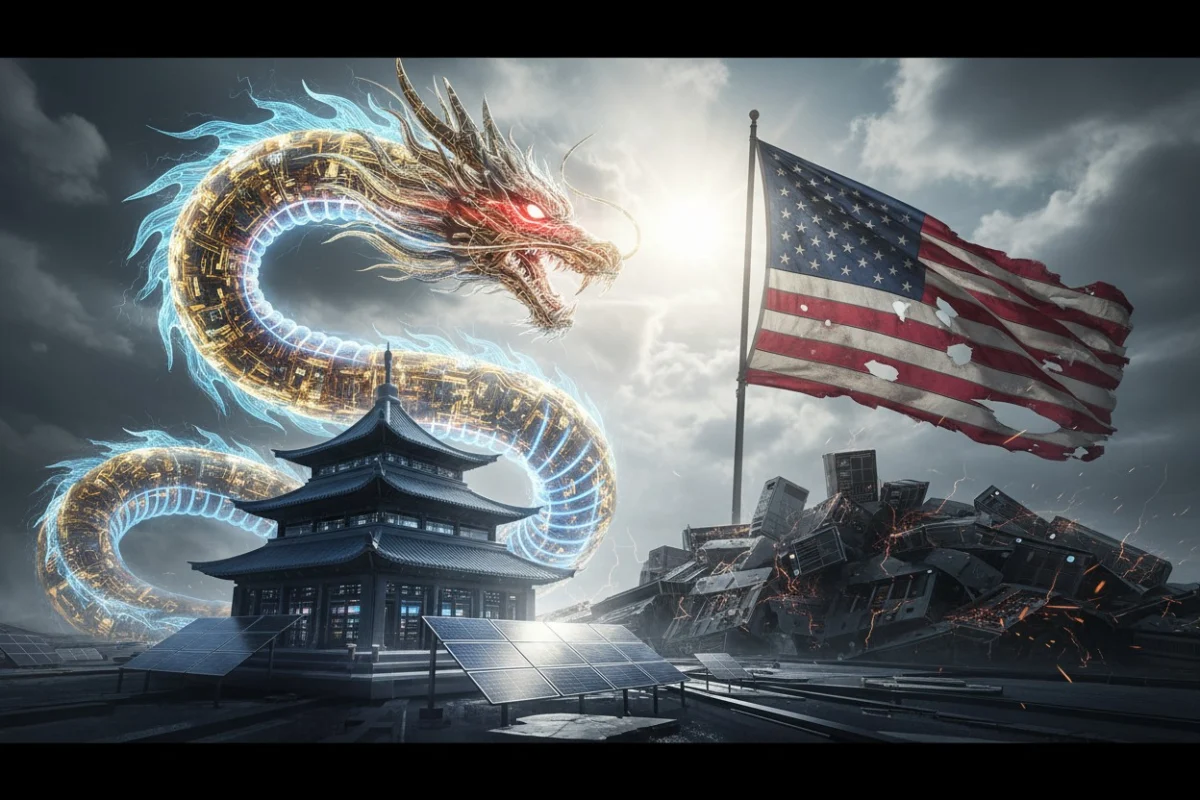
Perhaps the most chilling aspect of Pape’s analysis is the shift from state-sponsored warfare to the "democratization of destruction." The age of the unchallenged American aircraft carrier—the ultimate symbol of 20th-century power—is effectively over.
Pape highlights a brutal economic reality: the cost-exchange ratio of modern warfare has inverted. A single Patriot interceptor missile costs over $1 million, while a commercially available drone used by non-state actors like the Houthi rebels costs only a few thousand dollars.
By utilizing swarms of cheap, off-the-shelf drones, smaller nations and non-state actors can now neutralize multi-billion dollar naval assets and choke off global economic arteries, such as the Strait of Hormuz. This gives these actors a "strategic veto" over global trade, turning commercial parts into tools of mass economic disruption. The vulnerability of our globalized economy is now such that a localized conflict can trigger a worldwide recession in a matter of weeks, as supply chains collapse under the weight of even minor disruptions to energy flows.
Official Responses and Economic Implications
The implications for the global economy are dire. Pape’s analysis of the Strait of Hormuz is a masterclass in risk assessment. He warns that a conflict involving Iran could trigger a collapse of energy supplies, leading to a global recession that would dwarf the 2008 financial crisis.
With global oil inventories currently scraping five-year lows due to underinvestment and geopolitical instability, the global energy market is a "powder keg" waiting for a spark. Pape identifies the potential for an economic "date of reckoning" as strategic petroleum reserves are depleted, suggesting that the current foreign policy path is not just militarily unsustainable, but economically suicidal.
The "forever wars" have externalized these costs. While the military-industrial complex reaps the benefits of constant procurement, the ordinary citizen pays the price through inflation, national debt, and volatile energy prices. The social contract is being sacrificed on the altar of perpetual, low-visibility conflict.
A Path Forward: Resilience and Accountability
Crucially, The Escalation Trap does not leave the reader in a state of hopeless resignation. Pape advocates for a fundamental shift in national strategy, centered on three pillars:
- Localization: We must move away from the fragility of hyper-globalized supply chains. Rebuilding community-level resilience—decentralized energy production, local food systems, and robust mutual aid networks—is not a retreat into isolationism, but a necessary survival strategy for a volatile century.
- Truth and Accounting: Pape calls for a national truth commission regarding the post-9/11 conflicts. We cannot chart a new course until we have an honest, public accounting of the trillions spent and the millions of lives altered or ended. Acknowledging the failure is the first step toward preventing its repetition.
- Strategic Restraint: Policymakers must move away from the temptation of "surgical" intervention. Real security comes from diplomatic strength and economic stability at home, not from the illusion that a cruise missile can force a foreign culture to adopt a desired political structure.
Conclusion: The Wisdom to Listen
Robert Pape’s The Escalation Trap is a clarion call to citizens and leaders alike. It strips away the comforting, high-tech veneer of modern warfare to reveal the grim, human reality beneath. The era of "clean" war is a myth, and continuing to chase that myth will only lead to further strategic catastrophe.
Whether policymakers have the courage to acknowledge these failures and pivot toward a more grounded, realistic foreign policy remains to be seen. However, for those who wish to understand the trajectory of our current global crisis, this book is not just recommended—it is essential reading. It is time to stop playing with the levers of global chaos and start building a foundation for genuine, sustainable peace.
For those seeking to delve deeper into these arguments, Robert Pape’s insights are available in his latest work, "The Escalation Trap," as well as through his recent appearances on platforms like the Health Ranger Report. The transition from an era of unchecked intervention to one of strategic wisdom begins with an informed citizenry.