Divorce at 50 is a unique developmental challenge. It is not merely the end of a legal contract; it is the sudden, jarring dissolution of a decade-spanning identity. On an ordinary Tuesday, the life you curated—the mortgage logins, the shared dinner rituals, the social calendar—can feel like a set of stage props for a play that has been abruptly canceled.
For many, the initial instinct is to compensate for the emotional vacuum with radical change. The "fresh start" fantasy—the new city, the dramatic career pivot, the aggressive fitness regimen—can feel like a lifeline. However, psychological and financial experts warn that attempting to reinvent one’s entire life while the "floor" is still shifting is a recipe for burnout. True recovery at this stage of life requires a shift in philosophy: from dramatic reinvention to a layered, methodical rebuild.
The Three Layers of Stability
The "Stability Before Reinvention" framework posits that the most effective way to navigate midlife divorce is to treat it like a structural renovation. You do not redecorate the living room before you have checked the foundation for cracks.
Layer 1: Protecting the Floor
The first priority is triage. You must secure the essential pillars of your existence to prevent further damage. This is not about long-term planning; it is about survival. Key areas include:
- Physical and Legal Safety: If a partner is controlling, monitoring, or threatening you, do not attempt to negotiate. Seek immediate help from professional resources like the National Domestic Violence Hotline.
- The "Bare-Month" Map: Calculate your absolute minimum financial requirements. What are the non-negotiables: rent/mortgage, utilities, food, and medication?
- Documentation: Ensure you have physical or digital access to tax returns, deeds, insurance policies, and legal decrees.
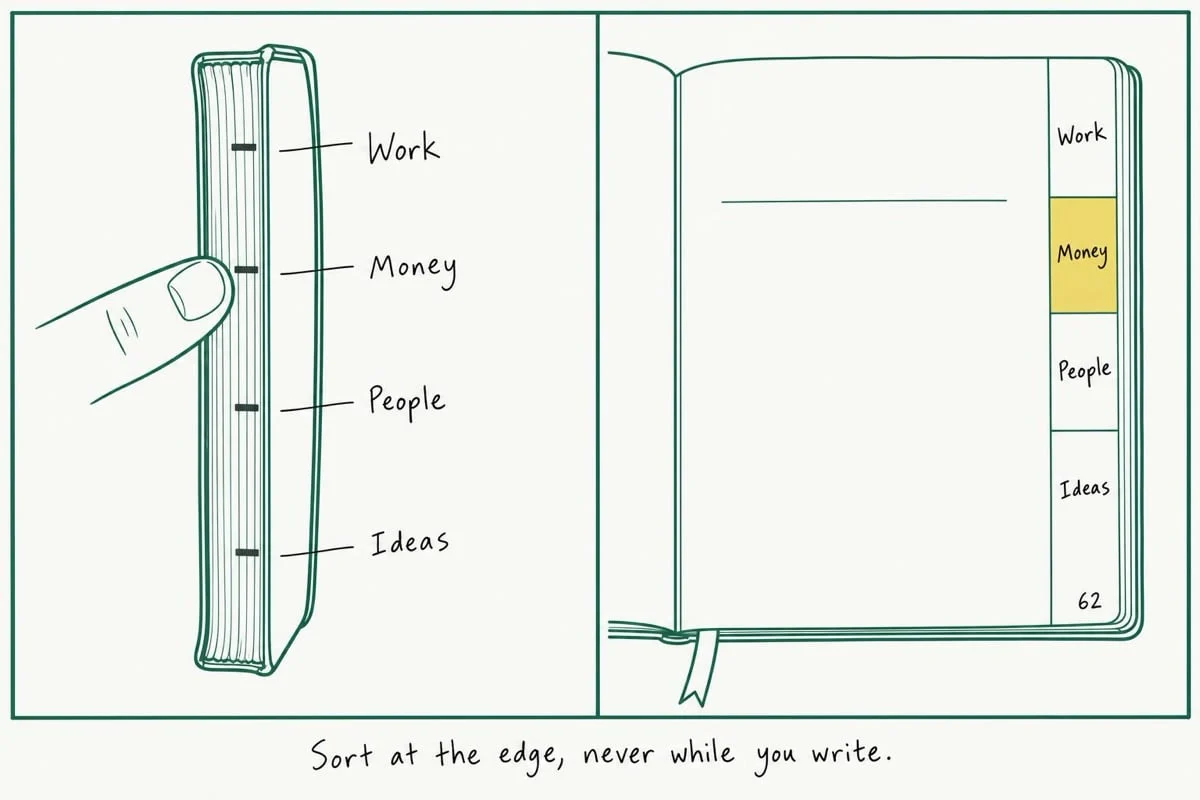
- The Triage List: Categorize every open issue into four columns: "Urgent," "This Month," "Needs a Professional," and "Can Wait." By forcing tasks into these buckets, you stop them from competing for your attention all at once.
Layer 2: Rebuilding a Trustworthy Week
Once the floor is stable, you must construct a "trustworthy week." This is not about productivity; it is about creating an environment where you are not constantly forced to make high-stakes, reactive decisions.
Incorporate four specific "anchors" into your schedule:
- Administrative Block: A dedicated time for divorce-related paperwork.
- Physical Maintenance: A non-negotiable activity that supports your health, such as a walk or a consistent mealtime.
- Reliable Connection: A standing check-in with a trusted friend or family member.
- Authorized Inactivity: A period where you are allowed to be unproductive, preventing the guilt of "not doing enough" from consuming your rest.
Layer 3: Testing Your New Identity
Only after the first two layers are firm should you begin to explore who you want to become. This is the stage for "reversible experiments." If you are considering a career change, don’t quit your job; take a weekend workshop. If you want to move, rent an Airbnb in a new neighborhood for a week before committing to a lease. By keeping experiments small and reversible, you turn potential failures into valuable data rather than catastrophic life events.
Why "All-at-Once" Reinvention Backfires
The human brain is designed to handle stress, but it is not designed to handle a total systemic overhaul while under the duress of a major life transition. Research into cognitive load suggests that when we face a "fresh start" after trauma, we often experience decision fatigue.
A meta-analysis of studies regarding stress and executive function indicates that when our internal resources are taxed, our ability to make sound, long-term decisions degrades. When you try to change your housing, your social circle, and your professional trajectory simultaneously, you are essentially asking your most exhausted self to make your most significant life choices.

The "fresh start" fantasy is often a symptom of a desire to escape pain. However, when we run from pain, we often carry our decision-making habits with us. By slowing down, we allow the emotional fog to lift, ensuring that our next chapter is built on intention rather than reaction.
The Financial Reality of Midlife Divorce
Financial impact is perhaps the most quantifiable aspect of divorce after 50. Data suggests that the economic fallout is significant. A longitudinal study on divorce in the 50-plus demographic found an average 45% decline in the standard of living for women and a 21% decline for men, with total household wealth often being halved.
It is critical to understand that a divorce decree is not a financial "reset button." A divorce judgment does not automatically remove your name from a joint mortgage or an auto loan. Many individuals falsely believe that because a court granted them the house, the bank will release them from the debt. Dealing with these legal nuances requires professional guidance. Before signing any settlement, ensure you have consulted with a tax professional or financial advisor who specializes in midlife transitions.
Rebuilding in Chronological Stages
Recovery does not happen on a linear path, but having a chronological roadmap can reduce anxiety.
- Week One (The Audit): Focus entirely on the four-column inventory. Identify the "urgent" items—insurance, immediate debt, safety—and tackle them one by one. Do not look past the end of the week.
- Week Two (The Routine): Introduce your "anchors." If you miss a scheduled walk or an administrative block, do not spiral. The goal is not a perfect streak; it is to create a rhythm that can sustain you when you are tired.
- Week Three (The Support Request): Identify one person in your circle who can help with a specific task. If you feel like a burden, recognize that this may be a "people-pleasing" reflex. Allowing others to assist you is a form of boundary-setting.
- Week Four (The Experiment): Choose one small, low-stakes experiment. This is not a "new life" declaration; it is a way to test your preferences in your new reality.
Official Resources and Professional Support
When navigating the complexities of divorce, it is vital to know where to turn for objective, professional assistance.
- For Safety: If you feel monitored, threatened, or controlled, visit the National Domestic Violence Hotline. They offer confidential safety planning that can be accessed via phone, text, or secure web chat.
- For Legal Aid: The Legal Services Corporation (LSC) provides a directory for finding civil legal aid. While resources vary by state and eligibility, these organizations are essential for those with limited financial means.
- For Mental Health: If the emotional burden of the divorce leads to crisis, the 988 Lifeline provides 24/7 support.
Implications: The Long View
The goal of this process is not to reach a state where you feel "like your old self." Your old self was defined by a partnership that no longer exists. The goal is to reach a state of equilibrium where you are capable of making deliberate choices.
Progress in the aftermath of divorce is often invisible. It is not marked by the moment you feel "happy" again; it is marked by the moment you stop feeling like your life is a series of emergency exits. By protecting the floor, building a reliable week, and testing your identity through small, reversible actions, you create the space for a life that is not just "recovered," but genuinely yours.
Remember: You are not required to reinvent everything while the floor is still moving. Secure the ground beneath your feet, and the rest will follow in due time. Stability is not surrender; it is the prerequisite for all the growth that is yet to come.