By Beth Skwarecki, Senior Health Editor
September 18, 2026
The arrival of the Apple Watch Series 12 has been one of the most anticipated events in the wearable technology sector this year. As someone who has spent over a decade analyzing health metrics and putting fitness trackers through their paces, I approached this device with both excitement and a healthy dose of professional skepticism. After 24 hours of continuous wear and rigorous initial testing, the picture emerging is one of a device that finally catches up on foundational features—like step counting—while perhaps over-promising on the nuance of its "most accurate" sensor claims.
Main Facts: The Evolution of the Series 12
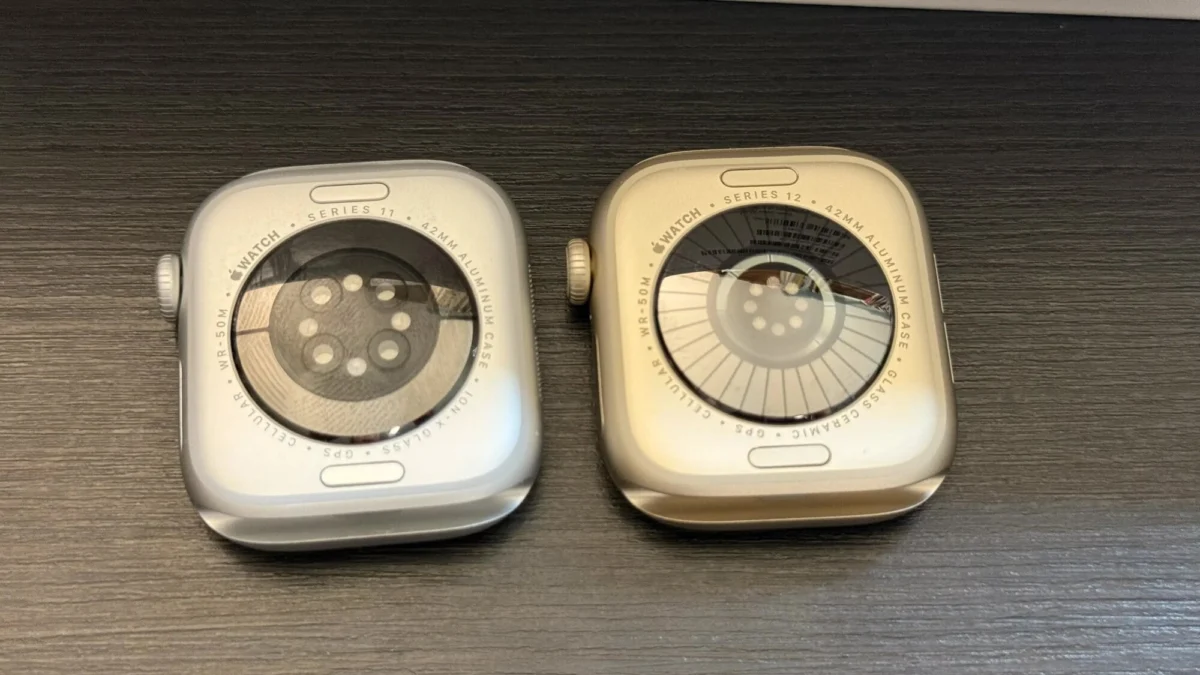
The Apple Watch Series 12 introduces a redesigned sensor array on the chassis, aimed at improving biometric data collection. The most immediate change for long-time users is the long-overdue inclusion of native, easily accessible step counting. While other manufacturers have treated step tracking as a baseline feature for years, Apple has finally integrated it directly into the "Smart Stack" and watch face complications.
However, this feature comes with a hardware caveat: it is exclusive to the Series 12. Apple attributes this to a specialized pedometer model integrated into the new processor, rendering it unavailable for legacy devices like the Series 11. This decision has sparked debate regarding whether the hardware limitation is truly insurmountable or if it represents a strategic move to drive upgrades.

Beyond step counting, the device introduces "Recovery HRV"—a shift in focus from cardiac-health-specific Heart Rate Variability (HRV) to a more holistic recovery metric. This aligns the watch more closely with competitors like Oura and Whoop, signaling Apple’s desire to become a comprehensive wellness companion rather than just an activity tracker.
Chronology: The First 24 Hours
My testing began immediately upon unboxing. The initial setup process was seamless, as expected, but the true test lay in the transition to daily activity.
- T+0 hours: Device initialization and pairing. Configuration of the new step count complication via the "Activity" menu.
- T+6 hours: Casual validation. Throughout the workday, I performed manual counts of steps taken from my workstation to various points in the office. The watch’s output aligned perfectly with my manual count.
- T+12 hours: First indoor run. Comparison testing began against a medical-grade chest strap and a Garmin Forerunner 570.
- T+20 hours: Outdoor testing. Transitioned to variable terrain to assess sensor stability during elevation changes and varying intensity levels.
- T+24 hours: Data synthesis and initial review of sleep-linked metrics, specifically checking the "Recovery HRV" reporting.
Supporting Data: Accuracy and the "Sampling" Problem
Apple has marketed the Series 12 as having the most accurate heart rate sensor in the wearable market. My preliminary findings suggest that while the performance is certainly competitive, the claim requires nuance.
The Sampling Rate Gap
One of the most critical findings involves the data sampling frequency. During active workouts, the Apple Watch Series 12 samples heart rate data at five-second intervals. By contrast, the "gold standard" chest straps and premium Garmin devices sample at one-second intervals.

Mathematically, this means the Apple Watch captures 12 data points per minute, while specialized athletic hardware captures 60. This discrepancy is visible in the data graphs: during small, sharp spikes in heart rate—often associated with interval training or high-intensity bursts—the Apple Watch occasionally misses the peak of the spike, smoothing the data in a way that may be less useful for elite athletes, even if it is "accurate enough" for the average gym-goer.
Benchmarking Against the Garmin 570
In my testing, I utilized the Garmin Forerunner 570 as a control, as it has consistently proven to be the most accurate wrist-based sensor I have tested to date. During indoor runs, the Series 12 performed admirably, mirroring the chest strap’s trends closely. However, the Series 11—my previous daily driver—also performed quite well. It remains to be seen if the Series 12 offers a significant delta in improvement or if the gains are marginal. I will be expanding the test parameters over the next two weeks to include swimming and high-intensity interval training (HIIT) to further stress-test the sensor.
Official Responses and Ecosystem Context
Apple has remained firm on its "most accurate" branding, likely relying on proprietary algorithms that interpret the sampled data points to predict the intervening seconds. The company maintains that the hardware-level integration between the new processor and the redesigned sensor array allows for a higher confidence interval in biometric readings.
Furthermore, the delay in "Readiness" scores is a notable point of contention. While users are currently seeing HRV data, the holistic "Readiness" score requires a full week of baseline sleep data. Apple’s emphasis on "trends over specific points" is a prudent approach, acknowledging that wearable data is inherently noisy and subject to environmental interference.

Implications: The Future of the Apple Health Ecosystem
The absence of "Live Rewind" and "Siri Recaps" at launch is a significant factor for consumers to consider. These features, which promise real-time transcription and meeting summarization, are slated for a later update in watchOS 27. For the power user or the professional who bought the Series 12 specifically for these productivity-enhancing AI features, the initial experience is currently incomplete.
The "Hardware Gatekeeping" Controversy
The fact that step counting is restricted to the Series 12 is a potential point of frustration. By locking this behind a specific processor, Apple has effectively created a barrier to entry for users who might otherwise be satisfied with their older hardware. This implies that future health features may continue to be siloed behind processor upgrades, moving the Apple Watch away from a "software-first" platform to one where the hardware generation is the primary determinant of feature access.
Final Thoughts for the Consumer
If you are upgrading from an Apple Watch Series 8 or older, the Series 12 offers significant advancements in sensor technology, battery efficiency, and the long-awaited arrival of native step counting. However, if you are currently using a Series 11, the decision to upgrade is less clear-cut.
The accuracy claims are a compelling marketing point, but for the average user, the "accuracy" of the previous generation was already at a high plateau. As I continue to gather data over the coming month, I will be looking for one key indicator: consistency. A device that is 99% accurate 100% of the time is more valuable to the average consumer than a device that is 99.9% accurate but occasionally drops data points during high-intensity intervals.

Stay tuned for my follow-up report, where we will dive deeper into the "Readiness" scores and the impact of the upcoming AI-driven software features on daily workflow.