
By Emily Long
September 21, 2026
In an era where digital footprints are tracked, sold, and analyzed, the Virtual Private Network (VPN) has transitioned from a niche tool for tech enthusiasts into a staple of digital hygiene. Among the crowded marketplace of privacy tools, Proton VPN has consistently distinguished itself through its open-source transparency and robust feature set. However, many users treat their VPN as a simple "on/off" switch, failing to leverage the granular controls that can significantly enhance both browsing speeds and security.
Whether you are a privacy advocate looking to shield your data from prying eyes or a casual streamer attempting to bypass geo-restrictions, mastering your VPN settings is the key to a seamless digital experience. This guide explores the advanced configurations of Proton VPN that transform it from a basic privacy shield into a powerful, automated, and versatile tool for the modern internet user.
The Core Fundamentals: Why Fine-Tuning Matters
At its most basic level, a VPN encrypts your traffic and routes it through a secure server, masking your true IP address. While this provides immediate privacy benefits, it often comes at the cost of latency—the delay between your action and the server’s response. By understanding and manipulating features like split tunneling, protocol selection, and connection profiles, users can reclaim their internet speed without sacrificing security.
Understanding the Trade-offs
The primary tension in VPN usage is between security and utility. Routing all traffic through a distant server is great for privacy, but it is unnecessary for gaming, local file transfers, or accessing trusted local services. Proton VPN’s advanced settings are designed to resolve this tension, allowing for a bespoke connection environment.
Chronology of Connectivity: Mastering Advanced Features
The evolution of Proton VPN has moved toward greater user autonomy. Below is a breakdown of the essential features that have defined the service’s recent updates, allowing users to customize their network behavior.
1. Granular Control with Split Tunneling
Split tunneling is arguably the most underrated feature in the VPN space. It allows you to partition your internet traffic, routing some applications through the secure VPN tunnel while letting others connect directly to your ISP.
- Exclude Mode: Ideal for high-bandwidth activities like online gaming or local streaming, where VPN latency might cause "lag." By excluding these specific apps, you keep your gaming performance high while keeping your browser traffic protected.
- Include Mode: The "paranoid" setting. You can force only your most sensitive applications—such as banking software or encrypted messaging tools—through the VPN, leaving the rest of your traffic unencumbered.
2. Domain-Level Precision via Browser Extensions
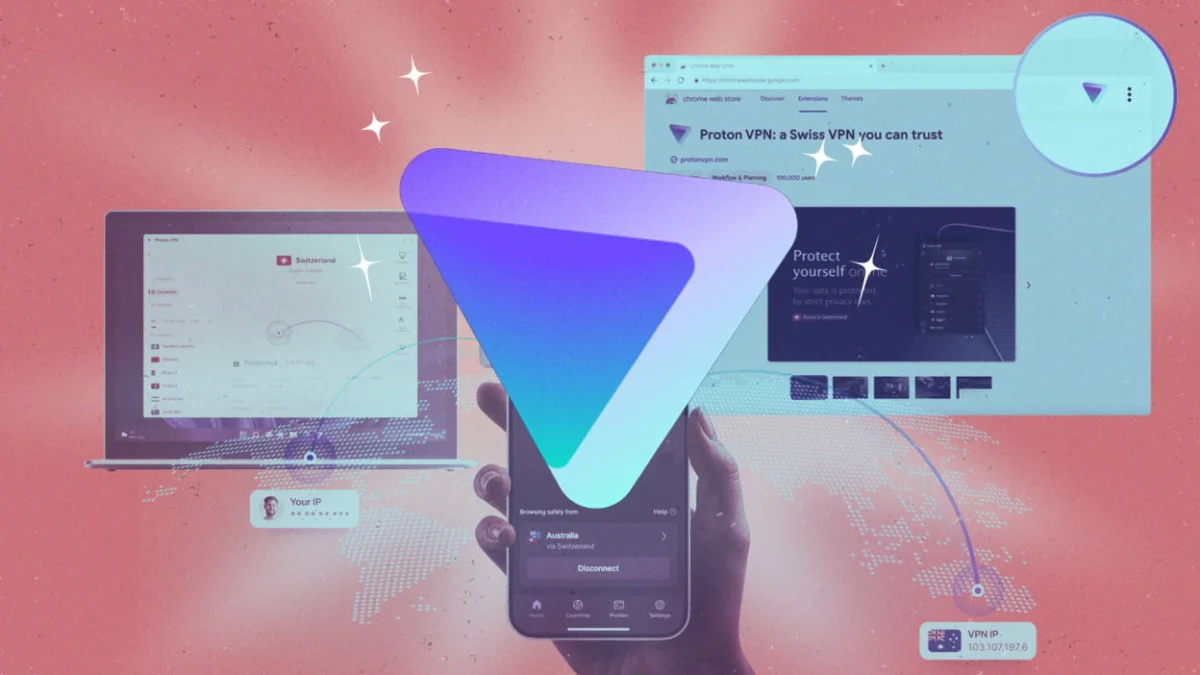
For those who prefer not to manage device-wide tunnels, Proton VPN’s browser extensions for Chrome and Firefox offer a more surgical approach. By operating at the domain level, these extensions allow you to selectively protect specific websites. This is particularly useful for users who need a VPN to access a specific international news site or regional service but want to maintain local network speeds for everything else.
3. One-Click Profiles and Streaming Optimization
Manually selecting servers and protocols every time you want to watch a geo-restricted show is tedious. Proton VPN’s Connection Profiles feature acts as a macro for your network settings. By saving your preferred server, protocol, and split-tunneling configurations, you can transition from a secure work environment to a streaming-optimized one with a single click. These profiles appear in your "Recents" tab, minimizing the time spent navigating menus.

Supporting Data: Leveraging Advanced Configurations for Real-World Scenarios
Beating Dynamic Pricing
A little-known "hack" involving VPNs is the mitigation of dynamic pricing. Travel booking sites, airlines, and hotels often use your location to adjust prices based on regional purchasing power or local demand. By using a VPN to route your traffic through a country with a lower cost of living or the airline’s home base, you may find significantly lower fares.
- Strategy: Combine a pre-set VPN profile with an incognito browser window. This ensures that the booking site sees a "fresh" visitor from the chosen region, preventing cached cookies from revealing your true location or past search history.
Managing Local Area Network (LAN) Connectivity
A common frustration for VPN users is the inability to communicate with local devices, such as network-attached storage (NAS), printers, or smart home hubs, once the VPN is active. Proton’s LAN Access feature allows for a "bridge" in your security tunnel. By enabling this in your settings, you maintain the encryption of your internet traffic while allowing your devices to "see" each other on your local network.
Official Responses and Technical Standards
Proton VPN’s architecture relies on a foundation of trusted protocols, each serving a distinct purpose in the privacy ecosystem.
The Protocol Hierarchy
- WireGuard: The gold standard for speed and security. It is lightweight, modern, and currently the recommended choice for most users.
- OpenVPN: The reliable workhorse. While slightly slower than WireGuard, its track record for stability and security is unmatched.
- Stealth Protocol: A proprietary innovation by Proton designed to bypass sophisticated censorship. Stealth obfuscates VPN traffic, making it appear as standard HTTPS traffic. This is essential for users in countries with restrictive firewalls or corporate environments where VPNs are strictly prohibited.
- Smart Protocol: If you are unsure which to pick, Smart Protocol acts as an intelligent traffic director, automatically switching to the most reliable connection if your current path is blocked or unstable.
Implications: The Future of Your Digital Privacy
The Kill Switch: The Final Line of Defense
The "Kill Switch" is perhaps the most critical security feature in the Proton arsenal. If your VPN connection drops unexpectedly—even for a millisecond—your real IP address could be exposed. The kill switch acts as a circuit breaker, instantly cutting off all internet traffic until the secure tunnel is re-established. For users on public Wi-Fi, this is not just a feature; it is an absolute necessity.
NetShield and DNS Filtering
Proton’s NetShield is a DNS-based ad-blocker that works before a page even loads. By cross-referencing your requests against lists of known trackers, malware, and ad servers, it improves page-load times and significantly enhances security. Unlike browser-based ad blockers, NetShield works at the system level, protecting you even when you aren’t using a web browser.
Anti-Censorship via Alternative Routing
In the event that Proton’s primary servers are blocked by a government or ISP, Alternative Routing kicks in. This feature reroutes your connection through third-party infrastructure (such as AWS or Google). While this involves a trade-off in privacy—as your traffic touches third-party servers—Proton ensures that the actual data remains encrypted and inaccessible to those third parties. It is a vital fail-safe for maintaining connectivity in hostile digital environments.
Automation and Shortcuts
The integration of iOS Shortcuts and Android automation (via Tasker) brings a level of "set it and forget it" convenience to privacy. By triggering VPN connections based on location—such as automatically turning on the VPN the moment you join a public Wi-Fi network at a coffee shop—you eliminate the human error factor that often leads to data exposure.
Conclusion: Taking Control of Your Connection
Privacy is not a passive state; it is an active practice. While the default settings of Proton VPN provide a robust baseline of security, the true value of the service lies in its flexibility. By utilizing split tunneling, mastering connection profiles, and understanding the nuances of protocols like Stealth and WireGuard, you are no longer just a user of a VPN—you are an architect of your own digital security.
As we move toward a future where online tracking becomes increasingly sophisticated, the ability to tailor your connection to your specific needs will remain the most effective defense against the erosion of digital anonymity. Take the time to explore your settings today; your privacy will be the better for it.