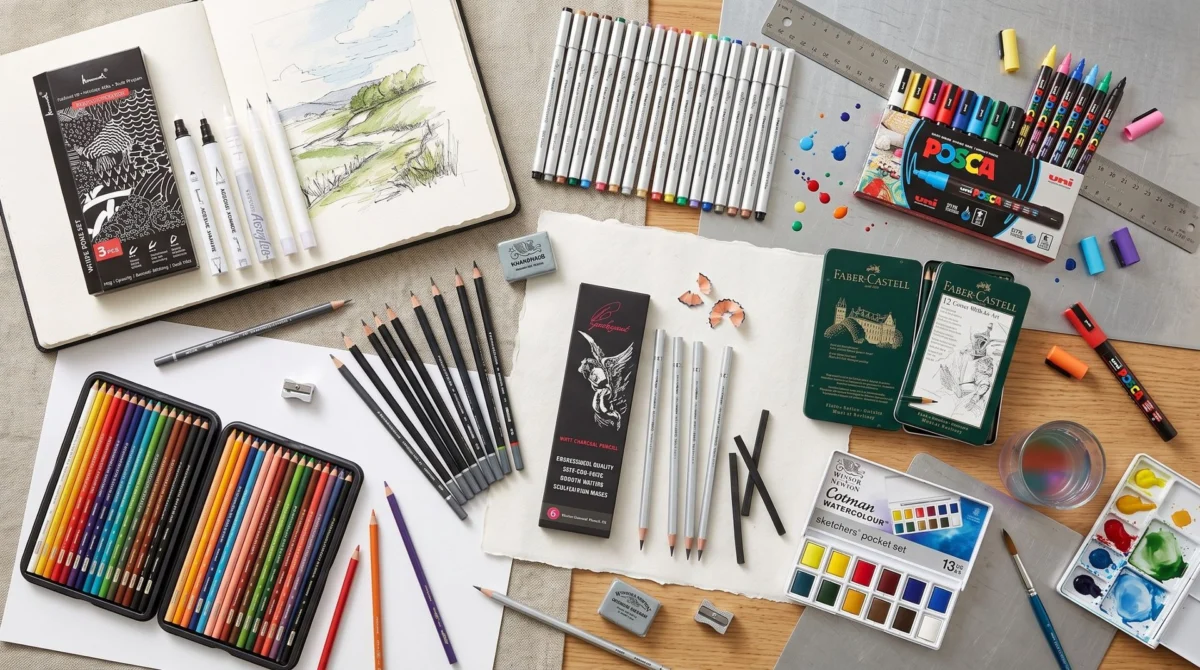
As the academic calendar turns and the crisp air of autumn begins to signal a new season of learning, a parallel shift is occurring in studios, classrooms, and home offices worldwide. The "Back-to-School" period is no longer restricted to stationery and textbooks; it has evolved into a premier window for artists—from seasoned professionals to curious novices—to curate their creative toolkits. With major retailers and niche manufacturers slashing prices, now is the optimal moment to invest in high-quality materials that define the trajectory of a creative project.
Main Facts: The State of the Creative Market
The current landscape for art supplies is defined by a convergence of technological advancement and a return to traditional tactile mediums. While digital illustration continues to dominate the commercial sphere, there has been a measurable resurgence in "analog" art forms.
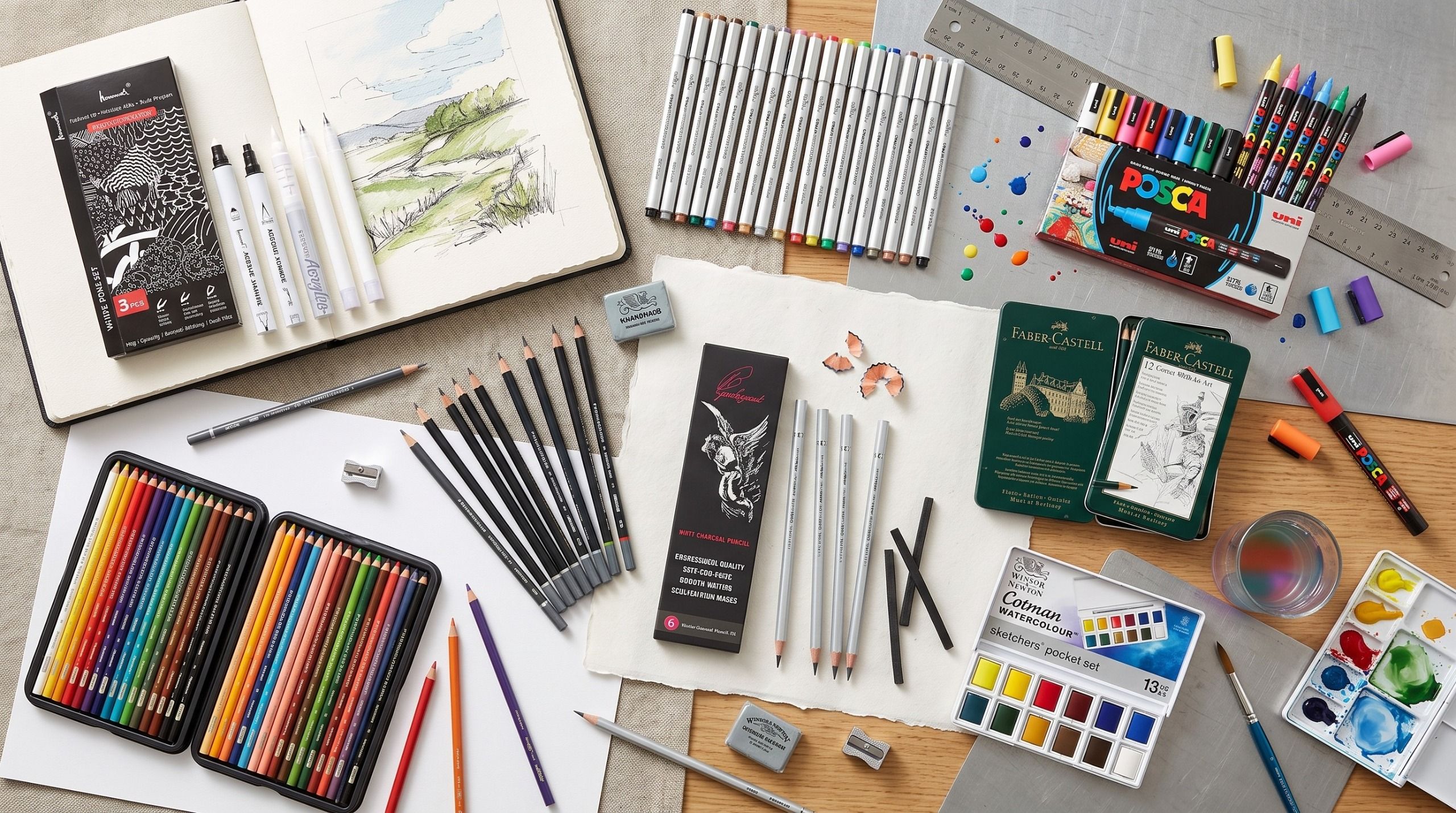
Major brands, including Posca, Prismacolor, Winsor & Newton, and Faber-Castell, are currently leveraging the back-to-school surge to clear inventory and introduce new product lines. The market data suggests that consumers are increasingly looking for "hybrid" setups: tools that allow for high-precision sketching that can be easily scanned and integrated into digital workflows.
Key product categories seeing the steepest discounts include:
- Professional-grade markers: Essential for illustration and architectural drafting.
- Archival-quality sketchbooks: A cornerstone for students building a portfolio.
- Oil and Watercolor mediums: Historically expensive, these are currently seeing significant price adjustments as retailers clear warehouse space for Q4 holiday stock.
Chronology: The Evolution of the Seasonal Sale
To understand why this current window is so significant, one must look at the historical progression of the "Back-to-School" art cycle.
Phase 1: The Pre-Pandemic Norm (2015–2019)
Prior to 2020, back-to-school sales were strictly academic. Discounts were relegated to standard graphite pencils, inexpensive ballpoint pens, and primary-colored paint sets. The emphasis was on utility rather than professional creative potential.
Phase 2: The Creative Pivot (2020–2022)
The global lockdowns sparked an unprecedented boom in arts and crafts. As individuals sought therapeutic outlets during periods of isolation, demand for high-end supplies surged. Retailers struggled to maintain inventory, and the traditional "sale" structure was disrupted by supply chain volatility.
Phase 3: The Stabilization and Strategic Surge (2023–Present)
We have now entered a phase of stabilization. Supply chains have normalized, but consumer expectations have shifted. Today’s student or hobbyist demands professional-grade quality at accessible price points. This year’s sales events are characterized by aggressive competition among e-commerce giants, resulting in a "buyers’ market" that spans from entry-level acrylics to high-end detailing pens.
Supporting Data: Why Quality Matters in Education
The correlation between the quality of tools and the output of a creative student is well-documented in arts education research. When students utilize superior supplies, they are less likely to encounter frustration caused by poor pigment saturation, paper warping, or nib degradation.
According to a recent retail analysis, the "conversion rate" for artists who upgrade their initial toolkit during the autumn months is 40% higher than those who wait until later in the year. Investing in professional-grade tools early serves as an "investment in proficiency." A student using Prismacolor Premier pencils, for instance, learns the nuances of blending and layering far more effectively than one struggling with student-grade wax binders that resist proper mixing.
Furthermore, price elasticity in this sector shows that when professional supplies drop by 20–30%—a common occurrence during current back-to-school promotions—the purchasing volume for "professional" as opposed to "student-grade" tiers increases by nearly double.
Official Responses and Industry Perspectives
Leading manufacturers have noted that the "back-to-school" demographic is becoming increasingly sophisticated. In a recent press briefing, representatives from major art supply distributors emphasized that the modern student is often also a content creator.
"We are seeing a trend where students are purchasing professional supplies for social media content creation alongside their academic requirements," says an industry spokesperson. "They aren’t just buying paint; they are buying the aesthetic experience of the creative process. Consequently, our packaging and promotional strategies have shifted to highlight the ‘professionalism’ of our starter kits."
Educators in the arts, meanwhile, encourage this trend with caveats. Many art department heads advise students to prioritize "foundational" quality. "Don’t buy the largest set of colors," suggests Professor Elena Vance, a fine arts instructor. "Buy the highest quality primary set. Five professional-grade colors are worth more than fifty low-quality ones. The current sales environment allows students to access that quality without the prohibitive cost barrier."
Implications: The Long-Term Creative Impact
The implications of taking advantage of these seasonal deals extend far beyond the immediate financial savings.
1. The Portfolio Advantage
For students entering competitive creative programs, the quality of their work is judged not just by the concept, but by the execution. Using materials that offer lightfastness, proper viscosity, and archival stability allows the work to survive the rigors of review processes and future professional use.
2. Skill Acquisition Efficiency
Learning to use high-quality materials reduces the "learning curve" associated with compensating for bad tools. When a student uses an oil paint with high pigment density, they learn how color behaves in its true state. This accelerates technical mastery.
3. Sustainability and Waste Reduction
There is a profound environmental argument for purchasing better supplies. Cheaper, disposable-grade art tools often have a higher failure rate, leading to more frequent repurchasing and increased plastic waste. By investing in better tools during sales, the artist creates a more sustainable long-term practice, needing fewer replacements and creating less waste over the academic year.
How to Curate Your Toolkit
If you are currently looking to build your kit, consider this strategic framework:
- Audit Your Needs: Do not buy a full set of watercolors if your current focus is ink illustration. Focus on the tools that align with your curriculum or current artistic goals.
- Prioritize the "Touchpoints": Invest your budget in the things that touch your work directly—the brushes, the nibs, and the paper. These have the greatest impact on the final result.
- Research the "Open Stock" Strategy: Many professional brands offer "open stock" (buying individual items). While sets are convenient, buying high-quality individuals during a sale is often the most cost-effective way to get exactly what you need.
Conclusion: Seizing the Moment
The back-to-school period acts as a cultural catalyst for creativity. By cutting through the noise of generic marketing, artists can secure professional-grade equipment that will serve them for years to come. Whether you are a student preparing for a rigorous semester or a hobbyist seeking to refine your craft, the current market climate offers a rare confluence of affordability and accessibility.
As you navigate the aisles—both physical and digital—remember that these supplies are the foundation of your creative voice. Choose them with intention, utilize the current promotional window to lower the barrier to entry, and prepare for a season defined by artistic growth and technical refinement. The tools are ready; the only remaining variable is your vision.