In a significant shift for the popular journaling platform, Day One has officially announced the reinstatement of "Day One Labs" for its Silver-tier subscribers. The move serves as a direct response to community feedback, acknowledging that the most effective way to refine experimental features is through the hands of the platform’s most dedicated daily users. By re-opening this collaborative space, Day One aims to bridge the gap between abstract development and the lived, daily experience of its user base.
Main Facts: What You Need to Know
Starting with version 2026.17, all Silver subscribers regain access to Day One Labs at no additional cost. This initiative is designed as an "active workshop" rather than a premium perk. It allows users to interact with features that are still in development, providing a feedback loop that directly informs the company’s product roadmap.
For the user, the return of Labs means:
- Version Dependency: Access is strictly tied to app version 2026.17 or later.
- No Hidden Costs: Labs access is bundled into the Silver subscription, effectively reversing the previous decision to gate these experiments behind the Gold tier.
- Experimental Nature: Features within Labs are, by definition, unfinished. They may graduate to the main app, move to a higher subscription tier, or be discontinued entirely.
- Transparency First: Day One has committed to a three-step notification process, ensuring users are aware of potential changes before they occur.
A Chronological Look at the Labs Saga
To understand why this development is significant, one must look at the recent history of Day One’s subscription model.
The Early Days: Initially, Labs served as a testing ground for all premium users, fostering a culture of collaboration where developers and power users worked in tandem to refine the journaling experience.
The Shift in March: In March, as part of a broader restructuring of the platform’s subscription tiers—Silver and Gold—Day One moved Labs exclusively behind the Gold paywall. This decision was met with immediate friction. Many long-time users who had spent months contributing feedback to experimental features suddenly found themselves locked out of the very tools they helped refine.
The Graduation Conflict: The frustration peaked when several features that had been incubated in Labs moved to the Gold tier on the same day that access was restricted. This effectively turned the "community workshop" into a gatekept feature set, a move that the company has now formally walked back.
The Present: Today’s announcement represents a "return, not a debut." By restoring access to Silver members, the company is attempting to repair the relationship with its user base and return to the collaborative development model that defined its early success.
Supporting Data: Why User-Led Testing Matters
The philosophy behind Day One Labs is rooted in the diversity of the human experience. As the company notes, no two people journal the same way. When a feature is tested by a "few hundred" people, the developers learn if the feature functions correctly. However, when thousands of users interact with a tool, the company gains insights into whether that feature genuinely "belongs in people’s lives."
The current focus of Labs is "journaling out loud." Data indicates that users often suffer from the "paralysis of the blank page." While typing is the traditional method, talking is often faster and captures raw emotion that is frequently lost during the editing process of typing. However, raw audio transcription often results in a "wall of text" that becomes unreadable, leading many users to abandon their journaling habits. Labs is currently testing two AI-driven solutions to solve this:
- New Audio Recorder: A rebuilt interface for mobile devices that includes AI-generated summaries, allowing users to recall the essence of a six-minute recording at a glance.
- AI Format Transcription: This tool applies punctuation, grammar correction, and automatic titling to voice transcripts, turning messy spoken word into polished, readable entries.
These features remain strictly optional. Both are disabled by default, and the company has reiterated that their privacy standards—where no data is stored on servers for training purposes—remain intact.
Official Responses and Strategic Pivot
In a statement reflecting on the shift, the Day One team addressed the community’s "blunt" feedback regarding the March changes. The company acknowledged that the exclusion of Silver users was a "real loss" and recognized that by restricting access, they had effectively silenced the very people most invested in the app’s future.
"We didn’t build Labs as a perk or a preview," the company stated. "It’s part of how Day One gets made."
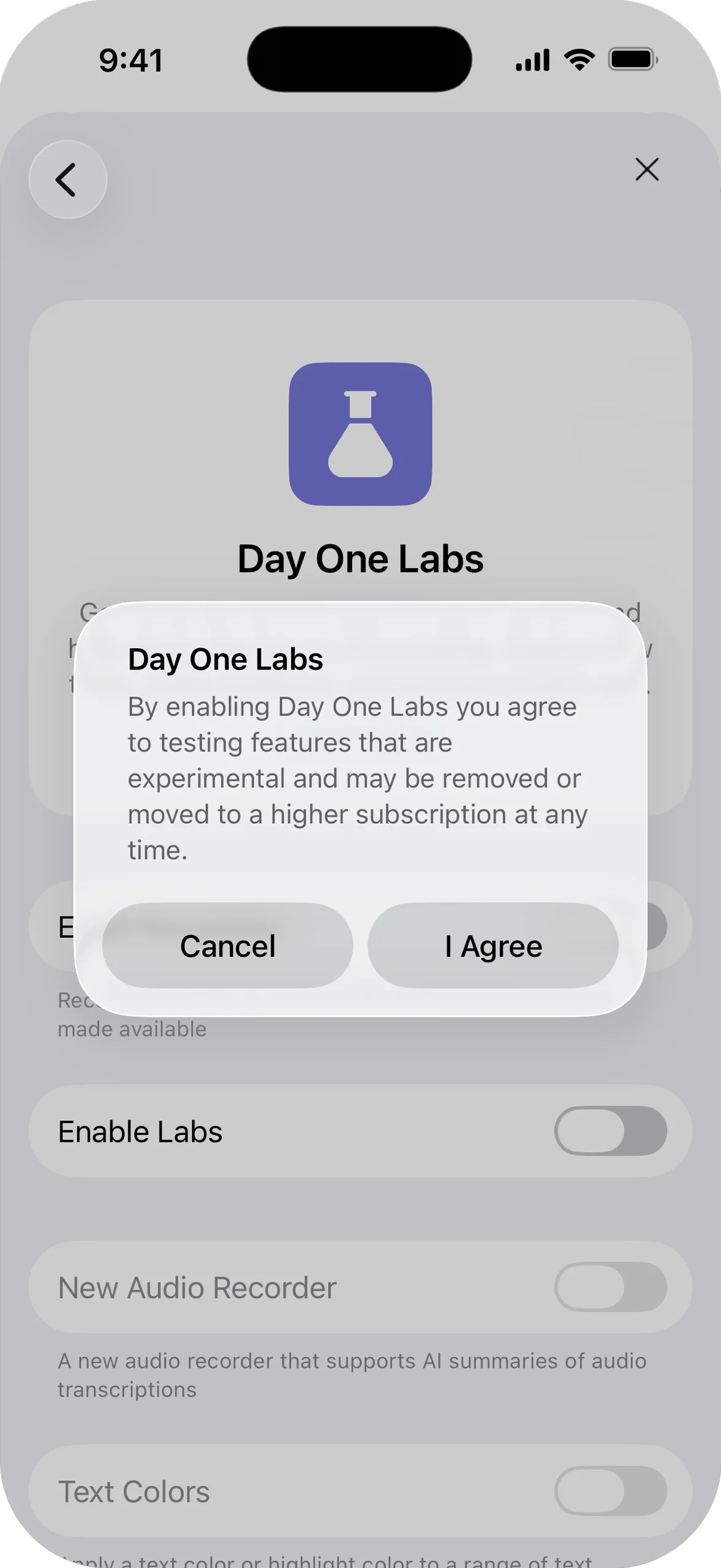
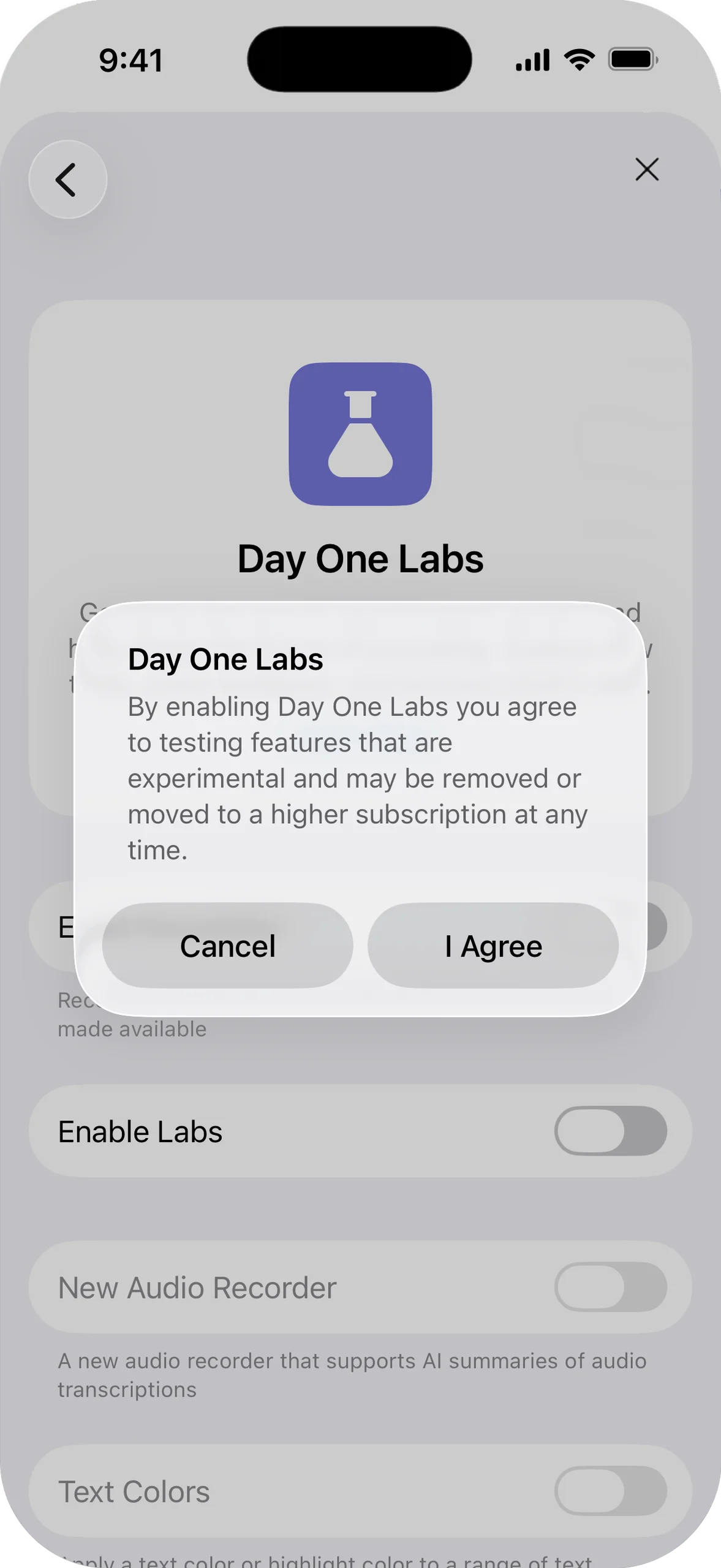
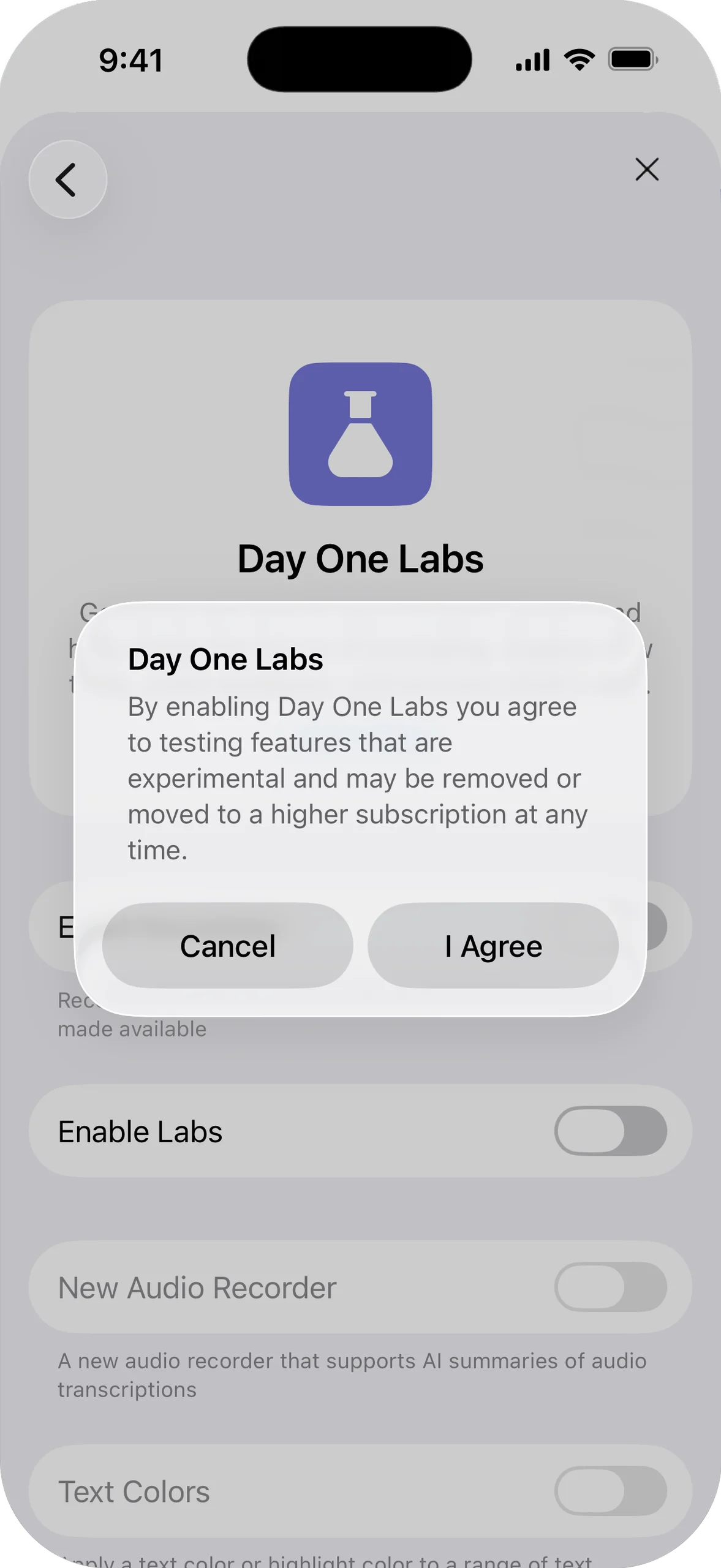
This pivot underscores a broader trend in the software-as-a-service (SaaS) industry: the transition from "product-led growth" to "community-led development." By acknowledging that the community is a vital component of the development lifecycle, Day One is attempting to build trust. They have pledged that if a feature is set to graduate from Labs—or if it is set to be moved to a higher subscription tier—users will be notified at three distinct points: upon enabling the feature, via persistent in-app badging, and through direct communication before any final changes occur.
Implications for the Future of Journaling
The decision to bring Labs back to the Silver tier has profound implications for both the platform and its users.
The "Workshop" Model
By positioning Labs as a workshop, Day One is effectively lowering the barrier to entry for innovation. The "Labs" badge acts as a social contract between the company and the user: the user accepts that the feature may be buggy or subject to change, and in exchange, the company promises that the user’s voice will directly impact the feature’s evolution.
The AI Balancing Act
The inclusion of AI tools in the Labs environment is a strategic test of how modern technology can support, rather than replace, human memory. By keeping these tools in Labs, Day One can monitor how users react to AI-assisted formatting. If these features prove to be essential, the company will have a clear, data-backed path for how to integrate them into their permanent, tiered offerings without blindsiding their user base.
Subscription Tiers and Consumer Trust
For the broader subscription software market, this move is a case study in "reclaiming the narrative." When users feel that a company is prioritizing monetization over utility, they often churn. By reversing the decision to wall off Labs, Day One has prioritized user retention and brand loyalty. The implication is clear: in a crowded market, the most successful tools will be those that treat their power users as partners rather than customers.
Looking Ahead
While Android and Windows users currently do not have access to Labs features, the company has indicated that they are working to bring testing capabilities to these platforms as well. As it stands, the current iteration of Labs is a focused effort on refining mobile audio capture and transcription.
Ultimately, the return of Day One Labs to Silver subscribers is a victory for the "active user." It validates the notion that software is never truly "finished," and that the best products are those that allow their users to shape the tools they rely on for their most personal, private memories. Whether these experimental features eventually graduate to the Gold tier or remain as Silver staples, the process of their arrival will now be one defined by transparency, collaboration, and a renewed commitment to the community that keeps the digital journal alive.