
For millions of fitness enthusiasts, the ritual is identical: complete a workout, check the stats, and log the data. Whether it is a grueling mountain bike climb, a meditative sunset walk, or a high-intensity interval training session, these activities are typically siloed within fitness-centric platforms. However, the true significance of these moments—how they felt, the scenery that surrounded us, or the personal breakthroughs achieved—often gets lost in the cold, hard metrics of pace, heart rate, and elevation.
Day One, the premier digital journaling application, is fundamentally changing that dynamic. With the launch of its new, seamless Strava integration in version 2025.22, the company is bridging the gap between quantified fitness data and qualitative life storytelling. By automatically importing Strava workouts into the Day One ecosystem, the platform allows users to move beyond the "numbers-only" paradigm of traditional fitness trackers, turning every run, ride, and hike into a permanent chapter of their personal history.
The Convergence of Quantified Self and Reflective Journaling
At its core, the mission of Day One has always been to document life as it unfolds. The integration with Strava, the world’s leading social platform for athletes, is a logical evolution of this mission. By automating the entry process, Day One removes the friction that often prevents people from documenting their fitness journey.
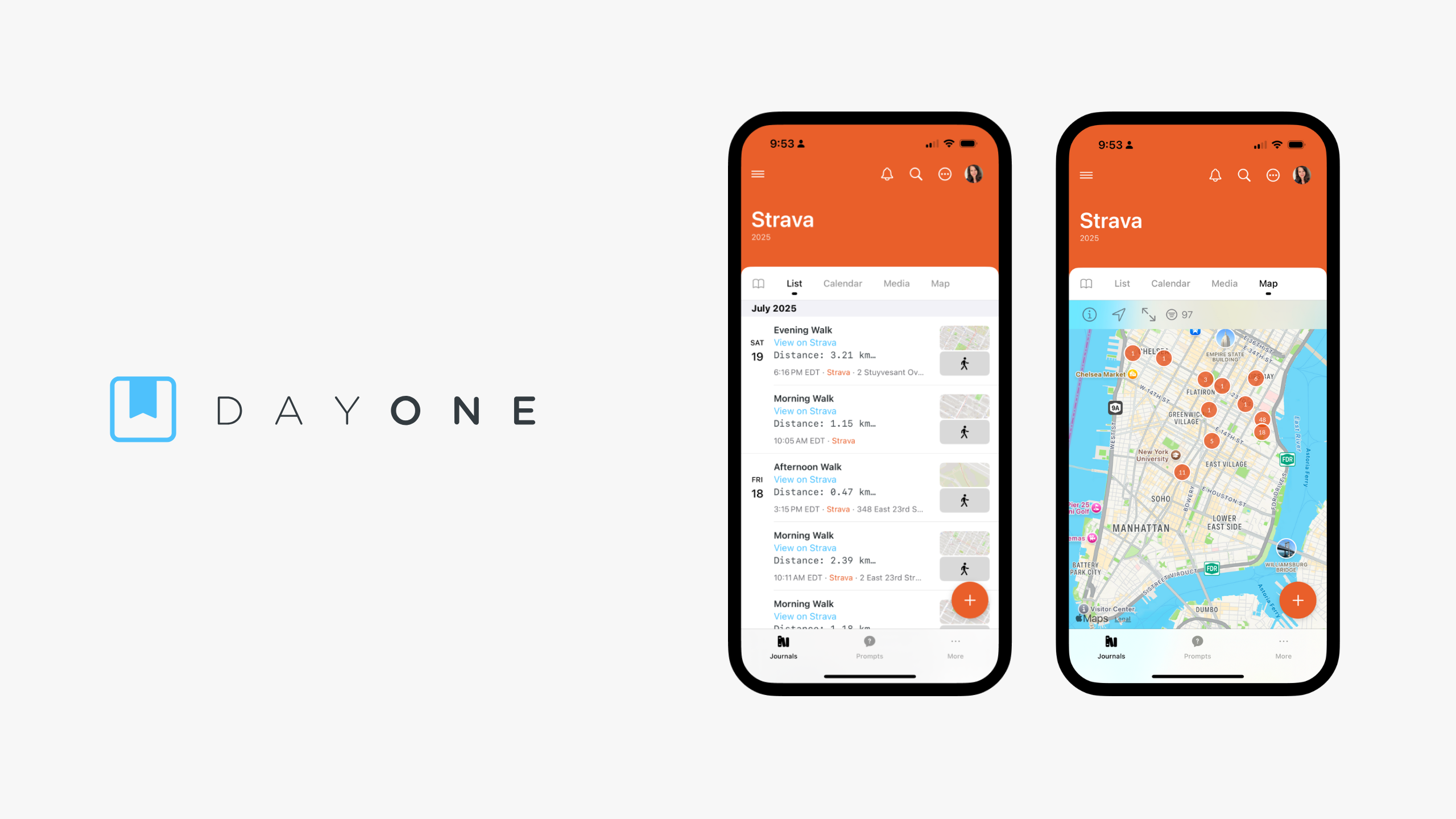
"Our goal is to help you document life as you live it," the company stated in its official launch announcement. "Now, with the new Strava integration, you can automatically capture your workouts and adventures, so every ride, run, hike, or walk becomes part of your story."
This integration is not merely a data sync; it is a contextual enrichment. When a user completes a workout, it is no longer just a row in a spreadsheet or a line item in a feed. It becomes a rich journal entry that can be augmented with photos, videos, personal reflections, and metadata. This approach encourages a holistic view of health, where the mental clarity gained from a morning run is given as much weight as the calories burned during the session.
Chronology of Development: From Concept to Integration
The integration journey for Day One has been marked by a focus on user experience and ecosystem compatibility. The feature, released in version 2025.22, was designed to be platform-agnostic, ensuring that whether a user is training on a road bike in the countryside or tracking a casual walk in the city, the data flows seamlessly into their digital diary.

The rollout follows a structured, multi-platform approach:
- Initial Launch: The feature debuted on iOS (iPhone and iPad) and the Web platform, providing the largest segment of the user base immediate access.
- Backfilling Logic: Recognizing that users have years of history, the integration includes a background "backfill" service. Upon connecting their accounts, users see their most recent activities appear instantly, while older records populate over time without requiring manual intervention.
- Future Expansion: While currently available on iOS and Web, the company has confirmed that Android support is in active development, signaling a commitment to a unified experience across all mobile devices.
The Mechanics of the Integration: How It Works
For the average user, the barrier to entry is minimal. The integration is part of the Day One Silver subscription plan, reflecting the company’s focus on providing high-value features to its premium members.
The Setup Process:
Connecting the two platforms is a straightforward, six-step procedure:

- Authorization: Users navigate to the settings menu within the Day One application and locate the "Integrations" tab.
- Secure Handshake: By selecting "Connect with Strava," the app initiates a secure OAuth2 handshake, ensuring that sensitive user data remains protected while granting necessary permissions for data retrieval.
- Permissions Approval: Users grant access to their activity history, allowing Day One to pull telemetry and media data.
- Automatic Sync: Once connected, the systems communicate in real-time. New workouts are reflected in the journal within moments of being saved on the Strava platform.
A standout technical achievement of this integration is the handling of visual data. While Strava provides the core activity metrics, Day One dynamically recreates the visual route map within the journal entry. This ensures that the aesthetic continuity of the user’s journal remains high, even when pulling from external data sources.
Data Synthesis: The "Best of Both Worlds"
The primary value proposition of this integration is the synthesis of "The Story and The Stats." Most fitness apps fail to capture the "why" behind the movement. Why was today’s run particularly difficult? Was it the heat? Was it a lack of sleep?
By importing the data into Day One, users gain access to:

- Contextual Reflection: Users can tag their workouts with mood, energy levels, or specific life events, allowing for trend analysis that standard fitness trackers cannot provide.
- Multidimensional Views: Users can toggle between List, Calendar, Media, and Map views. This allows for a bird’s-eye view of a training block, enabling athletes to see their progress from a bird’s-eye perspective or a detailed, day-by-day account.
- The "On This Day" Feature: One of Day One’s most beloved features is its "On This Day" notification, which surfaces past entries. With this integration, users will receive reminders of workouts from years prior, effectively turning their fitness history into a trip down memory lane.
Official Perspectives: Why This Matters
Industry analysts and the team at Day One suggest that this move addresses a growing "burnout" phenomenon in the quantified-self movement. As data fatigue sets in, users are becoming increasingly disinterested in raw metrics and more interested in the meaning of their activities.
"Movement and reflection often go hand in hand," notes the Day One development team. "Whether you’re logging a daily walk or training for a marathon, the Strava integration helps you capture not just your performance but the experience itself. It bridges the gap between the physical, mental, and emotional journeys."
The integration also serves a practical purpose for goal-oriented individuals. Marathoners or triathletes, for instance, can use the "Print your Strava story" feature. By exporting their journal to a high-quality physical book, they can create a tangible keepsake of their training journey, moving their hard-earned progress from the digital cloud to the coffee table.

Implications for the Fitness and Journaling Industries
The intersection of these two platforms has significant implications for how we define "wellness."
1. The Death of the Data Silo
For years, fitness data was trapped in proprietary ecosystems. By allowing that data to flow into a neutral, personal space like Day One, the power dynamic shifts back to the user. The data is no longer just a tool for a fitness company to sell subscriptions or show ads; it becomes personal property, preserved in a format that the user owns and controls.
2. Enhanced Long-term Behavioral Health
Psychological research into behavior change suggests that reflection is a critical component of habit formation. By pairing the completion of a task (the workout) with a brief period of reflection (the journal entry), users are more likely to internalize the positive identity of being an "active person," rather than just someone who "does a workout."

3. The Future of Memory Keeping
As digital tools become more sophisticated, the distinction between "fitness tracking" and "life tracking" will continue to blur. We are entering an era where our entire lives—our routes taken, the photos we snapped, the music we listened to while running, and our physiological performance—will exist in a singular, searchable, and printable archive.
Addressing User Concerns: FAQs and Technical Nuance
The launch has not been without questions, particularly regarding data privacy and synchronization. Day One has been proactive in addressing these:
- Privacy: The company emphasizes that while it retrieves activity data, the privacy of the user’s journal remains paramount. Data is treated with the same encryption and security standards as any other journal entry.
- Step Counting Limitations: A common point of confusion is step counting. Because Strava does not natively track steps, Day One uses an algorithm based on distance and pace to estimate them. The company is transparent that these will be estimates, not precision measurements.
- Editing Capabilities: Recognizing that users often make mistakes in their workout logs, the integration allows for re-syncing. If a user edits an activity on Strava, a manual refresh in Day One updates the entry, ensuring the journal is always current with the primary source.
Conclusion: A New Standard for Active Living
The collaboration between Day One and Strava represents a maturation of the digital wellness space. It acknowledges that humans are complex, multifaceted beings whose physical performance is inextricably linked to their personal narratives.

By integrating these two worlds, Day One has done more than just add a new feature—it has provided a framework for users to better understand their own journey. In a world that is increasingly focused on the next metric, the next milestone, and the next PR, this integration encourages us to pause, look back at the trail we have traveled, and find the story hidden within the sweat and the miles.
Whether you are a casual walker or an elite athlete, the ability to weave your physical activity into your broader life story is a profound enhancement to the journaling experience. As the feature rolls out to more users and eventually reaches the Android community, it is set to become an essential tool for anyone looking to document not just how far they went, but who they became along the way.