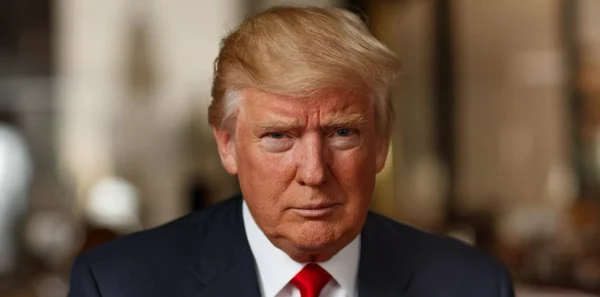
WASHINGTON / NEW YORK / TEHRAN — The seven-month war between the United States, Israel, and Iran has reached a critical diplomatic and military precipice. Following a week of intense back-channel negotiations via Qatari intermediaries, U.S. President Donald Trump has flatly denied offering any form of sanctions relief to Tehran.
The denial comes as Iranian leadership insists it is still awaiting a formal, official American response to a comprehensive, multi-step ceasefire proposal. At the absolute center of this volatile geopolitical tug-of-war is the Strait of Hormuz—the vital maritime corridor through which roughly one-fifth of the globe’s petroleum passes—which was shuttered by Iran in the opening days of the conflict.
The unfolding diplomatic crisis underscores a deepening paradox: even as both Washington and Tehran signal a theoretical willingness to engage in dialogue, their public postures remain defined by maximalist demands, mutual distrust, and the ongoing, catastrophic economic and human tolls of a widening regional war.
Main Facts
The current diplomatic confrontation revolves around a seven-day phased ceasefire and de-escalation framework crafted by Tehran and relayed to Washington through Qatari diplomats in New York.
- The Core Demands: Iran’s proposed framework outlines a conditional, step-by-step reopening of the Strait of Hormuz. In exchange for unblocking the strategic waterway, Tehran is demanding an immediate halt to the U.S. naval blockade of Iranian ports, a cessation of hostilities in both Iran and Lebanon, the suspension of crushing U.S. oil sanctions, and access to billions of dollars in Iranian assets frozen in international accounts.
- The U.S. Position: President Trump has publicly and aggressively rejected the framework. Dismissing the Iranian overture as a sign of deep desperation, Trump maintains that military pressure and economic strangulation remain the most effective tools to compel Tehran to capitulate. On Monday, he took to social media to explicitly shoot down reports that his administration was weighing limited sanctions relief in exchange for verifiable progress on Iran’s nuclear dossier.
- The Regional Realities: Launched in February under the moniker "Operation Epic Fury" by the United States and Israel, the war has devastated regional infrastructure, claimed thousands of lives, and sent shockwaves through global energy markets. With Brent crude hovering well above $100 a barrel, the conflict has intensified global inflationary pressures while drawing in regional actors, including Saudi Arabia and Houthi forces in Yemen.
Chronology of the Crisis
Understanding how the current diplomatic deadlock materialized requires examining the escalation of events over the past seven months:
- February: Following months of escalating rhetoric and clandestine cyber and proxy engagements, the United States and Israel launch "Operation Epic Fury," a sweeping campaign of air strikes and naval operations targeting Iranian military infrastructure, command-and-control nodes, and nuclear facilities.
- Early Conflict Phase: In response to the U.S.–Israeli campaign, Tehran exercises its primary asymmetric leverage: the closure of the Strait of Hormuz through naval mines, fast-attack craft, and anti-ship missile batteries. Global energy markets immediately react with panic, and oil prices begin a steady, steep climb.
- Spring and Summer: The conflict spills across borders. Iranian allied militias and proxy groups launch persistent drone and missile barrages against U.S. partners and military outposts across the Gulf. Simultaneously, Yemen’s Houthi movement steps up operations, threatening critical Red Sea shipping lanes and drawing Saudi Arabia deeper into the fray as Riyadh moves to protect its own energy export routes.
- Late Last Week: Reports emerge through regional media outlets detailing a new, seven-day Iranian ceasefire proposal centered on the phased reopening of the Strait of Hormuz in exchange for specific Western concessions, including unfreezed assets and an end to the naval blockade.
- The Weekend: President Trump rejects the proposal outright during a White House press briefing, framing Tehran’s outreach as an admission of battlefield failure and economic exhaustion.
- Monday: Rumors swirl via Axios and CNN, citing anonymous U.S. sources, suggesting that Washington might be open to a conditional easing of sanctions tied to Iran’s nuclear program. President Trump forcefully refutes these reports on Truth Social. Meanwhile, Iranian Foreign Minister Abbas Araghchi tells state media that Tehran has received no official rejection through diplomatic channels and remains on standby for a formal message from Qatari mediators.
- Tuesday: Oil benchmarks reflect the enduring uncertainty, with Brent crude trading at $106.77 per barrel and U.S. West Texas Intermediate holding at $93.94, underscoring the market’s acute sensitivity to the diplomatic stalemate.
Supporting Data & Economic Impact
The macroeconomic fallout of the seven-month conflict has proven far-reaching, transforming what began as a targeted military campaign into a global economic liability.
Energy Markets and Inflation
The closure of the Strait of Hormuz—the world’s most critical oil choke point—has choked off approximately 20% of global petroleum supplies. Despite efforts by alternative producers to ramp up output, the logistics of rerouting global crude have proven insufficient to prevent severe market shocks.
- Brent Crude: Reached $106.77 per barrel.
- WTI Crude: Stood firm at $93.94 per barrel.
Both benchmarks notched consecutive gains as traders priced in the reality that a diplomatic breakthrough over the strait remains distant. The sustained high cost of energy has directly fueled domestic inflation across North America, Europe, and Asia, raising political stakes for governments worldwide.
The Human and Material Toll
Beyond the balance sheets, the human cost of Operation Epic Fury has escalated steadily. Thousands of military personnel and civilians have perished across Iran, Lebanon, and the broader Gulf region. Critical civilian infrastructure, water treatment facilities, and power grids have suffered collateral damage from precision strikes and retaliatory drone attacks.
Furthermore, the proliferation of drone and missile technology used by Iranian-backed proxies has forced commercial aviation to reroute vast swathes of Middle Eastern airspace, dramatically increasing transit times and operational costs for international carriers.
Official Responses
The divergence between public rhetoric and back-channel diplomacy highlights the profound mistrust defining the current U.S.–Iran dynamic.
The White House Perspective
President Trump’s administration continues to frame its strategy around uncompromising maximalist goals. These objectives include permanently dismantling Iran’s capacity to enrich weapons-grade nuclear material, neutralizing its proxy network across the Middle East, and creating conditions favorable to regime change.
Refusing to validate Iran’s overtures, Trump told reporters: "They want to make a deal to open the Hormuz Strait immediately because they’re losing so badly."
Later reinforcing his hardline stance on Truth Social, Trump directly addressed the media speculation regarding sanctions relief: "This is untrue. I offered them NOTHING." The administration’s calculation appears to be that compounding economic pain will eventually force unconditional capitulation rather than a negotiated compromise.
Tehran’s Diplomatic and Defensive Stance
Iranian officials have attempted to project an image of strategic readiness, balancing overtures for dialogue with strict warnings against coercion.
In a recent interview with CBS’s Face the Nation, Iranian President Masoud Pezeshkian articulated Tehran’s official stance: while Iran is entirely prepared to negotiate regarding its nuclear program and regional stability, it will never yield to "bullying or coercion." Pezeshkian emphasized, "Iran is not seeking war, but will defend itself against pressure, threats and attacks." He reiterated that Tehran’s official doctrine forbids the development of nuclear weapons.
Foreign Minister Abbas Araghchi echoed these sentiments, noting that while Qatari mediators are actively engaged in New York, Tehran has received no formal notice of a U.S. rejection. Araghchi maintained that any sustainable movement toward unlocking the Strait of Hormuz is strictly contingent upon the realization of Iranian conditions, stating, "Any move toward reopening the Strait of Hormuz is contingent on these conditions being met."
It is worth noting the consensus within the broader international intelligence community: despite persistent American and Israeli concerns, the U.S. intelligence apparatus has consistently assessed—dating back to at least 2007—that Iran officially halted its organized, active nuclear weapons development program in 2003, maintaining instead a civilian enrichment infrastructure alongside defensive deterrence capabilities.
Implications
As diplomats in New York and Doha continue their delicate, high-stakes shuttle diplomacy, the fundamental trajectory of the Middle East hangs in the balance. The implications of this standoff extend across several critical vectors:
- The Fragility of Global Supply Chains: As long as the Strait of Hormuz remains closed or contested, the global economy will remain acutely vulnerable to inflationary shocks. Central banks worldwide are closely monitoring energy futures, knowing that a prolonged closure risks tipping fragile post-pandemic economies into recession.
- The Risk of Regional Escalation: The war is no longer contained between Washington, Jerusalem, and Tehran. With Saudi Arabia increasingly drawn in to defend its vital Red Sea shipping lanes, and with active drone and missile exchanges involving Houthi forces and Gulf partners, the aperture for an uncontrolled regional conflagration widens by the day.
- The Limits of Coercion vs. Compromise: President Trump’s steadfast refusal to offer sanctions relief tests the absolute limits of a "maximum pressure" strategy during an active hot war. Conversely, Iran’s insistence on pre-conditions for maritime access demonstrates that Tehran retains potent asymmetric leverage capable of holding the global economy hostage.
The window for a negotiated settlement remains open, managed entirely through the delicate scaffolding of Qatari mediation. However, with Washington doubling down on military pressure and Tehran drawing firm red lines against coercion, the coming weeks will determine whether pragmatic diplomacy can pierce the fog of war—or if the conflict will plunge the region into an even deeper, more destructive spiral.