In the landscape of self-help and psychological performance, the mantra "think positive" has long been championed as the ultimate key to success. From vision boards to daily affirmations, the culture of optimism suggests that if you visualize your dreams vividly enough, they will inevitably manifest. However, modern psychological research tells a different story. Excessive positive thinking can often lead to complacency, effectively draining the energy required to actually reach one’s goals.
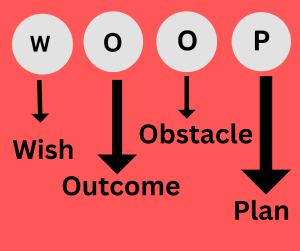
Enter the WOOP method—a research-backed, evidence-based strategy that bridges the gap between idealistic dreaming and concrete action. Developed by Dr. Gabriele Oettingen, a renowned professor of psychology at New York University and the University of Hamburg, WOOP stands for Wish, Outcome, Obstacle, and Plan. This framework, rooted in over two decades of rigorous scientific inquiry into human motivation, provides a practical roadmap for anyone looking to change habits, refine their focus, and achieve lasting success.
The Genesis of WOOP: A New Science of Motivation
The history of the WOOP method is deeply intertwined with Dr. Oettingen’s extensive research into self-regulation. Throughout the late 20th and early 21st centuries, Oettingen observed that while people were adept at setting goals, they frequently failed to execute them. In her seminal work, Rethinking Positive Thinking: Inside the New Science of Motivation, she details the psychological mechanisms that cause well-intentioned individuals to stall.
The Paradox of Positive Thinking
Oettingen’s research identified a counterintuitive phenomenon: when people fantasize about achieving their goals—such as picturing themselves having already secured a promotion or lost weight—their bodies often exhibit a physiological response of relaxation. This sense of premature satisfaction can cause the brain to perceive the goal as already accomplished, thereby lowering the urgency to exert effort. This is not to say that optimism is inherently bad; rather, it is insufficient when practiced in isolation.
The Discovery of Mental Contrasting
By the mid-1990s, Oettingen began formalizing a concept she termed "mental contrasting." Her hypothesis was simple yet profound: to mobilize action, one must bridge the gap between a desired future and the current reality. By juxtaposing a dream with the specific obstacles that impede it, the mind is forced to move from passive fantasizing to active problem-solving. This process provides the psychological "jolt" necessary to overcome the inertia that often characterizes the early stages of goal pursuit.
The WOOP Framework: A Four-Step Methodology
The WOOP method is designed to be accessible, requiring only five to ten minutes of focused reflection. It turns abstract intentions into actionable behavior through a structured four-step process.

1. Wish: Defining the Objective
The first step is identifying a specific, meaningful goal. Unlike vague resolutions, a "Wish" within the WOOP framework must be challenging but attainable. It requires the individual to assess their priorities. Whether the goal is related to career advancement, physical health, or personal development, it must be something the individual is genuinely committed to achieving. Experts recommend distilling this into a short, concise phrase of four to six words to maintain mental clarity.
2. Outcome: Visualizing the Result
Once the wish is defined, the practitioner must identify the "best outcome." This is the emotional and physical reality of having achieved the goal. This step is not merely about identifying the end result, but about deeply experiencing the positive sensations associated with that success. By visualizing the outcome clearly, one strengthens the psychological tether to the goal, creating a compelling reason to push through future challenges.

3. Obstacle: Facing Internal Realities
Perhaps the most crucial step—and the one most frequently skipped—is the identification of the internal obstacle. This is not an external factor like "lack of time" or "bad weather," but rather an internal barrier: a habit, a recurring thought, a fear, or a lack of motivation. By naming the obstacle, the individual stops blaming external circumstances and begins to take ownership of the psychological barriers that prevent progress.
4. Plan: The If-Then Strategy
The final step incorporates "implementation intentions," a concept championed by psychologist Peter Gollwitzer. By creating an "If-Then" statement, the individual creates a pre-programmed response to their obstacle. If the identified obstacle arises, the individual knows exactly what action to take to circumvent it. This transforms a potential failure point into a trigger for success.
Supporting Data: Why It Works
The efficacy of the WOOP method is supported by a significant body of empirical data. Studies conducted by Dr. Oettingen and her colleagues have demonstrated that mental contrasting combined with implementation intentions consistently outperforms positive thinking alone.
In one notable study involving hospital patients, those who utilized mental contrasting strategies were significantly more likely to engage in necessary physical therapy compared to those who simply focused on the positive outcome of recovery. Another study involving students showed that individuals who applied WOOP techniques to their academic goals showed higher levels of persistence and reported higher levels of success in completing assignments.

The mechanism is simple: by grounding dreams in reality, the individual creates a state of "necessity." The brain perceives that action is not just desired, but essential to achieving the outcome. This increases cognitive focus and enhances self-regulation.
Official Responses and Practical Applications
The WOOP method has gained widespread traction in various sectors, from corporate boardrooms to athletic training facilities. Professionals who utilize the method report that it effectively reduces procrastination by removing the "guessing game" from difficult tasks.

Workplace Implications
In a corporate environment, the "If-Then" planning aspect is particularly powerful for time management. For example, if a professional identifies that "procrastinating on reports" is their internal obstacle, they might create the plan: "If I feel the urge to check social media instead of starting my report, then I will immediately close the tab and set a timer for 15 minutes of work." This converts a high-friction decision into a simple, automated action.
Health and Fitness Applications
In the health sector, WOOP is frequently recommended for lifestyle changes, such as weight loss or smoking cessation. By acknowledging that "cravings" or "lack of motivation" are the primary obstacles, individuals can prepare specific, healthy, or productive replacements for those moments of weakness.
Overcoming Challenges: A Case Study
To better understand the practical application of WOOP, consider the example of an individual aiming to regain physical fitness after a long hiatus.
- Wish: "Regain my lost muscle mass."
- Outcome: "I will look and feel strong."
- Obstacle: "Lack of motivation during the first ten minutes at the gym."
- Plan: "If I feel a lack of motivation when I arrive at the gym, then I will put on my favorite music track and start with a light warm-up immediately."
By creating this specific contingency, the individual eliminates the need for willpower in the moment of weakness. The "If-Then" plan acts as a psychological safety net, ensuring that the goal remains prioritized even when motivation wanes.

Conclusion: The Path Forward
The WOOP method is not a panacea; it is a tool for self-mastery. It requires the courage to face one’s internal obstacles and the discipline to craft specific, actionable plans. Unlike passive approaches to personal growth, WOOP demands an active, realistic engagement with one’s own psyche.
As research continues to evolve, the distinction between "blind optimism" and "strategic planning" becomes increasingly clear. By adopting the WOOP method, individuals can move beyond the comfort of daydreams and into the reality of tangible, sustainable achievement. Whether you are aiming to write a novel, improve your health, or advance your career, the four steps of Wish, Outcome, Obstacle, and Plan offer a scientifically validated path to turning your aspirations into your reality.
For those ready to move past the limitations of traditional positive thinking, the time to begin is now. By spending a few minutes today to "WOOP" your most important goal, you are not just hoping for a better future—you are actively constructing the steps to reach it.