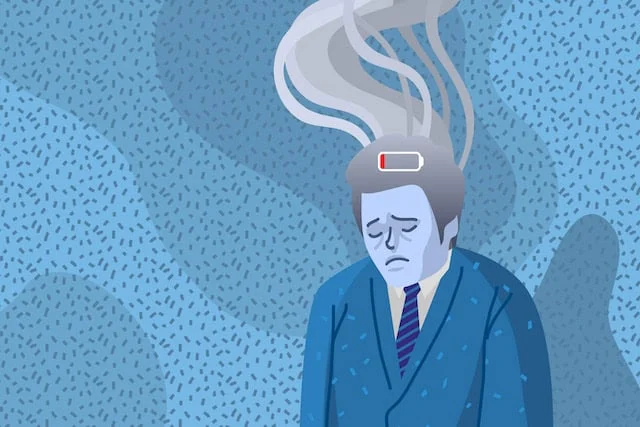
Introduction: The Blind Spot in Personal Progress
In the expanding landscape of modern mental health and wellness literature, a recurring paradox has emerged: individuals undergoing significant psychological recovery are often the last to recognize their own progress. While clinical interventions, self-care practices, and therapeutic modalities have become mainstream, a growing body of psychological observation suggests that the subjective experience of healing is frequently characterized by a profound "progress blindness."
This phenomenon was recently highlighted by emotional sovereignty author and mental wellness essayist Dakota J. Dawson. In a reflective analysis of her own recovery from chronic stress and burnout, Dawson detailed how personal growth operates on an almost entirely subconscious level, leaving individuals to judge their mental state by past crises rather than current stability.
Psychologists refer to this discrepancy as a disconnect between objective behavioral change and subjective emotional assessment. It raises critical questions about how progress is measured, both individually and clinically, in an era increasingly focused on self-improvement and mental resilience.
Main Facts: The Phenomenon of "Progress Blindness"
The core challenge of self-monitoring during psychological recovery lies in the brain’s cognitive architecture. According to clinical consensus, humans are biologically ill-equipped to objectively measure their own gradual emotional shifts. This is driven by several key factors:
- The Negativity Bias: The human brain naturally prioritizes negative stimuli and memories over positive ones as an evolutionary survival mechanism. Consequently, an individual is far more likely to remember a single recent anxiety episode than the weeks of calm that preceded it.
- Habituation to Peace: Just as individuals adapt to high-stress environments, they also quickly habituate to lower levels of stress. When anxiety or hypervigilance recedes, its absence is rarely registered as an active "event." Instead, it becomes the new, unremarkable baseline.
- The Perfection Trap: Many individuals measure healing against an absolute standard—such as the complete eradication of anxiety, doubt, or sadness—rather than measuring it by increased resilience, faster recovery times, or reduced frequency of episodes.
In her writing, Dawson notes that this cognitive bias often leads people to abandon therapeutic practices prematurely, under the false assumption that they are "broken beyond repair" or that their efforts are yielding no results.
Chronology: From Chronic Burnout to Unexpected Realization
To understand how progress blindness manifests in daily life, it is instructive to examine the chronological trajectory of recovery, as illustrated by Dawson’s two-year transition from acute emotional distress to sustained stability.
Phase 1: Acute Distress and Coping Mechanisms (Two Years Prior)
Two years ago, Dawson operated under a state of chronic hyperarousal, a common consequence of prolonged stress and unaddressed trauma. Behavioral markers during this period included:
- Emotional dysregulation: Frequent crying episodes in isolated spaces during social gatherings.
- Cognitive looping: Replaying interpersonal conflicts hours or days after their occurrence.
- Maladaptive coping: Utilizing alcohol at family events to dull sensory overload and social anxiety.
Phase 2: Active Intervention and Invisible Labor (One Year Prior)
Recognizing the unsustainability of her mental state, Dawson initiated a structured recovery protocol. This involved cognitive behavioral strategies, journaling, somatic processing, and establishing emotional boundaries. During this phase, despite consistent effort, the subjective feeling of "being broken" remained unchanged. Dawson recorded these struggles in sporadic journal entries, characterized by heavy self-criticism, catastrophic thinking, and frequent self-apology.
Phase 3: The External Mirror (The Turning Point)
The disconnect between internal perception and external reality became clear during a family wedding. Despite experiencing severe anticipatory anxiety about attending—fearing that others would only see the volatile version of her from two years prior—Dawson attended the event.
During the gathering, an aunt observed that Dawson appeared "lighter" and encouraged her to maintain her current path. This external observation served as the first indication that a profound systemic shift had occurred, despite Dawson’s internal belief that she had made no progress.
[Chronic Burnout] ──> [Active Therapy/Journaling] ──> [External Validation (Wedding)] ──> [Objective Review of Past Journals] ──> [Cognitive Realignment ("Better, Not Cured")]Phase 4: The Internal Audit
Following this encounter, Dawson conducted an objective review of her journals from the previous year. Reading her past writings allowed her to step outside her current cognitive framework and view her historical self objectively. The exercise revealed a stark contrast between her past catastrophizing and her current cognitive processing, forcing an intellectual and emotional acceptance of her progress.
Supporting Data: The Cognitive Science Behind Slow Change
The clinical reality of "invisible healing" is well-supported by neurological and psychological data. The brain does not rewire itself overnight; rather, neuroplasticity—the brain’s ability to reorganize itself by forming new neural connections—is a slow, incremental process.
Neurological Adaptation and the "End of History Illusion"
A study published by researchers at Harvard University and the University of Virginia highlights a psychological phenomenon known as the "End of History Illusion." The research indicates that individuals of all ages tend to recognize that they have changed significantly in the past, but consistently underestimate how much they will change in the future.
This illusion directly impacts the perception of healing:

| Metric of Comparison | Past Self (2 Years Ago) | Current Self (Perceived) | Current Self (Objective) |
|---|---|---|---|
| Anxiety Episode Frequency | Daily / Multiple times per week | "Still anxious" | Bi-weekly / Occasional |
| Conflict Resolution | Cognitive looping for weeks | "Overthinking" | Resolved within hours |
| Boundary Setting | Non-existent / People-pleasing | "Failing to speak up" | Speaks up 70% of the time |
| Recovery Velocity | Days to recover from trigger | "Still triggered" | Minutes/hours to recover |
The Role of Habituation
According to behavioral psychology, as new, healthier habits are formed, they require less conscious effort. Because they demand less cognitive load, they become less noticeable.
For instance, when an individual successfully refrains from overreacting to a canceled plan or a dismissive comment from a colleague, the brain registers this as a non-event. The individual does not celebrate the absence of a panic attack; they simply proceed with their day, entirely unaware that a major psychological milestone has been reached.
Clinical Perspectives: How Therapists Track Progress
Because self-assessment is notoriously unreliable during psychological recovery, clinical psychologists and therapists rely on standardized metrics to track patient progress. These tools are designed to bypass the patient’s immediate emotional bias.
Standardized Assessment Scales
In clinical settings, practitioners routinely administer diagnostic questionnaires at regular intervals, such as:
- The GAD-7 (Generalized Anxiety Disorder 7-item scale): Measures severity of anxiety symptoms.
- The PHQ-9 (Patient Health Questionnaire-9): Monitors depressive symptoms and severity.
- The WHO-5 (Well-Being Index): Assesses subjective psychological well-being.
By comparing numerical scores over six-month or one-year periods, clinicians can show patients empirical proof of their recovery, even when the patient reports feeling "no different."
The "Symptom-Free Interval" Metric
Dr. Caroline Leaf, a cognitive neuroscientist, has written extensively on the importance of tracking the duration and intensity of emotional spirals rather than expecting their complete elimination. Clinical practice emphasizes that healing is not characterized by the absence of triggers, but by:
- Reduced Amplitude: The emotional reaction is less intense.
- Increased Latency: The time between triggers increases.
- Rapid Recovery Velocity: The patient returns to baseline emotional states much faster.
Implications: Redefining "Healing" in Modern Wellness Culture
The widespread misunderstanding of how healing occurs has broader cultural implications, particularly within the multi-billion-dollar wellness industry. Modern self-help culture often commodifies healing as a destination—a state of permanent peace, toxic positivity, and flawless emotional regulation.
The Danger of the "Cure" Narrative
As Dawson noted, referencing a conversation with a friend in long-term recovery from substance abuse, the concept of being "cured" is often a counterproductive metric.
"People always ask me if I’m cured," Dawson’s colleague observed. "I tell them that’s not the right question. The right question is: am I living better than I was? And the answer to that is yes."
By shifting the goalpost from "perfection" to "improvement," individuals can relieve the pressure that often stalls recovery. This perspective aligns with Stoic philosophy and modern acceptance and commitment therapy (ACT), both of which emphasize accepting discomfort as an inevitable part of the human experience rather than a sign of personal failure.
Practical Strategies for Self-Tracking
To counteract progress blindness, mental health professionals recommend several practical, objective tracking methods:
- Objective Journaling Audits: Keeping a structured record of reactions to specific triggers, to be reviewed only after a minimum of six months.
- Behavioral Tracking: Logging objective behaviors (e.g., hours slept, social events attended, boundaries asserted) rather than subjective emotional states.
- Third-Party Feedback: Safely relying on trusted friends, family members, or therapists to provide external assessments of behavioral changes.
Conclusion: The Value of Looking Back
The ultimate challenge of personal growth is learning to trust a process that is, by its very nature, invisible in the present moment. As Marie Curie famously noted, "One never notices what has been done; one can only see what remains to be done."
For those navigating psychological recovery, the most effective tool against despair may simply be the willingness to occasionally look backward—not to dwell on past pain, but to recognize the steady progress made along the way.