
In the quiet corners of central Connecticut, 34-year-old partners Brian and Michael are navigating the complex intersection of modern adulthood. Together since 2013, the couple stands on the precipice of their 10-year anniversary, reflecting on a journey marked by professional growth, personal resilience, and the evolving challenges of the American economy. While they have successfully cultivated a stable life—complete with two cats and a unique, industrial-style apartment—they find themselves wrestling with a familiar modern malaise: the weight of consumer debt and the elusive dream of homeownership.
This article examines their financial profile, the hurdles they face, and the professional guidance offered to help them transition from a cycle of debt to a trajectory of long-term wealth and security.

The Path to the Present: A Chronology of Growth
Brian and Michael’s journey is defined by significant career shifts and personal evolution. Brian, a quality assurance manager for a state-run hospital, has transitioned from the corporate sector through private non-profit work before finding stability in the public sector. His journey has not been without difficulty; he previously carried $58,000 in student loan debt, which he successfully retired a few years ago. However, despite his career advancement and the security of a state pension, he feels an acute sense of anxiety regarding his current financial standing.
Michael, a project coordinator for a state behavioral health agency, serves as both a professional and an advocate. As a brain injury survivor, his commitment to his work is deeply personal. Over the past year, the couple faced a major life pivot: moving from an affordable, 600-square-foot studio apartment to a larger, more expensive space in a refurbished mill. This transition, while providing a necessary "home office" and a more formal living environment, came at a time of unforeseen veterinary and relocation expenses, which contributed to their current debt accumulation.

Supporting Data: The Financial Snapshot
To understand their situation, one must look at the hard numbers. The couple boasts a robust combined annual gross income of $167,544, resulting in a net annual income of approximately $109,455. Their monthly expenses currently total $8,035, leaving them with little room for aggressive savings or investment.
The Debt Landscape
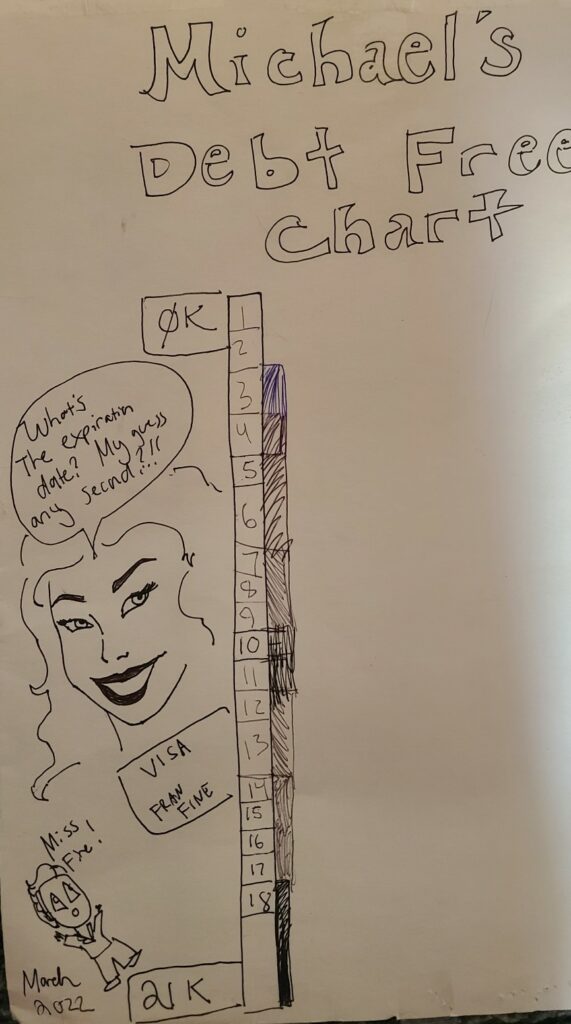
The couple is currently managing $28,259 in consumer debt, primarily spread across three credit cards.

- Brian’s Visa (SCU): $16,057 (0% interest until November 2023, escalating to 17.99%)
- Michael’s Visa Platinum: $9,700 (10.99% interest)
- Brian’s Visa Platinum (Navy Federal): $2,503 (0.99% interest until November 2023, escalating to 17.74%)
Assets and Retirement
Despite their debt, they have built a modest asset base of $91,250. This includes various retirement vehicles, such as a 401k, 403b, 457, and a state pension. However, they express concern that these investments are underfunded and lack the necessary diversification to withstand potential future economic instability.
Professional Analysis and Recommendations
In a consultation regarding their situation, financial expert Liz Frugalwoods suggests that while the couple feels "behind," their situation is not as dire as it appears. She emphasizes that many of their peers struggle with the exact same benchmarks of success. The primary issue, she notes, is not a lack of income, but a lack of intentionality in spending.

The "Spending Detox" Strategy
The core of the recommended strategy is a rigorous "spending detox." By categorizing expenses into "Fixed," "Reduceable," and "Discretionary," the couple can identify where their capital is being "frittered away."
- Fixed Expenses: These include rent, insurance, and necessary debt payments. These are largely non-negotiable.
- Reduceable Expenses: Groceries and utility costs. Small, consistent reductions here can yield hundreds of dollars in savings annually.
- Discretionary Expenses: The expert advises the temporary elimination of eating out, gift budgets, books, and various subscriptions. By cutting these items, the couple could potentially redirect over $4,000 monthly toward debt repayment, putting them on track to be debt-free within roughly six months.
Prioritizing Future Goals
The expert provides a clear hierarchy for the couple’s financial roadmap:
- Debt Elimination: High-interest debt is a primary threat to long-term wealth.
- Emergency Fund: Currently, their $9,000 in savings is insufficient for a true safety net.
- Retirement Contributions: Before saving for a home, they must maximize their tax-advantaged accounts.
- Homeownership: This remains a secondary goal, contingent on the stabilization of their liquid assets and retirement trajectory.
Implications: The "Master’s Degree" Dilemma
One of the most pressing questions raised by the couple is whether Brian should pursue a graduate degree. The expert’s advice is stark: unless there is a "precise, printed, iron-clad" correlation between the degree and a significant, guaranteed salary increase, the pursuit is an "unhelpful detour." For a couple focused on achieving debt freedom and homeownership, the time and financial cost of higher education may be counterproductive unless it serves as a direct vehicle for increased income.
A Philosophy of Financial Wellness
The overarching lesson for Brian and Michael—and for anyone in a similar position—is that money is a tool, not an end in itself. While they feel shame regarding their current status, the advisor reminds them that "spreadsheet problems" like debt are solvable.

The couple’s goal should be to find a "comfortable middle" where they can rest. They currently oscillate between feast and famine, overspending in periods of comfort and then suffering through periods of extreme austerity. By building a sustainable budget that allows for occasional, planned joys while aggressively protecting their future through retirement and emergency savings, they can move past the cycle of debt.
Final Takeaways
- Track Everything: You cannot manage what you do not measure. Using tools like Empower or simple spreadsheets is non-negotiable.
- Focus on the Goal: Earning more is not the cure for overspending. If they do not fix their spending habits, a higher income will simply lead to a higher cost of living, leaving them in the same position of vulnerability.
- Patience is Key: The combination of Brian’s state pension and long-term investment growth, if managed correctly, provides a strong foundation for a comfortable retirement.
As they move toward their 10-year anniversary, Brian and Michael are not just looking at their bank accounts; they are looking at their legacy. With a disciplined approach to their current income, they have the potential to shift from feeling "behind" to becoming architects of a stable, intentional future.