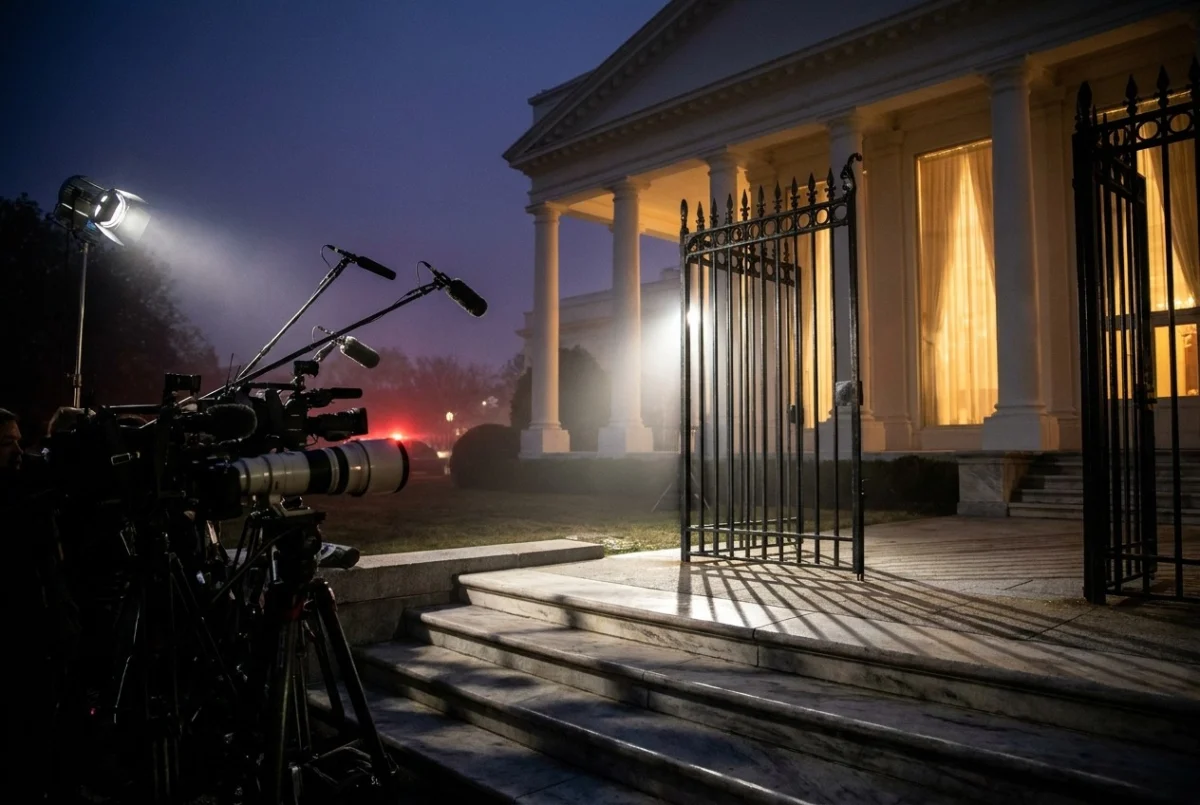
WASHINGTON — A escalating, high-stakes battle over the boundaries of the First Amendment and executive authority entered a new phase on Monday, Oct. 26. Six U.S. citizens filed a sweeping federal lawsuit against President Donald Trump, challenging the administration’s ongoing restrictions on White House press access.
Unlike previous legal actions brought by individual media companies seeking narrow relief for their own newsrooms, this new complaint—backed by legal organizations associated with Columbia and Yale universities—seeks blanket protections for the entire White House press corps. The plaintiffs argue that the administration’s pattern of barring specific journalists and retaliating against critical coverage creates an unconstitutional "chilling effect" on free speech, threatening not just the media, but the public’s fundamental right to be informed about government operations.
The federal lawsuit compounds a volatile standoff between the Trump administration and the fourth estate, one that has already triggered federal antitrust inquiries into major television networks, prompted the temporary suspension of shared press pool operations, and led to the creation of a state-backed digital broadcasting alternative, "Trump TV."
1. Main Facts of the Case
The federal complaint, filed on Oct. 26, names President Trump as the defendant and asserts that the administration’s credentialing policies violate constitutional protections. At the core of the plaintiffs’ legal theory is a distinct framing of First Amendment jurisprudence: rather than relying solely on a reporter’s right to gather news, the lawsuit asserts a broader public right of access to independent reporting concerning government activities.
- Broad Scope: While earlier lawsuits focused on reinstating credentials for specific corporate entities, the Columbia and Yale-backed filing asks the federal court to bar future retaliatory restrictions for all White House reporters and news outlets collectively.
- The Chilling Effect: The plaintiffs argue that when the executive branch selectively revokes access based on editorial tone, it sends a coercive message to the entire press corps, discouraging rigorous, independent, and critical reporting on the presidency.
- Legal Precedent Tested: The lawsuit wades into a notoriously complex area of constitutional law. Historically, federal courts have rejected the notion that the media possesses a special, unrestrained right of access to government information. In landmark rulings such as Zemel v. Rusk (1965) and Branzburg v. Hayes (1972), the Supreme Court affirmed that the freedom to speak and publish does not inherently guarantee an unrestricted right to gather information. By anchoring their arguments in the public’s right to receive independent information, the plaintiffs hope to carve out a viable constitutional pathway around these historical hurdles.
2. Chronology of the Press Access Crisis
The current litigation did not materialize in a vacuum; it is the culmination of escalating tensions that have steadily deteriorated over the course of several months.
- September 18: The crisis erupted publicly when the White House announced a sudden decision to bar reporters from MS NOW, CNN, and Politico from entering the complex. The ban was publicly communicated via a post on Truth Social and reinforced during remarks in the Oval Office, directly tying the credential revocations to the outlets’ critical coverage of the president.
- September 21: In swift response, CNN, MS NOW, and Politico jointly filed a 27-page federal lawsuit against President Trump and top administration officials, asking the court to overturn the access ban immediately.
- Late September: Major television networks temporarily suspended their shared presidential pool coverage—a cooperative system where networks take turns covering the president’s movements and distributing footage to all other subscribing publications—in solidarity with the barred outlets and amid logistical chaos.
- Early October: A federal judge intervened, issuing a 14-day temporary restraining order followed swiftly by a preliminary injunction. The judicial orders extended White House access for journalists from the three affected outlets while their specific lawsuits proceeded through the court system.
- Concurrent with the Ban: During the same week it locked out CNN, MS NOW, and Politico, the White House launched "Trump TV," a government-produced digital television channel designed to broadcast administration-approved content directly to the public.
- October 26: Six U.S. citizens, represented by legal organizations connected to Columbia and Yale, filed the new, expansive federal lawsuit seeking protections for the entire White House press corps.
3. Supporting Data, Investigations, and Escalations
The dispute over press access has rapidly expanded beyond constitutional arguments in a courtroom, spilling over into antitrust scrutiny and infrastructural boycotts of the traditional press apparatus.
The Antitrust Investigation
Following the temporary suspension of the shared television pool by major networks, the U.S. Department of Justice escalated the administration’s pressure campaign. The DOJ formally requested that media giants ABC, CBS, CNN, NBC, and Fox News hand over extensive internal communications related to the White House TV pool. Investigators are probing whether the networks’ temporary suspension of shared coverage violated federal competition laws, turning a credentialing dispute into a potential antitrust inquiry.
The Breakdown of the Pool System
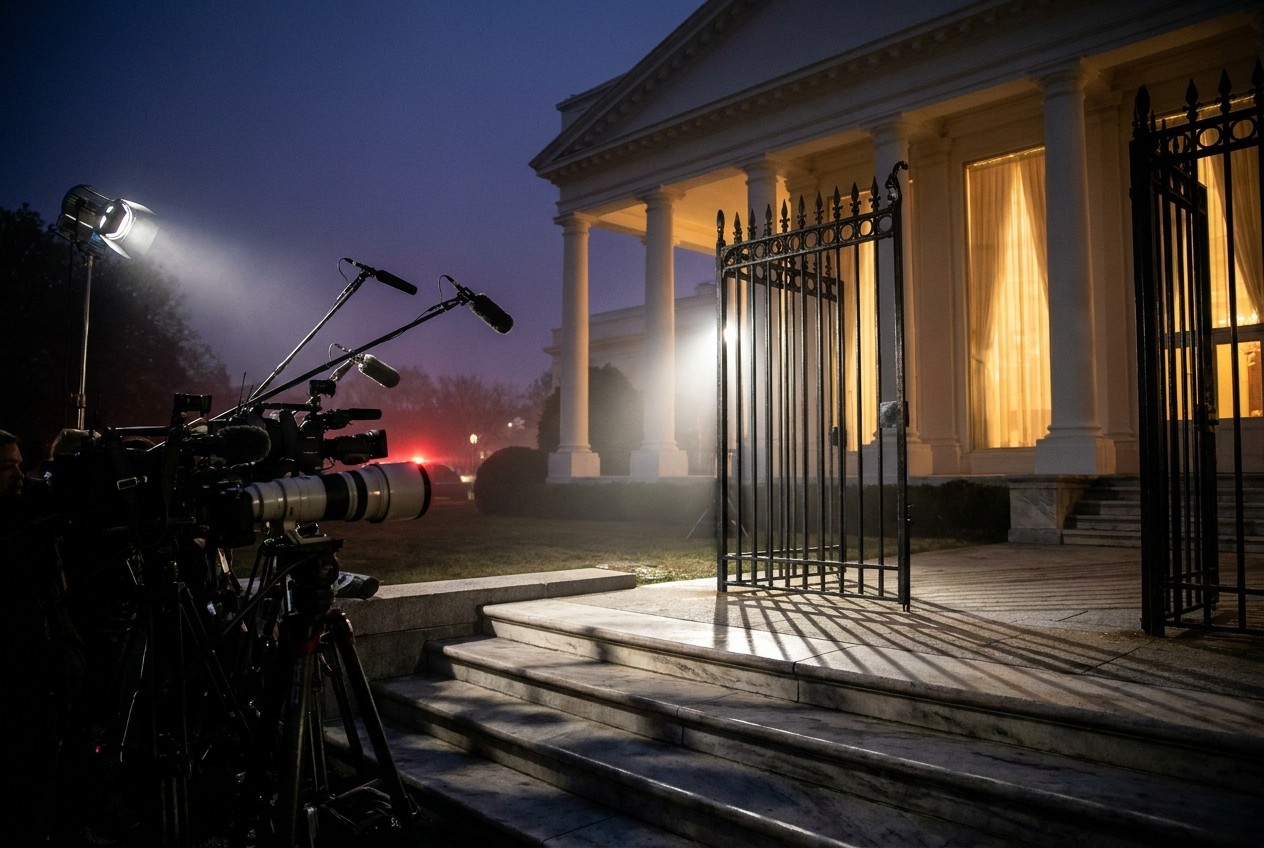
The White House press pool is the historic bedrock of executive-media relations. It ensures that regardless of political friction, a baseline record of the president’s official schedule, statements, and engagements is documented and shared broadly. The breakdown of this system—compounded by the advent of "Trump TV"—signals a structural shift in how the executive branch communicates with the public, increasingly bypassing independent gatekeepers in favor of state-managed distribution channels.
4. Official Responses and Administration Stance
The White House has consistently rejected characterizations of its policies as censorship or unconstitutional retaliation. Instead, the administration has framed its approach to media access as a necessary expansion and democratization of information channels.
- Prioritizing Independent Voices: Administration officials have argued that altering credentialing rules and introducing alternative broadcasting platforms like "Trump TV" prioritizes independent and non-traditional voices over what they characterize as a biased, legacy media establishment.
- Executive Defiance: Rather than softening its stance following judicial pushback—such as the preliminary injunction granted to CNN, MS NOW, and Politico—the administration has signaled a readiness to press forward with aggressive efforts to police media access.
- Silence on the New Filing: At the time of reporting, the White House has not issued an immediate formal statement regarding the Oct. 26 citizen lawsuit, though Justice Department attorneys are expected to mount a vigorous defense based on executive discretion over property and credential management.
5. Implications for Democracy and Future Governance
The outcome of the ongoing litigation carries profound implications for the future of American governance, executive accountability, and constitutional law.
Constitutional Precedent
If the plaintiffs in the new federal lawsuit succeed, the ruling could establish a powerful new precedent limiting an administration’s ability to weaponize press credentials as a tool of political punishment. Conversely, a victory for the executive branch would cement broad discretionary powers for the president to dictate who may—and may not—scrutinize the workings of the West Wing, effectively gutting the traditional independence of the White House press corps.
Practical Impact on Major Events
Beyond the courtroom, the standoff threatens to disrupt coverage of critical national and international engagements. High-profile events, such as the upcoming United Nations (UN) General Assembly in New York and domestic presidential travels, rely heavily on predictable, orderly press access protocols. If the infrastructure of the press pool remains fractured by legal battles and retaliatory bans, the public’s window into presidential diplomacy and decision-making risks becoming severely compromised.
As the case proceeds through the federal court system, legal scholars, journalists, and civil liberties advocates will be watching closely to see how the judiciary balances executive authority against the enduring tenets of the First Amendment.