Main Facts: A Landmark Achievement in Interplanetary Navigation
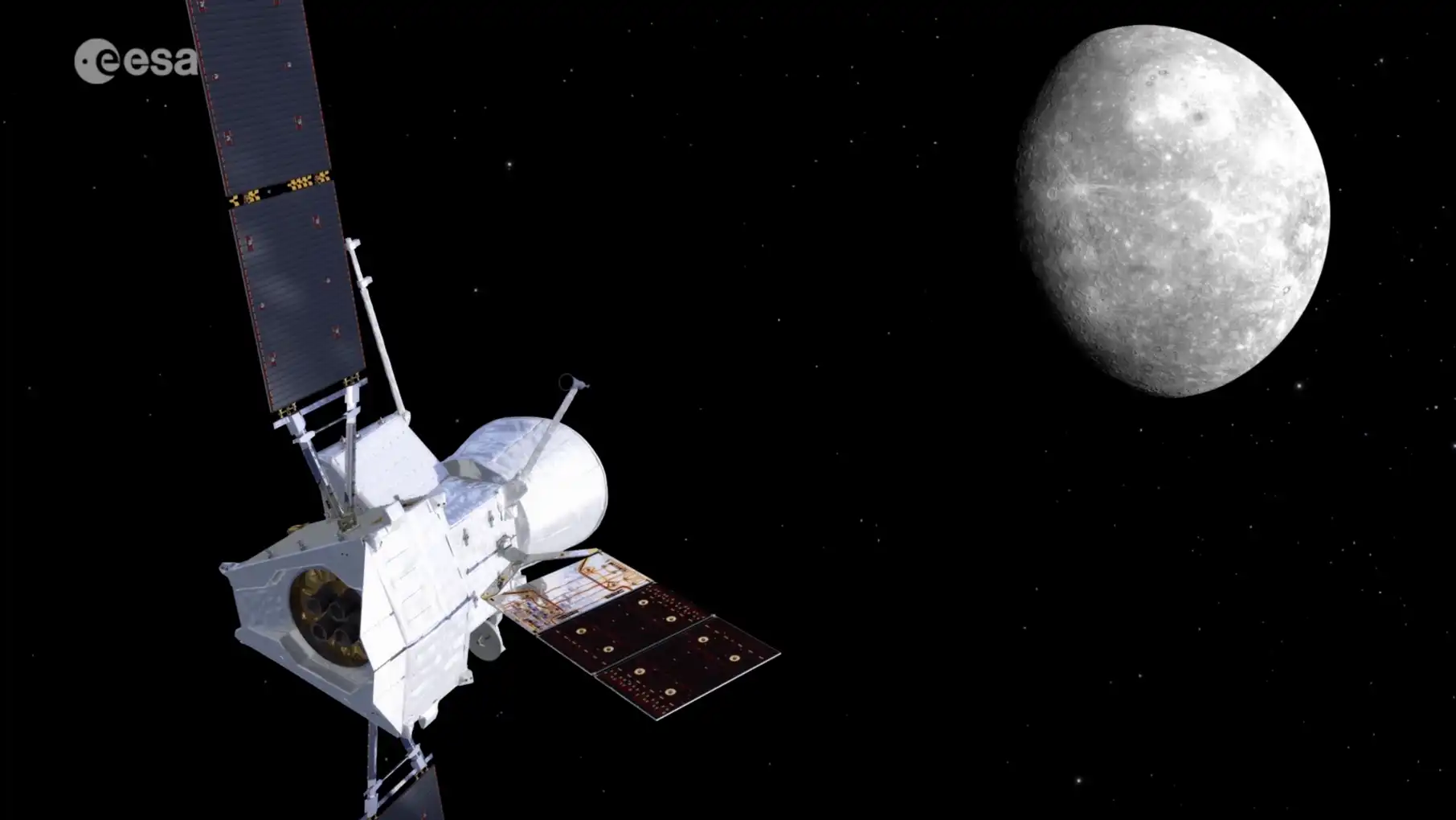
On September 3, mission control at the European Space Operations Centre (ESOC) in Darmstadt, Germany, erupted into cheers. After an epic, eight-year odyssey spanning six billion miles, the joint European Space Agency (ESA) and Japan Aerospace Exploration Agency (JAXA) mission, BepiColombo, successfully completed the first critical phase of its arrival at Mercury.
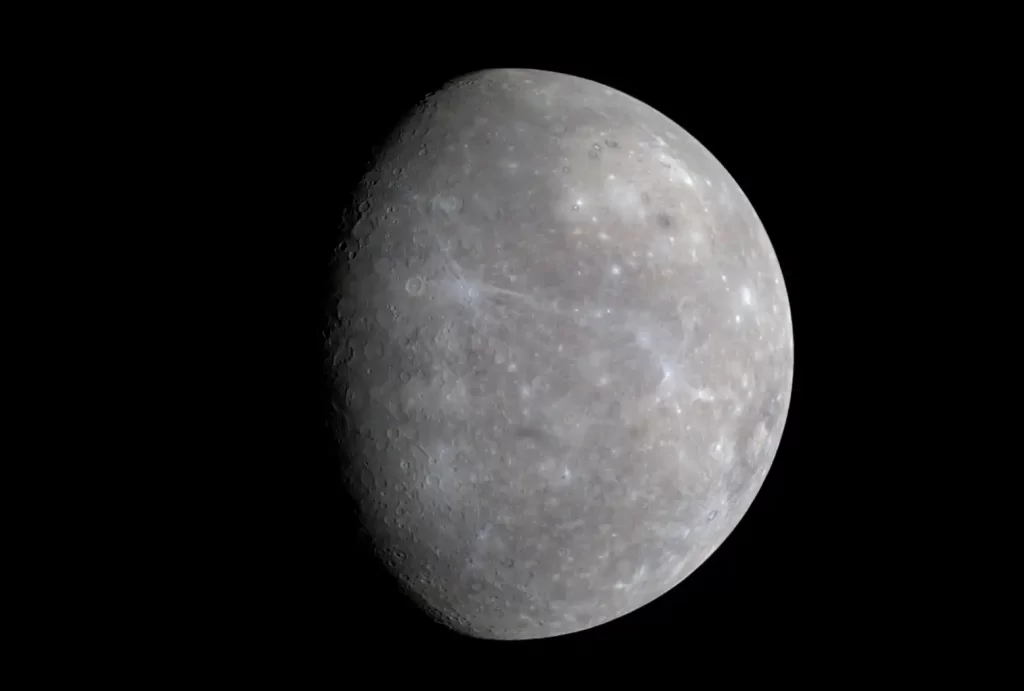
BepiColombo is only the third spacecraft in human history to visit the solar system’s innermost planet, following NASA’s pioneering Mariner 10 in the 1970s and the MESSENGER orbiter, which mapped the planet between 2011 and 2015.
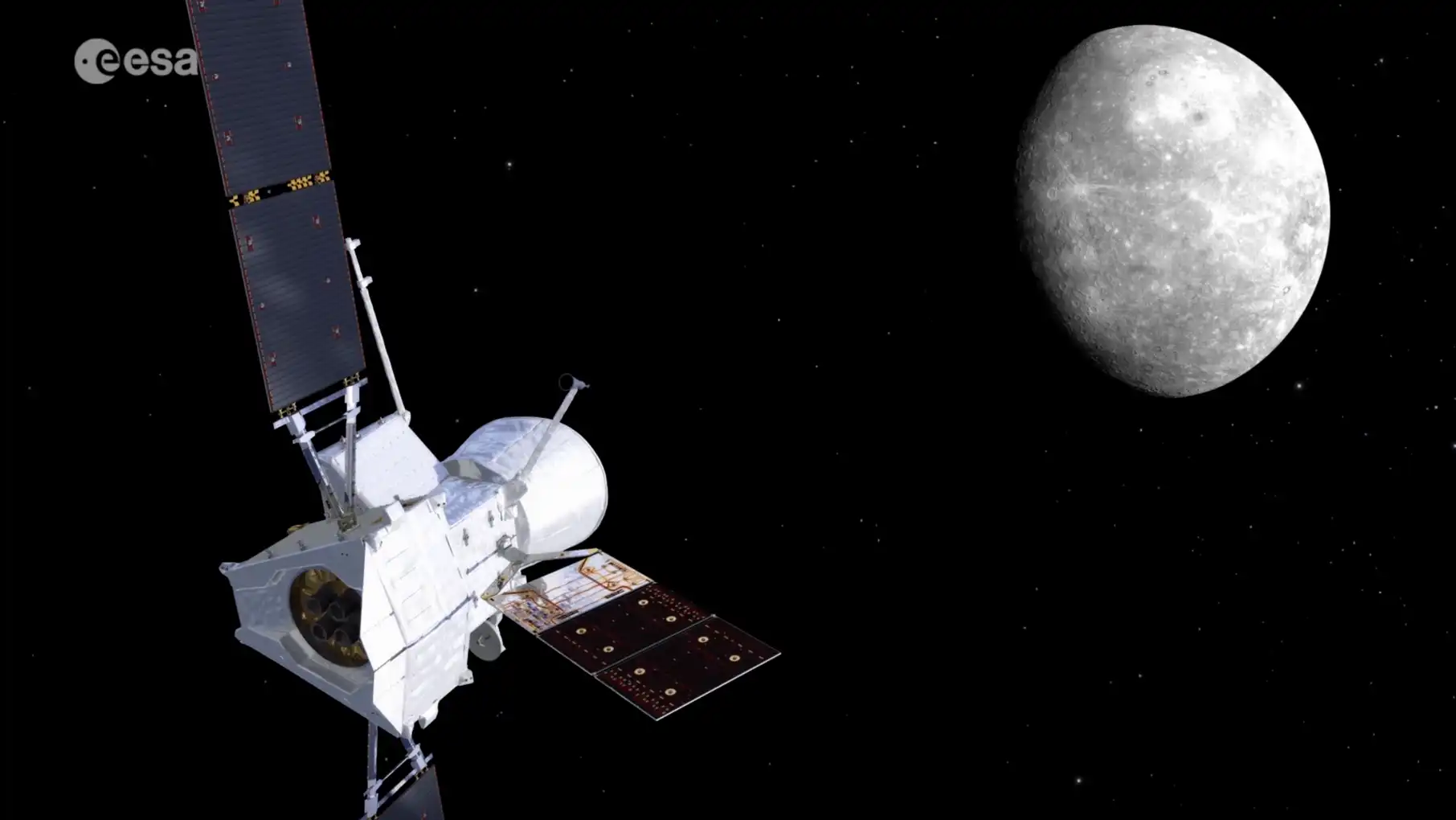
The milestone was achieved when the Mercury Transfer Module (MTM)—the propulsion powerhouse that guided the spacecraft through the inner solar system—successfully severed its connection from the main science stack. This separation marked the beginning of one of the most complex planetary arrival sequences ever attempted by space agencies.
Though BepiColombo is now safely within the clutches of Mercury’s gravitational realm, coming within 1.8 million miles of the scorched world, its primary science mission will not officially commence until April 2027. Once its remaining modules, the Mercury Planetary Orbiter (MPO) and the Mio magnetospheric orbiter, settle into their final polar orbits later this year and early next year, humanity will finally possess an unprecedented suite of instruments dedicated to decoding the mysteries of the least-understood terrestrial planet in our solar system.
Chronology: An Eight-Year, Six-Billion-Mile Odyssey
To understand the magnitude of BepiColombo’s arrival, one must understand the unique logistical nightmare of reaching Mercury. Despite being our celestial neighbor, getting a spacecraft into orbit around Mercury takes roughly as much energy and time as traveling to Pluto—more than eight years.
The primary obstacle is the immense gravitational well of the Sun. Any spacecraft attempting to travel on a direct, straight-line course toward Mercury would be violently accelerated by solar gravity, transforming the probe into an uncontrollable missile screaming past the planet at catastrophic speeds. Carrying enough chemical propellant to counteract the Sun’s gravitational pull and slow the craft down conventionally is an engineering impossibility for a modern science probe.
Instead, engineers had to orchestrate a meticulously calculated cosmic dance.
The Gravity-Assist Highway
To apply the necessary "brakes," BepiColombo relied on a series of planetary flybys. By using the gravitational fields of Earth, Venus, and Mercury itself, the spacecraft gradually bled off excess velocity without expending precious fuel.
- The Departure: Launched back in October 2018, the spacecraft embarked on a long, looping trajectory through the inner solar system.
- The Interplanetary Tour: Over the course of its cruise phase, BepiColombo completed nine planetary flybys: one around Earth, two around Venus, and six around Mercury itself.
- The "Goldilocks" Approach: Each flyby had to be executed with razor-thin margins. Approach a planet too fast, and the spacecraft would be flung uselessly into deep space; approach too slowly, and the gravitational slingshot would pull the craft permanently off course.
- The Separation: On September 3, 2026, having completed its final necessary flybys and drawing within 1.8 million miles of its destination, the MTM executed its final duty. Using a sophisticated combination of solar-electric propulsion and chemical gas propellants, the module positioned the spacecraft stack perfectly before shutting down and detaching.
Following this separation, the MPO and Mio will enter a joint polar orbit around Mercury on November 26, 2026. Two weeks later, on December 11, the Mio spacecraft will be ejected from the stack to study the planet’s magnetosphere, while the MPO will journey to its final mapping orbit by March 2027.
Supporting Data: Unlocking Mercury’s Enduring Mysteries
Mercury remains an evolutionary enigma. It is disproportionately small, largely metallic, and sits in an environment subjected to extreme solar radiation and thermal swings. To contextualize what BepiColombo aims to discover, scientists look back at the foundational data provided by its predecessors.
Historical Precedents: Mariner 10 and MESSENGER
- Mariner 10 (1974–1975): Utilizing Venus for the first-ever gravity assist, Mariner 10 flew by Mercury three times, capturing roughly 2,700 images. Its instruments revealed a surprisingly weak intrinsic magnetic field and recorded dramatic temperature extremes—plunging to a frigid minus 297 degrees Fahrenheit (minus 183 degrees Celsius) on the night side and soaring to a blistering 369 degrees Fahrenheit (187 degrees Celsius) on the day side.
- MESSENGER (2011–2015): As the first spacecraft to actually enter Mercury’s orbit, MESSENGER spent over four years mapping 100% of the planet’s surface across 200,000 images. It confirmed that Mercury’s permanent polar shadowed craters harbor massive deposits of water-ice, identified widespread historical volcanic activity, and detected high concentrations of volatile elements like potassium and sulfur on the surface.
Outstanding Geological and Physical Mysteries
Despite these past missions, profound questions remain unanswered—questions that BepiColombo is uniquely equipped to resolve:
- The Iron-Rich Core: Mercury’s core makes up about 85% of the planet’s radius, an unusually massive metallic heart for such a small body. Scientists still debate whether this is the result of a colossal ancient impact that blasted away the planet’s original mantle, or if it is a byproduct of solar nebula condensation processes in the early solar system.
- Lobate Scarps (Tectonic Ridges): The planet’s surface is fractured by massive, cliff-like geological faults known as lobate scarps, which can stretch for hundreds of miles and tower up to 1,500 meters high. These features indicate that Mercury shrank significantly as its interior cooled. BepiColombo will investigate the exact timing and mechanics of this planetary contraction.
- Leaky Magnetic Fields: While Mercury possesses an internally generated magnetic field roughly equivalent in strength to Earth’s equator—enough to shield it from the worst of the solar wind—MESSENGER discovered that the field is prone to breaches. Scientists observed massive "magnetic tornadoes" up to 480 miles wide (one-third of the planet’s radius) that periodically rip open the magnetosphere, allowing solar plasma to directly bombard the rocky surface.
Official Responses: Joy and Relief at Mission Control
The successful separation of the Mercury Transfer Module was a moment of profound emotional resonance for the hundreds of engineers and scientists who have dedicated decades of their lives to the mission.
"We heard it loud and clear in the voice loop from Flight Dynamics Manager, Frank Budnik, that they could clearly see from the Doppler data that MTM had separated," recalled Emmanuela Bordoni, ESA BepiColombo B-shift Spacecraft Operations Manager. "After all this waiting and preparation, we all looked at each other and hugged. It was a very powerful moment."
The European Space Agency officially characterized the event in a press statement as "one of the most complex planetary arrival sequences ever attempted by ESA," noting that the joint endeavor with Japan’s JAXA has officially entered its long-awaited climax.
Geraint Jones, ESA BepiColombo Lead Project Scientist, emphasized that the journey thus far has already yielded unexpected scientific dividends during the cruise phase flybys. However, he expressed palpable excitement for the months ahead:
"Although we already have great science from the cruise phase and nine planet flybys, it’s fantastic that we’ve taken this first important step towards finally being able to use all the powerful instruments on both MPO and Mio to study Mercury."
Implications: A New Window Into Planetary Formation
The implications of BepiColombo extend far beyond our understanding of Mercury itself. By studying a planet that formed under such extreme conditions—deep within the searing gravitational and thermal well of a young star—astrophysicists hope to gain broader insights into how rocky exoplanets form throughout the Milky Way.
Most known exoplanets discovered by telescopes like Kepler and TESS are "hot super-Earths" or sub-Neptunes orbiting extremely close to their parent stars. Because Mercury is our solar system’s closest analog to these ubiquitous alien worlds, decoding its interior structure, magnetic generation mechanisms, and surface composition serves as a vital baseline for understanding planetary systems across the galaxy.
Furthermore, the mission represents a triumph of international scientific cooperation. By merging European engineering excellence in orbital mechanics and remote sensing with Japanese ingenuity in magnetospheric plasma physics, BepiColombo demonstrates what humanity can achieve when pushing the absolute boundaries of technological endurance.
As the spacecraft drifts closer to its final operational configurations in late 2026 and early 2027, the scientific community stands on the precipice of a new golden age of planetary discovery. The scorching, cratered face of Mercury is finally ready to reveal its deepest secrets.