
Retired volunteer opportunities are not scarce. In almost any community across the country, you could identify forty of them before dinner. A mention at church might highlight the local food pantry. Your neighbor likely spends their Wednesday mornings driving for Meals on Wheels. A quick search reveals a hospital ten minutes away with a dedicated volunteer office, or a local library that perpetually signals a need for extra hands.
You have more open time now than you have had since you were 22, and you have a genuine desire for a piece of that time to land somewhere useful. So, why has that volunteer application been sitting in an open browser tab since March?
The hesitation is rarely a lack of motivation or a lack of heart. Most retirees are not stuck on the "whether" of volunteering; they are stuck on the "how." Every listing asks what you care about, yet none of them asks the question that decides whether you are still showing up in six months. They ask for your passion, but they fail to ask what your week actually looks like.
The Taxonomy of Service: Understanding Volunteer Shapes
Retired volunteer opportunities tend to come in a handful of distinct physical and temporal shapes. Understanding these shapes is far more critical to your longevity as a volunteer than the specific cause you choose to support.
These roles generally fall into several categories:
- Logistical Support: Delivering food, driving individuals to appointments, or managing routes.
- Social Connection: One-to-one companionship, hospice visits, and phone check-ins for the isolated.
- Educational/Developmental: Tutoring students, ESL instruction, or professional mentoring.
- Manual/Hands-on: Construction builds, park maintenance, trail clearing, and community gardening.
- Administrative/Technical: Back-office help, data entry, front-desk reception, and mailings.
- Episodic/Event-based: Single-day shifts for festivals, book sales, or disaster response.
- Virtual/Remote: Roles conducted via laptop, such as grant writing, transcription, or crisis-line support.
The cause may change—from animal shelters and historic sites to literacy programs and tax preparation—but the shape of the work is what you will feel in your bones every Tuesday. If you choose a role based solely on the mission, but the "shape" of the work clashes with your physical capacity or your personal routine, you are setting yourself up for burnout.
Why Good Intentions Fail: The Anatomy of a Dropped Commitment
We cannot point to a single, definitive national study that ranks the primary reasons for volunteer attrition, because the research in this area is fragmented. However, a 2022 mixed-methods study of a community health program in Ontario offers a compelling window into the phenomenon. Volunteers who stayed consistently described the scheduling, training, and logistics more positively than those who left.
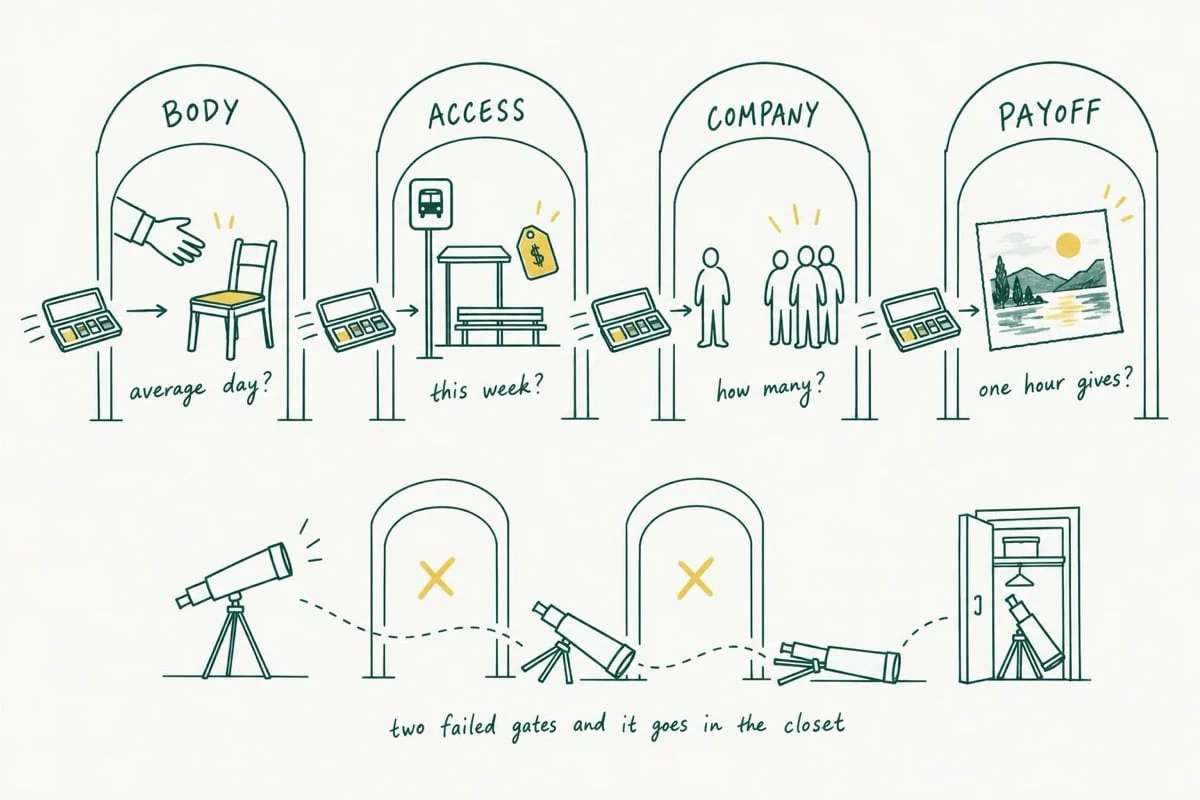
In our assessment, the things that truly end a volunteer tenure are often smaller and duller than a "change of heart." It is the shift that starts at 7 a.m. when you prefer a slow morning; it is the 25-minute drive that feels like an hour in heavy traffic; it is an orientation process that consumes two Saturdays; or it is three hours of standing on a concrete floor when your knees are already protesting.
When a role becomes untenable, many retirees feel a sense of guilt—a character verdict—that prevents them from simply having an honest conversation with the organization. This leads to the "silent quit," where an email goes unanswered. This silence is expensive on both sides. It is the same trap as retirement boredom: you add an activity to your calendar without checking if that activity can survive the friction of an ordinary week.
Strategy: Choose the Shape Before the Cause
The conventional approach to volunteering is fundamentally flawed because it prioritizes the "cause" over the "capacity." Directories sort opportunities by cause because that is what organizations lead with. But for a retiree, the scarce resource is not passion—it is the integrity of your recurring weekly schedule.
You likely already care about a dozen causes, but only two of them may have a role that fits how you actually live. This is not a lowering of standards; it is a commitment to sustainability. Just as one must build a daily routine after 60 to stay healthy and grounded, one must build a volunteer schedule that respects the hours you can actually give. Purpose is not found in the most "worthy" cause; it is found in the shifts you keep showing up for.

The Four-Line Volunteer Ad
Before you read another job description, draft your own. It takes ten minutes and transforms vague willingness into a clear, actionable request.
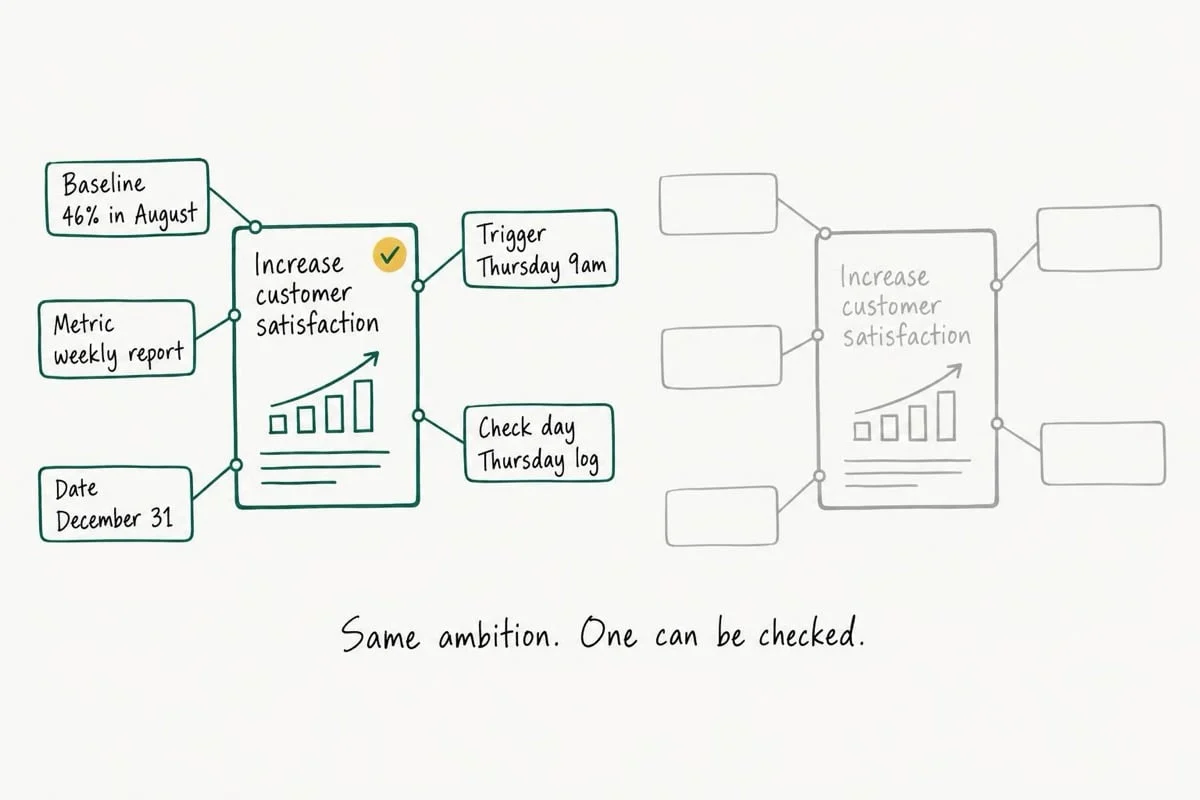
- The Shift: Be specific. Instead of "flexible," name the day, the time, the duration, and the frequency. "Two hours, Tuesday mornings, weekly" is a spec. "Whenever you need me" is an invitation to be scheduled for tasks you will eventually resent.
- The Task: What do you want to be doing at minute forty? Sorting, lifting, driving, teaching, listening, or writing? Be honest about what you are finished with. If you have spent thirty years in committee meetings, you are under no obligation to sit on another one.
- The People: Decide the level of social intensity you want. Some retirees crave the social feedback of a busy front desk, while others prefer the solitude of a delivery route.
- The Distance: Define your boundaries regarding travel. If you dislike driving at night during winter, rule out evening shifts 20 minutes away now. It is better to know your limitations in October than to discover them in January.
Operational Implementation: How to Pitch Your Specs
Once you have your four lines, do not fill out an online application immediately. Send an email to the volunteer coordinator. Include two sentences of context, your four-line spec, and one question: "Do you have a role that matches this, and if not, do you know who does?"
This may feel blunt, but it is an act of professional courtesy. It prevents the organization from placing you in a role that isn’t a fit, and it saves you from the inevitable frustration of quitting. While you are at it, ask the hard questions: What does the onboarding process entail? How many hours of training are required before the first shift? Who will be my direct supervisor? What is the protocol if I need to take a leave or step down?
The Search: Where to Look
While directories are useful, treat them as a first draft.
- Idealist/VolunteerMatch: Excellent for broad, searchable inventories including virtual roles.
- AARP’s "Create the Good": Specifically designed to match skills with local and remote needs.
- Volunteer.gov: The portal for federal public-lands opportunities.
- The Local Call: Often the most effective method. Call your library, your hospital’s volunteer office, and your local food bank. Ask for the coordinator and present your four-line spec.
The "Three-Shift" Rule
When you land a role, commit to three shifts before you make a final decision. The first shift is often orientation, which tells you little about the actual work. The second shift is usually awkward as you navigate new logistics. The third shift is where the reality of the commute, the environment, and the people becomes clear. Judge the role on the third shift, not the first.
If you find that the role is not a match, communicate this to the coordinator. It is not a failure; it is a recalibration. Changing the "shape" of your work—moving from a loud warehouse to a quiet delivery route, or from high-intensity hospice work to administrative support—is a normal part of finding the right fit.
Supporting Data: Does Volunteering Actually Pay Back?
The health benefits of volunteering are often touted, but they should be viewed with a healthy dose of skepticism. A large-scale analysis of 12,998 US adults over 50 found that those who volunteered at least 100 hours a year—roughly two hours a week—reported better physical function and lower mortality risk.
However, it is vital to remember that these studies are observational. It is likely that healthier, more socially connected individuals are simply more capable of volunteering in the first place. Do not sign up for a volunteer role as if it were a prescription medication. Sign up because a Tuesday with a reason in it beats a Tuesday without one.
Implications: The Legacy of Consistency
Ultimately, volunteering is a form of contribution that pays out in ways that are difficult to quantify. By moving away from the "heroic" view of volunteering—where you sacrifice your comfort for a grand cause—and moving toward a "structural" view—where you integrate a manageable, meaningful task into your routine—you create a sustainable pattern of engagement.
That browser tab has been open since March for a reason, and it was never a shortage of opportunities. It was a missing specification. Tonight, take an index card. Write your four lines. Tomorrow, send them to one place. You are not just applying for a role; you are architecting a version of your retirement that is both useful to your community and sustainable for your own life. When you align your volunteer work with your actual capacity, the commitment becomes not just a chore, but a pillar of your new life.