The landscape of one’s fifties is often viewed as a period of consolidation—a time when the "floor" of life should be at its most stable. However, when divorce disrupts this stage, the resulting upheaval can feel uniquely disorienting. The mortgage login, once shared, becomes a solitary chore; a Tuesday evening, formerly filled with domestic rhythm, turns into a quiet, unfamiliar space. For many, the expectation to "reinvent" oneself—to find a new body, a new career, and a new social circle—arrives with suffocating speed.
Yet, experts suggest that the most effective way to navigate this transition is not through dramatic reinvention, but through a calculated, layered reconstruction. Before one can build the "new you," one must first stabilize the ground beneath their feet.
The Core Philosophy: Stability Before Reinvention
The impulse to change everything at once is a common response to the pain of a dissolved marriage. However, this "all-at-once" approach frequently backfires, forcing a stressed mind to manage high-stakes decisions across multiple domains simultaneously.
To mitigate this, the "Stability Before Reinvention" framework proposes a three-tier approach. By prioritizing stabilization, individuals create the necessary psychological and practical room to make future decisions from a position of strength rather than desperation. This is not an act of surrender; it is a tactical retreat to a fortified position.
Tier 1: Protecting the Floor
The "floor" comprises the non-negotiable elements of survival: personal safety, housing stability, access to liquid cash, insurance coverage, medication management, and legal compliance. In the immediate aftermath of a divorce, these items are not merely administrative tasks; they are the bedrock of your future recovery.
Tier 2: Rebuilding a Trustworthy Week
Once the floor is secured, the next objective is to establish a predictable routine. A "trustworthy week" does not require perfection or peak productivity. It requires anchors—set times for household administration, physical movement, social connection, and intentional, guilt-free recovery.
Tier 3: Reversible Identity Experiments
Only after stabilization is achieved should one begin to test the waters of a new identity. By utilizing "reversible experiments"—small, low-risk actions like joining a hobby group or exploring a new environment—individuals can gather data on what truly fits their next chapter without the pressure of permanent commitment.
The Chronology of Recovery: A Four-Week Roadmap
Recovery is rarely linear, but it can be structured to reduce the cognitive load that follows a separation. Here is a suggested progression for the first month:
Week One: Triage and Risk Mitigation
The focus is on the "Four-Column Audit." Create four categories: Urgent, This Month, Needs a Professional, and Can Wait. By moving tasks out of the brain and onto paper, you reduce the paralysis of choice. If you have immediate legal or financial questions, book one consultation with a qualified professional rather than spending hours chasing fragmented advice online.
Week Two: Establishing the Anchor Points
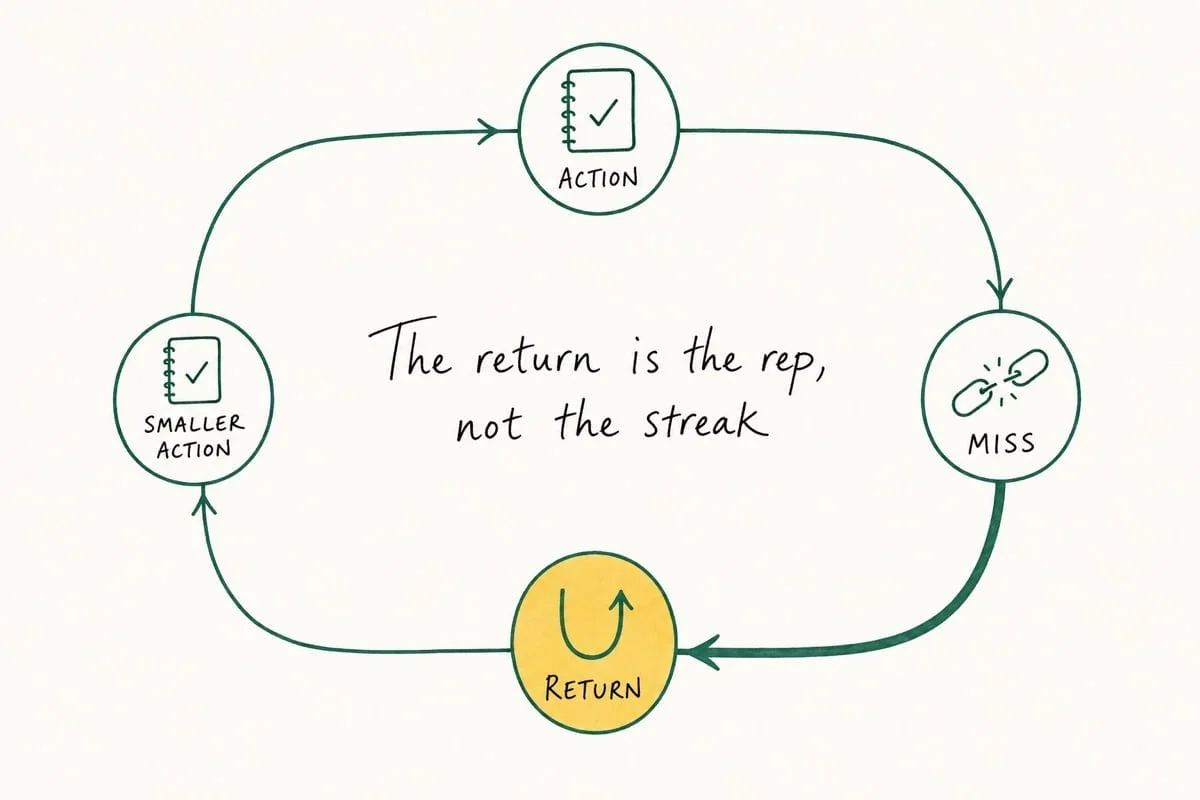
Implement your routine. Designate a specific "admin block" to handle divorce-related paperwork. This prevents the "divorce-brain" from bleeding into every hour of your day. If you miss a scheduled walk or a check-in call, do not view it as a failure; simply treat the next scheduled event as a new opportunity to restart.
Week Three: Expanding the Support Network
Identify one reliable person who can offer practical assistance—not just emotional listening. Ask them to join you for an appointment or help you navigate a specific document. This transition from total isolation to selective, purposeful support is a vital step in regaining agency.
Week Four: Initiating the First Experiment
Choose one low-stakes, reversible identity test. Whether it is signing up for a ceramics class or spending a Saturday in a new neighborhood, the goal is to observe your own reactions. If you dislike the experience, it is not a failure; it is simply useful information that helps you refine your preferences for the future.

Supporting Data: Why "Everything at Once" is a Trap
The pressure to transform quickly is often fueled by the desire to exit the pain of the present. However, psychological research into executive function suggests that this is the worst time to make life-altering decisions.
A meta-analysis of studies regarding acute stress reveals that it can significantly disrupt executive control—the very capacity required for high-stakes decision-making. When you are in the midst of a divorce, your brain is already managing a massive "cognitive load." Attempting to pivot careers or move to a new city while in this state increases the likelihood of "decision fatigue," which can lead to choices that are more about escaping pain than building a sustainable future.
The Financial Reality
Financial stability is arguably the most critical component of the "floor." A longitudinal study on divorce among those 50 and older indicates that, on average, individuals experience a significant decline in their standard of living—roughly 45% for women and 21% for men. While these figures represent averages rather than individual forecasts, they underscore why financial triage must precede any talk of "new beginnings." A divorce decree does not automatically resolve joint debts or mortgage responsibilities; these require diligent, proactive legal handling.
Official Responses and Safety Protocols
For those whose divorce involves fear, control, or abuse, the standard advice of "moving forward" is dangerous. If you feel monitored, threatened, or controlled by a partner or former partner, traditional conflict-resolution strategies like mediation or couples counseling are not appropriate.
Immediate Resources:
- National Domestic Violence Hotline: Offers confidential safety planning via phone, chat, or text.
- 988 Lifeline: For those experiencing a mental health, suicide, or substance-use crisis.
- Legal Services Corporation: A resource to help identify civil legal-aid organizations for those with limited financial resources.
Note: The information provided here is for educational purposes and does not replace professional legal, financial, or psychological advice. Divorce laws vary significantly by jurisdiction.
Implications: The Long View
Starting over at 50 is not about returning to the person you were at 25. It is about integrating the wisdom of your decades with the newfound freedom of your present.
Avoiding the "Courtroom Voice"
Many people carry an internal "courtroom voice"—a relentless, judgmental judge that evaluates every action as a win or loss. Research into self-compassion suggests that individuals who can move away from this narrative—who can acknowledge that "this is hard, and I may be clumsy"—experience less emotional intrusion over the long term.
Purpose vs. Performance
There is a common misconception that one must "find their purpose" immediately after divorce. In reality, purpose is often something that emerges through engagement with the world. By focusing on small, reversible choices, you allow your new identity to emerge naturally. You are not performing courage; you are simply making the next safe decision.
Final Guidance for the Journey
If you find yourself stuck, remember: there is no verified clock for recovery. Whether you are dealing with the lingering affection for an ex-partner or the financial anxiety of a reduced household, your path is your own.
- Prioritize the Floor: Secure your documents, your housing, and your legal standing.
- Trust the Process, Not the Speed: A steady, slow rebuild is more durable than a frantic, sudden change.
- Seek Professional Help: Do not attempt to navigate complex legal or financial waters alone.
- Practice Self-Compassion: Acknowledge that this is a difficult transition and that mistakes do not equate to character failures.
By protecting the floor today, you ensure that when you are finally ready to build the house of your future, the foundation will be strong enough to hold whatever life you choose to design.