The enduring quest for self-discipline, often framed as a battle of willpower against temptation, is fundamentally misunderstood, especially as we navigate the complexities of midlife. New insights suggest that the traditional model is not only flawed but actively detrimental, leading to frustration and self-recrimination. Instead, a paradigm shift towards a "recovery loop" offers a more realistic and effective path to sustained personal growth.
For years, individuals have grappled with the elusive nature of self-discipline, diligently searching for the "how-to" guides that promise enhanced willpower, perfected routines, and minimized distractions. Yet, for many, particularly those in their midlife years, these strategies often fall short. The persistent feeling of inadequacy stems not from a personal failing, but from an outdated model of how self-discipline actually functions. This article delves into the limitations of the conventional willpower approach, examines the unique challenges of midlife, and proposes a revolutionary framework centered on the power of recovery.
The Willpower Myth: A Foundation Built on Shifting Sands
The prevailing understanding of self-discipline has long been rooted in the concept of a finite "willpower tank." This model, popularized by Roy Baumeister’s influential ego-depletion studies in the late 1990s, posited that self-control draws from a limited resource that depletes with use and replenishes with rest. This led to the widely adopted metaphor of willpower as a muscle that can be strengthened or fatigued.
However, a generation of productivity advice based on this premise is now facing scrutiny. Critically, a large-scale replication study in 2016, involving 23 laboratories and over 2,000 participants, found the ego-depletion effect to be infinitesimally small, with a confidence interval that effectively rendered the findings inconclusive. In layman’s terms, the idea that we "run out" of willpower like a phone battery is far less robust than commonly assumed.
This revelation has profound implications for how we approach self-discipline, particularly during midlife. The perceived difficulty in maintaining discipline at 45 compared to 25 is not due to a diminished willpower reserve. Instead, it’s a consequence of life’s escalating demands. At 25, individuals typically have more cognitive bandwidth, fewer competing obligations, and a body that bounces back quickly from setbacks. By midlife, however, the "decision budget" is often depleted by mid-morning, consumed by a complex interplay of work responsibilities, financial planning, child-rearing, and the care of aging parents. The willpower model, which might have limped along under lighter loads, buckles under the weight of these expanded commitments. The good news is that this challenge is not a personal deficit, but a systemic issue that can be addressed with a structural solution, rather than requiring a fundamental character upgrade.
Redefining Self-Discipline: The Power of the Recovery Loop
The conventional dictionary definition of self-discipline paints a picture of a static virtue – the ability to control oneself and compel action. While useful in theory, this definition crumbles at the first instance of failure. It describes an idealized individual who never falters, a person who, quite frankly, does not exist.
The critical insight for midlife discipline lies in reframing self-discipline not as an inherent trait, but as a recovery loop. Most habit-formation advice focuses on the initial creation of a habit: a cue triggers a craving, which leads to a response, culminating in a reward that reinforces the cue. This explains how habits are built, but it offers little guidance for the inevitable day when the loop breaks. When the cue appears and the intended action is not taken, that moment of deviation is where midlife discipline is forged or fractured.
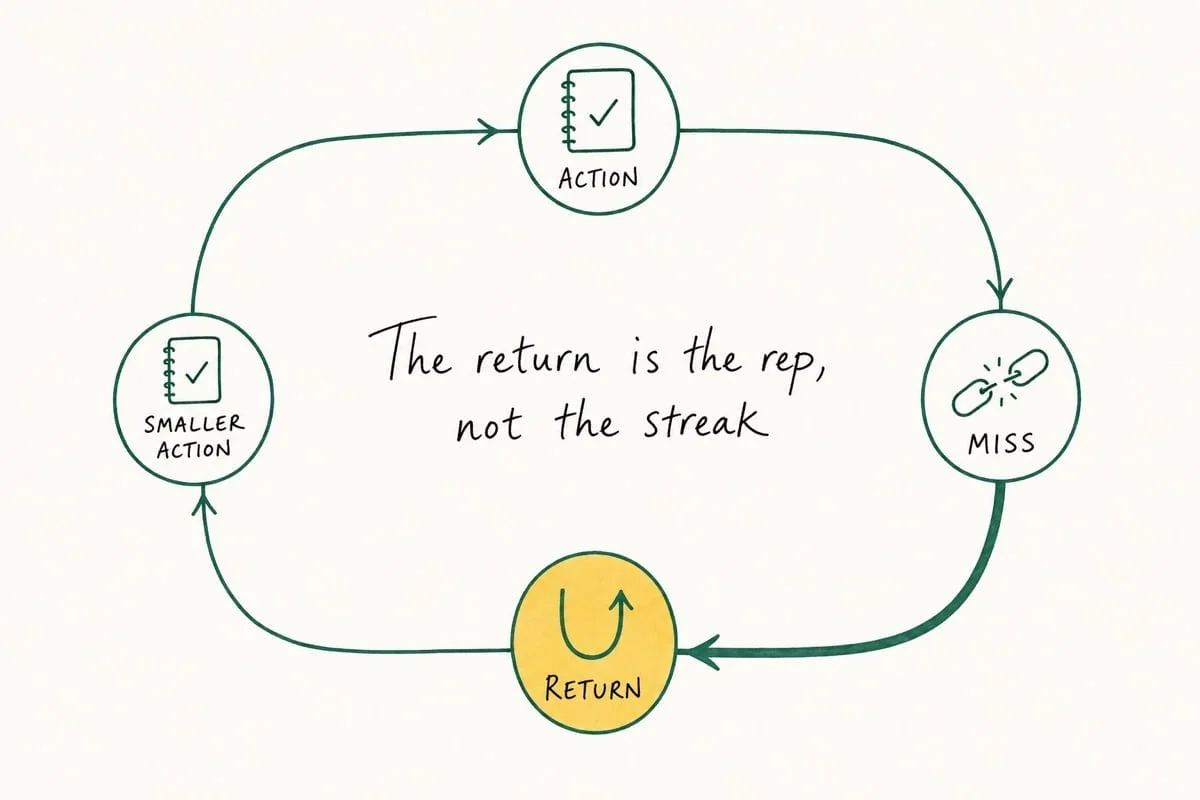
The effective loop for midlife is not a straight, unbroken line, but a circle: Action, Miss, Return, smaller Action. Discipline, in this context, is not measured by the length of a streak, but by the speed and efficiency of the "Return." This fundamental shift redefines discipline from an abstract quality to a measurable skill. The question evolves from "How do I prevent myself from ever breaking again?" (an impossible endeavor) to "How do I make the return so small and accessible that I will inevitably take it?" This is a trainable skill, achievable within the current week.
The Pitfalls of Conventional "7 Ways" to Self-Discipline at Midlife
A cursory search for "how to build self-discipline" invariably yields numerous "7 Ways" lists. While many of these tactics, often grounded in psychological research, are sound, their underlying assumption is problematic for individuals in their middle years. For instance, psychologist Ellen Hendriksen’s credible advice, focusing on removing temptation, employing if-then plans, and starting small, relies on the principle of addition. These strategies assume the primary obstacle is a lack of knowledge or tools.
At 25, this assumption often holds true. However, by 45, individuals have typically consumed vast amounts of information on habit formation, own numerous journals, and are well-versed in the theoretical underpinnings of discipline. The honest confession from many in this demographic is often, "I keep buying habit books and journals." Knowledge is rarely the missing ingredient.
When the bottleneck is not information but recovery, adding more systems and plans becomes counterproductive. Each new strategy becomes another potential point of failure, another streak to be broken, and another piece of evidence reinforcing the narrative of personal inadequacy. The midlife approach, therefore, is the inverse: subtraction. Identify a single, manageable practice and dedicate all effort to making the return to that practice as swift and effortless as possible after a lapse, rather than attempting to stack multiple complex habits that are likely to be abandoned by week’s end.
Deconstructing the "5 C’s": More Mnemonic Than Metric
Another common search query revolves around the "5 C’s of self-discipline." However, a closer examination reveals a lack of consensus on what these C’s actually are. Popular versions include Clarity, Commitment, Consistency, Control, and Compassion. Yet, alternative lists readily swap out these terms. This fluidity suggests that these frameworks are more akin to mnemonics – memory aids – rather than immutable laws of behavior.
Beyond the inconsistency, there’s a more fundamental issue: the "5 C’s" are almost universally presented as virtues or traits. While valuable, they are not measurable. One cannot objectively assess progress in discipline by rating one’s "Courage" on a scale of one to ten.
The true metric of discipline is not the streak, but the recovery time after a miss. When analyzing the goals of highly engaged individuals, the language that emerges consistently across various life domains – health, finance, family – is focused on action and consistency: "build," "establish," "consistent," "daily," "routine." People are not seeking to feel more disciplined; they desire a practice that endures. Virtues do not provide this feedback. Recovery time, however, offers a tangible gauge of whether a practice is holding. While the "C’s" can serve as helpful language, they should not be mistaken for the actual measurement of discipline.
The 90-Second Check-In: The Art of the Minimalist Practice
If recovery time is the key metric, then the primary objective must be to make the return to practice as inexpensive as possible. The cheapest and most effective return is one that can be accomplished within the worst 90 seconds of one’s worst day. This is the core design principle for a sustainable practice.
This is why, at LifeHack, the emphasis is not on elaborate morning routines, but on a daily Check-in. This is a brief, fixed prompt answered in under two minutes, focusing on the progress of the single most important endeavor. The value lies not in the data collected, but in its sheer accessibility. A demanding 5 AM cold-plunge routine is a streak destined to break. A 90-second Check-in, however, can be completed even from a hospital waiting room, ensuring continuity and a subsequent return the following day.
The principle of "smaller than you think" is paramount. The instinct at midlife, particularly after a period of struggle, is to compensate for perceived lost ground by increasing intensity. This is a misdirected effort. After a lapse, the return must be smaller than the resistance encountered, or the resistance will prevail, widening the gap. One push-up. One paragraph. One brief Check-in. The size of the return is the sole variable entirely within one’s control, and thus, the one that must be meticulously engineered.

The fundamental truth is that you have likely known what to do for years. The missing element has been the deliberate practice of making the action smaller than the resistance.
Unpacking "I Lack Discipline": Resistance as Information
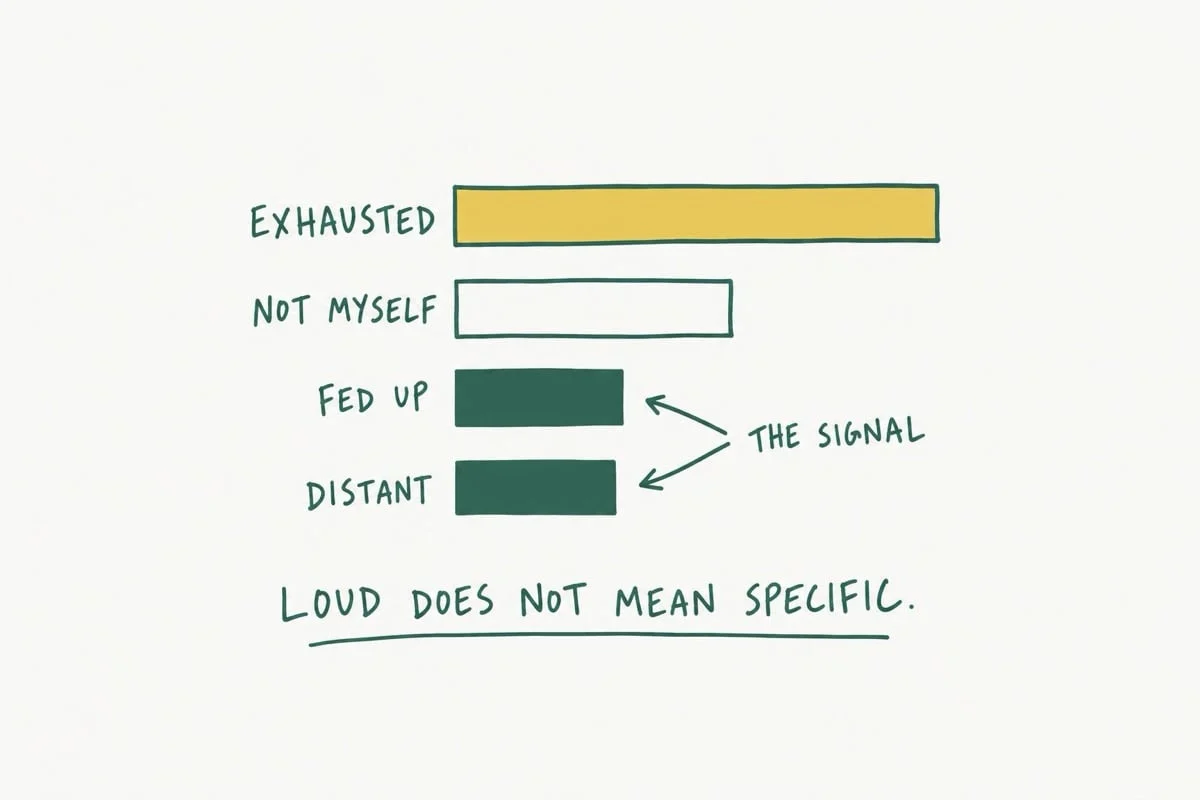
The common refrain, "I just don’t have the discipline," is often a misdiagnosis. Resistance to a task is rarely a moral failing; it is valuable information. Daniel Kahneman’s distinction between the fast, intuitive System 1 and the slow, deliberate System 2 thinking provides a useful lens. Most of our initial reaction to a task is generated by System 1 before conscious deliberation can even engage. When we instinctively shy away from an intended action, System 1 is flagging something important: the task may be vague, overly demanding, a threat to our identity, or simply the wrong objective.
Before attempting to summon more willpower, it is crucial to decipher what the resistance is communicating. If a task feels vague, the solution is to define the immediate next physical action, not to exert more force. If it feels too large, it needs to be scaled down. If, after adequate rest, resistance remains absolute, the issue may not be a lack of discipline at all. Persistent difficulty initiating tasks, coupled with low mood and disrupted sleep, can be indicators of burnout, not a willpower deficit. Burnout does not respond to increased pressure. In such cases, the signal is to prioritize rest, and if symptoms persist, to seek professional clinical guidance, rather than viewing it as a character flaw to be overcome through sheer force of will.
This reframing offers a powerful release from shame. You are not inherently lazy; you are receiving accurate feedback from a sophisticated internal system designed for your protection. By interpreting this feedback and adjusting the practice accordingly, genuine progress can be made.
Midlife vs. Mid-Twenties: The Evolving Landscape of Self-Discipline
The tendency for individuals to compare their current discipline levels to those of their younger selves often leads to the conclusion that they have somehow "weakened." This is a misconception. Three critical factors have changed, and none of them are directly related to willpower.
Firstly, the decision budget has shrunk not in capacity, but in availability. The same cognitive resources are now allocated to a wider array of complex decisions, from mortgage planning and teenage crises to parental health concerns and elevated job responsibilities. By the time one confronts the "should-do" tasks, the readily available cognitive fuel is often depleted.
Secondly, recovery time has demonstrably slowed. A disruptive week that might have necessitated a day of recalibration in one’s twenties can now require several days to regain equilibrium.
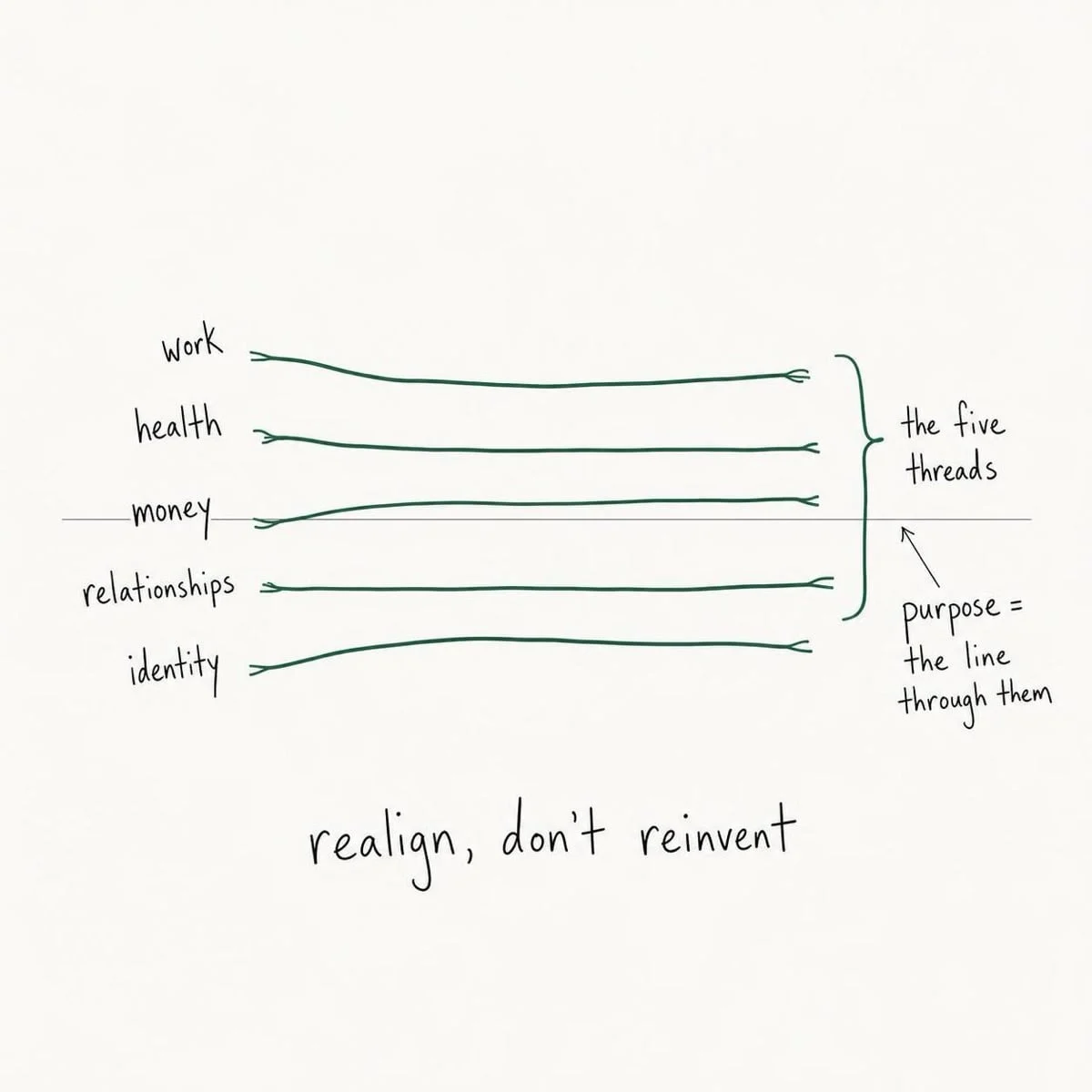
Finally, the stakes have become heavier. A lapse in discipline at midlife can feel like definitive proof of decline, rather than the transient setback it truly is. These shifts collectively underscore the inadequacy of the willpower model and highlight the superiority of the recovery loop. A smaller decision budget necessitates practices that are inherently low-cost. Slower recovery demands frictionless returns, enabling one to rebound from deeper setbacks. Higher stakes demand that the drama and shame surrounding a missed opportunity be minimized, preventing a downward spiral. The approach that was once effective did not fail due to aging, but because it was never designed to accommodate significant life demands. Midlife, by its very nature, is a period of immense load. This understanding mirrors the principles of larger life rebuilds: change is not a matter of willpower, but of sequencing, with consistency serving as the foundational dimension upon which all other progress rests.
The Minimum Viable Streak: The Power of One Return
The ultimate goal is not an unbroken chain of thirty days, nor a perfect, unblemished month. These aspirations subtly reintroduce the streak as the primary metric, when in reality, the streak was never the ultimate objective.
Research on habit formation reveals a more nuanced reality. In one notable study, achieving automaticity for a habit took a median of 66 days, with a wide range from 18 to 254 days, depending on the individual and the behavior. Crucially, missing a single day did not measurably impede the process. One missed day does not dismantle progress. It is the decision to quit after the miss that truly derails the endeavor. The entire game hinges on the return.
Therefore, the minimum viable streak is a streak of one: today’s return. That is the entirety of the objective. As Leo Babauta has long advocated at Zen Habits, discipline is cultivated through small, repeated actions, not heroic feats. The recovery loop specifically addresses the most critical component for individuals navigating midlife reconstruction: the return after a break is the actual repetition, not the streak itself.
This week, commit to one action: identify the practice you already know you should maintain, the one you have initiated and abandoned countless times. Shrink it to a size that feels almost embarrassingly small. Then, the next time you miss – and you will – time how quickly you return to it. That duration is your current measure of discipline. The objective is to make that number smaller. You have not exhausted your capacity for discipline; you are, quite literally, one return away from it.
Frequently Asked Questions
What is self-discipline?
Self-discipline is commonly understood as the capacity to compel oneself to perform necessary actions, irrespective of one’s inclinations. While this definition is serviceable until the first lapse, it proves inadequate for many, particularly during midlife. A more effective definition posits self-discipline as a recovery loop. It is the rhythm of returning to a practice after a disruption, rather than the unbroken continuity of adherence. A disciplined individual is not someone who never falters, but rather someone whose interval between a missed action and their subsequent return is exceptionally brief. By this definition, self-discipline ceases to be an inherent, fixed trait and transforms into a skill that can be honed and improved at any age, measured by the speed of recovery.
What are the "7 Ways" to gain self-discipline?
A reputable compilation of "7 Ways to have More Self-Discipline," offered by psychologist Ellen Hendriksen in Scientific American, is rooted in the prefrontal cortex’s mechanisms for impulse control. These methods include strategies such as environmental modification to remove temptations, implementing "if-then" planning, and initiating actions at a scale that feels manageable. These tactics are indeed effective. The critical caveat for individuals in midlife is that these approaches predominantly rely on addition. They are predicated on the assumption that the primary barrier is a lack of knowledge or strategy, when in reality, the obstacle is often the inability to consistently return after a lapse, a fact recognized for years. Therefore, while these tactics are valuable, they must be augmented by a singular, crucial addition: shrinking the practice to a size that is less than the perceived resistance, and then actively training the act of returning to it after a miss.
What are the "5 C’s" of self-discipline?
There is no universally agreed-upon set of "5 C’s" for self-discipline. Searches reveal competing lists, with one popular coaching framework comprising Clarity, Commitment, Consistency, Control, and Compassion. However, other versions substitute different terms entirely. This variability serves as an indicator that these frameworks are primarily mnemonic devices, designed for recall, rather than fundamental behavioral principles. Furthermore, a common thread across all iterations of the "C’s" is that they represent virtues or character traits. While these qualities are desirable, they are not quantifiable. It is impossible to ascertain whether one’s discipline has improved by rating their "Courage" on a numerical scale. The true measure of discipline lies in the speed of recovery after a missed action. While the "C’s" can be useful as a descriptive language, they should be distinguished from the actual metric: the time taken to return to a practice following a lapse.
Why is self-discipline harder at 40 or 50 than it was at 25?
The perceived difficulty in maintaining self-discipline at midlife is not attributable to a depletion of willpower. Instead, it is a consequence of fundamental shifts in life circumstances. At age 25, individuals typically benefit from greater cognitive availability, fewer competing life demands, and a more rapid recovery rate from disruptions. By the ages of 40 or 50, the daily "decision budget" is often exhausted before midday, consumed by the complexities of work, financial management, child-rearing, and the care of aging parents. Concurrently, the body’s capacity for recovery from disruptions is diminished. The willpower model, which conceptualizes discipline as a brute force applied, was always a suboptimal framework, but its limitations were less apparent when life’s demands were lighter. In midlife, these amplified demands expose its inherent flaws. The more effective model is the recovery loop: a practice that is sufficiently small to withstand a demanding day, coupled with a swift, low-drama return whenever life inevitably interferes.