Main Facts
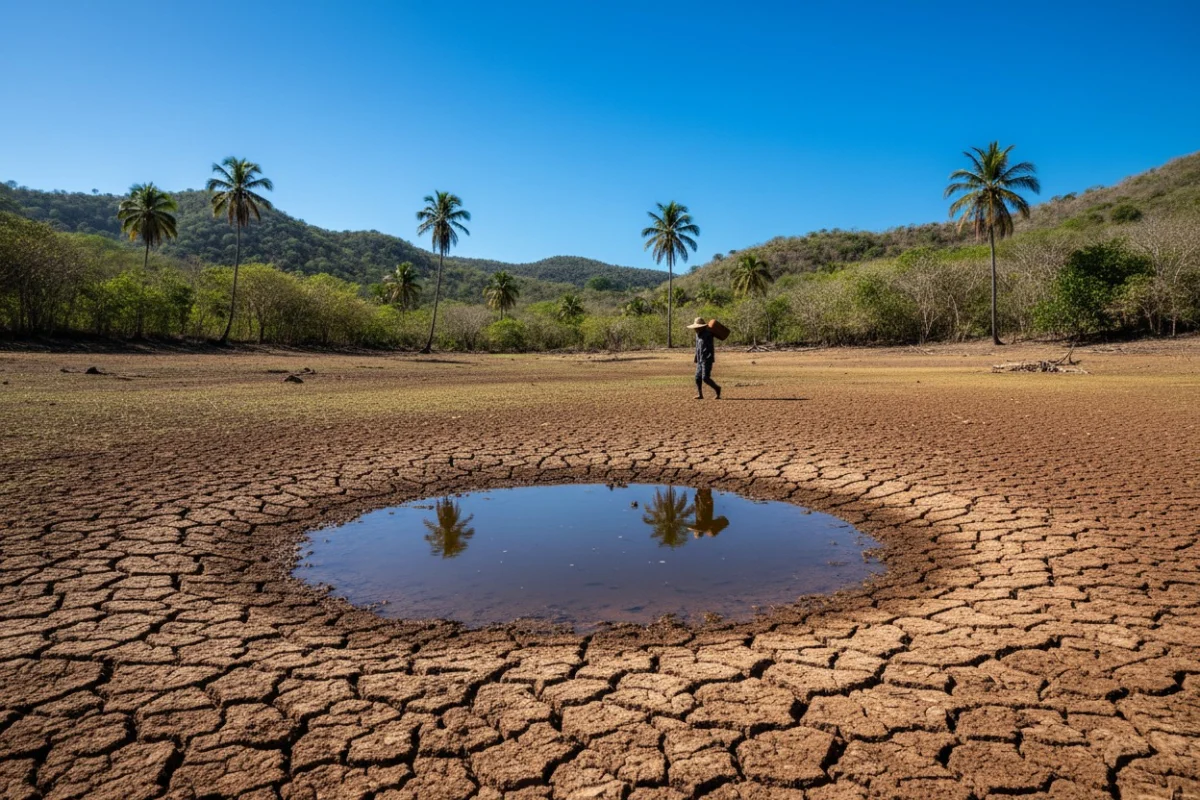
The global food system stands on the precipice of a structural transformation that threatens to permanently alter the cost and availability of basic nutritional goods. According to supply chain operators, agricultural economists, and major financial institutions, a confluence of geopolitical conflicts, energy bottlenecks, and agricultural input shortages is converging toward a severe global food shock projected to peak by 2027.
Wholesale indicators already reflect profound strain. Industry insiders report that wholesale shipping costs for essential bulk commodities—such as freeze-dried fruits—have spiked by as much as 50%, while available inventory from primary suppliers has plummeted by up to 75%. Similar contractions are visible across the board, including industrial-grade cacao powder, where available pallet counts from major sources have collapsed by over 80%.
This is not a temporary market fluctuation driven by fleeting supply-and-demand imbalances. Major financial institutions, including JPMorgan Chase and UBS, have issued stark warnings to investors. JPMorgan analysts recently highlighted a compounding storm termed the "Five Ws"—War, Weather, Warehousing, Water, and Waste—predicting that the next global food crisis will be deep and protracted. Concurrently, UBS research indicates that global food inflation will remain "structurally higher" than pre-pandemic averages, effectively erasing consumer hopes of a return to historical price stability.
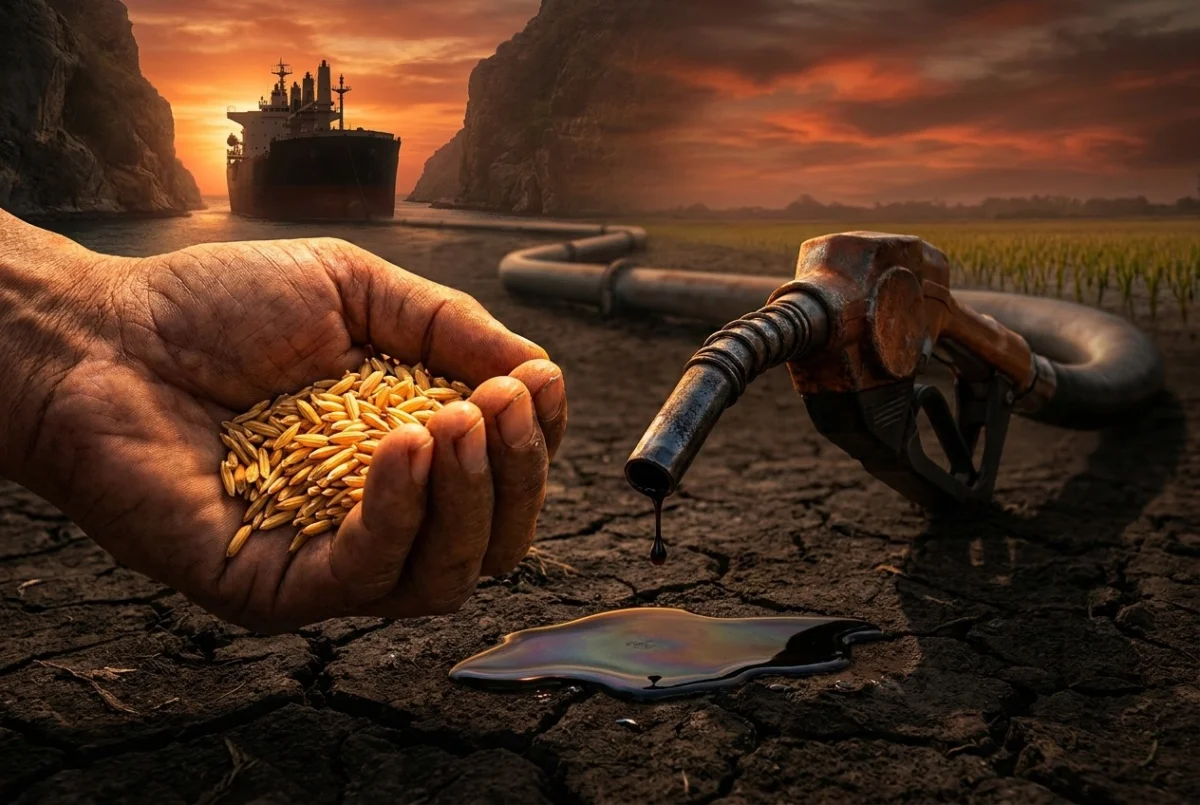
At the heart of this crisis lie two indispensable pillars of modern industrial agriculture: diesel fuel and nitrogen-based fertilizer. With vital energy and chemical transit corridors facing severe disruptions—most notably the effective closure of the Strait of Hormuz—the foundational inputs required to plant, harvest, transport, and refrigerate global food supplies are becoming increasingly scarce and expensive. As a result, analysts warn that everyday grocery shoppers must prepare for an era where today’s high food prices represent the absolute floor, rather than the ceiling, of future consumer costs.
Chronology of the Crisis
To understand how the global food supply chain reached this critical juncture, it is necessary to examine the cascading events that have progressively eroded agricultural stability over recent years:
- The Post-Pandemic Inflation Baseline (2021–2023): Following the global disruptions of the COVID-19 pandemic, agricultural supply chains experienced initial inflationary pressures. Central banks and market analysts anticipated these pressures would prove transitory, driven primarily by temporary labor shortages and port congestion.
- The Energy and Fertilizer Disruption (2022–2024): The outbreak of conflict in Eastern Europe and subsequent escalations in the Middle East severely impacted global natural gas markets. Because nitrogen fertilizer production relies directly on natural gas, fertilizer prices spiked globally, forcing smaller subsistence farmers in Africa, Asia, and Latin America to scale back planting operations.
- The Refining and Logistics Squeeze (2024–2025): Infrastructure strikes and regional conflicts crippled major oil refineries, driving diesel prices to historic highs. Because all segments of the food economy—from farm tractors and long-haul semi-trucks to cargo rail and maritime shipping—depend entirely on diesel, transportation overhead became a primary driver of wholesale food inflation.
- The Chokepoint Closure and Inventory Collapse (Late 2025–Present): Geopolitical friction around vital maritime and trade corridors, including the Strait of Hormuz, effectively throttled the movement of critical fertilizer components and fuel. Wholesale distributors began reporting massive inventory shortfalls, with supplier allocations dropping by 75% to 85% in key product categories.
- Projected Horizon of Full Impact (2026–2027): Industry leaders and financial analysts project that the cumulative lag of reduced fertilizer usage, sustained high energy costs, and depleted agricultural reserves will fully materialize as a generalized global food shock, pushing real food inflation significantly higher.
Supporting Data and Economic Indicators
The transition from localized supply chain hiccups to a systemic global food crisis is substantiated by hard economic data and quantitative metrics gathered from manufacturing, logistics, and financial sectors:
Wholesale and Inventory Metrics
- Wholesale Shipping Rates: Bulk wholesale shipping and packaging costs for staples have seen dramatic increases, with specific unit acquisition costs jumping from historical ranges of $50–$60 to $80–$90.
- Inventory Reductions: Major procurement operations report severe supply rationing. For instance, cacao powder availability from established international sources dropped precipitously from 250 pallets down to 35 pallets—an 86% contraction in available volume.
- Global Food Inflation Forecasts: Financial projections indicate that baseline food inflation will permanently detach from its pre-pandemic historical average of approximately 2.5%, remaining structurally elevated with anticipated spikes of 25% to 50% across general categories, and even higher in vulnerable regional markets.
Energy and Agricultural Input Costs
- Diesel Price Pressures: National average diesel prices have sustained levels above $6 per gallon, with regional anomalies (such as parts of California and major logistics hubs) clearing $8 per gallon. Proposals to invoke emergency federal measures, such as the Defense Production Act for refinery capacity, underscore the severity of the fuel squeeze.
- Fertilizer Vulnerability: Approximately half of the world’s critical nitrogen fertilizer components traditionally traverse or originate near the Strait of Hormuz. The restriction of this chokepoint has severed access for developing nations whose agricultural yields depend entirely on chemical enhancement.
- Refinery Recovery Timelines: The International Energy Agency (IEA) has noted that a complete recovery of regional oil and gas production infrastructure damaged by ongoing conflicts could require up to two years, ensuring that high energy costs remain baked into every stage of food production.
Official Responses and Institutional Assessments
Governments, central banks, and international financial institutions have increasingly acknowledged the structural vulnerabilities facing global food security, though their public messaging often contrasts sharply with the assessments of private-sector operators on the front lines of supply acquisition.
Financial Institutions Sound the Alarm
Major private banking entities have abandoned optimistic projections regarding inflation. JPMorgan Chase released a comprehensive analytical report titled Food Security Is National Security: A Compounding Storm, which explicitly warns that the next global food crisis is not a distant hypothetical, but an active risk that "won’t be short-lived." The report highlights the interconnected dangers of geopolitical conflict, extreme weather, warehousing deficits, water scarcity, and systemic waste.
Similarly, UBS published long-term economic evaluations concluding that structural forces will keep agricultural commodities expensive for the foreseeable future. Unlike previous cycles where high prices stimulated rapid overproduction and subsequent price corrections, current capital constraints, high borrowing costs, and input shortages prevent agricultural markets from rapidly expanding output.
Governmental and Diplomatic Posturing
Official political statements often attempt to project stability and control over critical trade arteries. Statements from executive administrations have frequently downplayed the long-term impact of regional conflicts on global commodity flows, asserting that strategic waterways remain secure or that domestic production can offset international losses.
However, industry experts and independent commodity traders argue that official rhetoric underestimates the complex web of global dependencies. For example, while governments may utilize emergency decrees or debate the invocation of wartime production acts to stimulate domestic fuel refining, these measures cannot instantly replace complex international supply chains or rebuild bombed infrastructure overseas. The gap between official political optimism and the harsh arithmetic of wholesale procurement leaves businesses and consumers to navigate an increasingly volatile marketplace largely on their own.
Implications for Consumers and Global Security
The convergence of high fuel costs, fertilizer scarcity, and depleted wholesale inventories carries profound implications for everyday consumers, national economies, and global geopolitical stability.
The End of Affordable Calories
For decades, consumers in developed nations have enjoyed a food economy characterized by cheap, abundant calories supported by highly efficient, JIT (Just-In-Time) global logistics. That era is drawing to a close. As baseline production costs rise, food manufacturers and retailers can no longer absorb margin compression. Consequently, shoppers will continue to experience a twofold reality: rising price tags alongside shrinkflation—where package sizes are reduced while prices remain static or increase.
While catastrophic, Mad Max-style empty shelves may not materialize uniformly in every neighborhood, the structural erosion of inventory will manifest as persistent out-of-stock items, reduced product variety, and the phasing out of affordable food tiers. In short, economists and market veterans agree: the grocery prices observed today represent the cheapest food consumers will see for the remainder of their lives.
Global Hunger and Geopolitical Instability
The humanitarian implications extend far beyond domestic grocery budgets. Smallholder and subsistence farmers across Africa, Southeast Asia, and Latin America lack the capital reserves and corporate hedging strategies of massive agribusiness conglomerates. When nitrogen fertilizer and diesel fuel become prohibitively expensive, these farmers simply reduce their acreage or skip planting cycles altogether.
Agricultural economists warn that this dynamic sets the stage for severe regional famines, placing hundreds of millions of people at risk of food insecurity. Such large-scale humanitarian crises invariably trigger mass migration, political destabilization, and heightened international conflict as nations compete fiercely for dwindling grain reserves and arable resources.
The Shift Toward Individual and Community Self-Reliance
In response to systemic institutional and supply chain fragility, a growing movement of individuals, homesteaders, and decentralized organizations are advocating a pivot away from total dependence on centralized food systems. Recommendations from food security experts increasingly focus on practical resilience:
- Pantry Accumulation: Securing non-perishable, lab-tested bulk staples while they remain accessible and before inflationary waves fully peak.
- Home and Community Production: Cultivating localized food sources, establishing fall crops, utilizing indoor microgreen sprouting, and mastering fundamental homesteading and gardening skills.
- Decentralized Networks: Supporting regional food hubs, local farmers’ markets, and peer-to-peer distribution networks that bypass vulnerable, long-distance corporate supply chains.
Ultimately, the impending global food shock serves as a stark reminder that the modern industrial food apparatus is far more vulnerable than commonly perceived. Navigating the economic landscape of the coming years will require heightened awareness, strategic preparation, and a renewed emphasis on self-reliance at both the household and community levels.