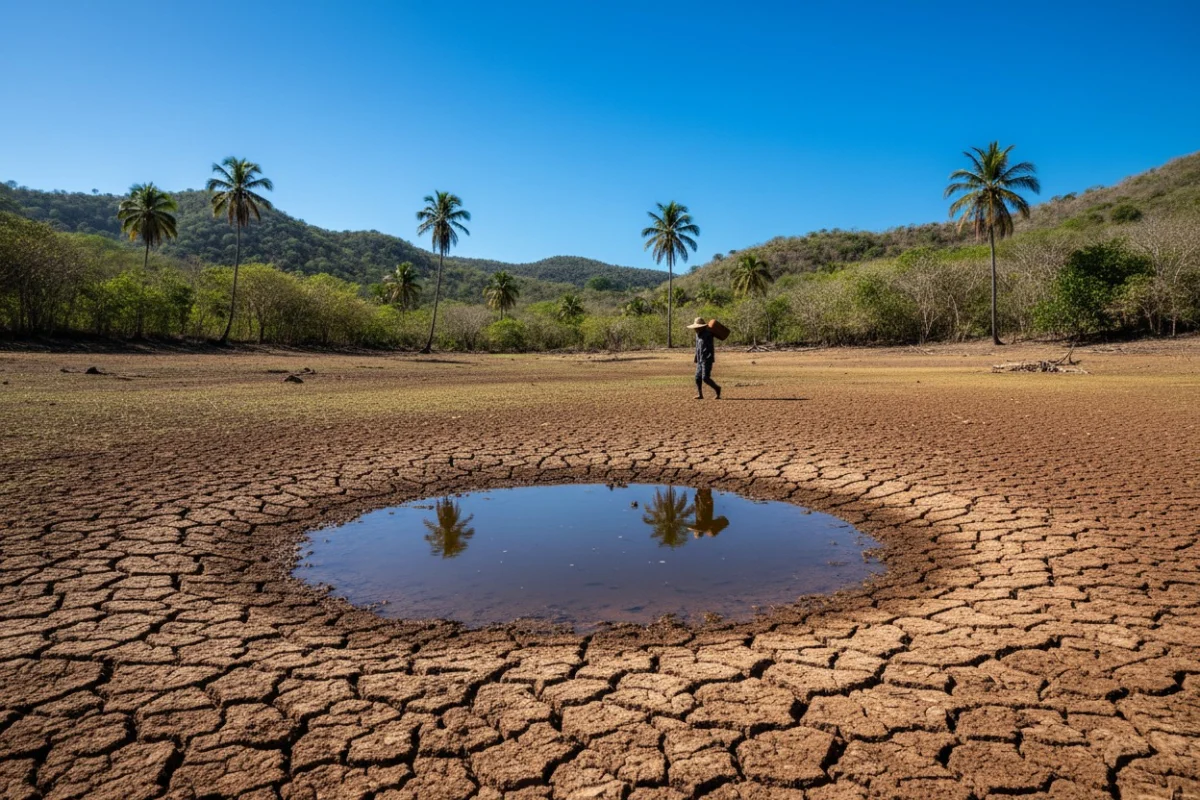
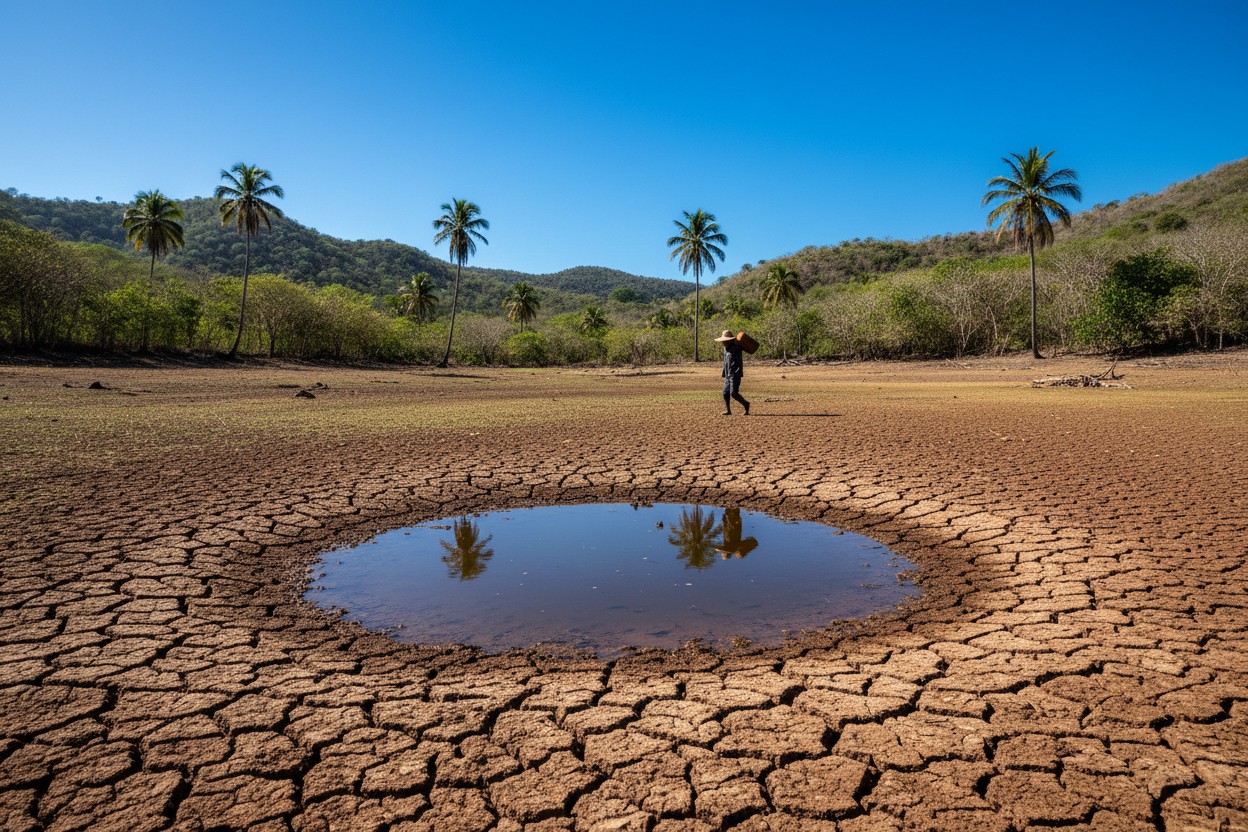
SAN JUAN, Puerto Rico — As scorching temperatures and a relentless lack of rainfall continue to grip the Caribbean, Puerto Rico has entered a period of extreme hydrological stress. On Thursday, Governor Jenniffer González officially declared a state of emergency, a move designed to unlock emergency funding and resources to combat a deepening drought that is threatening the basic livelihoods of millions of residents.
Starting Friday, the Puerto Rico Water and Sewer Authority (PRWSA) will implement a rigorous 48-hour water rationing schedule. The mandate, which will primarily impact thousands of residents in the northeastern municipalities of Canóvanas and Río Grande, marks a grim return to a strategy of managed scarcity that the island has not seen with such severity in years.
“There is simply not enough water,” said Luis González, executive president of the PRWSA, during a press briefing. He warned that the current rationing plan is likely a precursor to broader, more frequent cutoffs if meteorological conditions do not improve.
The State of the Drought: A Data-Driven Crisis
The current water crisis is not a sudden anomaly but the culmination of a months-long precipitation deficit. According to the latest data from the U.S. Drought Monitor, approximately 14% of the island is currently categorized as being in a state of "severe drought," while an additional 59% is suffering under "moderate drought" conditions.
This represents a significant and rapid deterioration from late June, when the severe drought designation applied to only 18% of the territory. With a total population of 3.2 million, the crisis is now directly affecting the daily lives of nearly 2.3 million people.
Global Context: The "Great Drying"
Experts suggest that Puerto Rico’s struggle is a microcosm of a much larger, more ominous global trend. Researchers have coined the term "the great drying" to describe the diminishing availability of potable freshwater across the planet. A recent climate study indicates that roughly 75% of the world’s population currently resides in countries grappling with similar water scarcity issues. As climate change alters precipitation patterns and intensifies heatwaves, the margin for error in water management has become dangerously thin.
A Chronology of Declining Resources
To understand the current emergency, one must look at the island’s historical struggle with water management.
- 2016 Crisis: Puerto Rico experienced a severe drought that forced the PRWSA to implement drastic measures. At that time, approximately 400,000 customers were subjected to a cycle where water was available only every third day.
- Early 2026: Throughout the spring, residents in highly populated areas began reporting intermittent outages. These disruptions occurred months before the official drought declarations, leading to speculation that systemic failures were already in motion.
- Late May 2026: The mounting frustration reached a breaking point when the mayor of San Juan filed a lawsuit against the PRWSA, citing a failure to provide consistent, reliable service to the capital’s residents.
- June 2026: A major, non-drought-related infrastructure failure left nearly 40,000 customers without water. The incident was severe enough that Governor González was forced to activate the National Guard to distribute potable water to affected neighborhoods.
- July 2026: The formal declaration of a state of emergency was signed, marking the beginning of the current 48-hour rationing cycle.
Infrastructure and Management: The Hidden Culprit
While the drought provides the meteorological catalyst, critics and government officials alike acknowledge that the island’s water woes are compounded by decades of institutional neglect. Governor González admitted during a recent address that the PRWSA’s infrastructure has suffered from a profound lack of capital investment and consistent maintenance for over thirty years.
The issue is not merely the quantity of water, but the efficiency of the delivery system. Leaks, aging pipes, and outdated pumping stations result in a massive loss of treated water before it ever reaches a residential tap.
The National Landscape of Failure
Puerto Rico’s struggle mirrors a broader national crisis within the United States. A recent analysis of American water utilities concluded that chronic underinvestment has left critical infrastructure "on the verge of collapse" in many jurisdictions. The challenge is not just one of supply, but of resilience; the systems were built for a climate that no longer exists, and they are being maintained with budgets that haven’t kept pace with modern demands.
Furthermore, the public health implications of this decay are significant. As noted in the seminal work The Water We Drink, the regulatory frameworks governing water quality were largely designed with the prevention of cancer and other long-term health issues in mind. When infrastructure fails or when water levels drop, the concentration of contaminants can increase, and the ability of treatment facilities to process water to safety standards is severely compromised.
Official Responses and Political Fallout
The political fallout from the water rationing has been swift. Legislative halls in San Juan have become a battleground for discourse on executive competence.
Representative Domingo J. Torres has been among the most vocal critics of the administration’s handling of the crisis. "What is happening with the Puerto Rico Water and Sewer Authority cannot be attributed solely to the drought," Torres stated in a recent legislative session. "What we are seeing is a management style that improvises—that reacts only when the crisis is already upon us—and that has failed to present a clear, sustainable plan to guarantee access to our most basic need."
The Governor’s office has attempted to pivot toward long-term solutions, promising an infusion of federal and local funds to modernize the pumping stations and repair the distribution network. However, for the average resident, these promises offer little immediate relief.
Implications for the Future: A Uncertain Horizon
The declaration of a state of emergency serves as a stark reminder that water security is the primary challenge of the 21st century. For Puerto Ricans, the immediate future remains precarious. With no significant rainfall predicted in the short term, the 48-hour rationing schedule is likely to be extended, and the geographic reach of these restrictions may expand to include the central and western regions of the island.
Public Sentiment and Social Organizing
In response to the recurring shortages, communities have begun to organize. From neighborhood protests to social media advocacy groups, residents are demanding greater transparency from the PRWSA regarding water distribution schedules and maintenance timelines. The lack of reliable information has been a particular source of frustration, as families are often left guessing when the taps will run dry.
The Path Toward Sustainability
To escape the cycle of "emergency-response-emergency," experts suggest that the government must undertake three key initiatives:
- Systemic Infrastructure Overhaul: Shifting from "patch-work" repairs to a comprehensive replacement of aging mains to reduce systemic water loss.
- Diversification of Water Sources: Investing in rainwater harvesting, desalination plants, and groundwater management to reduce reliance on vulnerable reservoirs.
- Governance Reform: Depoliticizing the management of the PRWSA to ensure that technical expertise and long-term planning are prioritized over short-term political cycles.
As the sun beats down on the Caribbean, the people of Puerto Rico are left waiting for the rain. But as the current crisis illustrates, rain alone will not fix the structural deficits that have made a manageable weather event into a full-blown humanitarian emergency. The resilience of the island will depend on whether its leaders can move past the era of improvisation and into an era of sustainable, proactive infrastructure management. Until then, the rationing continues—a 48-hour reminder of the fragility of the modern water supply.