In an era where digital privacy is increasingly at odds with the rapid evolution of artificial intelligence, the developers behind the acclaimed journaling application Day One have unveiled a significant shift in how users can interact with their personal records. With the release of version 2025.19, Day One has officially integrated Apple Intelligence, transforming the app into a proactive, intelligent companion for personal reflection. This update marks a pivotal moment for the platform, promising to enhance the journaling experience through advanced machine learning while maintaining the stringent privacy standards that have long defined the brand.
The Core Mission: Privacy-First Innovation
At its inception, Day One’s mission was simple: to create a secure, intuitive, and personal space for users to capture life’s moments. As artificial intelligence began to dominate the tech landscape, the team at Day One faced a challenge—how to leverage the power of AI to provide deeper insights without compromising the sanctity of a private diary.
The solution lies in the architecture of Apple’s Foundation Models. By utilizing on-device processing, Day One ensures that every AI-driven interaction remains contained within the user’s hardware. Unlike cloud-based AI services that transmit sensitive data to external servers for processing, Day One’s new tools operate entirely offline. No data is collected, no information is shared with third parties, and the user’s most intimate thoughts remain strictly under their own control.

Chronology of Development: From Experimental Labs to Full Integration
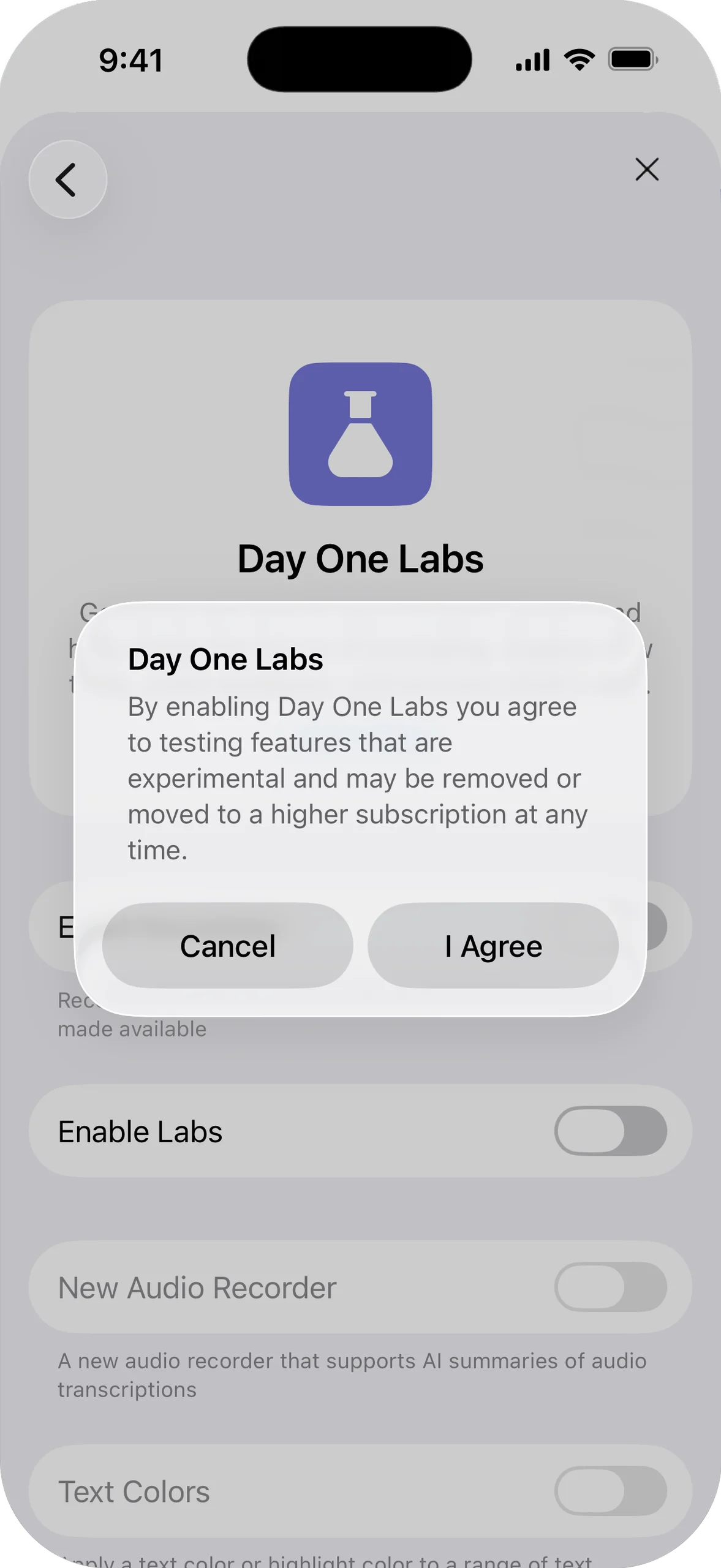
The path to this integration was not instantaneous. Day One has long fostered a culture of experimentation through "Day One Labs," a dedicated space where power users could test beta features before they were released to the general public.
- The Experimental Phase: For months, users participated in testing "Entry Summary" features within the Labs environment. This period allowed the developers to gather crucial feedback on how users interacted with AI, identifying what features were genuinely helpful versus those that felt intrusive.
- The Shift to Foundation Models: Following the announcement of Apple’s integrated AI framework, the team pivoted to align their experimental tools with the native system capabilities. This ensured that the features were not only more powerful but also more deeply integrated into the iOS ecosystem.
- The Transition (Version 2025.19): With the rollout of version 2025.19, the legacy "Entry Summary" feature was sunsetted and replaced by the more robust "Entry Highlights" tool. This transition represents the move from experimental, cloud-adjacent testing to a stable, native, and highly secure implementation.
Understanding the Tools: How Apple Intelligence Enhances Your Journal
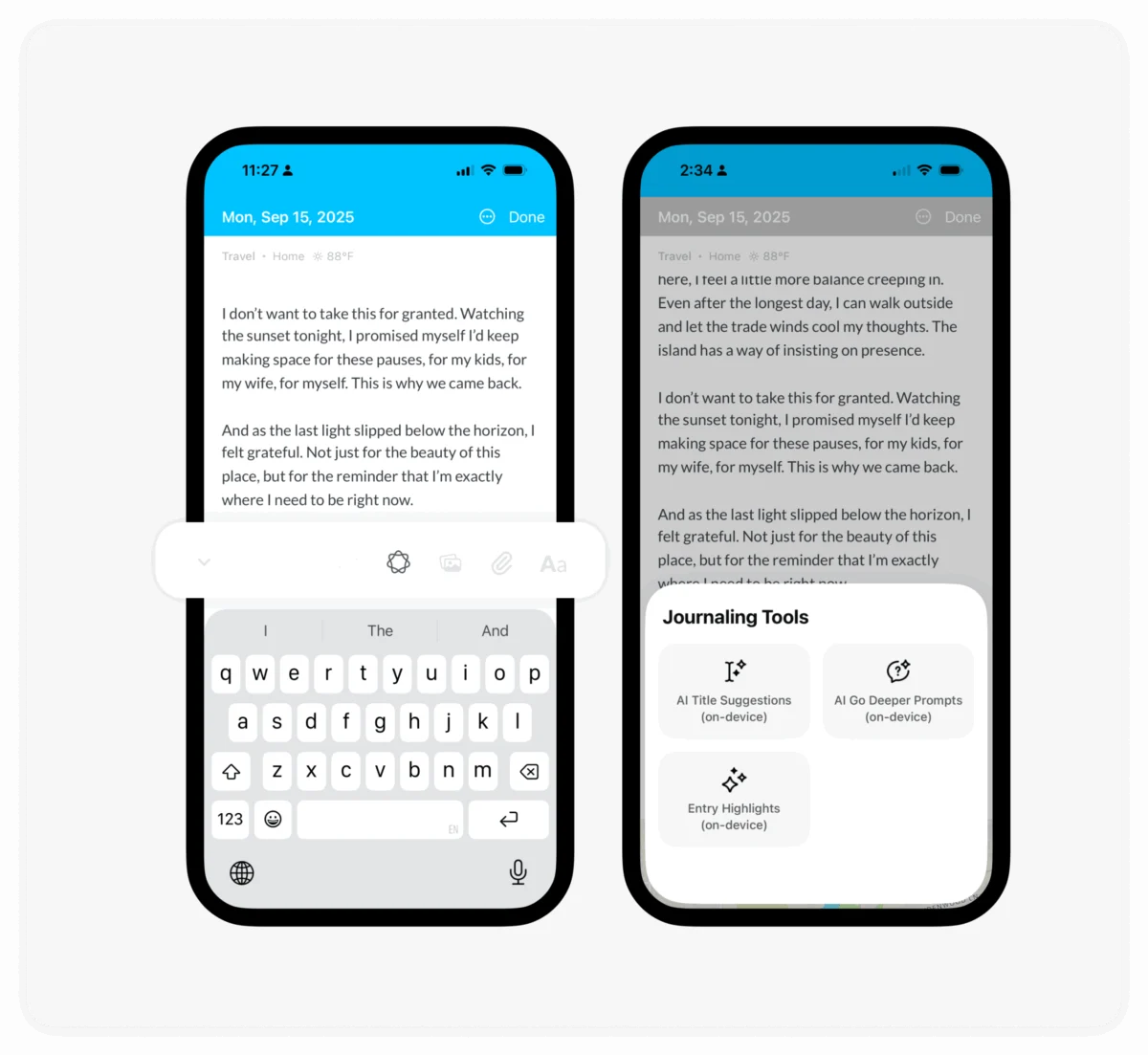
The integration introduces three primary AI-driven features designed to lower the barrier to entry for daily journaling and to provide deeper value when revisiting past entries.
1. Go Deeper Prompts
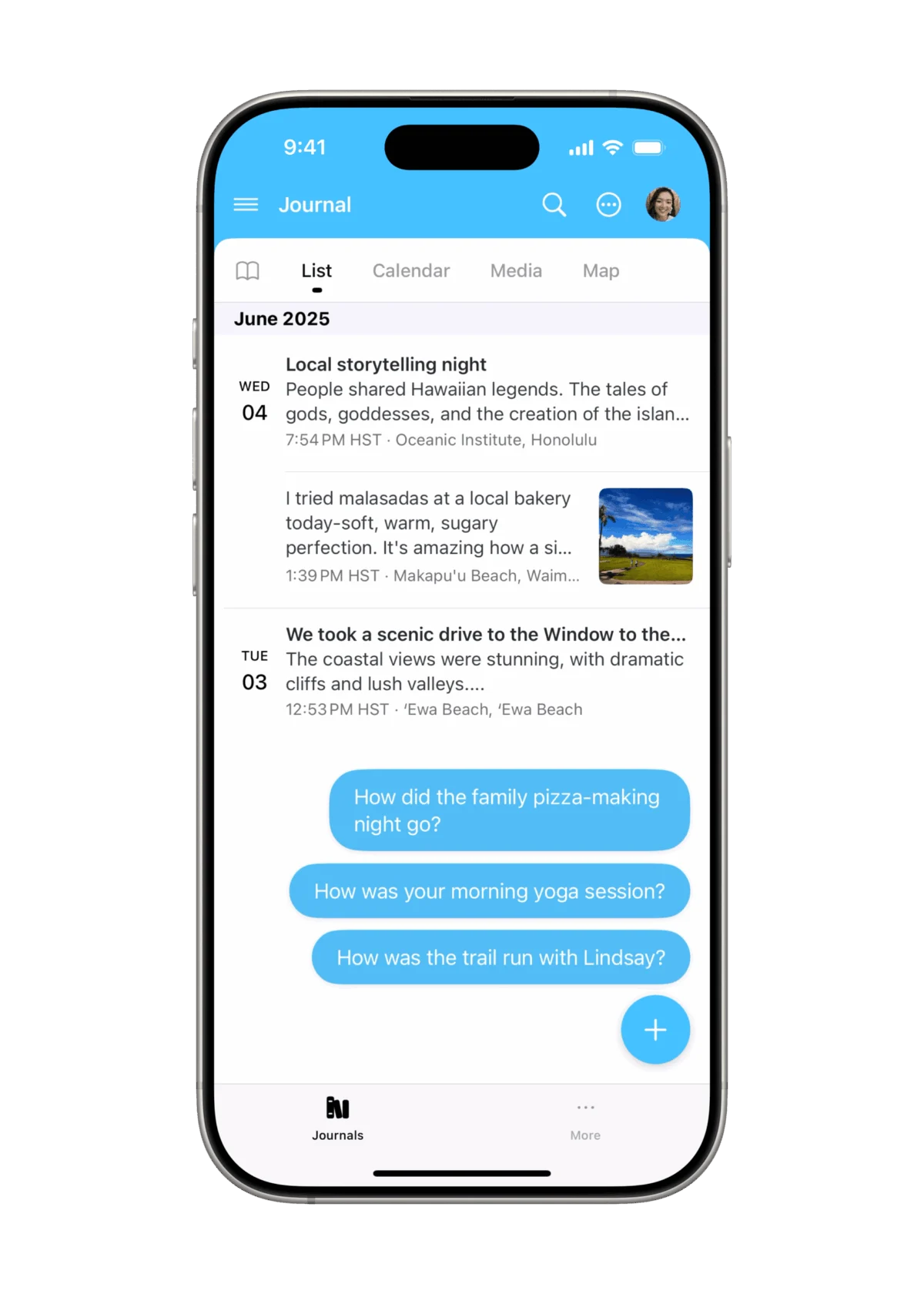
One of the most common hurdles in journaling is "writer’s block." The Go Deeper feature acts as a thoughtful conversational partner. When a user writes a sentence or two about their day, the AI analyzes the context and suggests follow-up questions designed to encourage reflection. It does not dictate the narrative; rather, it prompts the user to consider different angles, helping them transform a mundane observation into a meaningful entry.

2. Entry Title Suggestions
For many, the most tedious part of journaling is naming an entry. While it may seem trivial, a good title makes it significantly easier to browse through years of history. The AI now scans the body of an entry and generates intelligent, descriptive, and thematic titles. This subtle touch streamlines the organizational process, making the journal more accessible as a retrospective tool.
3. Entry Highlights
Replacing the former "Entry Summary" feature, Entry Highlights uses the Foundation Models framework to synthesize long-form entries into concise, bullet-pointed summaries. This is particularly useful for users who write lengthy, stream-of-consciousness entries and want a quick way to scan their journal for key milestones, emotions, or events.
Supporting Data and Technical Requirements
To ensure a seamless user experience, these features are governed by specific technical requirements. The tools are currently available exclusively on iPhone and iPad for users running iOS 26.

- Compatibility: The features require hardware capable of running the Apple Intelligence suite. Users can verify their device status directly within the Day One Settings > Apple Intelligence menu.
- Offline Capability: A key differentiator of this implementation is its full offline functionality. Because the model resides locally on the device, users can be on a flight or in a remote area with no connectivity and still receive high-quality AI assistance.
- Opt-in Philosophy: In alignment with their commitment to user autonomy, these features are disabled by default. Users must manually opt-in, and they retain the power to toggle them off at any time.
Official Responses and The Philosophy of AI
In discussions regarding the rollout, the Day One team has been clear: AI is a companion, not a replacement for the human voice. The official stance is that the "human touch" is what gives a journal its value.
"We see AI as a creative catalyst," a spokesperson for the development team noted. "Our goal is to help you overcome the friction of starting to write. By providing prompts or summarizing highlights, we hope to make the act of reflection more rewarding. However, the soul of the journal remains the user’s authentic voice."
The company has also addressed the "black box" concern surrounding AI. By choosing to use the Apple Foundation Model specifically, they have opted for a "walled garden" approach to privacy. They have publicly confirmed that they do not store, log, or transmit any journal content to their own servers to train or improve their models.

Implications for the Future of Personal Record Keeping
The integration of Apple Intelligence into a platform as sensitive as a digital diary has broader implications for the tech industry. It proves that developers can offer the benefits of modern AI without requiring users to surrender their privacy.
The Normalization of AI as an Assistant
As these features become common, we may see a decline in the "blank page syndrome." When technology helps bridge the gap between intent and action, the frequency of user engagement often increases. If a user knows that their app will help them find a title or reflect more deeply, they are statistically more likely to open the app on a daily basis.
The Privacy Benchmark
Day One is setting a new benchmark for other productivity apps. As users grow more wary of data harvesting, the "on-device-only" label will likely become a competitive advantage. If other journaling, health, and note-taking apps fail to provide similar privacy guarantees, they may find themselves losing market share to those that prioritize local processing.

The Evolution of Memory
Ultimately, these tools change how we view our past. By offering summaries and insightful prompts, Day One is transforming the journal from a static repository of data into a living, breathing archive. It allows the user to see patterns in their life—mood trends, recurring themes, and personal growth—that might have been obscured by the sheer volume of text in a multi-year journal.
Moving Forward: The Next Chapter
While the current features represent a significant leap forward, they are explicitly described as the beginning of a larger journey. The developers have invited users to participate in the ongoing refinement process by providing feedback. Because the technology is still evolving, the quality of responses may vary, but the promise of continuous improvement remains a cornerstone of the update.
For those concerned about the speed of innovation, the team has reassured the community that their commitment to the "Labs" program remains. Users can still test experimental features that are not yet part of the Apple Intelligence integration, ensuring that the app remains at the cutting edge of both privacy-conscious AI and innovative UX design.

In conclusion, Day One’s adoption of Apple Intelligence is a masterclass in responsible innovation. By placing the user’s privacy at the forefront and utilizing on-device hardware capabilities, they have successfully brought the power of modern AI into the most intimate of digital spaces. Whether you are a daily journaler or someone looking to start, this update offers a compelling reason to embrace the future of personal reflection.