WASHINGTON — In an era marked by persistent economic uncertainty and shifting household expenses, financial literacy has emerged as a cornerstone of modern household stability. For millions of individuals and families, the simple act of navigating daily transactions without a cohesive strategy can lead to mounting financial stress. However, financial experts and personal organization advocates increasingly emphasize that the key to long-term wealth accumulation and reduced financial anxiety lies in a single, fundamental practice: the creation and diligent maintenance of a structured monthly budget.
Far from being a restrictive document meant to eliminate all enjoyment, a well-constructed budget serves as an intentional blueprint for hard-earned income. By transforming abstract financial concepts into actionable categories, households can bridge the gap between earning and saving, ensuring that every dollar serves a distinct purpose.

Main Facts: The Anatomy of Modern Household Budgeting
At its core, a monthly budget is a quantitative plan that outlines projected income against anticipated expenses, debt obligations, and savings goals over a standard calendar month. Despite the proven benefits of budgeting, many consumers find the initial setup intimidating. The sheer volume of recurring bills, discretionary purchases, and variable costs can overwhelm even the most organized individuals.
To demystify the process, financial planners advocate for a systematic, step-by-step approach. Rather than relying on guesswork, successful budgeting relies on historical data—typically gathered from past bank statements and credit card histories—to establish realistic spending baselines. Whether utilizing traditional pen-and-paper binders or automated digital spreadsheets that calculate mathematical equations in real time, the objective remains identical: gaining absolute clarity over cash flow.

Furthermore, industry insights highlight that effective budgeting is not about achieving absolute perfection. Unexpected expenditures, market fluctuations, and seasonal variations guarantee that few months will unfold precisely as planned. Instead, the true value of a monthly budget lies in its adaptability, providing individuals with the situational awareness required to pivot quickly when financial surprises arise.
Chronology: The Seven-Step Implementation Roadmap
For beginners embarking on their financial journey, establishing a routine requires a clear, chronological framework. Financial strategists recommend breaking the setup process down into seven distinct phases:

Step 1: Calculate Net Monthly Income
The budgeting process begins not with what an individual earns on paper, but with what actually hits their bank account. This requires determining net monthly income—total salary minus taxes, healthcare premiums, and other automatic payroll deductions. For households with multiple earners or supplemental income streams, such as side hustles or freelance work, all sources must be aggregated.
- Addressing Variable Income: For those working on commission or with fluctuating freelance schedules, experts advise adopting a conservative baseline estimate. It is far easier to adjust a budget upward if earnings exceed expectations than to scramble to cut expenses when actual income falls short.
Step 2: Account for Recurring Bills
Once the baseline income is established, the next priority is cataloging fixed, recurring liabilities. These are predictable payments that remain relatively constant from month to month, quarter to quarter, or year to year. Examples include rent or mortgage payments, auto loans, insurance premiums, utilities, and subscription services. Reviewing previous bank statements ensures that no recurring charges are accidentally overlooked.

Step 3: Establish Variable Expense Categories
Unlike fixed bills, variable expenses fluctuate based on lifestyle choices, consumption habits, and seasonal needs. This category typically encompasses groceries, dining out, fuel, entertainment, clothing, and personal care.
- Granular vs. Broad Approaches: Households can customize this section to match their preferences. Some prefer a granular approach with dozens of specialized categories, while others favor streamlined frameworks like the popular 50/30/20 rule—allocating 50% of net income to needs, 30% to wants, and 20% to savings.
Step 4: Map Out Debt Repayment Strategies
While debt obligations are technically recurring bills, financial advisors frequently separate them into their own dedicated category. Because debts such as credit cards and personal loans accrue interest over time, paying them down aggressively yields long-term financial dividends. Incorporating structured debt payments into the monthly budget supports methodologies like the "Debt Snowball" or "Debt Avalanche" plans, accelerating freedom from high-interest liabilities.

Step 5: Prioritize Strategic Savings Goals
A sustainable budget looks beyond immediate survival to future milestones. Establishing a dedicated savings category ensures that households are adequately prepared for both predictable annual expenses—such as holiday gifts or vehicle maintenance—and unexpected emergencies. Incorporating concepts like sinking funds allows consumers to save incrementally for future expenditures, entirely eliminating the panic associated with sudden out-of-pocket costs.
Step 6: Commit to Consistent Spending Tracking
The critical turning point in any financial plan is active tracking. Entering transactions into a budget ledger or spreadsheet on a regular schedule—whether daily, every few days, or during a dedicated weekly review session—fosters acute financial awareness. Regular tracking acts as a safeguard against fraudulent charges, billing errors, and unconscious overspending, naturally encouraging more intentional consumer behavior.

Step 7: Refine and Adjust as Needed
A budget is a living, breathing document. After tracking expenses for two to three months, consumers should evaluate their progress. Categories that consistently run over or under budget should be adjusted to reflect real-world realities, ensuring the financial plan remains sustainable over the long term.
Supporting Data and Industry Insights
Empirical observations across the personal finance sector consistently validate the efficacy of structured budgeting. Studies on consumer spending habits reveal that individuals who actively monitor their transactions reduce impulsive purchases by a measurable margin within the first ninety days of implementation.

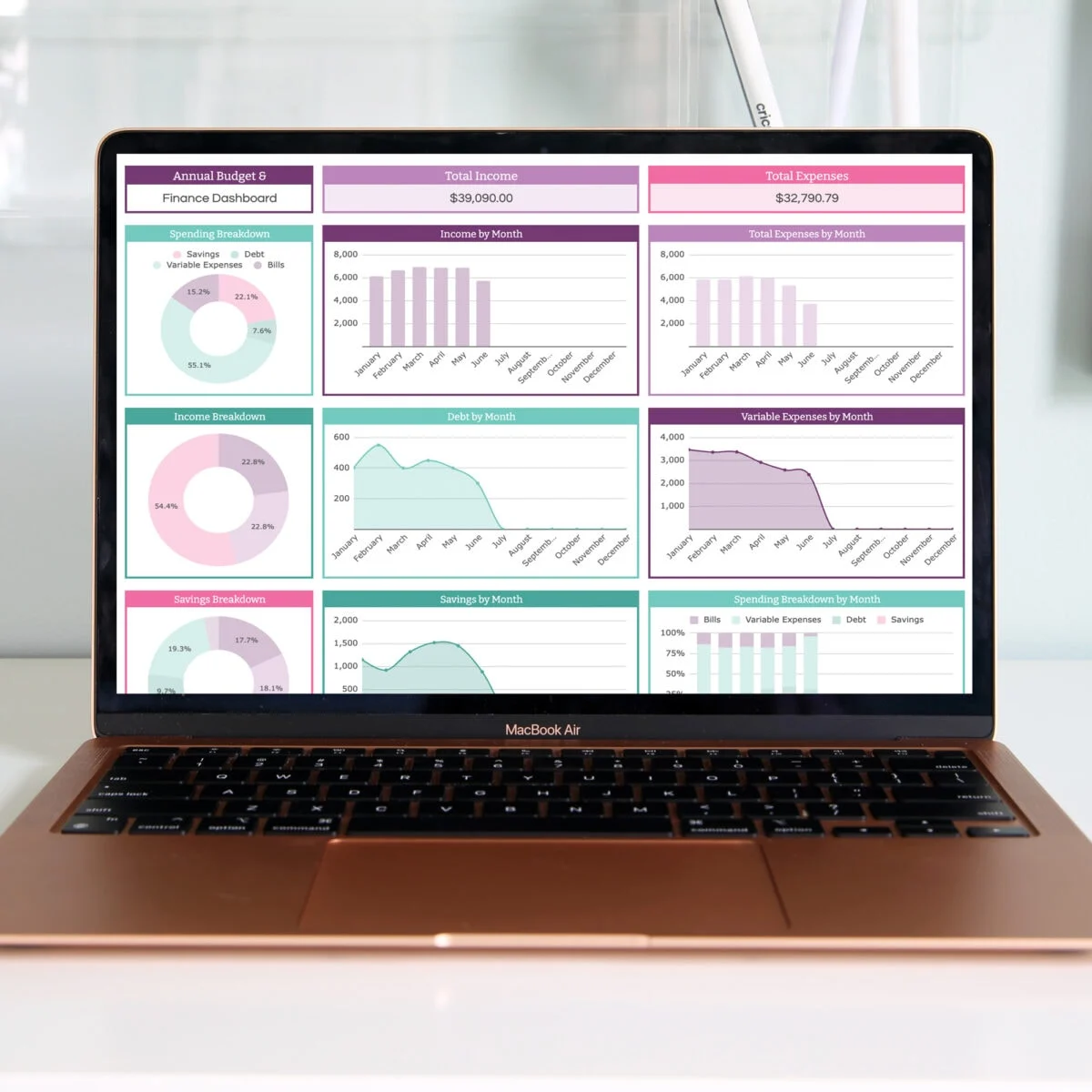
Furthermore, digital tool utilization has surged. Modern consumers increasingly rely on automated budget templates and dynamic spreadsheets that eliminate human arithmetic error. User testimonials consistently highlight the psychological shift provided by these tools; when financial management is stripped of tedious manual calculations and transformed into an organized visual dashboard, user compliance and long-term engagement rise significantly.
Official Perspectives and Expert Commentary
While large-scale institutional policies dictate macroeconomic conditions, consumer advocates emphasize that individual financial resilience starts at the grassroots level.

Prominent personal finance educators stress that budgeting should be viewed as an act of self-care rather than a punitive measure. "When you know precisely where your capital is allocated, you reclaim your agency," notes financial wellness advocate Abby Lawson. "Budgeting isn’t about denying yourself the things you enjoy; it’s about aligning your daily expenditures with your deepest personal priorities so you can achieve your long-term goals without panic."
Industry analysts also point out that structured financial planning plays a vital role in macro-level economic stability. Households that maintain emergency savings and manage debt effectively are significantly better positioned to weather economic downturns, inflation spikes, and unexpected employment disruptions.

Implications for Households and Future Outlook
The broader adoption of structured monthly budgeting carries profound implications for modern society. As inflation and cost-of-living pressures continue to challenge household balance sheets, the margin for financial error is shrinking.
Families and individuals who embrace proactive budgeting cultivate a distinct advantage. By replacing financial anxiety with empirical knowledge, they insulate themselves against minor monetary shocks and build generational wealth over time. Ultimately, the transition from passive spender to active budgeter is not merely an exercise in accounting—it is a transformative shift toward enduring financial independence and peace of mind.