By Jake Peterson
Senior Technology Editor
November 5, 2026
In the rapidly evolving landscape of personal computing, few products have sent as significant a shockwave through the industry as the MacBook Neo. Released to critical acclaim and record-breaking sales, the device effectively democratized the "premium" Mac experience, allowing millions of new users to enter the Apple ecosystem at an accessible price point. However, this success placed intense pressure on the Windows PC market, particularly for manufacturers who rely on hardware parity to compete with Apple’s vertically integrated software-hardware optimization.
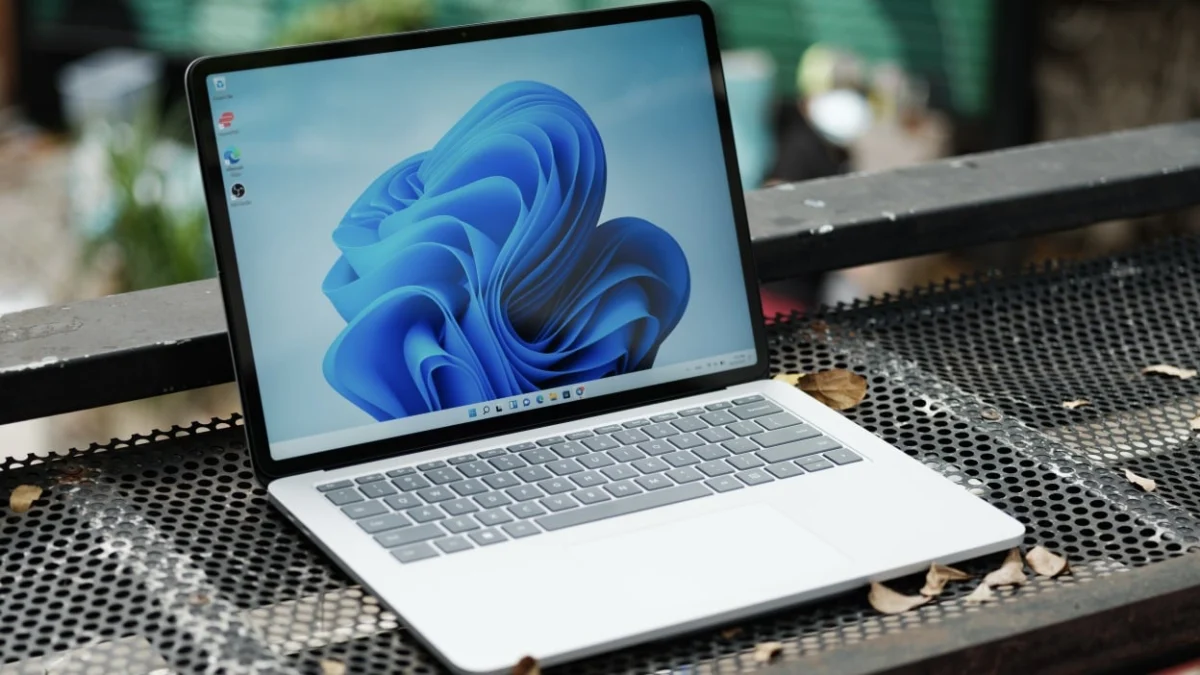
For years, the narrative was simple: if you wanted budget-friendly, high-value hardware, you bought a Windows laptop. If you wanted a polished, optimized, and cohesive ecosystem experience, you paid the "Apple Tax." With the MacBook Neo, Apple bridged that gap, forcing PC makers to fight on their own turf. Today, however, the playing field has been leveled once more. Microsoft has just unleashed a significant suite of memory-management optimizations for Windows 11, specifically targeting the 8GB RAM configuration—a move that fundamentally alters the value proposition for millions of consumers.
The Rise of the MacBook Neo: A Market Disrupted
To understand the gravity of Microsoft’s latest intervention, one must look at the market environment preceding it. When the MacBook Neo launched, it was hailed as a watershed moment for Apple. Former Apple CEO Tim Cook famously noted that the device triggered the company’s most successful launch week for first-time Mac customers in history.
The strategy was simple: provide the core Mac experience—seamless integration, long battery life, and high-quality build materials—at a price point that undercut most competitors. While the device typically ships with 8GB of RAM, Apple’s proprietary silicon (the M-series chips) and the highly efficient macOS architecture allowed the machine to outperform Windows laptops with identical, or occasionally superior, raw specifications. For PC manufacturers like Dell, HP, ASUS, and Lenovo, this was a nightmare scenario. Their primary competitive advantage—value-per-dollar—was being eroded by a device that offered a superior user experience at a comparable price.
Chronology of a Competitive Shift
The tension between the MacBook Neo’s rise and the Windows response can be traced through a series of key industry developments:
- Early 2026: The MacBook Neo hits the market. Sales figures immediately exceed projections, forcing PC manufacturers to reconsider their pricing strategies for the mid-range and budget segments.
- Mid-2026: As AI-integrated features begin to demand more system resources, the conversation surrounding 8GB of RAM turns negative. Tech analysts and reviewers begin to warn consumers that 8GB is no longer sufficient for modern multitasking.
- Late 2026 (November 3): Microsoft breaks its silence on the issue by announcing a comprehensive suite of memory-management upgrades for Windows 11. These updates are specifically optimized for machines with 8GB of RAM.
- Present Day (November 5, 2026): Early benchmarks and industry testing, including reports from PCMag, confirm that the update provides a tangible, performance-enhancing "second life" for budget-tier hardware.
Under the Hood: How Microsoft Reclaimed Efficiency
The core of the issue for Windows PCs has historically been the "decoupling" of software and hardware. Because Microsoft develops Windows to run on thousands of different hardware configurations, it lacks the specific, granular optimizations Apple achieves by designing the OS for a handful of proprietary chips.
Microsoft’s latest update aims to mitigate this by radically changing how Windows handles memory. According to the company’s official technical documentation, the new approach treats RAM usage with a "desk vs. drawer" methodology.
Previously, Windows would aggressively offload background tasks to the drive (the "drawer") to keep the RAM (the "desk") clear. While this was designed to keep the system responsive, it led to constant reloading of tabs and apps. The new update allows Windows to retain up to 2GB more of active data in the RAM. This means that when a user switches between a browser, a word processor, and a communication app, the "state" of those applications is preserved, eliminating the stutter and lag associated with refreshing.

Key Performance Benchmarks
The improvements are not merely anecdotal. Microsoft’s internal stress tests reveal stark performance gains compared to the state of Windows in January 2026:
- App Responsiveness: Opening system utilities—including the Start menu, Settings, and the Snipping Tool—is now up to 20% faster.
- Web Browsing: Microsoft Edge now launches up to 33% faster, with a new "inactive tab" protocol that forces tabs to sleep after 15 minutes, down from the previous two-hour window.
- Multitasking: In a simulated test involving 20 Edge tabs, a 4K video, and multiple instances of Word, PowerPoint, and Excel, the system proved to be 40% faster than it was earlier this year.
- Resource Management: Microsoft successfully reduced the "committed memory growth" of its Office suite by 900MB, effectively reclaiming space that was previously wasted.
Implications for the Consumer and the Industry
The immediate implication of these updates is that the 8GB Windows laptop is no longer a "compromise" choice. For the average user—the student, the office worker, or the casual home user—the argument that you must spend extra for 16GB of RAM or switch to a Mac has lost much of its bite.
A Pivot in Professional Sentiment
Industry experts who were previously vocal about the limitations of 8GB hardware are beginning to revise their stances. Chris Hoffman, writing for PCMag, noted that while he remains a proponent of higher RAM for professional creative workflows, the average consumer looking for a "reasonable desktop experience" can now rely on these machines without fear of systemic slowdown.
This is a critical pivot. By optimizing the software, Microsoft has essentially saved the entry-level PC market from obsolescence. Consumers who were previously scared off by the "8GB warning" can now save hundreds of dollars by opting for standard configurations, knowing that the operating system itself is now working as a force multiplier for their hardware.
The New Competitive Landscape
The rivalry between the MacBook Neo and the Windows ecosystem has entered a more sophisticated phase. Apple’s advantage remains its vertical integration, but Microsoft’s advantage is now its software-driven versatility. As hardware costs remain inflated due to the global demand for AI-ready components, the ability to squeeze more performance out of "entry-level" specs has become the most valuable currency in the laptop wars.
For the consumer, the choice is no longer about which machine is "better" in a vacuum; it is about which ecosystem provides the best value for their specific workflow. If you are a user who prefers the Windows environment, the "Neo-gap" has been effectively bridged. You no longer need to fear the performance bottleneck that defined the first half of 2026.
Official Stance and Future Outlook
Microsoft’s messaging is clear: they are committed to ensuring that Windows 11 remains the most viable platform regardless of the user’s budget. By focusing on efficiency, they are positioning Windows as the democratic choice in an era of rising hardware costs.
Apple, for its part, is reportedly preparing for the launch of the MacBook Neo 2, with expectations of doubling sales in 2027. They will likely lean into the hardware-software synergy that has defined their success thus far. However, they will now face a refreshed and more efficient Windows competitor that can do more with less than ever before.
As we look toward 2027, the consumer is the ultimate winner. The competition between Apple and Microsoft has forced a level of optimization that was previously absent from the market. Whether you choose a MacBook or a Windows machine, the "standard" laptop experience has become significantly more robust, efficient, and capable than it was just twelve months ago. The 8GB barrier has been broken, and for millions of users, that means a faster, smoother, and more productive year ahead.