On July 17, 2026, the landscape of American public surveillance shifted, if only slightly, when Flock Safety—a dominant force in the private-public law enforcement infrastructure—announced the termination of its "human distress detection" pilot program. The decision, confirmed by the Electronic Frontier Foundation (EFF), followed months of escalating public outrage, organized resistance, and profound legal questions regarding the sanctity of private conversations in public spaces.
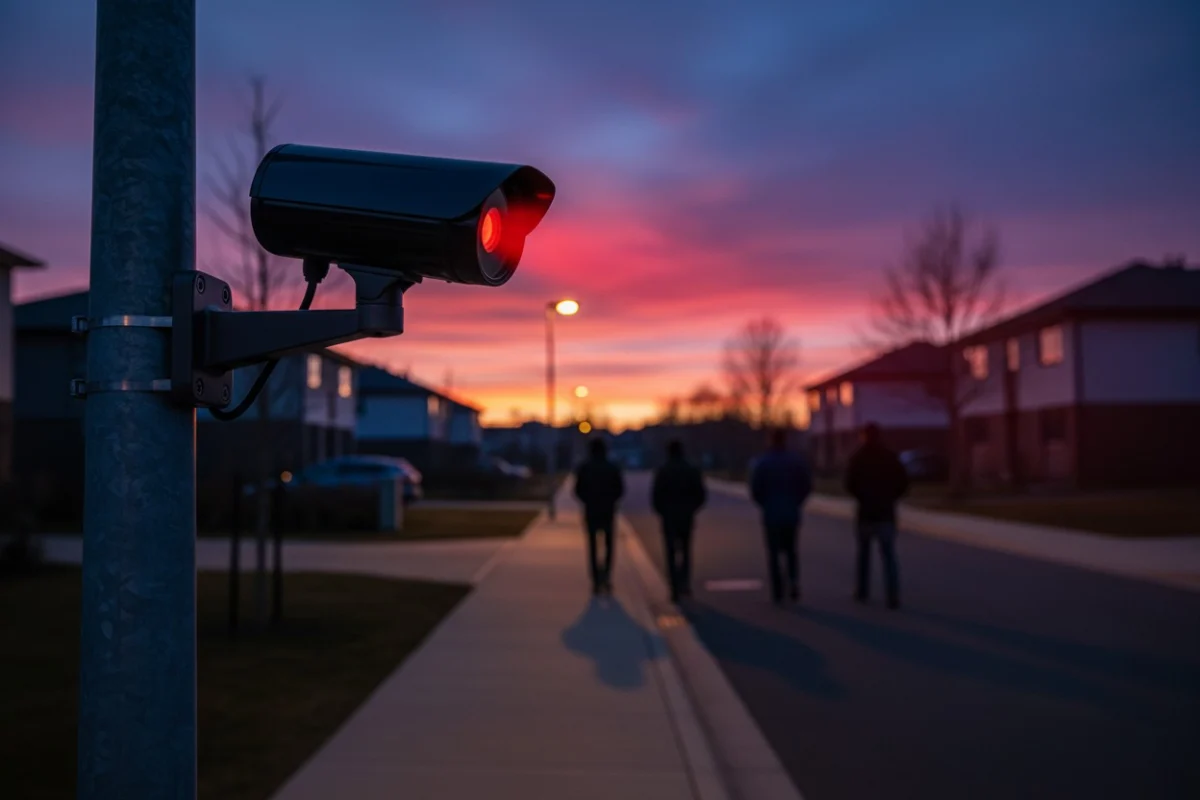
The program, which utilized high-powered microphones embedded within the company’s ubiquitous camera arrays, was designed to detect sounds of "screaming" or "distress." While Flock framed the tool as an evolution in public safety, civil liberties groups viewed it as a dystopian encroachment that threatened to turn the streets into a live-monitored, algorithmic dragnet. This retreat, while framed by the company as a result of "careful consideration," marks a pivotal moment in the ongoing national debate over the limits of the surveillance state.
Chronology: From Gunshot Detection to Acoustic Dragnet
The evolution of Flock Safety from a provider of Automated License Plate Readers (ALPRs) to an acoustic monitoring powerhouse is a classic case study in "mission creep."
- Initial Deployment: Flock first gained national prominence by installing cameras at key intersections and entry points, promising local police departments "evidence-based" crime solving by tracking vehicle movements.
- The Raven Integration (2024-2025): The company expanded its hardware capabilities by integrating acoustic gunshot detection technology, branded as "Flock Raven." By identifying the percussive sound of a gunshot, the system could theoretically triangulate the location of violence and alert law enforcement in real-time.
- The Pivot to Distress (October 2025): In a quiet rollout, Flock introduced a feature capable of identifying "human distress." Initially marketed as a tool to flag "screaming," the feature was intended to trigger alerts for anything the software categorized as a vocalized distress event.
- Rising Scrutiny (Early 2026): As civil liberties groups began to analyze the technical specifications, alarm bells sounded. The technology was not limited to gunshots; it was now capable of parsing the nuance of human emotion, raising the specter of police responding to heated debates, rowdy teenagers, or emotional outbursts.
- The Breaking Point (Summer 2026): Following a wave of public protests and the proliferation of grassroots sabotage against the physical hardware, Flock issued its formal retreat on July 17, 2026.
Supporting Data: The Growing Resistance
The backlash against Flock has not been confined to the boardroom or the courtroom; it has spilled into the streets. In cities across the United States, the resistance has taken on a physical, often destructive form.
Independent reports indicate that the number of individuals engaging in "direct action"—the act of hacking down, blinding with spray paint, or dismantling Flock camera units—has reached record highs. These vandals are frequently lauded as "folk heroes" in decentralized online forums, where digital activists organize to provide legal support and technical advice on disabling the devices.
A flashpoint occurred on July 4, 2026, in Houston, Texas, near the busy Washington Avenue corridor. Several Flock units were discovered severed at the base and defaced with spray paint, with one camera notably bearing an American flag over its lens. The complexity of these incidents is amplified by the murky ownership structure of the cameras. Because these units are often deployed via a hybrid model—funded by city contracts, homeowners’ associations, or private business collectives—the Houston Police Department faced immediate difficulty in determining who held the title to the destroyed assets, further complicating the legal response.
While Flock Safety has publicly condemned these actions, asserting that "damaging public safety equipment is illegal and puts the community at risk," the sheer volume of incidents suggests a profound disconnect between the company’s perception of "safety" and the public’s perception of "privacy."
Official Responses and the Corporate Narrative
Flock Safety has maintained that its intentions were consistently altruistic, focusing on the reduction of violent crime. In a formal response following the cancellation of the pilot, the company reiterated that its audio technology was "designed to help identify potential violent incidents in areas where other public safety tools were less effective."
The company was quick to limit the scope of the controversy, stating that the distress detection feature was never a widespread product, but rather a "limited trial" available to a "small number of customers." This distancing tactic, however, did little to satisfy critics who argued that the mere existence of the feature proved the company’s intent to expand its monitoring capabilities into the realm of human behavior.
Conversely, organizations like the EFF have been relentless in their criticism. "This was a misguided and dangerous feature because of the civil liberties concerns it poses," the EFF stated in its analysis. They argued that the technology threatened to summon armed law enforcement to any loud interaction in public, effectively criminalizing the noise of city life. The EFF also underscored that the cancellation of the distress pilot does not address the foundational dangers of the existing hardware, which continues to rely on controversial gunshot detection algorithms—technology notoriously prone to false positives, such as identifying fireworks as gunfire.
Implications: Mission Creep and the Surveillance State
The Flock controversy serves as a microcosm of a larger, systemic issue in the American surveillance landscape: the tendency for technology initially marketed for "narrow" use cases to expand into invasive, general-purpose monitoring.
The Problem of Mission Creep
History shows that surveillance infrastructure, once installed, rarely remains static. License plate readers, sold as tools to find stolen cars, are now used to track the movement patterns of law-abiding citizens. By adding audio capabilities to these same poles, the surveillance apparatus moves from tracking where people go to what they sound like and how they interact.
Legal and Constitutional Boundaries
The EFF and other legal scholars have pointed out that the "distress detection" feature likely skirted the edges of state eavesdropping laws. In many jurisdictions, recording the content of human speech without consent is a criminal act. By repurposing hardware to listen to the nuances of a scream or a shout, companies risk turning private, transient moments of emotion into permanent, searchable records for law enforcement databases.
The Power of Public Pressure
The retreat of Flock Safety is a rare, tangible victory for privacy advocates. It demonstrates that when the public is adequately informed and sufficiently organized, the political and reputational costs of surveillance can become too high for corporations to bear.
Unresolved Tensions: What Comes Next?
While the "Distress Detection" feature has been officially abandoned, the physical infrastructure remains firmly in place. Thousands of microphones continue to listen to the American streetscape, and thousands of cameras continue to record the movement of every vehicle. The underlying tension between the desire for "public safety"—often defined as total visibility—and the preservation of "civil liberty"—defined as the right to live without constant observation—remains as unresolved as ever.
The sabotage in Houston and other cities suggests that a segment of the population has lost faith in the traditional channels of oversight. When the public feels that democratic institutions are no longer capable of curbing the growth of the surveillance state, they often resort to the very destruction that the surveillance companies fear.
For policymakers, the challenge is clear: the current model of rapid, private-public surveillance expansion is meeting significant, often hostile, resistance. The question for the future is whether this retreat on "distress detection" will lead to a broader re-evaluation of surveillance in American life, or if it will simply serve as a tactical concession—a strategic pause before the next iteration of monitoring technology is introduced.
The public has demonstrated that it possesses the power to push back, but the infrastructure of the surveillance state is not built to retreat. As society moves further into the digital age, the battle over the "public square"—and whether that square belongs to the people or the algorithm—is only just beginning.