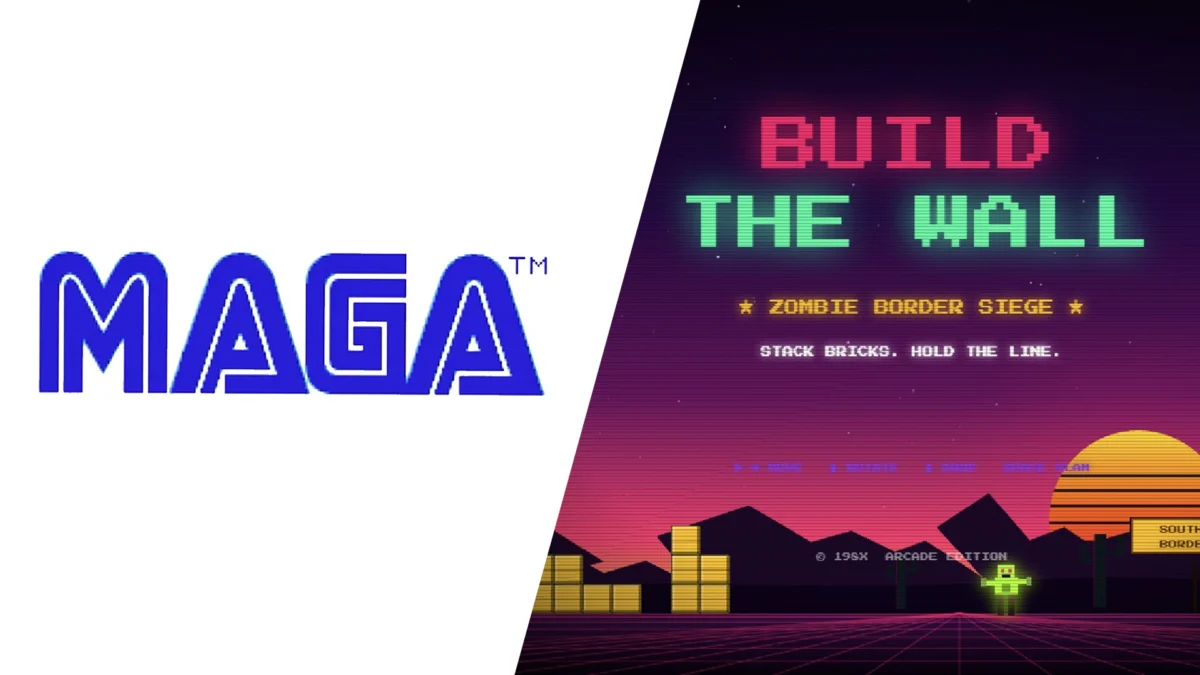
The intersection of partisan politics and intellectual property (IP) law has long been a contentious space, but the recent launch of "Arcade.gov" by the U.S. administration has pushed these boundaries into unprecedented territory. By repurposing iconic, globally recognized gaming mechanics—most notably the legendary Tetris—to promote a specific anti-immigration agenda, the White House has inadvertently sparked a digital firestorm. The project, which aimed to use gamification as a political tool, quickly collapsed under the weight of its own legal oversights, highlighting a growing tension between government messaging and corporate copyright enforcement.
A Chronology of a Digital Blunder
The trouble began with the quiet launch of Arcade.gov, a platform featuring a collection of low-budget, web-based games. The portal was designed to mirror the aesthetic and mechanics of classic arcade hits, including Tetris, Snake, and Flappy Bird. However, the execution was marked by a flagrant disregard for the underlying intellectual property.
- Launch Day: Arcade.gov goes live, featuring five browser-based games. The site prominently displays logos for industry giants like Xbox and Sega, despite those companies having no involvement in the site’s creation or content.
- The 24-Hour Fallout: Within a single day of the site’s public debut, social media users and copyright advocates began highlighting the blatant infringement. The most controversial title, "Build the Wall," was identified as an unauthorized clone of Tetris.
- The Tetris Company Responds: On September 4, 2026, The Tetris Company took to the social media platform X to issue a swift, definitive statement. They explicitly distanced themselves from the "Build the Wall" game, stating, "The Tetris Company was not involved in the creation of ‘Build the Wall.’ We take copyright infringement very seriously."
- The Takedown: Facing mounting legal pressure and widespread ridicule, the White House removed "Build the Wall" from the portal. As of now, only four of the original five titles remain accessible on the site.
Mechanics of a Failed Narrative
The game "Build the Wall" was intended to serve as a digital manifesto, yet it served primarily as a case study in poor game design. The premise was straightforward: "Protect the border from the coming horde." Players were tasked with stacking blocks to construct a wall, utilizing the classic Tetris falling-block mechanic.
However, the execution failed on multiple levels. Users reported that the game was fundamentally broken; in one instance, a player noted that completing a wall to the top of the screen resulted in a "Game Over" rather than a victory, turning the intended political metaphor into an accidental critique of the project’s own logic. This, combined with the xenophobic framing of the game, made it an easy target for criticism.
Beyond Tetris, the site featured other titles that raised eyebrows. "Rio Run," a derivative of Snake, depicted a border patrol figure leading a line of people in orange jumpsuits. Another title, "Trump Savings Tycoon," utilized a Duck Hunt-inspired interface to encourage players to "Fill your Kids’ Trump Accounts." These games, characterized by their "America First" rhetoric, demonstrated a peculiar preoccupation with gaming tropes that are historically rooted in Japanese pop culture—a trend that has previously seen the administration using the Pokémon theme song during footage of immigration enforcement raids.
The Broader Landscape of IP Infringement
The unauthorized use of corporate branding is not a new tactic for the current administration, but the scale of the Arcade.gov project suggests a systemic failure to respect intellectual property rights. This incident follows a pattern of behavior that has previously drawn the ire of international entities.
In previous instances, the Japanese government and various rights holders have formally requested that the administration cease the unauthorized use of characters such as Mario. Despite these warnings, the administration’s social media arm has continued to appropriate characters and logos, often blurring the lines between government communication and private intellectual property.
The Role of Corporate Silence
While the response from The Tetris Company was immediate and firm, the reaction from other entities—such as Microsoft (Xbox) and Sega—has been noticeably muted. This "cowardly silence," as some critics have described it, likely stems from a reluctance to be dragged into the volatile arena of American partisan politics. Companies fear that taking a public stand against a government-sanctioned website could lead to boycotts, regulatory retaliation, or accusations of political bias.
However, the success of The Tetris Company in forcing a takedown proves that corporate entities possess significant leverage. By framing the issue as one of copyright protection rather than political ideology, they successfully shielded themselves from partisan accusations while effectively asserting their ownership rights.
Implications for the Future of Digital Governance
The failure of Arcade.gov raises profound questions about the intersection of artificial intelligence, copyright, and government accountability. As AI-driven content generation becomes more accessible, the barriers to creating "low-budget" clones of popular media are dropping. If a government entity can simply spin up a derivative game to serve a political narrative, it sets a dangerous precedent for the erosion of creative rights.
1. The Legal Precedent
The Tetris Company’s intervention serves as a landmark moment. It suggests that even in the face of executive power, intellectual property laws remain a robust mechanism for protecting creative work. For the gaming industry, this is a vital signal: copyright remains the most effective shield against the unauthorized appropriation of a brand’s identity for political gain.
2. The Credibility Gap
The incompetence demonstrated in the coding of "Build the Wall" has further damaged the credibility of the project. By failing to ensure that the game functioned correctly, the administration turned its own propaganda tool into a meme. The ridicule directed at the site—specifically the social media commentary questioning how one manages to "fuck up a Tetris clone"—has arguably done more to undermine the intended message than any official press release could have.
3. The Future of Government Digital Outreach
Arcade.gov serves as a cautionary tale for any government entity seeking to leverage popular culture for political messaging. When the medium is stolen and the message is poorly integrated, the result is not an increase in public engagement, but rather a loss of institutional dignity.
Conclusion: A Lesson in Boundaries
The saga of Arcade.gov highlights the necessity of maintaining clear boundaries between political discourse and private enterprise. While the administration attempted to capitalize on the nostalgia and reach of classic video games to push its policy agenda, the effort resulted in a legal and technical disaster.
The swift action taken by The Tetris Company underscores a critical reality: intellectual property is not a secondary concern, nor is it a negotiable asset in the face of political expediency. As we look toward the future, the "Arcade.gov" incident will likely serve as a textbook example of why government entities should refrain from infringing on the digital creations that they do not own. In the digital age, a brand’s reputation is its most valuable asset, and as The Tetris Company demonstrated, defending that asset is not just a right—it is a responsibility.
The remaining games on the site, while currently online, exist in a state of precariousness. If the administration continues to ignore the basic tenets of IP law, it is only a matter of time before the remaining titles—and the platform itself—face similar legal repercussions. For now, the "Wall" has fallen, not because of a political shift, but because of the fundamental power of copyright law in the 21st century.