
For years, the fitness community has been tethered to cold, hard data: heart rate zones, split times, elevation gains, and caloric burn. While platforms like Strava have revolutionized how we track our physical performance, there has long been a missing component—the "why" behind the workout. Today, Day One, the world’s premier digital journaling platform, is bridging that gap. With the launch of its new, seamless Strava integration, users can now automatically bridge the divide between performance metrics and personal reflection, turning every ride, run, hike, and walk into a permanent chapter of their life story.
The Convergence of Data and Reflection
The integration, rolling out in version 2025.22, marks a significant shift in the journaling landscape. By automatically pulling Strava’s rich activity data into the Day One ecosystem, the app moves beyond the role of a simple diary and evolves into a comprehensive "life repository."
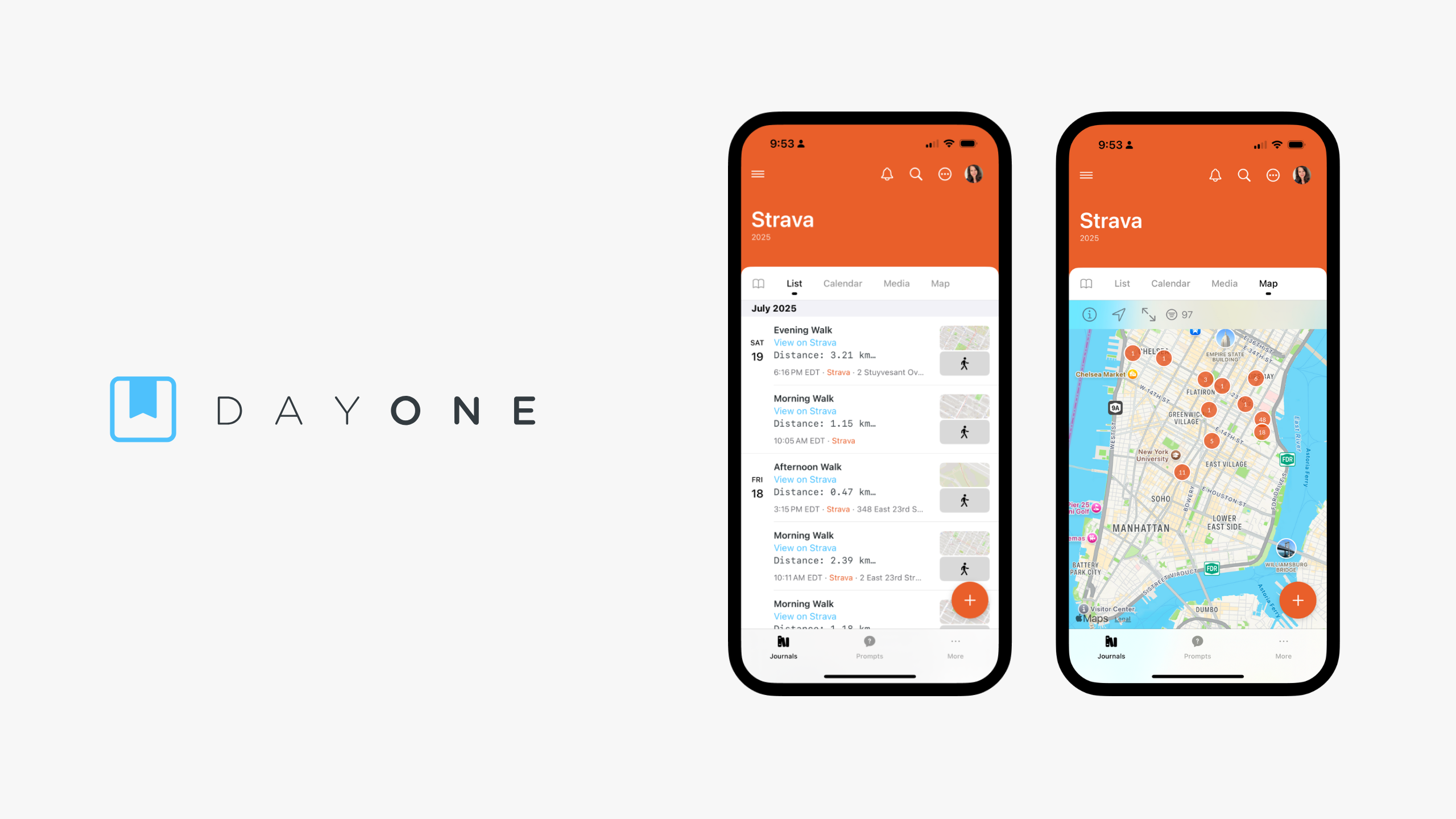
For many athletes, the experience of a workout—the crisp air of a sunrise run, the mental clarity achieved during a long-distance cycling session, or the grueling physical challenge of a mountain hike—is far more valuable than the numbers displayed on a screen. Previously, capturing these experiences required manual entry, a friction-heavy process that often resulted in abandoned journaling habits. With this update, that friction is removed. Every Strava activity now creates a dedicated, rich-media journal entry, allowing users to pair objective stats with subjective, human experiences.
Chronology of the Update: A Seamless Workflow
The integration is designed for simplicity, ensuring that the technology stays in the background while the narrative remains front and center. The process follows a straightforward, user-centric workflow:

- Authentication: Users initiate the connection within the Day One app settings, linking their Strava account via a secure OAuth handshake.
- Initial Synchronization: Upon connecting, the app immediately imports recent activities to provide an instant overview of current fitness trends.
- Background Processing: For power users with years of historical data, Day One initiates a silent, background backfill, populating the journal with past workouts over time without impacting app performance.
- Real-Time Syncing: Moving forward, new workouts are synced automatically within moments of being uploaded to Strava.
- Refinement: Once imported, these entries are fully editable. Users can append personal notes, reflect on their mood, attach additional photos or videos, and tag the entry with location data or custom labels.
Supporting Data: Why Context Matters
The necessity for this integration stems from a shift in consumer behavior. Digital wellness experts have noted that while fitness tracking apps have seen massive adoption, they often promote a "gamified" culture that focuses solely on achievement. This can lead to burnout or a lack of engagement with the deeper benefits of exercise.
By providing a space for reflection, Day One is tapping into the psychological benefits of journaling. Studies have consistently shown that "expressive writing"—the act of documenting one’s feelings and experiences—can reduce stress and improve mental health. When combined with fitness data, this allows users to see patterns that go beyond the physical. For example, a user might notice that their best performance times correlate with days when they journaled about high-quality sleep or low-stress environments.

Furthermore, the flexibility of the Day One interface allows users to view their progress through multiple lenses. Whether using the List, Calendar, Media, or Map view, users can visualize their fitness journey as part of a larger timeline, making it easier to see how their physical health has evolved alongside their life’s broader milestones.
Official Perspectives: The Philosophy of "The Whole Journey"
The team behind Day One has been clear about their mission: to help people document their lives as they happen. In their latest release notes, they emphasized that movement and reflection are not mutually exclusive.

"Movement is a fundamental part of the human experience," a spokesperson for Day One stated. "By bringing the intensity of a marathon training session or the peace of a morning walk into a journal, we are allowing our users to see the intersection of their physical, mental, and emotional journeys. We aren’t just helping them count miles; we are helping them write their biography."
The inclusion of "Print Your Story" functionality underscores this philosophy. The company offers a service where digital journals can be converted into high-quality, physical books. This allows users to transform their digital sweat and data into a tangible artifact—a physical archive of their growth that can be kept on a shelf, rather than buried in a digital cloud.

Implications: A New Standard for Fitness Documentation
The implications of this integration for the fitness and journaling sectors are profound.
1. The Rise of "Holistic" Wellness
This move signals that fitness tracking is moving away from the "quantified self" and toward the "mindful self." As users become more conscious of their data, they are demanding tools that allow them to process that data in a way that provides emotional value.

2. Longevity and Memory Preservation
Fitness apps are often treated as temporary tools—used to hit a goal and then discarded. By integrating into a journaling platform, these workouts are given a permanent home. The ability to look back on "This Day" five years from now and see a specific workout, complete with the weather, the route, and how the user felt, adds a layer of nostalgia and historical value to the fitness journey.
3. A Competitive Advantage for Day One
In a crowded market of note-taking and journaling apps, Day One is solidifying its position by becoming a hub for interconnected data. By integrating with the most popular fitness app in the world, they have lowered the barrier to entry for active individuals who want a more robust way to track their lives.

Addressing User Concerns: FAQs and Technical Nuance
As with any major integration, questions regarding privacy and data accuracy have arisen. Day One has addressed these with transparency:
- Data Integrity: When a user updates an activity in Strava, Day One allows for a manual resync to ensure the journal entry remains accurate. This provides a "single source of truth" for the user’s records.
- Visual Representation: While the integration does not pull the exact graphic map from Strava, it uses the underlying route data to generate a native, clean, and highly readable map within the journal entry, maintaining the aesthetic integrity of the user’s book.
- The "Human" Element: The integration notably excludes step counts from Strava, as the platform does not provide them, and instead encourages users to manually input their own subjective metrics or notes, keeping the human perspective at the center of the entry.
Conclusion: A Living Record of Your Best Self
The partnership between Day One and Strava is more than just a software update; it is an acknowledgment that our lives are a complex tapestry of numbers and emotions. By automating the capture of our physical efforts, Day One allows us to save time while gaining deeper insights into our own habits and growth.

Whether you are a professional athlete tracking peak performance or a casual walker looking to document the beauty of your daily routine, this integration provides a powerful tool for self-reflection. It transforms the act of "working out" from a check-box task into a meaningful narrative of personal evolution.
As we move forward in an increasingly digital world, the ability to curate our own stories—to bridge the gap between the stats on our wrist and the thoughts in our heads—is becoming an essential form of self-care. With this new integration, your workouts are no longer just data points in the cloud; they are the ink with which you write the story of your life.