
The years between 40 and 55 often represent a critical juncture, a period where the carefully constructed edifice of one’s life may begin to feel misaligned with inner realities. This is not necessarily a crisis, but a burgeoning need for a "midlife reset"—a proactive and comprehensive recalibration of work, health, finances, relationships, and identity. This article delves into the nuances of this vital life stage, distinguishing it from the more reactive midlife crisis and offering a structured approach to navigate this transformative period before drift becomes breakdown.
Understanding the Midlife Reset: A Proactive Rebuilding
A midlife reset is characterized by a deep-seated realization that while life may appear functional on the surface, it no longer resonates with one’s authentic self. It’s a period where the hum of daily routine feels discordant, the body’s resilience wanes, and established relationships may operate on autopilot. This internal dissonance prompts a desire to overhaul various life domains – career satisfaction, physical well-being, financial security, meaningful connections, and a clear sense of self. Crucially, a midlife reset is a self-directed endeavor, undertaken on one’s own timeline, aiming to prevent an eventual breakdown by initiating a deliberate rebuilding process.
It’s vital to differentiate this proactive approach from a midlife crisis, which is typically a reactive response to a significant breakdown. A midlife crisis often manifests in impulsive, dramatic actions such as sudden career changes, significant financial overspending, or drastic personal decisions. Similarly, a midlife reset is not a fleeting 21-day detox or a singular wellness protocol. Instead, it is a systemic approach to realign multiple interconnected facets of life.
The Subtle Signs of Drift: When Life Feels Misaligned
Many individuals recognize the feeling of being in a midlife reset before they can articulate it. The calendar may be packed, yet the days feel devoid of purpose. The physical body no longer bounces back with youthful ease. Close relationships might feel stagnant, running on established patterns rather than genuine connection. There’s a persistent intention to revisit financial plans, redefine career aspirations, or dedicate quality time to loved ones, yet the momentum to implement these changes falters. This persistent inability to translate intention into action is the hallmark of "drift."
To gauge the extent of this drift, a simple five-second diagnostic can be employed. Individuals are encouraged to rate each of the following domains on a scale of 1 to 10, reflecting how aligned they feel in that specific area for the current week: work, health, money, relationships, and identity. A score below 6 in any domain signifies an area that is drifting. Experiencing low scores in two or more domains suggests that a midlife reset is likely imminent or already underway.
Why Previous Resets Have Failed: The Pitfall of Single-Domain Fixes
Many individuals have embarked on self-improvement journeys – be it a 30-day fitness challenge, a sudden career pivot, or a strict new diet – only to witness these efforts unravel within weeks. The persistent failure of such initiatives is not attributed to a lack of discipline, but rather to the inherent inadequacy of single-domain solutions for multi-domain drift.
For instance, a well-intentioned sleep reset can be undermined by the stress of a demanding work project. Financial anxieties can derail efforts to rebuild intimate relationships. The fundamental issue is that attempting to fix one aspect of life in isolation, while other areas are experiencing quiet decline, is akin to trying to mend a single thread in a tapestry where multiple threads are fraying.
Research on habit spillover across life domains underscores this interconnectedness. Consistent positive behavior in one area tends to reinforce progress in others, but only when identity, environment, and repeated exposure support the change holistically. A reset focused solely on fitness, for example, implicitly asks the rest of one’s life to remain stable and unsupportive of interference. This is rarely the case. When life feels perpetually "stuck in a rut," the stagnation is often a consequence of interconnected issues across multiple domains.
Midlife Reset vs. Midlife Crisis: Proactive Design vs. Reactive Damage Control
The distinction between a midlife reset and a midlife crisis is crucial. A midlife crisis is a reactive phenomenon, occurring when the cumulative effect of unchecked drift culminates in a significant breakdown. This can manifest in drastic and often destructive actions, such as impulsive resignations, unaffordable purchases, extramarital affairs, or sudden, disruptive life changes.
In contrast, a midlife reset is a proactive strategy. It involves recognizing the subtle signs of drift while they are still manageable, diagnosing the issues across all five life domains simultaneously, and initiating a deliberate rebuilding process on one’s own terms. Individuals who successfully navigate midlife do not avoid this period of recalibration; they embrace it with intention.
Psychological frameworks further illuminate this distinction. Erik Erikson, a renowned developmental psychologist, identified midlife as a critical stage characterized by a choice between "generativity" – contributing to society and building a legacy – and "stagnation"—withdrawal and self-absorption. A midlife reset is the active pursuit of generativity, ensuring that this life stage becomes a period of creation and contribution rather than decline.
More contemporary research, such as David Brooks’ concept of the "second mountain," frames midlife as a transition from a focus on ego and achievement to a deeper engagement with family, vocation, faith, and community. Arthur Brooks’ work further suggests that while fluid intelligence may peak in the 40s, crystallized intelligence—wisdom, judgment, and pattern recognition—continues to rise, making the latter half of adulthood a period of strategic potential if redesigned accordingly.
The practical implication is clear: a reset is about proactive drift management, while a crisis is about reactive damage control. Most individuals delay the inevitable recalibration, finding themselves in a crisis when they could have opted for a proactive reset. A fragmented approach, addressing only one or two aspects of life, is merely a New Year’s resolution with more sophisticated terminology. True midlife wellness requires a holistic approach that integrates work, finances, relationships, and identity alongside physical health.
The Five Pillars of a Midlife Reset: Integrated Domains for Sustainable Change
The efficacy of a midlife reset hinges on the interconnectedness of its five core domains. These domains support and reinforce one another, creating a synergistic effect that drives sustainable change.
Domain 1: Work – Alignment Over Title
At midlife, the critical question shifts from "What do I want to do next?" to "Where is my current work already aligned with my values, and where is it draining energy that could be reallocated?" Often, midlife career dissatisfaction stems not from a desire for a complete career change, but from a realization that a small portion of one’s work provides significant meaning, while the majority has become a source of noise. A reset prioritizes pruning this noise before contemplating a radical pivot. A feeling of cognitive overload, even with a full schedule, is a clear signal from the work domain.
Domain 2: Health – Baseline Before Longevity
The focus in midlife health shifts from optimizing for extreme longevity to establishing a robust baseline. This includes prioritizing sleep, ensuring adequate recovery, maintaining consistent daily energy levels, and establishing a foundational strength training routine. Strength training is particularly crucial for individuals aged 40 to 60, as muscle mass decline accelerates, and the energy derived from it underpins all other life efforts. Optimization, such as advanced blood work or specialized supplements, should be considered a secondary layer, built upon a stable foundation. Neglecting the baseline in favor of advanced protocols often leads to burnout. Energy is the silent engine of all other reset efforts; its absence stalls progress across the board.
Domain 3: Money – Right-Sizing, Not Maximizing
Midlife cultivates the skill of recognizing "enough." While the pre-40 mindset often emphasizes maximization – earning more, saving more, acquiring more options – the 40-to-55 reset prompts a different inquiry: "What does ‘enough’ truly cost, once clearly defined?" Financial right-sizing empowers individuals to decline work, commitments, and lifestyle creep that no longer align with their evolving life vision. Establishing what is "enough" first is the hidden lever that enables genuine work alignment.
Domain 4: Relationships – Depth Over Breadth
By midlife, many individuals find themselves with a wide social network but few truly deep connections. A reset reverses this ratio, prioritizing depth. Key anchors include re-contracting with one’s partner to define mutual needs for the coming decade, actively engaging with aging parents and adult children in real time, and nurturing the core 3-5 friendships that have provided steadfast support through challenging periods. A social calendar brimming with obligations that lack genuine connection is a strong indicator of a Domain 4 that requires attention.
Domain 5: Identity – Who You Are Becoming, Not What You Have Done
Identity serves as the unifying thread for all other domains. Without a clear sense of self, other resets can feel like arduous chores. With it, they transform into a meaningful life journey. The pertinent question is not "What have I accomplished?" but "Who am I becoming over the next decade, and does my current routine support or detract from that vision?" Midlife research indicates a strong impulse towards generativity—the desire to create something that endures. A Domain 5 reset is measured against one’s personal growth trajectory, not against the curated highlights of others’ lives. Consequently, cultivating the ability to cease comparison is an integral part of this process.
The overarching principle for implementing these domain-specific habits is to select two non-negotiable habits per domain, resulting in a total of ten habits, rather than an overwhelming thirty. Each habit should be anchored to an existing routine, and the commitment should be to never miss twice. The strategy emphasizes doing less than initially perceived, allowing for the compounding effect of consistent, small actions.
The 90-Day Framework for a Midlife Reset
A structured 90-day approach can facilitate a comprehensive midlife reset, divided into three distinct 30-day phases: diagnosis, design, and installation.
Days 1-30: Diagnosis and Awareness
This initial phase is dedicated to a thorough diagnosis without any habit changes. Once a week, individuals score each of the five domains and articulate in a single sentence where the primary drift is occurring. The objective is to gain a clear, unadulterated understanding of the entire landscape before initiating any interventions.
Days 31-60: Design and Strategy
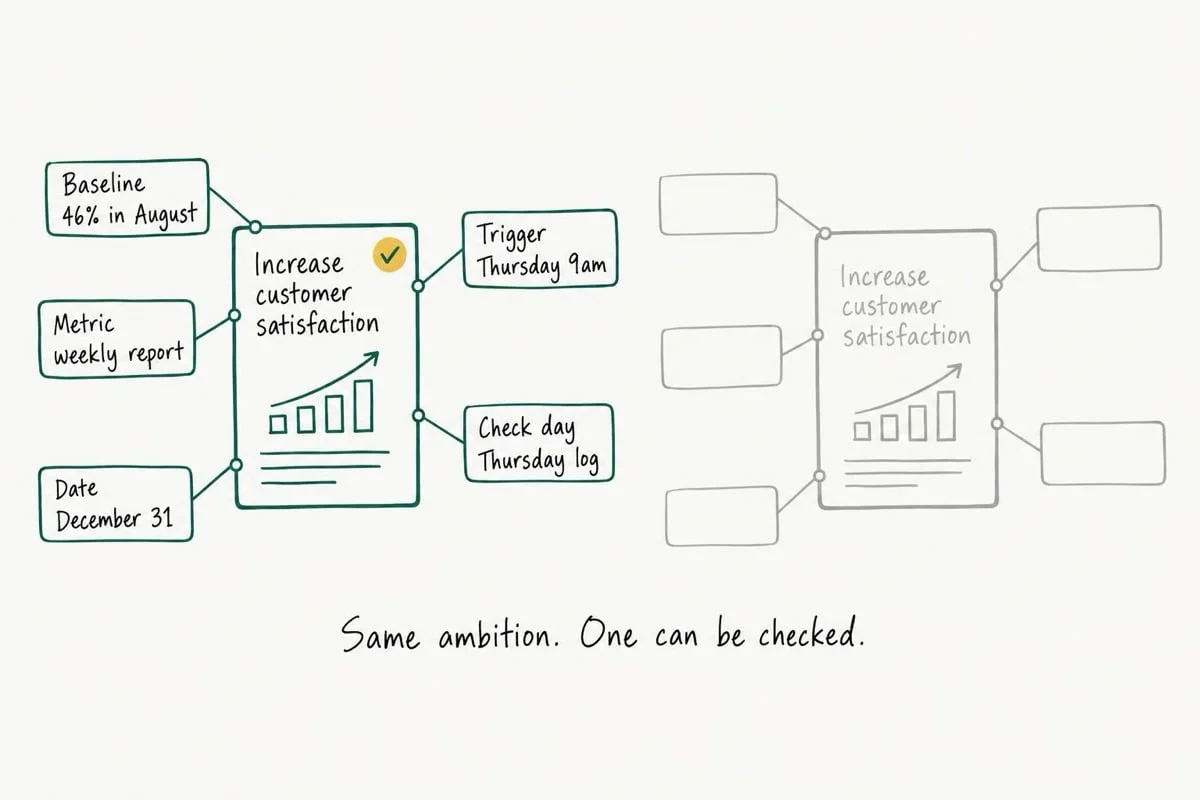
Building upon the diagnostic insights, this phase focuses on designing ten non-negotiable habits—two per domain. Each habit should be strategically stacked onto an existing daily anchor (e.g., "After I pour my morning coffee, I will…"). Furthermore, a "low-battery" version of each habit should be developed for challenging weeks. This meticulous planning significantly enhances consistency, as commitments are measured in minutes rather than hours.
Days 61-90: Installation and Tracking
The final phase involves the active installation and tracking of the designed habits. Visible tracking systems are recommended, and the guiding principle is to "never miss twice." Celebrating small victories, such as a quiet nod of accomplishment or a subtle fist pump, reinforces the positive behavioral changes. The purpose of tracking is not to induce guilt, but to provide tangible evidence of progress and the evolving identity of the individual undertaking the reset.
This 90-day timeline is informed by research on habit formation, which suggests that new behaviors typically take a median of 66 days to become automatic, with a realistic range of 18 to 254 days. Committing to the full 90 days allows for the integration of these new patterns. Many individuals falter around day 14, before significant visible changes have occurred, underscoring the importance of perseverance.
A hypothetical Tuesday for Marco, a 49-year-old undergoing his reset, illustrates this principle. He begins his day with a 10-minute strength circuit immediately upon waking (Health). While his coffee brews, he reviews his top three priorities for the day, delaying email checks until 9 AM (Work). He incorporates a 15-minute walk before lunch and dedicates Wednesdays to calling his father (Relationships). On Fridays, he spends 20 minutes reviewing his weekly spending against his defined "enough" threshold (Money). Sundays are reserved for a 10-minute journaling session focused on his evolving identity (Identity). These are not dramatic overhauls, but ten anchored habits, each requiring under 15 minutes, compounding across all five domains simultaneously.
Overcoming Common Objections to a Midlife Reset
Three prevalent objections often surface when discussing midlife resets: a perceived lack of time, the belief that one’s situation is uniquely complex, and the denial of being in a crisis. However, these objections are not valid reasons to postpone or avoid the process.
The feeling of lacking time is often a consequence of the very drift that the reset aims to address. By identifying and eliminating non-essential activities, a reset actually liberates time. While the specific details of each individual’s situation may vary, the underlying patterns of domain failure and rebuilding are remarkably consistent across diverse professions and life circumstances. Finally, the absence of an overt crisis is precisely the opportune moment to initiate a reset. By the time a crisis point is reached, options have become limited, and the reset is often dictated by external pressures rather than personal agency. Motivation is ephemeral, but a well-designed system provides the necessary structure to sustain change.
Frequently Asked Questions About Midlife Resets
What is the difference between a midlife reset and a midlife crisis?
A midlife reset is proactive, addressing drift before it becomes a breakdown. A midlife crisis is reactive, a response to a significant breakdown that often necessitates drastic, impulsive changes. A reset involves deliberate rebuilding across all life domains, while a crisis involves damage control.
What age should I start a midlife reset?
While the typical age range is 40 to 55, age is a guideline, not a rigid rule. If you experience drift across two or more domains before 40, it’s advisable to start then. For individuals over 60, the framework can be adapted as an "encore reset" to navigate the coming decade. The key indicator is the presence of significant drift, not a specific birthday.
Is a midlife reset only for women?
No. While discussions around midlife often highlight female-specific biological changes like menopause, the five-domain framework is gender-inclusive. Men and women experience different physical and societal pressures, but the core process of rebuilding work, health, finances, relationships, and identity remains structurally similar.
How long does a midlife reset take?
The initial comprehensive cycle, encompassing diagnosis, design, and installation, takes 90 days. The habits themselves may take 6 to 18 months to become deeply ingrained, depending on the individual’s starting point. Multiple cycles are common, and the goal is not necessarily to feel "done" in 90 days, but to establish a sustainable system for ongoing growth.
Do I need to do this with my partner?
While not strictly required, it can be beneficial. Many individuals undertake their first reset individually to gain clarity on relationship dynamics before discussing them with their partner. Subsequent cycles are often undertaken collaboratively, leading to enhanced mutual understanding and support.
The Foundation of Change: Diagnosis Before Design
The journey to a midlife reset begins not with an elaborate plan, but with an honest assessment of one’s current state. This week, take a moment to score your five domains. The lowest-scoring domain is the initial focus for your first small rebuild. This does not necessitate a 90-day program or a radical life pivot. Instead, it involves identifying two small, anchored habits that will incrementally improve that score.
True midlife wellness is not about optimization or relentless ambition. It is about starting small, focusing on one domain with two manageable habits for thirty days. As these habits take root, the system will naturally indicate whether the reset needs to expand to other domains. The framework’s power lies in its simplicity, its systemic approach, and its initiation before external pressures necessitate it. By starting small and consistently, the midlife reset becomes a pathway to a more aligned and fulfilling life.